UK / Europe: +44 1268 568200 USA / Canada: +1 877 215 8463
in
0%

The 2026 search for Top Thyristor Controlled Transformer Rectifiers is not merely a product comparison. It is a practical examination of control accuracy, transformer design, thermal stability, and service life. These systems still support demanding industrial processes, including electrochemical plants, furnace supplies, battery charging, and large DC drives.

Real heat matters. Engineers often evaluate rectifiers beside the datasheet, using thermal imaging, waveform measurements, and load records. A unit may appear efficient at nominal capacity, yet perform differently during voltage fluctuations or repeated overloads. Transformer impedance, thyristor firing control, ripple voltage, cooling airflow, and maintenance access deserve equal attention. Small design weaknesses become expensive when production cannot stop.

Power electronics authority Muhammad H. Rashid defines the field clearly: “Power electronics is the application of solid-state electronics for the control and conversion of electrical energy.” That principle remains central to Thyristor Controlled Transformer Rectifiers, where controlled switching converts transformer output into adjustable DC power. However, no ranking is perfect. A high current rating does not guarantee the best installation result. Harmonic behavior, protection coordination, spare-parts availability, and local technical support can change the decision.

This introduction examines leading 2026 solutions through an engineering-focused lens. It considers measurable performance, operating experience, manufacturer credibility, and documented reliability. Some comparisons remain difficult because suppliers publish different test conditions. That limitation should be acknowledged, not hidden. The strongest choice is usually the rectifier that fits the real load, the environment, and the maintenance team’s capabilities.
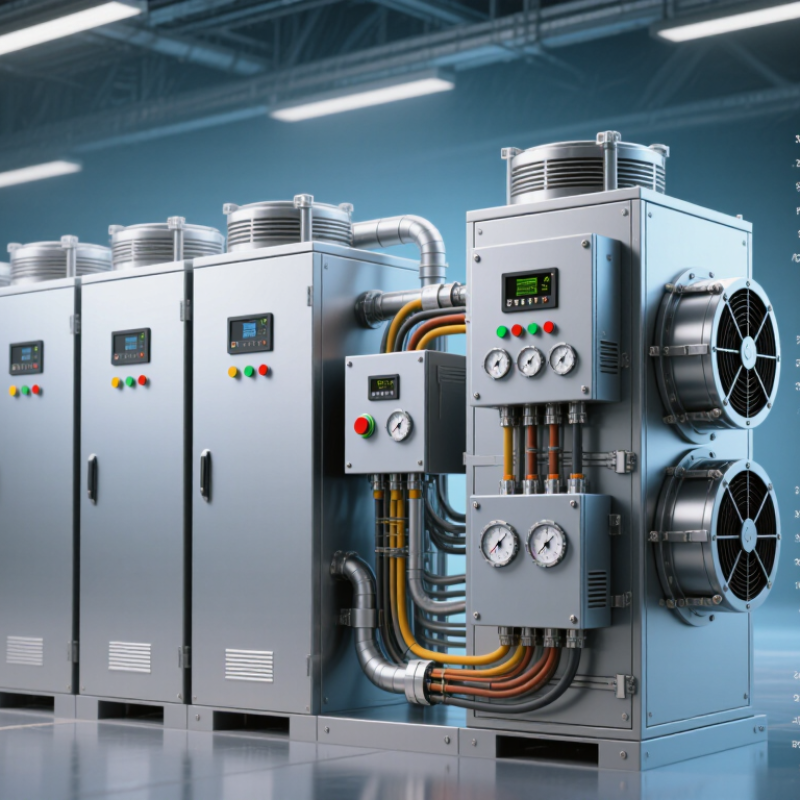
2026 Top Thyristor Controlled Transformer Rectifiers?

What Is a Thyristor-Controlled Transformer Rectifier?

A thyristor-controlled transformer rectifier converts alternating current into adjustable direct current. The transformer changes voltage and provides electrical isolation. The thyristor bridge then controls when current enters the load.

A firing circuit sends timed gate pulses to the thyristors. Changing the firing angle changes the average DC output. A smaller angle usually produces higher voltage, while a larger angle reduces it. This control method suits battery charging, electrochemical equipment, heating systems, and industrial DC drives. It handles substantial current without relying on mechanical switching.

Practical performance depends on more than the circuit diagram. The transformer must tolerate rectifier duty, including harmonic heating and repeated current peaks. Cooling paths need clear airflow, secure connections, and realistic temperature limits. Input reactors can reduce current distortion and protect sensitive components. Protection should include fuses, overvoltage suppression, snubbers, and safe gate-drive isolation.

Field testing often reveals details that calculations miss. A loose terminal can create abnormal heat within minutes. An oscilloscope can expose uneven firing pulses or unexpected commutation notches. A neat diagram can still mislead. Thyristors also produce ripple, so the load may require smoothing inductors or capacitors. Poorly chosen filtering can increase stress rather than solve it. Engineers should verify insulation, grounding, fault clearance, and thermal rise under the actual load. The design is rarely perfect. Careful measurement remains essential.

How the Transformer and Thyristor Bridge Work Together

2026 Top Thyristor Controlled Transformer Rectifiers

How the Transformer and Thyristor Bridge Work Together

A transformer rectifier begins with controlled voltage, not controlled current. The transformer adjusts the incoming AC voltage and provides electrical isolation. Its secondary winding then feeds a six-pulse thyristor bridge. Each thyristor receives a timed gate signal and conducts during its assigned interval. By delaying the firing angle, the bridge reduces the average DC output. Small timing changes can create large voltage differences.

In practical commissioning, the transformer and bridge must be treated as one system. Leakage reactance limits fault current, but it also causes commutation overlap between thyristors. That overlap reduces output voltage and increases waveform distortion. An inductive load can smooth current, yet it may keep devices conducting longer than expected. Measure the secondary voltage, gate pulses, and DC ripple together. Never judge performance from output voltage alone.

Cooling deserves equal attention. Copper connections, busbars, and heat sinks should remain secure after repeated load cycles. I have seen calculations appear correct while loose terminals created unexpected heating. The lesson is uncomfortable: design data can hide installation errors. Harmonic currents may also warm the transformer beyond its normal rating. Input protection, ventilation, firing control, and insulation checks must be verified under realistic load conditions. Some systems perform well on a test bench, then behave differently in the field.

Key Performance Characteristics and Control Methods

2026 Top Thyristor Controlled Transformer Rectifiers: Key Performance Characteristics and Control Methods

Thyristor controlled transformer rectifiers convert alternating current into adjustable direct current for demanding industrial loads. Their performance depends on output stability, ripple, efficiency, thermal capacity, and response speed. In practical commissioning work, engineers often watch voltage recovery after sudden load changes. A fast recovery is useful, but excessive firing speed can increase electrical stress.

The firing angle controls the average DC output. A smaller angle usually produces higher voltage. Gate pulses must remain synchronized with the transformer waveform. Poor synchronization can cause uneven current sharing and unwanted torque in the supply system. Closed-loop voltage feedback improves accuracy. Current feedback adds protection during short overloads. Soft-start control also limits inrush current.

Keep pulses clean.

Transformer design affects insulation, leakage reactance, and heat dissipation. Higher leakage reactance can reduce fault current, but it may increase commutation overlap and lower output voltage. Harmonic filtering may be necessary when the rectifier operates near full load for long periods. Engineers should measure power factor, waveform distortion, winding temperature, and cooling airflow during site tests. A calibrated thermal sensor is more reliable than a quick surface check.

Digital control provides flexible firing-angle adjustment and fault recording. However, software settings still require careful verification. A small timing error can create large current imbalance. Protection should cover overcurrent, overtemperature, loss of synchronization, and cooling failure. One design weakness is often overlooked: maintenance access. A rectifier that performs well but takes hours to inspect is not truly practical.

Major Industrial Applications and Selection Factors

Thyristor-controlled transformer rectifiers remain practical for demanding industrial power systems in 2026. They convert alternating current into adjustable direct current for electroplating lines, metal furnaces, battery charging, cranes, and electrochemical processing. Their controlled output supports smooth current changes, especially when production loads vary sharply.

Application details should guide the selection. Electroplating usually needs stable current and low ripple, while furnaces demand high thermal capacity and strong overload tolerance. A rectifier for a crane may need rapid response and frequent regenerative events. Check the required DC voltage, continuous current, peak current, duty cycle, and allowable ripple. Do not size only from the motor or process label. Real loads often behave differently.

Cooling method matters. Air cooling may suit moderate ratings, but water cooling can reduce cabinet size and heat buildup. Engineers should also examine input harmonics, transformer impedance, protection coordination, insulation class, and local electrical standards. Harmonic filters may be necessary near sensitive equipment. Maintenance access is easily overlooked. Leave room for testing, cable bending, and thyristor replacement. Keep it serviceable.

A perfect selection is rare. Field conditions change. Weak ventilation, dusty enclosures, or unstable supply voltage can defeat a well-designed unit. Factory testing, thermal checks, and documented commissioning reduce that risk. I would request measured load data before approving the final rating, even when the process schedule appears reliable. Guesswork is expensive.

Leading 2026 Technologies and Market Comparison Criteria

2026 Top Thyristor Controlled Transformer Rectifiers?

Leading 2026 Technologies and Market Comparison Criteria

Thyristor controlled transformer rectifiers remain practical for high-current industrial DC systems. They regulate output through phase-angle control, while the transformer provides isolation and voltage adaptation. Field experience shows that cooling, harmonics, and maintenance access often matter more than peak efficiency.

The International Energy Agency reports that data centres consumed about 415 TWh of electricity in 2024. It expects demand to more than double by 2030. This growth increases pressure on rectifier suppliers to improve power quality and thermal performance. However, data-centre loads are not the only driver. Electrolysis, metal processing, railway infrastructure, and battery manufacturing also require stable DC power.

Compare 2026 systems using six criteria: continuous current, voltage range, overload duration, transformer efficiency, harmonic distortion, and control response.

Check compliance with IEC 60146-1-1 and relevant electromagnetic compatibility requirements. A twelve-pulse arrangement can reduce characteristic harmonics, while an active filtering stage may improve grid performance further. It also raises cost and service complexity.

The best design is not always the newest. Independent testing should verify ripple, acoustic noise, cooling temperature, and thyristor fault behaviour under real load cycles. Ask for measured data, not optimistic brochures.

One weakness remains: published market forecasts often combine unrelated rectifier categories, making direct comparisons imperfect. c

FAQS

What does a thyristor-controlled transformer rectifier do?

It converts alternating current into adjustable direct current. The transformer changes voltage and provides electrical isolation. The thyristor bridge controls current timing.

How does firing-angle control change the output?

Timed gate pulses trigger the thyristors. A smaller firing angle usually produces higher DC voltage. A larger angle reduces it. Small timing changes matter.

Why must the transformer support rectifier duty?

Rectifier operation creates harmonics and repeated current peaks. These effects can increase transformer heating. A standard transformer may not survive continuous stress.

What happens during commutation overlap?

Transformer leakage reactance can delay current transfer between thyristors. This overlap lowers output voltage and increases waveform distortion. Measure the actual waveform.

Which loads commonly use these rectifiers?

Common uses include electroplating, furnaces, battery charging, cranes, and electrochemical equipment. Each load needs different voltage, current, ripple, and overload ratings.

How should engineers choose the rectifier rating?

Check continuous current, peak current, DC voltage, duty cycle, and allowable ripple. Do not rely only on the motor or process label. Real loads can behave differently.

What cooling and protection features are important?

Provide clear airflow or suitable water cooling. Use fuses, overvoltage suppression, snubbers, and isolated gate drives. Secure terminals, busbars, and heat sinks.

Why are field tests necessary after installation?

Calculations may miss loose terminals, uneven gate pulses, or abnormal ripple. An oscilloscope can reveal firing problems and commutation notches. Measure under realistic load.

Can filtering always reduce ripple safely?

No. Smoothing inductors or capacitors may reduce ripple, but poor choices can increase component stress. Verify current, voltage, and thermal limits carefully.

What installation details are often overlooked?

Leave space for cable bending, testing, and thyristor replacement. Check grounding, insulation, fault clearance, ventilation, and temperature rise. Keep it serviceable.

Conclusion

Thyristor Controlled Transformer Rectifiers combine a transformer’s voltage conversion and isolation functions with a thyristor bridge that regulates the output through controlled phase-angle firing. This arrangement enables efficient conversion of alternating current to adjustable direct current while supporting electrical isolation, current limiting, and stable operation under changing loads. The transformer establishes the required voltage and power capacity, while the thyristors control how much energy reaches the DC output. Performance is typically evaluated through output range, current stability, efficiency, ripple, response time, cooling requirements, and harmonic behavior.

In 2026, these rectifiers are expected to remain important in electrochemical processing, industrial heating, charging systems, metal treatment, traction-related equipment, and other high-power applications. Selection should consider voltage and current ratings, control accuracy, overload capability, maintenance needs, installation conditions, digital monitoring, and compatibility with power-quality systems. Technology comparisons should focus on lifecycle cost, reliability, energy efficiency, modularity, protection features, and the ability to integrate with modern automation platforms rather than relying only on initial purchase price.


Oliver

Oliver

Oliver is a dedicated marketing professional with extensive experience in developing clear, engaging, and results-focused content for modern businesses. As a key member of our marketing team, he has developed a deep understanding of the company’s products, services, and customer needs. His......