Technical Compliance & Engineering Insight Understanding Defense Electrical Standards in MIL-COTS Converters
Navigating defense procurement requires a granular understanding of military power standards. When deploying military electronics in tactical vehicles, naval vessels, or aircraft, power supplies must withstand unpredictable input line anomalies without degradation of performance or premature failure.
1. MIL-STD-1275E: Ground Vehicle 28V DC Electrical Systems
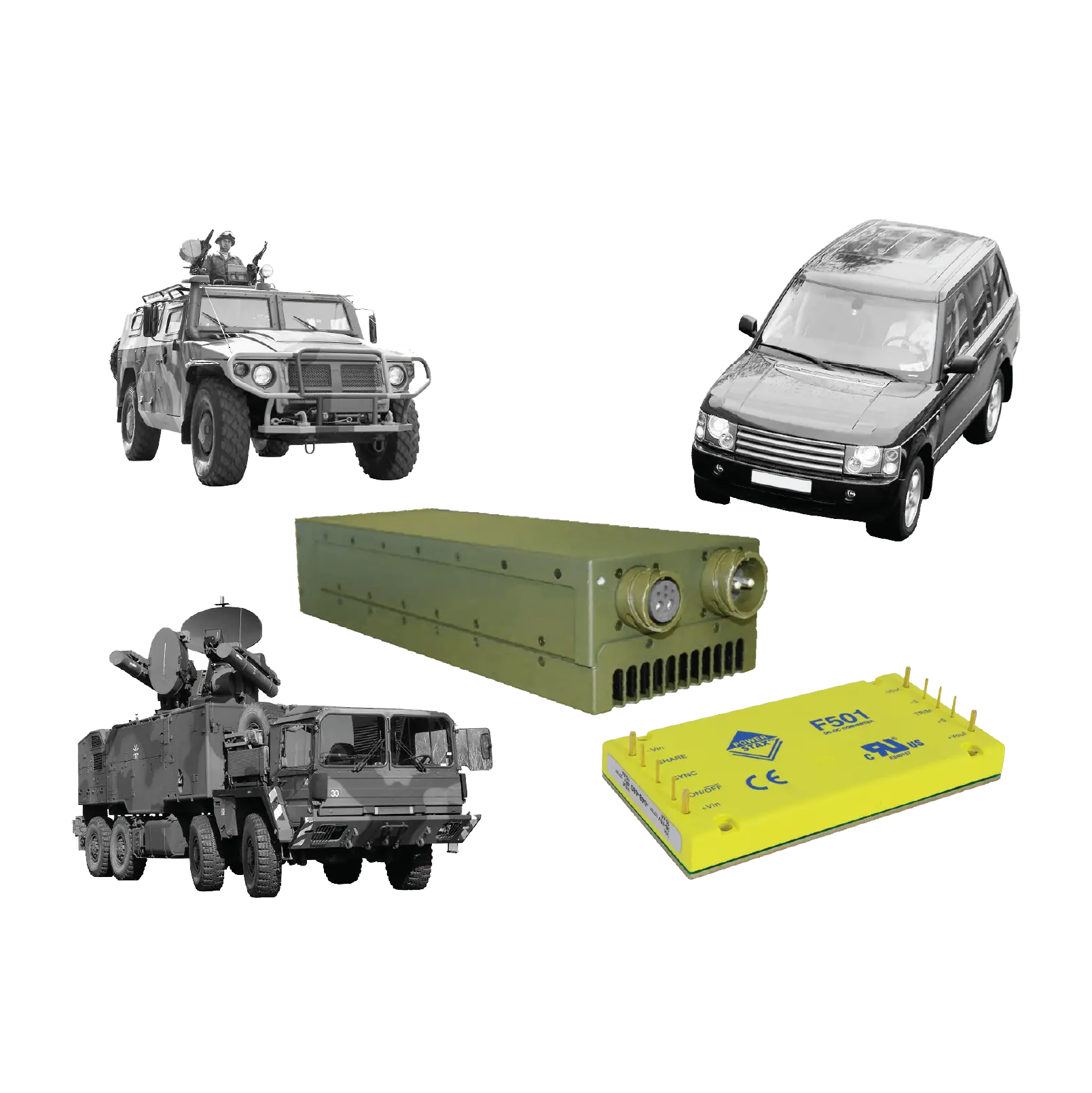
Military ground vehicles—such as armored personnel carriers, tactical trucks, and mobile command stations—experience extreme electrical disturbances caused by heavy inductive load switching, engine starting surges (cranking dropouts), and alternator load dumps. MIL-STD-1275E mandates that 28V DC powered equipment must tolerate:
- Surges: Up to 100V DC for 50 milliseconds during load dump events.
- Spikes: High-voltage transients up to ±250V DC for short microsecond durations.
- Cranking Dropouts: Voltage sags down to 6V DC or 12V DC for up to 1 second during engine cold-cranking.
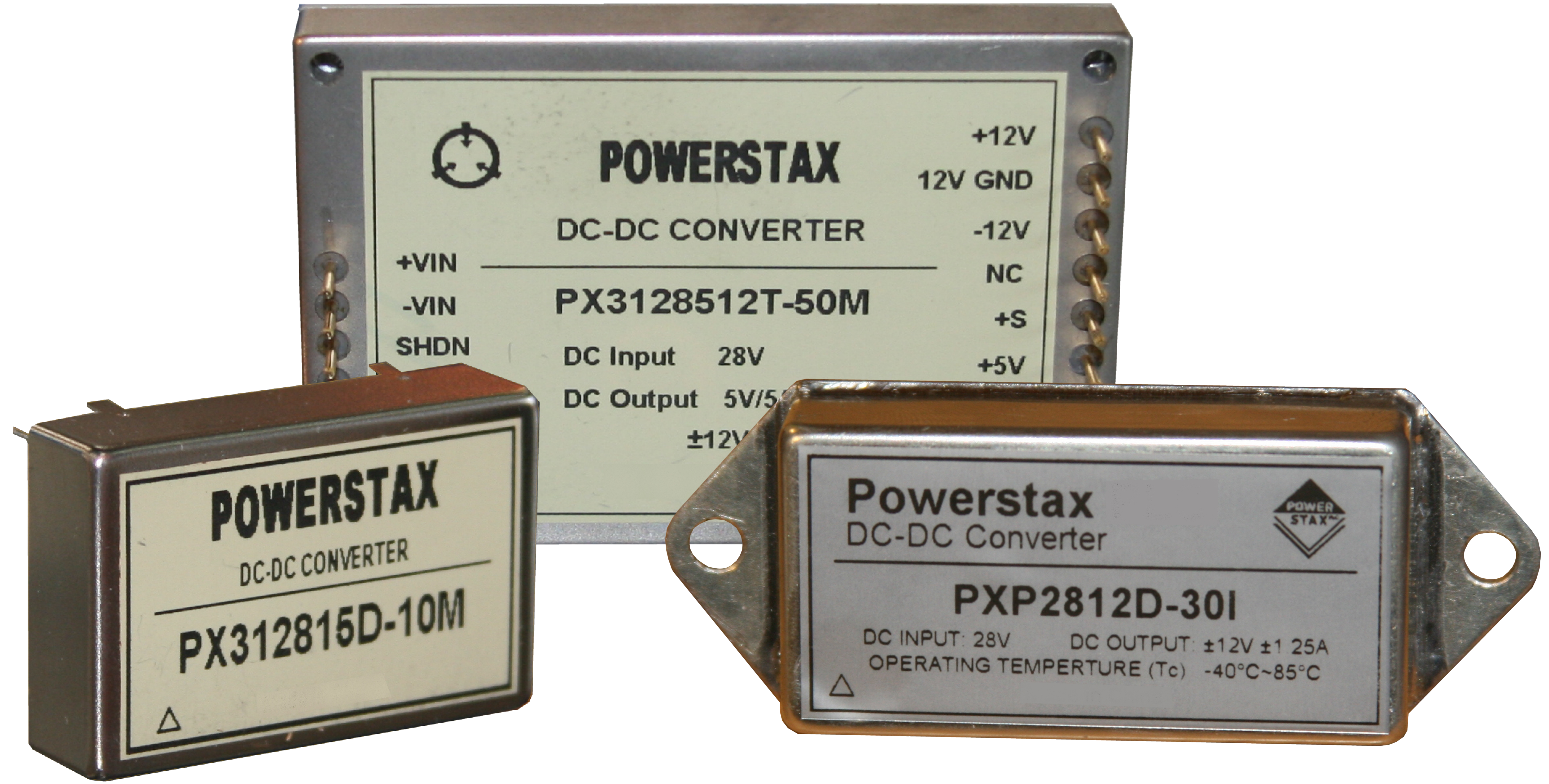
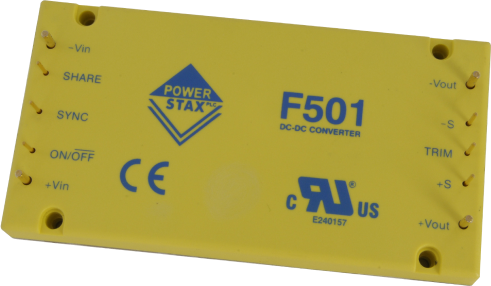
Powerstax MIL-COTS DC-DC converters achieve compliance when combined with our active transient suppression modules (TVS Series). Unlike passive MOV solutions that degrade over time, our active clamping topologies absorb excess voltage energy, maintaining a steady DC bus to downstream sensitive defense payloads.
2. MIL-STD-704F: Aircraft Electric Power Characteristics
Airborne environments present strict power quality metrics for both 28V DC low-voltage systems and 270V DC high-voltage architectures. MIL-STD-704F defines acceptable limits for power spikes, phase imbalance, frequency variations, and voltage transients on fixed-wing aircraft, rotary platforms, and unmanned aerial vehicles (UAVs).
Powerstax 270V nominal input MIL-COTS DC-DC converters incorporate wide-input topologies capable of operating across line variations from 160VDC to 400VDC, ensuring continuous avionics operation during generator transfer and engine throttle acceleration power swings.
3. MIL-STD-461G: Electromagnetic Interference (EMI) Control
Electromagnetic compatibility is non-negotiable in combat scenarios where radar detection, secure communications, and electronic warfare (EW) suites operate in close physical proximity. MIL-STD-461G specifies strict limits for Conducted Emissions (CE101, CE102) and Radiated Emissions (RE101, RE102).
High-frequency switched-mode power supplies inherently generate differential and common-mode noise. Powerstax designs complementary MIL-COTS EMI filter modules that pair directly with our DC-DC converter brick footprints. This integrated design approach ensures system compliance with CE102 and RE102 without requiring defense engineers to perform trial-and-error external filtering circuit design.
Need Custom MIL-STD-1275 or 704 Compliance Verification?
Our power engineers assist prime contractors with test plans, thermal modeling, and custom board layout optimizations.