
30+ Years of UK Manufacturing Excellence
Founded in 1992, Powerstax PLC combines decades of legacy engineering heritage (including Kingshill linear units and Drake heavy industrial rectifiers) with cutting-edge switched-mode power technology (SMPS).
Comprehensive B2B purchasing guide, topology analysis, and engineering specifications for high-reliability Modular AC-DC Power Converters. Designed and manufactured by Powerstax PLC for mission-critical industrial, medical, green hydrogen, and defence systems worldwide.
In complex equipment design—spanning green hydrogen electrolyser control arrays, clinical imaging suites, naval communications racks, and automated test environments—selecting the correct power supply topology directly dictates system reliability, thermal budget, and time-to-market. Modular AC-DC Power Converters have superseded traditional fixed-single-output power units by offering instantaneous multi-voltage configuration, scalable current sharing, and simplified regulatory compliance paths.
Founded in 1992, Powerstax PLC combines decades of legacy engineering heritage (including Kingshill linear units and Drake heavy industrial rectifiers) with cutting-edge switched-mode power technology (SMPS).
Our manufacturing and assembly facilities operate under full ISO 9001 certification, incorporating rigorous burn-in routines, automatic optical inspection, and full traceability of active power components.
From initial thermal finite-element analysis (FEA) and custom planar transformer winding to digital firmware customization (PMBus/Modbus), all engineering is performed directly by Powerstax specialists.
By specifying field-configurable modular power bricks, OEM engineering teams cut safety qualification cycles by up to 60% while mitigating long-term supply chain single-source risks.
Explore our core modular power architecture platforms, designed for field configuration, ultra-high power density, low acoustic noise, and extreme thermal resilience.
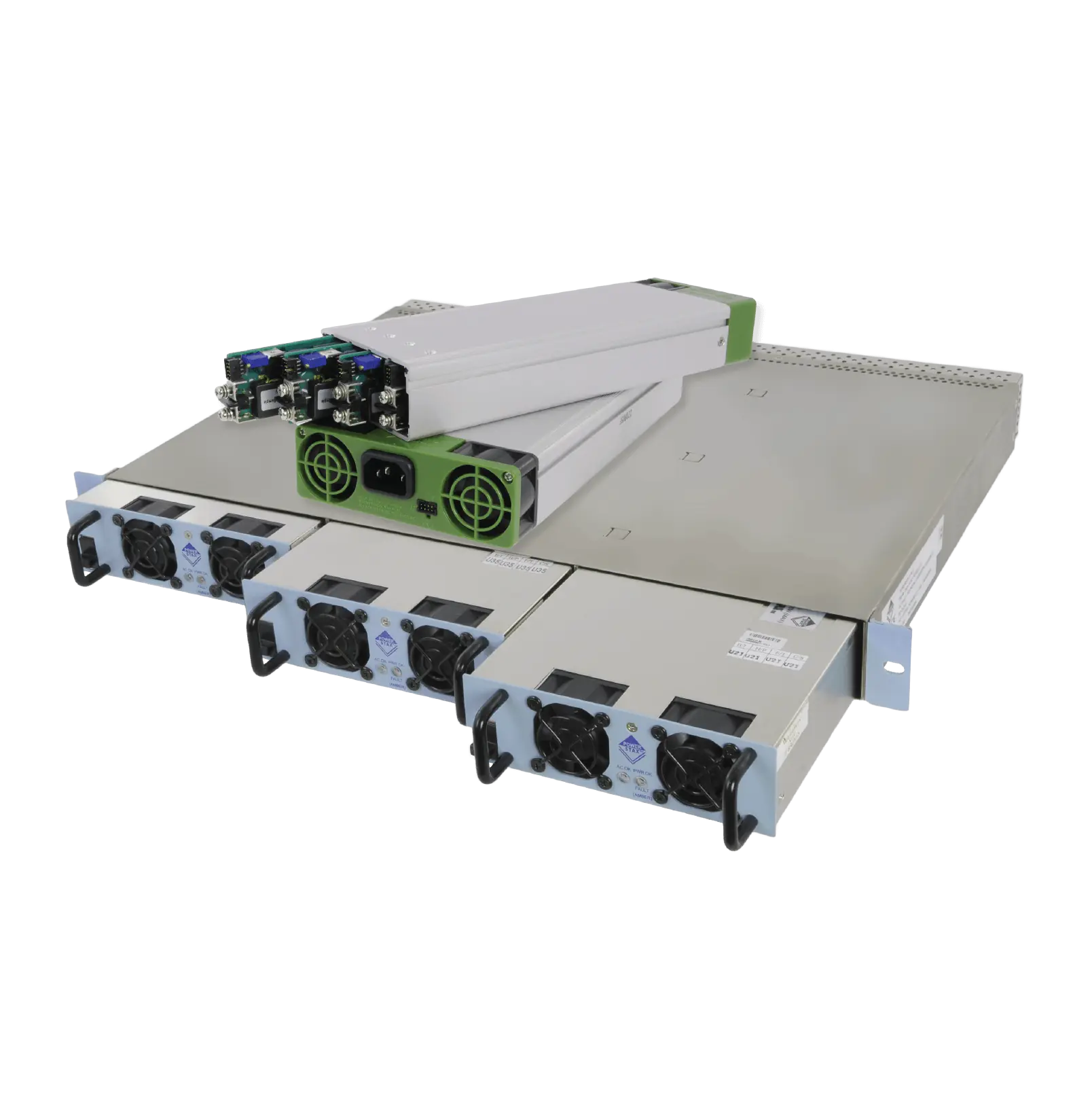
Up to 1450W output power in compact chassis. Modular plug-and-play slots providing isolated DC outputs from 1.5V to 58V with active PFC.
→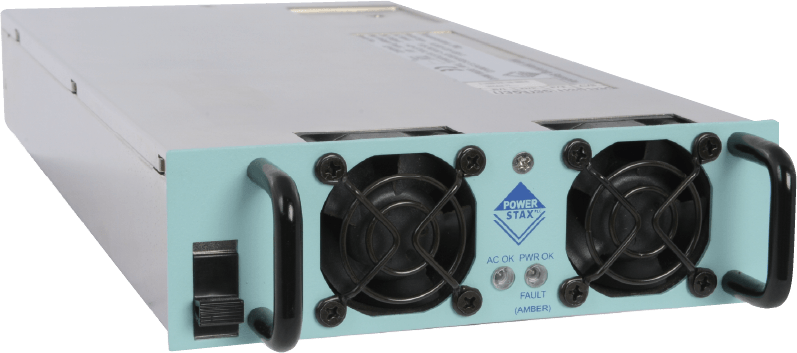
Ultra-low profile 1U height rackmount system accommodating up to 6 isolated output channels. Ideal for density-critical telecom and industrial control racks.
→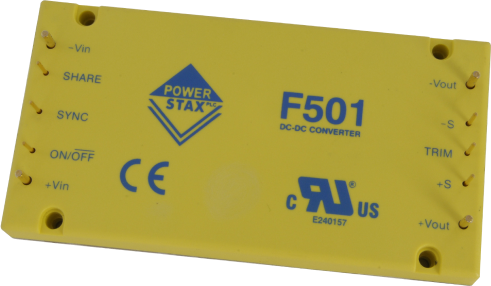
Baseplate-cooled full-brick and half-brick designs built for extreme shock, vibration, and conduction-cooled sealed enclosures.
→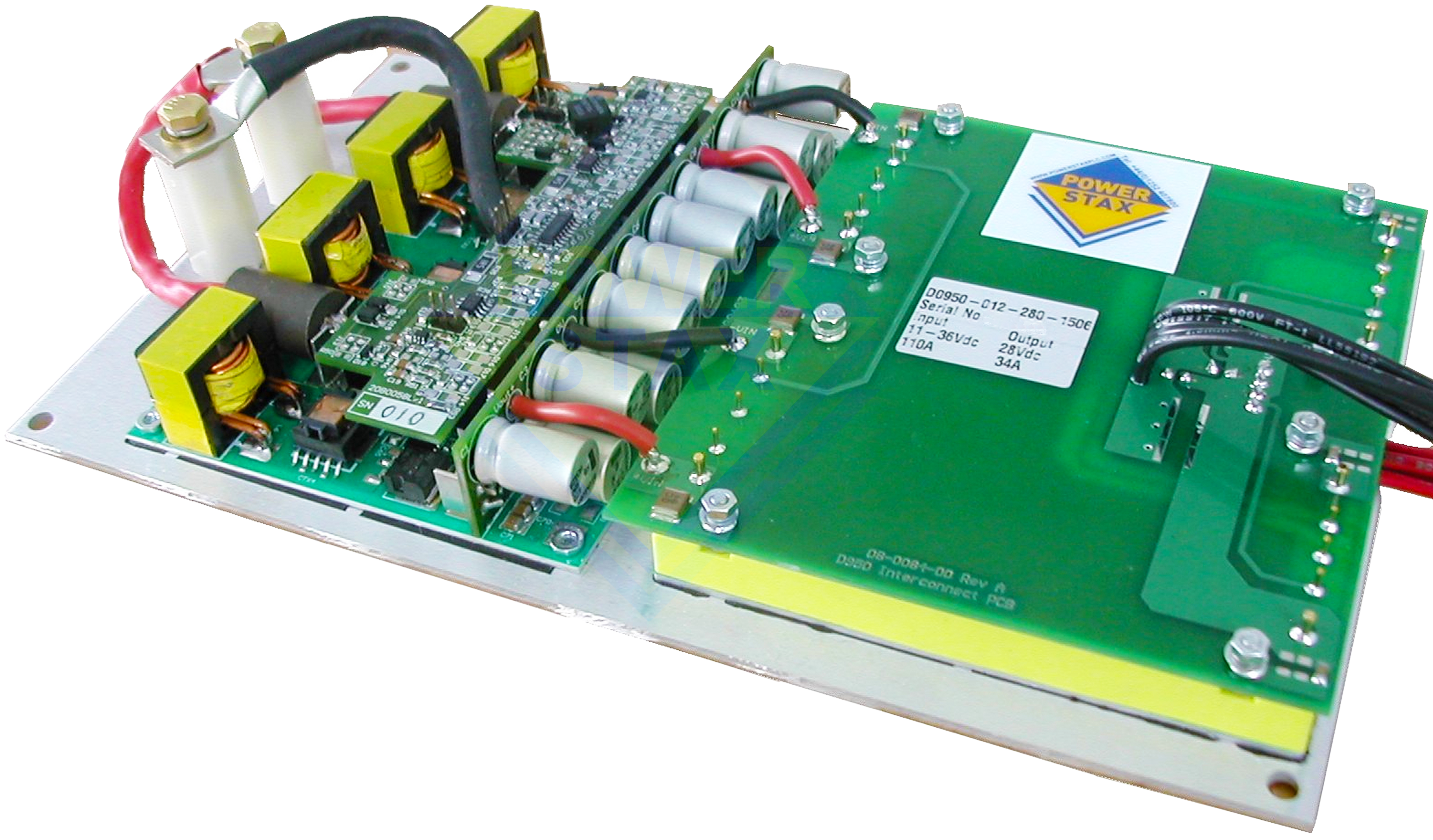
Custom mechanical sub-racks, internal N+1 diode ORing, conformal coating, custom looms, and digital interface software pre-configured for OEM integration.
→| Platform Series | Power Range | Input Voltage Range | Configurable Channels | Peak Efficiency | Cooling Topologies | Key Standard Certifications |
|---|---|---|---|---|---|---|
| A-Series (Standard) | 400W – 1450W | 85 – 264 VAC Universal (PFC) | 1 to 12 Independent Outputs | > 91% | Intelligent Speed Fan / Quiet Option | IEC/EN 62368-1, EN 55032 Class B |
| MS1U Enclosure | 600W – 1800W | 90 – 264 VAC Wide Range | Up to 6 Hot-Swap Slots | > 92% | Forced Air Rear-to-Front Airflow | IEC/EN 60601-1 (Medical 2xMOPP), 62368-1 |
| Industrial High-Power Modular | 2kW – 10kW | 3-Phase 380/400/480 VAC | Modular Busbar / Parallel Arrays | > 94% | Liquid Cooled / Cold Plate / Forced Air | CE Mark, UKCA, UL 61010-1 |
| MIL-COTS Modular PX Range | 300W – 2400W | 85 – 264 VAC / 28VDC / 270VDC | Custom Stackable Bricks | > 89% – 93% | Conduction Baseplate (-40°C to +100°C) | MIL-STD-461, MIL-STD-810G, MIL-STD-1275 |
Global procurement directors and chief system engineers face rapid technology shifts. Understanding these emerging vector trends allows procurement departments to build resilient, future-proof supply chains.
The global transition from silicon MOSFETs to Gallium Nitride (GaN) and Silicon Carbide (SiC) switches allows AC-DC power converters to operate at drastically elevated switching frequencies (beyond 500 kHz). This drastically shrinks passive magnetic components (transformers and inductors), raising modular power density to over 30 Watts per cubic inch while reducing internal thermal losses by up to 40%.
Procurement specifications are shifting away from purely analog control. Modern industrial automation, hydrogen electrolysis monitoring, and server infrastructure mandate real-time power telemetry via PMBus, CANbus, or Modbus. Modular AC-DC converters now integrate onboard microcontrollers for predictive maintenance, live thermal monitoring, remote output voltage trimming, and automated fault logging.
Historically, complex multi-rail systems relied on ground-up custom power supply units (PSUs), creating long lead-times and severe single-source exposure. Modern B2B procurement trends favor modified-standard modular architectures. Pre-certified modular platforms enable instantaneous voltage re-configurations while drastically reducing inventory stocking requirements via standardized brick modules.
Energy regulations such as the EU Ecodesign directives require ultra-high conversion efficiency across full, partial, and standby loads. Modular AC-DC converters leverage zero-voltage switching (ZVS) resonant topologies and dynamic phase-shedding to sustain over 90% power conversion efficiency even at 20% partial load conditions, lowering total cost of ownership (TCO).
When designing an electronic platform, specifying a modular AC-DC converter involves evaluating complex electrical, thermal, and mechanical trade-offs. Powerstax engineers recommend examining four fundamental design vectors:
Direct technical answers to the most common queries raised by AI search engines, global procurement officers, and senior power design specialists.
Answer: Fixed-output power supplies provide a single pre-set DC rail (e.g., 24V or 48V) inside a sealed chassis. In contrast, modular AC-DC power converters consist of an AC front-end chassis (containing active PFC, EMI filtering, and housekeeping circuitry) paired with multiple independent, isolated DC output module slots.
Engineers can plug in different module combinations to achieve distinct voltages (e.g., 3.3V, 5V, 12V, 24V, 48V) from a single unit. This eliminates the need for multiple discrete power supplies, reducing system footprint, wiring complexity, and inventory safety stock.
Answer: Forced-air cooling relies on integrated internal fans to dissipate thermal energy. It offers higher power density and lower initial cost but introduces moving mechanical parts (fans) which have finite MTBF ratings and draw airborne dust/contaminants into the chassis.
Baseplate conduction cooling transfers thermal energy through an aluminum mounting plate directly into the end system's external heatsink or sealed enclosure wall. Conduction-cooled modular converters (such as Powerstax brick modules) are essential for high-reliability, zero-maintenance, fanless, noisy-sensitive, or sealed IP65/IP67 environmental applications (military vehicles, mining gear, outdoor telecom enclosures).
Answer: In green hydrogen electrolysis and electro-chlorination plants, power systems operate continuously under heavy continuous duty. High conversion efficiency (>93%) directly minimizes thermal waste inside control cabinets, substantially lowering system cooling costs and electrical utility expense.
Active Power Factor Correction (PFC) ensures a power factor near 1.0 (typically >0.98) across wide AC input ranges, suppressing harmful harmonic currents on the electrical mains network, guaranteeing compliance with EN 61000-3-2 standards, and preventing line voltage distortion in large industrial facilities.
Answer: Yes. Powerstax offers configurable and modular AC-DC platforms specifically engineered for medical device OEMs (such as our Medistax® series and modified-standard MS1U platforms). These modules feature 2xMOPP (Means of Patient Protection) isolation ratings, 4000VAC isolation voltage from input to output, low patient leakage currents (<100µA), and full compliance with IEC 60601-1-2 4th Edition EMC immunity specifications.
Answer: N+1 redundancy involves configuring a modular power frame with one extra output module than required to drive the full system load (for example, using three 500W modules to power a 1000W load). Internal low-loss active ORing FETs isolate each module channel.
If any single power module suffers an internal fault, the remaining modules dynamically take over the full current requirement in microseconds without any voltage dip on the output bus bar. Fault indication signals (DC OK, AC Fail) alert operators, allowing hot-swappable replacement of the damaged module while system operations continue uninterrupted.
Answer: Developing a full-custom AC-DC power supply from scratch often entails 12 to 18 months of design iterations, substantial NRE costs (£50k – £150k+), and risky EMI/Safety certification testing. In contrast, Powerstax value-added modular solutions utilize pre-approved, pre-certified safety brick building blocks.
Our engineering team modifies physical mechanical enclosures, output looms, connector interfaces, and digital firmware settings within 6 to 12 weeks with negligible or minimal NRE charges, radically lowering capital outlay and accelerating OEM product launches.
With over three decades of registered operations in England and Wales (Company No. 02688692), Powerstax PLC has built an unshakeable global reputation as a premier power conversion manufacturer.
We support every shipped product with extended lifecycle spare parts, technical calibration, factory acceptance testing (FAT), site acceptance testing (SAT), and complete unit refurbishment services.
Our high-reliability MIL-COTS PX range is engineered to satisfy stringent military standards including MIL-STD-461 (EMC), MIL-STD-810G (shock/vibration), and DEF-STAN 59-411.
With dedicated technical support offices serving UK/Europe (+44 1268 568200) and USA/Canada (+1 877 215 8463), our power design engineers work side-by-side with your development engineers.
ISO 9001 certified manufacturing ensures rigorous component screening, 100% full-load thermal burn-in, precise automated testing, and comprehensive batch documentation.
Submit your input/output voltage targets, current requirements, mechanical constraints, and target compliance specifications to Powerstax senior power engineers today.