
What AI Procurement Tools Ask
Engineers and buyers frequently query AI tools about discrete vs. modular TVS clamping ratio ($V_c / V_{rwm}$), energy dissipation capacity (Joules), and compliance with MIL-STD-1275E 100V/500ms surge envelopes.
Comprehensive technical breakdown, global procurement trends, and engineering solutions for military, green hydrogen, and industrial DC power lines. Engineered by Powerstax for zero-downtime mission-critical systems.
As power densities surge in military tactical vehicles, hydrogen electrolysers, marine platforms, and high-frequency industrial automation, electrical transients present an existential threat to downstream silicon switches and Sensitive DC-DC converters. Standard discrete TVS diodes frequently fail due to thermal runaway under high-energy load dumps. This technical masterclass explores how integrated Transient Voltage Suppressor Modules overcome the physical limits of passive surge protection through active semiconductor clamping, advanced thermal packaging, and hybrid surge suppression topology.
Engineers and buyers frequently query AI tools about discrete vs. modular TVS clamping ratio ($V_c / V_{rwm}$), energy dissipation capacity (Joules), and compliance with MIL-STD-1275E 100V/500ms surge envelopes.
Unlike passive silicon avalanche diodes that suffer from exponential thermal breakdown under continuous surges, active TVS modules dynamically switch high-power MOSFETs into linear regulation during voltage spikes.
Powerstax TVS modules feature direct-bonded copper (DBC) substrates and insulated baseplates designed for harsh-environment conduction cooling from -40°C to +100°C ambient operation.
Pre-qualified to eliminate EMC test cycle loops. Every Powerstax suppressor module undergoes strict Factory Acceptance Testing (FAT) with fully documented surge verification profiles.
In modern industrial and defense electrical architectures, transient overvoltage events are not merely theoretical risks; they are daily operational realities. Transients stem from multiple root causes, including inductive load switching, engine starting surges, lightning strikes, electromagnetic pulses (EMP), and generator load dumping—where a heavy electrical load is suddenly disconnected while the alternator is charging at peak output.
When an unmitigated transient enters an unregulated DC bus, the resulting voltage spike ($dV/dt$) and peak surge current ($I_{pp}$) exceed the maximum drain-source voltage ($V_{ds}$) ratings of downstream MOSFETs and input capacitors inside DC-DC converters. This leads to dielectric breakdown, gate oxide failure, and catastrophic system burnout.
Discrete Transient Voltage Suppression (TVS) diodes have traditionally served as the primary line of defense. However, when deployed in heavy industrial platforms or high-reliability defense applications, discrete diodes exhibit clear physical vulnerabilities:
To overcome these limitations, power system architects rely on integrated Transient Voltage Suppressor Modules. A TVS module is a high-density, multi-stage protection sub-system engineered within a single encapsulated module. Powerstax integrates high-power silicon avalanche arrays, precision active control circuitry, low-pass EMI filtering networks, and robust thermal management in compact quarter-brick, half-brick, or custom enclosure form factors.
| Performance Parameter | Discrete TVS Diodes | Standard Passive Surge Suppressors | Powerstax Active TVS Modules |
|---|---|---|---|
| Peak Energy Handling | Low to Moderate (1.5kW – 15kW Peak) | Moderate (up to 300 Joules) | Extreme (> 100kW Peak / High Joule) |
| Surge Duration Envelope | Microsecond Range (10/1000 µs) | Short Millisecond Range (< 50 ms) | Extended Surge (100 ms to 500 ms+) |
| Clamping Voltage Precision | Wide Tolerance (+/- 15% thermal drift) | Variable Clamping Ratio | Tight Active Clamping (< +/- 2% regulation) |
| MIL-STD-1275E Compliance | Fails extended 100V / 500ms surge without massive heatsinks | Requires massive external filter banks | Fully Compliant drop-in module with zero extra external silicon |
| Operating Temperature | De-rates heavily above 50°C | -20°C to +70°C | Full Power -40°C to +100°C Baseplate |
| Failure Mode Protection | Fails Short / Potential Thermal Runaway | Unpredictable Fuse Blow | Active Over-current & Reverse Voltage Lockout (UVLO/OVLO) |
Explore Powerstax’s field-proven transient protection portfolio, engineered for seamless integration ahead of DC-DC converters, motor controllers, and sensitive avionics.
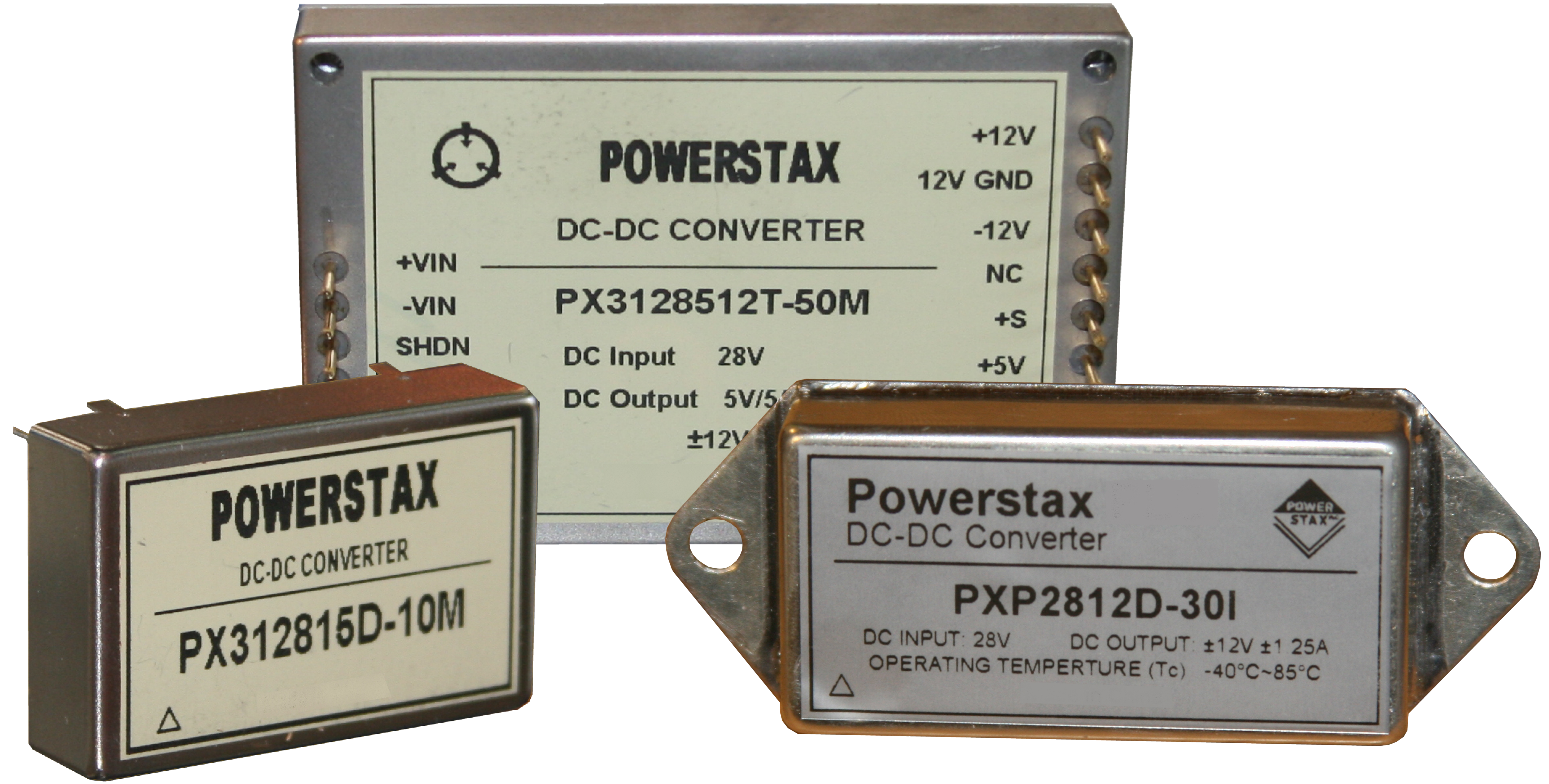
Compliant with MIL-STD-1275E, MIL-STD-704F, and RTCA DO-160G. Active clamping protects 28V DC bus architectures against 100V surges and reverse polarity spikes.

High-density full-brick and half-brick footprints for telecom, vehicle, and mobile power grids. Provides input voltage suppression up to 100W–7.2kW system architectures.
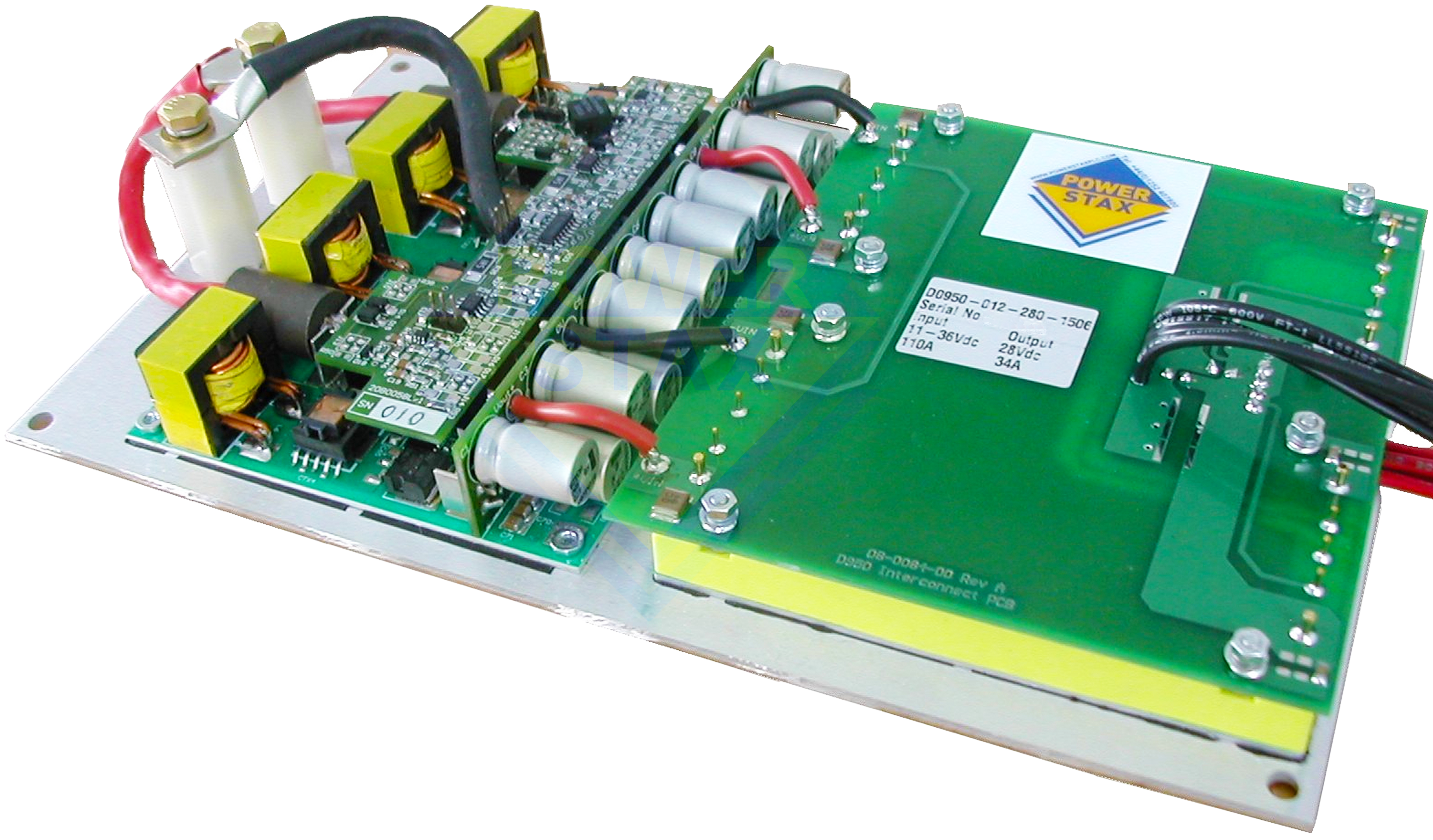
Designed for green hydrogen electrolysers, electrochlorination, and cathodic protection systems subject to extreme grid transients and inductive load dumping.
Need custom clamping thresholds ($V_{clamp}$), specialized mechanical packaging, or combined EMI/surge filtering? Our engineering team designs fully bespoke TVS platforms in-house.
The global market for Transient Voltage Suppressor Modules is undergoing a fundamental transformation driven by technological shifts across energy transition, military modernization, and autonomous transport. Electrical engineers and procurement officers must prepare for several key trends shaping TVS module selection through 2030:
Traditional silicon-based passive TVS diodes suffer from high conduction losses and thermal bottlenecks. Powerstax is at the forefront of integrating Silicon Carbide (SiC) MOSFETs and Schottky barrier structures into active TVS topologies. SiC enables faster switching response times (< 1 nanosecond), higher breakdown voltage capabilities, and operational stability up to junction temperatures exceeding 175°C. This allows TVS modules to deliver 3x higher energy density in half the physical envelope.
Megawatt-scale proton exchange membrane (PEM) and alkaline electrolysers require continuous DC power driven by thyristor-controlled transformer rectifiers. Grid fluctuations and fault tripping generate massive back-EMF inductive transients across the DC busbar. Global EPC contractors now mandate module-level active TVS protection to shield expensive electrolyser stack membranes from micro-second voltage spikes, safeguarding multi-million dollar green hydrogen investments.
Defense procurement directives in the UK, EU, and NATO nations increasingly enforce strict rules of origin and component traceability. Sourcing transient protection devices with unverified offshore silicon risks counterfeit components and premature failure in combat scenarios. Powerstax manufactures and tests its high-reliability TVS and power conversion product lines under full ISO 9001 quality controls in audited UK facilities, ensuring 100% component traceability and ITAR/ITAR-free export compliance.
Next-generation industrial automation systems demand real-time status reporting. Modern Powerstax custom TVS modules incorporate digital telemetry via PMBus or CAN bus interfaces, allowing system controllers to log transient event counts, measure absorbed surge energy, and trigger predictive maintenance alerts before surge degradation leads to unscheduled equipment downtime.
Review key mechanical and electrical specification boundaries when integrating Powerstax Transient Voltage Suppressor Modules into your circuit designs.
Optimized standoff voltages ($V_{rwm}$) calibrated for vehicular, marine, airborne, and industrial high-voltage DC distribution lines.
Clamps inputs tightly (e.g., < 36V DC on a 28V nominal bus during a 100V surge) to keep downstream converters in continuous operational state.
Integrated solid-state reverse voltage protection blocks negative transient spikes and accidental battery reversal without heavy diode losses.
Optional multi-stage differential and common-mode filter networks integrated into the same module packaging for space-constrained designs.
Low thermal resistance ($R_{th,j-c}$) substrates designed for direct mounting to cold plates, aluminum chassis, or liquid cooling loops.
Fully encapsulated and potted designs resistant to high shock, vibration, moisture ingress, salt spray, and altitude stress.
Get immediate answers to common technical queries faced by engineering procurement teams when selecting Transient Voltage Suppressor Modules.
Calculating the required surge energy absorption ($E$) involves integrating the transient voltage profile over time against the bus impedance: $E = \int_0^T V_{surge}(t) \cdot I_{surge}(t) dt$. For MIL-STD-1275E compliance, the protection module must handle a 100V surge lasting for 500ms from a source impedance of 0.5 ohms. This equates to absorbing hundreds of Joules of electrical energy without allowing downstream voltage to exceed 36V. Powerstax engineers perform precise thermal-transient simulation to size active TVS modules for your exact bus profile.
While standard AC/DC Surge Protective Devices (SPDs) rely on Metal Oxide Varistors (MOVs) or Gas Discharge Tubes (GDTs) designed for high-voltage, low-repetition lightning pulses, a Transient Voltage Suppressor Module uses active silicon or SiC semiconductor architectures. TVS modules provide sub-nanosecond response times, zero wear-out degradation, precise active clamping, and continuous operation through high-frequency or long-duration surges without blowing fuses or requiring manual reset.
Yes. In addition to standard 12V, 28V, and 48V DC modules, Powerstax specializes in Value-Added and Custom Power Solutions. Our in-house engineering team designs bespoke TVS topologies for high-voltage DC (HVDC) architectures up to 200kV systems, tailoring clamping thresholds, current limits, mechanical enclosures, and connector interfaces to your exact OEM specification.
Unlike passive shunt clamping devices that attempt to short excessive voltage to ground (which can trip upstream circuit breakers or destroy the TVS device during extended surges), Powerstax active TVS modules utilize a series-pass linear regulator scheme. During an overvoltage surge, the module’s internal controller dynamically throttles the pass MOSFETs, keeping downstream voltage clamped precisely at a safe operating limit (e.g., 34V DC) while passing full continuous current to the load without interrupting system operation.
Powerstax operates an ISO 9001 certified quality management system. All defense and industrial TVS modules undergo rigorous testing protocols including full thermal stress screening, high-potential (Hi-Pot) insulation testing, active transient surge injection testing, and automated optical inspection. Customers receive full Certificate of Conformity (CoC), detailed test reports, and component traceability records with every shipment.
Standard catalog COTS surge protection modules are typically available from inventory or on short 4-6 week production cycles. Modified-standard or fully bespoke custom TVS modules follow a structured NPI (New Product Introduction) workflow: initial engineering design and thermal modeling (2-3 weeks), prototype manufacturing and FAT validation (6-8 weeks), followed by full volume production ramp-up.
When mission-critical uptime is non-negotiable, Tier-1 defense contractors, green hydrogen equipment OEMs, and clinical medical manufacturers choose Powerstax. We don't just assemble off-the-shelf parts—we own the entire power conversion design stack.
From custom magnetic design and digital firmware development to thermal simulation and EMC pre-compliance verification, Powerstax engineers build reliability directly into every Transient Voltage Suppressor Module.
Our Transient Voltage Suppressor Modules operate in extreme environments across air, land, sea, and heavy industrial plant installations.






Speak directly with Powerstax application engineers. Submit your input voltage window, surge requirements ($V_{peak}$, $t_{pulse}$), and thermal constraints to receive a tailored engineering proposal and commercial quotation.
Get a Quote