UK / Europe: +44 1268 568200 USA / Canada: +1 877 215 8463
in

Blog

How to Choose Industrial Frequency Converters?

How to Choose Industrial Frequency Converters?

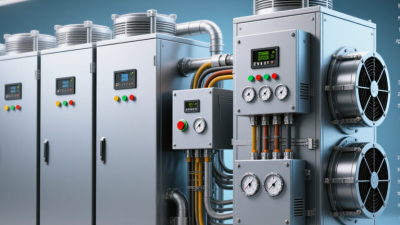
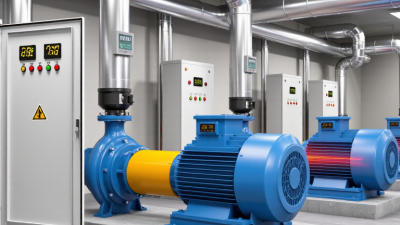
Industrial Frequency Converters help match motor speed to the work a machine actually needs. In a pump room, that can mean slowing a motor when demand falls instead of regulating flow with a partly closed valve. The practical choice, however, depends on more than rated power. Load profile, supply voltage, operating environment, control method, and maintenance capacity all matter. Small mismatches can become persistent costs. The scale is significant. The International Energy Agency has reported that electric motor systems account for around 46% of global electricity consumption, highlighting why motor efficiency deserves careful attention. This figure covers motor systems broadly; it is not a forecast of savings from converters alone. The U.S. Department of Energy’s motor-system guidance likewise emphasizes assessing the whole application, including the driven equipment and operating conditions. A converter cannot correct an oversized pump or poor control logic by itself. Worth remembering. A sound selection starts with the motor nameplate and real operating data: voltage, current, frequency, speed range, and hours under load. Check whether the application needs constant torque, variable torque, braking, or precise speed control. Then compare enclosure ratings, cooling, harmonic considerations, communications, and service support. These details are easy to overlook. Manufacturer specifications and a qualified application review provide firmer evidence than headline efficiency claims. The best Industrial Frequency Converters are not simply the largest or most advanced units; they are correctly matched to the duty, installation, and people who will maintain them. One caveat remains: actual energy savings vary with the system and its use.
Read more »
Oliver By:Oliver - November 1, 2026
10 Best High Voltage Isolation Components for Global Buyers

10 Best High Voltage Isolation Components for Global Buyers

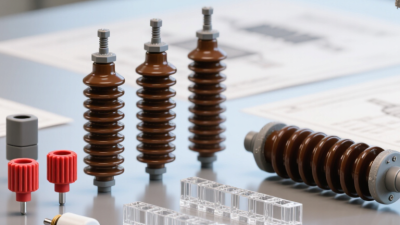
Selecting reliable High Voltage Isolation Components is a practical engineering decision, not a simple catalog exercise. Global buyers must compare insulation performance, operating voltage, environmental limits, and supplier credibility. A compact ceramic feedthrough may suit a laboratory enclosure, while a molded polymer insulator may better serve outdoor equipment exposed to moisture and dust. This guide examines ten components commonly considered for high-voltage systems. It focuses on dielectric strength, creepage distance, clearance, partial-discharge behavior, temperature resistance, and mechanical stability. These details matter. A component rated for 10 kV in dry conditions may perform differently after humidity, vibration, or repeated thermal cycling. Buyers should also review test reports, material declarations, quality certifications, traceability records, and production consistency before placing international orders. Performance is only part of the decision. Availability, packaging, replacement support, delivery terms, and communication can affect a project just as much. Verify the relevant regional requirements. Do not assume one certification covers every market. No ranking is universal. A premium isolator can still be unsuitable if its dimensions conflict with the enclosure or its surface creepage is inadequate. That mistake is easy to make. The following selection offers a balanced starting point for engineers, distributors, and procurement teams. It combines technical evidence with practical sourcing experience, while recognizing that supplier data may require independent verification. Check the drawings carefully. Ask difficult questions. High-voltage safety deserves patience, documented testing, and a willingness to reconsider an attractive but incomplete specification.
Read more »
Oliver By:Oliver - October 27, 2026
2026 Top Transient Voltage Suppressor Modules Types?

2026 Top Transient Voltage Suppressor Modules Types?

Choosing the right Transient Voltage Suppressor Modules in 2026 requires more than comparing peak voltage ratings. Modern equipment faces switching surges, electrostatic discharge, lightning-induced transients, and repeated electrical stress. A suitable module must protect the circuit without interrupting normal operation. Dr. Peter Hasse, a widely recognized surge-protection specialist and author of Overvoltage Protection of Low-Voltage Systems, emphasized a practical rule: “Protection is only as strong as its weakest link.” That principle remains important. A powerful TVS device cannot compensate for poor grounding, undersized traces, or an unsuitable enclosure. This guide examines the leading Transient Voltage Suppressor Modules types expected to attract attention in 2026. It covers unidirectional and bidirectional TVS modules, automotive-grade protectors, high-power surge modules, ESD arrays, and application-specific hybrid designs. Each type behaves differently under a 24-volt control line, a USB data path, or a high-current industrial supply. Details matter. Engineers should compare standoff voltage, clamping voltage, peak pulse power, response time, leakage current, capacitance, and thermal performance. Package size also affects heat removal and installation reliability. A module that looks efficient in a laboratory may perform poorly inside a sealed cabinet at 85°C. The selection process is not perfectly predictable. Datasheets may use different test conditions, and real installations rarely match ideal waveforms. That is where practical testing becomes essential. Careful layout review, waveform measurement, and repeated surge testing can reveal weaknesses before field deployment. The sections ahead provide a clearer comparison. They also question common assumptions, because “higher power” does not always mean better protection.
Read more »
Oliver By:Oliver - October 22, 2026
What Are EMI Filter Modules and How Do They Work?

What Are EMI Filter Modules and How Do They Work?

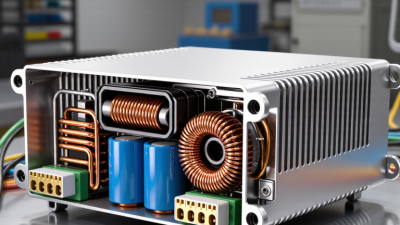
EMI Filter Modules are quiet guardians inside modern electronic equipment. They reduce unwanted electromagnetic noise before it travels through power lines, signal cables, or a metal enclosure. A switching power supply may create sharp current pulses every few microseconds. Without control, those pulses can disturb a nearby sensor, radio receiver, or medical instrument. The filter acts like a selective gate. It allows useful power to pass while weakening disruptive frequencies. Henry W. Ott, a respected EMC engineer and author, described the broader objective clearly: “The goal of EMC is to ensure that different pieces of electronic equipment can operate in close proximity to each other without interfering with each other.” His statement explains why EMI Filter Modules matter beyond simple noise reduction. They support reliable operation across industrial controls, automotive systems, consumer devices, and communications equipment. Their internal capacitors, inductors, common-mode chokes, and shielding elements work together. Placement matters. Grounding matters even more. Real installations are rarely perfect. A filter that performs well in a laboratory may behave differently beside a long cable or a poorly bonded enclosure. That uncomfortable detail deserves attention. Design teams must examine impedance, frequency range, load current, heat, and safety requirements. They should also test the complete system, not only the module. This article explores what EMI Filter Modules contain, how they suppress interference, and why practical installation decisions can determine their final performance.
Read more »
Oliver By:Oliver - October 17, 2026
Why Choose Modular AC-DC Power Converters?

Why Choose Modular AC-DC Power Converters?

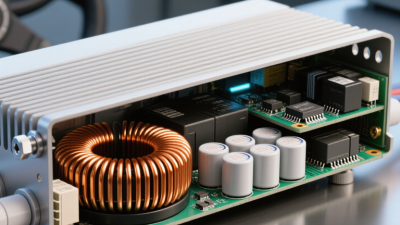
Modern electronic systems demand power supplies that are efficient, serviceable, and ready for changing loads. Modular AC-DC Power Converters address these needs through replaceable, configurable power modules. Instead of relying on one large unit, engineers can distribute power across several compact sections. This approach can simplify installation inside telecom racks, industrial controls, medical equipment, and laboratory instruments. It also creates room for future expansion. The practical advantages become clear during maintenance. A technician can isolate one module, inspect its terminals, and replace it without removing the entire power system. This may reduce downtime and improve troubleshooting accuracy. Modular designs can also support redundancy, allowing another module to carry the load when one section fails. Careful sizing remains essential. Poorly matched modules may increase heat, noise, or conversion losses. Efficiency matters. Experienced designers examine more than the product label. They review thermal performance, input tolerance, output regulation, protection features, electromagnetic compatibility, and long-term reliability. A converter that performs well in a quiet laboratory may behave differently inside a crowded cabinet at 45°C. Real installation conditions matter. Airflow can be restricted. Wiring can become complicated. Modularity is not automatically the best choice. A single integrated converter may cost less and require fewer connections. Engineers should compare lifecycle cost, service access, safety requirements, and expected load changes. Standards and manufacturer documentation deserve close attention. Testing under realistic conditions is still necessary, even when specifications appear impressive. The right decision depends on the application, not fashion. This article examines why Modular AC-DC Power Converters continue attracting attention, while also considering their limitations and the design compromises that are easy to overlook.
Read more »
Oliver By:Oliver - October 12, 2026
How to Choose Programmable AC Power Supplies?

How to Choose Programmable AC Power Supplies?

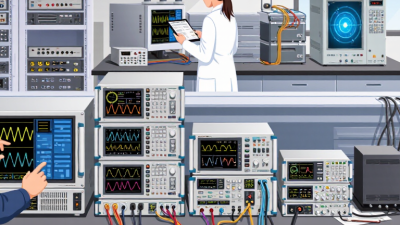
Choosing Programmable AC Power Supplies is not simply a matter of selecting the highest voltage or largest wattage. The right unit must reproduce real operating conditions accurately, safely, and repeatedly. In a laboratory, a supply may need to simulate voltage fluctuations, frequency changes, brownouts, or brief interruptions. A model that performs well on a datasheet can still disappoint during demanding tests. Practical experience makes the difference. Engineers should examine voltage range, output power, frequency accuracy, waveform quality, crest-factor capability, and load response. They should also check measurement resolution, protection functions, calibration records, and available interfaces. USB, LAN, or analog control can simplify automated testing, but only when the software integrates reliably. Small details matter. A noisy cooling fan may disturb sensitive measurements. A confusing display can slow troubleshooting. The application should guide the decision. A power supply for consumer electronics testing may require flexible waveform programming and fast transient response. An aerospace or industrial laboratory may prioritize stability, synchronization, and long-term service support. Budget remains important, yet the cheapest option can create hidden costs through failed tests or limited expansion. No selection guide is flawless. Requirements change, and real loads can behave unexpectedly. Therefore, compare verified specifications with hands-on trials whenever possible. Review test reports, ask manufacturers specific technical questions, and confirm performance under your actual load conditions. Careful selection builds confidence before the equipment reaches production.
Read more »
Liam By:Liam - October 7, 2026
What Are MIL-COTS DC-DC Converters and How Do They Work?

What Are MIL-COTS DC-DC Converters and How Do They Work?

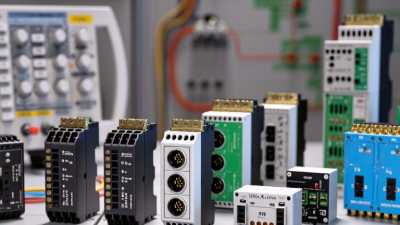
MIL-COTS DC-DC Converters combine commercial availability with performance requirements common in military and aerospace electronics. They convert one direct-current voltage into another, helping equipment operate reliably from batteries, vehicle power systems, or unstable supply rails. A typical unit may accept a 28-volt input and provide regulated 5-volt, 12-volt, or multiple outputs. Inside, switching transistors rapidly control energy through magnetic components, while feedback circuits maintain the required output voltage. Built for demanding environments, these converters often include electrical isolation, overvoltage protection, short-circuit protection, and filtering against electromagnetic interference. Their metal cases can improve shielding and heat transfer. Engineers may also examine vibration tolerance, temperature range, humidity resistance, and connector reliability before selecting a model. Details matter. A converter can function perfectly on a laboratory bench yet fail when exposed to engine noise, rapid temperature changes, or restricted airflow. The term “MIL-COTS” does not automatically guarantee compliance with every military standard. Certification, testing records, and the manufacturer’s quality controls must be checked carefully. That distinction is sometimes overlooked. Reliable evaluation includes reviewing efficiency curves, transient response, derating guidance, and thermal measurements under realistic loads. Experienced designers also allow margin rather than operating continuously at the published limit. This article explains how MIL-COTS DC-DC Converters work, where they fit in rugged power architectures, and which practical specifications deserve closer attention. Some applications need customized qualification, and a catalog part may not be sufficient. That uncertainty is worth acknowledging before deployment.
Read more »
Ethan By:Ethan - October 2, 2026
Why Choose High Voltage DC Power Supplies?

Why Choose High Voltage DC Power Supplies?

High Voltage DC Power Supplies convert AC input into controlled direct current at elevated voltages. They serve semiconductor fabrication, electron microscopy, medical imaging, insulation testing, and research laboratories. In these settings, a stable output matters: a small ripple can distort measurements or affect sensitive equipment. So can a sudden voltage change. Demand for dependable electricity is growing. The IEA’s Electricity 2024 report projected global electricity demand would increase by an average of 3.4% annually from 2024 through 2026. That forecast concerns electricity broadly, not high-voltage supply units specifically. Still, it highlights why efficient, reliable power conversion deserves attention. IEA Executive Director Dr. Fatih Birol has called energy efficiency “the first fuel.” Applied here, that idea means checking conversion losses, cooling needs, and operating stability—not just the maximum voltage on a specification sheet. The uncomfortable truth: higher voltage alone proves nothing. Buyers should compare regulation, ripple, protection features, service support, and performance under their actual load. Picture a test bench running for hours; heat inside the supply can matter as much as its headline rating. A well-matched unit can improve control and repeatability. A poorly matched one may add cost, noise, and maintenance. These trade-offs are easy to overlook. They deserve closer attention.
Read more »
Ethan By:Ethan - September 27, 2026
China Best Switched Mode Power Supplies Manufacturers

China Best Switched Mode Power Supplies Manufacturers

China has become a major manufacturing base for Switched Mode Power Supplies, serving automation, telecommunications, medical equipment, LED lighting, and data-center applications. Yet finding the right supplier requires more than comparing catalog prices. A reliable manufacturer should demonstrate verified electrical performance, stable production, transparent certifications, and responsive engineering support. Abraham I. Pressman, a respected authority in power supply design, wrote, “The power supply is the heart of any electronic system.” That principle remains practical today. A poorly designed unit may create audible coil noise, excessive ripple, overheating, or unexpected shutdowns. A dependable supplier addresses these risks through careful topology selection, thermal testing, electromagnetic compatibility evaluation, and documented quality control. This guide examines leading Chinese manufacturers of Switched Mode Power Supplies through an engineering-focused lens. It considers product range, input and output specifications, efficiency, protection functions, customization capability, factory experience, and after-sales service. Details matter. A power supply installed inside a dusty control cabinet faces different demands from one mounted in a clean server room. No ranking is perfect. Supplier claims still require verification. Buyers should request test reports, sample units, production references, and applicable safety documentation. Site audits can reveal practical weaknesses that brochures hide. Some manufacturers offer impressive specifications but limited support after shipment. Others may appear less polished while providing stronger technical cooperation. The best choice depends on the application, operating environment, certification needs, and long-term reliability goals. This overview aims to make that decision clearer, while recognizing that performance must be confirmed in real working conditions.
Read more »
Ethan By:Ethan - September 20, 2026
Top 10 Capacitor Charging Power Supplies Suppliers?

Top 10 Capacitor Charging Power Supplies Suppliers?

Selecting a reliable supplier for high-voltage energy storage requires more than comparing catalog prices. Capacitor Charging Power Supplies must deliver stable voltage, controlled current, repeatable charging cycles, and dependable protection. In laboratory, medical, industrial, and pulsed-power environments, a small specification gap can create significant performance problems. This guide introduces ten notable suppliers serving the capacitor charging market. The comparison considers output voltage, charging speed, power range, regulation accuracy, safety features, customization, service capability, and documented application experience. It also looks at practical details, such as enclosure quality, cooling design, communication interfaces, and support during system integration. Specifications matter. Real-world support matters more. The list is not an absolute ranking. Supplier suitability depends on pulse duration, capacitor size, operating environment, production volume, and required certification. Some manufacturers publish detailed technical data, while others provide limited information until engineers discuss the project. That difference deserves attention. No ranking is perfect. Product lines change, and regional availability can affect the final decision. Readers should verify datasheets, test conditions, warranty terms, lead times, and compliance documentation before purchasing. Speaking with an applications engineer can reveal limitations that marketing pages rarely explain. A supplier may perform well in a controlled laboratory but struggle with continuous industrial duty. Another may offer slower delivery yet provide stronger customization and field support. Careful evaluation helps buyers choose a power supply that remains stable, serviceable, and appropriate for the intended capacitor charging application.
Read more »
Oliver By:Oliver - September 20, 2026
2026 Top Thyristor Controlled Transformer Rectifiers?

2026 Top Thyristor Controlled Transformer Rectifiers?

The 2026 search for Top Thyristor Controlled Transformer Rectifiers is not merely a product comparison. It is a practical examination of control accuracy, transformer design, thermal stability, and service life. These systems still support demanding industrial processes, including electrochemical plants, furnace supplies, battery charging, and large DC drives. Real heat matters. Engineers often evaluate rectifiers beside the datasheet, using thermal imaging, waveform measurements, and load records. A unit may appear efficient at nominal capacity, yet perform differently during voltage fluctuations or repeated overloads. Transformer impedance, thyristor firing control, ripple voltage, cooling airflow, and maintenance access deserve equal attention. Small design weaknesses become expensive when production cannot stop. Power electronics authority Muhammad H. Rashid defines the field clearly: “Power electronics is the application of solid-state electronics for the control and conversion of electrical energy.” That principle remains central to Thyristor Controlled Transformer Rectifiers, where controlled switching converts transformer output into adjustable DC power. However, no ranking is perfect. A high current rating does not guarantee the best installation result. Harmonic behavior, protection coordination, spare-parts availability, and local technical support can change the decision. This introduction examines leading 2026 solutions through an engineering-focused lens. It considers measurable performance, operating experience, manufacturer credibility, and documented reliability. Some comparisons remain difficult because suppliers publish different test conditions. That limitation should be acknowledged, not hidden. The strongest choice is usually the rectifier that fits the real load, the environment, and the maintenance team’s capabilities.
Read more »
Oliver By:Oliver - September 20, 2026