UK / Europe: +44 1268 568200 USA / Canada: +1 877 215 8463
in
0%

Selecting reliable High Voltage Isolation Components is a practical engineering decision, not a simple catalog exercise. Global buyers must compare insulation performance, operating voltage, environmental limits, and supplier credibility. A compact ceramic feedthrough may suit a laboratory enclosure, while a molded polymer insulator may better serve outdoor equipment exposed to moisture and dust.

This guide examines ten components commonly considered for high-voltage systems. It focuses on dielectric strength, creepage distance, clearance, partial-discharge behavior, temperature resistance, and mechanical stability. These details matter. A component rated for 10 kV in dry conditions may perform differently after humidity, vibration, or repeated thermal cycling. Buyers should also review test reports, material declarations, quality certifications, traceability records, and production consistency before placing international orders.

Performance is only part of the decision. Availability, packaging, replacement support, delivery terms, and communication can affect a project just as much. Verify the relevant regional requirements. Do not assume one certification covers every market. No ranking is universal. A premium isolator can still be unsuitable if its dimensions conflict with the enclosure or its surface creepage is inadequate. That mistake is easy to make.

The following selection offers a balanced starting point for engineers, distributors, and procurement teams. It combines technical evidence with practical sourcing experience, while recognizing that supplier data may require independent verification. Check the drawings carefully. Ask difficult questions. High-voltage safety deserves patience, documented testing, and a willingness to reconsider an attractive but incomplete specification.
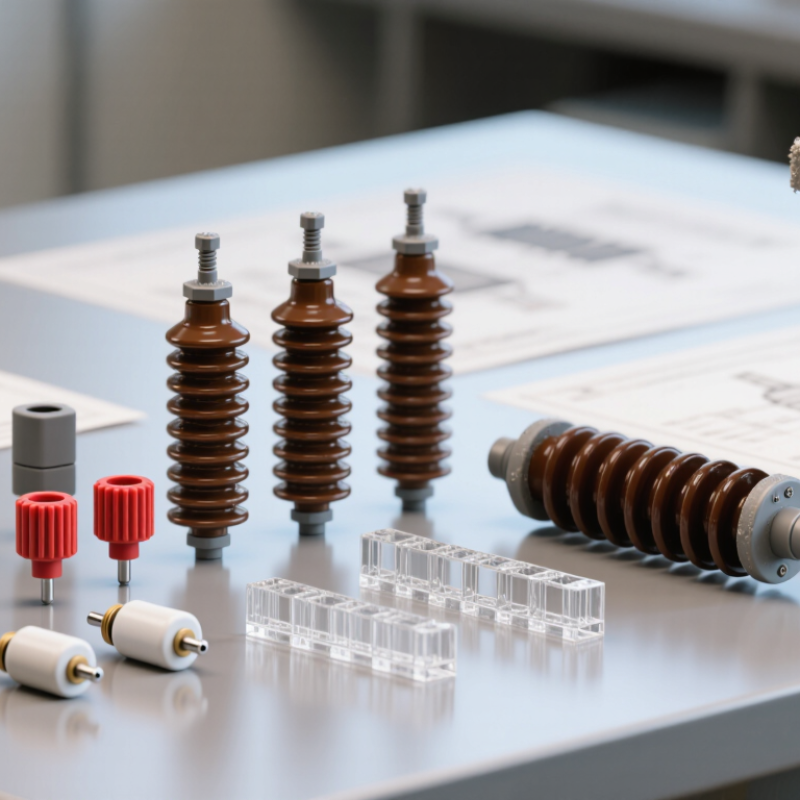
10 Best High Voltage Isolation Components for Global Buyers

What High Voltage Isolation Components Are and Why They Matter

High voltage isolation components create a controlled barrier between energized conductors, people, instruments, and low voltage circuits. They include insulated feedthroughs, bushings, isolation transformers, capacitive couplers, and optical isolators. Their purpose extends beyond blocking voltage. They must withstand operating stress, switching surges, contamination, heat, vibration, and aging. In field design reviews, engineers often find that insulation fails at edges, joints, or poorly supported terminals. Small details matter.

Consider a cabinet receiving 10 kV while a monitoring board operates at 24 V. A suitable feedthrough passes power through the enclosure while preserving creepage and clearance distances. An optical isolator transfers a control signal without a direct conductive path. Dust, moisture, sharp edges, and trapped air can trigger partial discharge. The damage may remain invisible for months. It fails quietly.

Global buyers should examine working voltage, impulse withstand rating, insulation system, temperature range, and certified test methods. They should also request drawings, material data, traceability records, and aging information. Ratings can change with altitude, humidity, and pollution level. Do not compare components by voltage alone. A perfect datasheet is not enough. Installation quality, maintenance access, and realistic fault conditions deserve equal attention. These checks reduce uncertainty across different grids, climates, and certification requirements.

Key Electrical, Safety, and Performance Specifications

For global buyers, the ten best high-voltage isolation components are not selected by voltage rating alone. IRENA’s Renewable Capacity Statistics 2024 recorded 473 GW of renewable capacity added in 2023. More converters now face fast switching, heat, and polluted outdoor air. Check working voltage, impulse withstand voltage, creepage, clearance, and insulation class before comparing prices. A 1,000-volt rating may describe only a short test. Read the continuous rating.

Electrical safety depends on more than a datasheet headline. IEC 60664-1 supports insulation coordination using overvoltage category and pollution degree. For optocouplers, digital isolators, transformers, relays, and isolated gate drivers, request reinforced-insulation evidence, partial-discharge data, common-mode transient immunity, and temperature limits. Measure leakage current at the actual switching frequency. Small gaps matter. Humid enclosures can reduce laboratory margins quickly.

Performance specifications should match the installation. The IEA Electricity 2024 report forecasts global electricity demand to rise 3.4% annually from 2024 to 2026. Compare propagation delay, isolation capacitance, surge endurance, thermal derating, and service life at altitude. For connectors, feedthroughs, fuses, surge arresters, and insulation monitors, verify torque, sealing, fault response, and maintenance access. Ask for lot traceability and test conditions, not only compliance marks. Buyers often overvalue peak voltage and undervalue contamination. That choice deserves another review.

Ten Leading High Voltage Isolation Component Categories

10 Best High Voltage Isolation Components for Global Buyers

Ten leading high voltage isolation component categories serve different safety and control needs. These include isolation transformers, optocouplers, capacitive isolators, magnetic isolators, isolation amplifiers, isolated gate drivers, signal isolators, isolated DC-DC converters, high voltage relays, and insulated feedthroughs. Each category handles electrical separation differently. Transformers suit power transfer, while optocouplers protect low-voltage control signals. Gate drivers are useful in switching systems, especially where fast voltage changes create stress. Feedthroughs matter in sealed enclosures and harsh environments.

Selection requires more than checking the maximum voltage. Review working voltage, impulse voltage, creepage, clearance, insulation type, partial-discharge data, temperature range, and package pollution limits. A compact component may save board space but reduce creepage distance. That trade-off is easy to miss. In practical evaluations, I also inspect solder spacing, enclosure materials, humidity exposure, and connector geometry. A clean laboratory result can change after dust, vibration, or repeated thermal cycling. Datasheets are essential, but they cannot replace testing in the intended assembly.

Tips: Compare certified test methods, not only headline ratings. Confirm regional documentation and traceability before purchasing. Request samples for insulation and thermal checks. Do not assume identical voltage labels mean identical performance. I have seen otherwise suitable parts fail because the surrounding PCB layout was overlooked. Leave design margin, and record every test condition for reliable global sourcing.

How Global Buyers Should Compare Suppliers and Certifications

Global buyers comparing high-voltage isolation components should examine suppliers beyond price and catalog ratings. Demand is expanding with electrification. The International Energy Agency reported nearly 14 million electric car sales in 2023, increasing pressure on isolation reliability across chargers, inverters, and battery systems.

Start with the component’s working voltage, transient voltage, creepage distance, clearance, and pollution degree. Then verify test conditions. A 5 kV rating means little without test duration, insulation type, and failure criteria. IEC 60664-1 helps buyers assess insulation coordination, while IEC 62368-1 or IEC 61010-1 may apply to specific equipment. Ask for original test reports, not only certificates. Check the laboratory’s accreditation and report traceability. Small gaps matter.

Supplier quality systems also deserve evidence. The ISO Survey 2023 recorded more than 1.26 million ISO 9001 certificates worldwide, but certification alone does not prove stable production. Request process capability data, incoming-material controls, change-notification procedures, and lot-level traceability. Review thermal cycling, humidity, partial-discharge, and endurance results. Do not ignore field-return data. A supplier may provide impressive samples, yet struggle after volume production begins. That uncomfortable possibility should remain visible during evaluation. A second-source plan is sensible, although it can increase qualification time and cost.cuntegn

Installation, Maintenance, and Long-Term Reliability Considerations

High-voltage isolation components need installation discipline, not only impressive voltage ratings. Before energizing, verify creepage distance, clearance, altitude, humidity, and pollution severity. IEC 60815 guidance links insulation design with local contamination and weather conditions. A component suitable for a dry indoor site may fail prematurely near salt, dust, or industrial vapors. Check terminal torque with a calibrated wrench. Keep surfaces clean and dry.

CIGRE Technical Brochure 642 analyzed failure records from more than 900 power transformers across multiple utilities. Its findings identify bushings, windings, and tap changers as important failure contributors. This supports a practical maintenance plan. Record insulation resistance, capacitance, dissipation factor, and partial-discharge results during commissioning. Repeat tests at defined intervals. Compare trends, not isolated readings. Small changes matter. Infrared inspections can also reveal loose connections and uneven heating before visible damage appears.

Long-term reliability depends on storage and documentation. Seal unused components against moisture. Protect polymer surfaces from ultraviolet exposure and sharp bending. IEEE 493-2007 (R2019) uses component failure-rate data to evaluate electrical-system availability. Buyers should request test certificates, material details, service limits, and replacement guidance. Global supply chains make identical spares difficult to secure. Maintain approved alternatives and clear dimensional records. A perfect maintenance schedule is unrealistic. Human error remains a weak point, so simple checklists and photographs are worth using.

FAQS

What do high-voltage isolation components do?

They create a controlled barrier between energized conductors, people, instruments, and low-voltage circuits. They reduce shock, fault, and signal-transfer risks. Small details matter.

Which components provide high-voltage isolation?

Common types include insulated feedthroughs, bushings, isolation transformers, capacitive couplers, and optical isolators. Each uses a different transfer method. Selection depends on the circuit and installation.

Why is voltage rating alone not enough?

A voltage rating may describe only a brief laboratory test. Check continuous working voltage and impulse withstand voltage. Also review creepage, clearance, insulation class, and temperature limits.

How can contamination damage insulation?

Dust, moisture, and trapped air can create partial discharge. Sharp edges and weak joints increase local electrical stress. Damage may remain invisible for months.

What should buyers request from suppliers?

Request drawings, material data, test conditions, traceability records, and aging information. Ask how ratings change with altitude, humidity, and pollution. A compliance mark alone is not enough.

How should isolation work in a high-voltage cabinet?

In a cabinet receiving 10 kV, a feedthrough passes power through the enclosure safely. A monitoring board may operate at 24 V. The design must preserve adequate creepage and clearance distances.

Which performance details deserve comparison?

Compare propagation delay, isolation capacitance, surge endurance, thermal derating, and service life. For signal isolators, check common-mode transient immunity and leakage current. Measure at the actual switching frequency.

What installation details can reduce isolation performance?

Poor support, incorrect torque, weak sealing, and difficult maintenance access can reduce safety margins. Humidity may shrink laboratory margins inside a real enclosure. Installation is not a minor detail.

How should environmental conditions affect component selection?

Review temperature, altitude, humidity, pollution level, vibration, and switching surges. Outdoor air can carry dust and moisture toward insulation surfaces. The chosen rating may need derating.

What common selection mistake should engineers reconsider?

Buyers often focus on peak voltage and overlook contamination or aging. That choice deserves another review. A perfect datasheet still cannot predict every field condition.

Conclusion

High Voltage Isolation Components are essential for separating high-energy circuits from people, control systems, and sensitive equipment while maintaining dependable electrical performance. This article explains their role in preventing unwanted current flow, reducing arc and insulation risks, and supporting stable operation in demanding environments. It reviews key specifications such as voltage rating, insulation strength, creepage and clearance distances, dielectric performance, temperature range, mechanical durability, and resistance to moisture, chemicals, and aging.

The guide also presents ten major component categories, including insulators, isolation switches, barriers, transformers, relays, connectors, feedthroughs, bushings, isolators, and monitoring-related devices. For global buyers, it outlines how to compare suppliers through technical documentation, quality systems, testing records, certifications, traceability, and consistent production capability. Finally, it highlights correct installation, inspection, cleaning, torque control, environmental protection, preventive maintenance, and lifecycle planning as essential practices for achieving long-term reliability and safe performance.


Oliver

Oliver

Oliver is a dedicated marketing professional with extensive experience in developing clear, engaging, and results-focused content for modern businesses. As a key member of our marketing team, he has developed a deep understanding of the company’s products, services, and customer needs. His......