China has become a major manufacturing base for Switched Mode Power Supplies, serving automation, telecommunications, medical equipment, LED lighting, and data-center applications. Yet finding the right supplier requires more than comparing catalog prices. A reliable manufacturer should demonstrate verified electrical performance, stable production, transparent certifications, and responsive engineering support.
Abraham I. Pressman, a respected authority in power supply design, wrote, “The power supply is the heart of any electronic system.” That principle remains practical today. A poorly designed unit may create audible coil noise, excessive ripple, overheating, or unexpected shutdowns. A dependable supplier addresses these risks through careful topology selection, thermal testing, electromagnetic compatibility evaluation, and documented quality control.
This guide examines leading Chinese manufacturers of Switched Mode Power Supplies through an engineering-focused lens. It considers product range, input and output specifications, efficiency, protection functions, customization capability, factory experience, and after-sales service. Details matter. A power supply installed inside a dusty control cabinet faces different demands from one mounted in a clean server room.
No ranking is perfect.
Supplier claims still require verification. Buyers should request test reports, sample units, production references, and applicable safety documentation. Site audits can reveal practical weaknesses that brochures hide. Some manufacturers offer impressive specifications but limited support after shipment. Others may appear less polished while providing stronger technical cooperation.
The best choice depends on the application, operating environment, certification needs, and long-term reliability goals. This overview aims to make that decision clearer, while recognizing that performance must be confirmed in real working conditions.
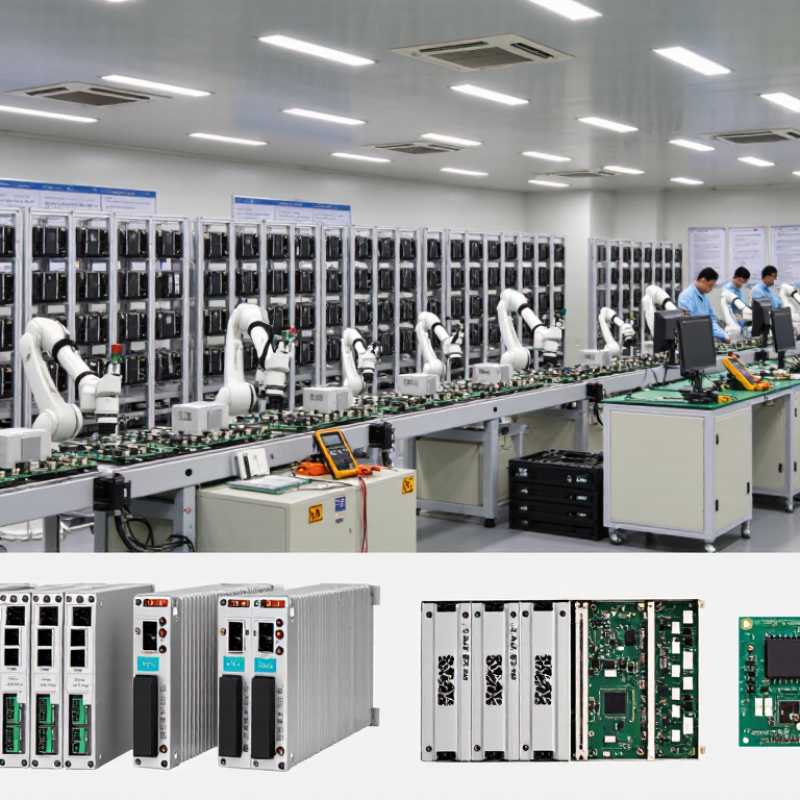
China’s switched-mode power supply industry serves consumer electronics, industrial automation, telecommunications, transportation, and renewable-energy equipment. Production ranges from compact wall adapters to high-power enclosed units for factory control cabinets. Local suppliers often support custom voltage, current, cooling, and connector requirements. Shorter development cycles can help equipment makers test new designs faster.
The main product categories include AC-DC power supplies, DC-DC converters, DC-AC inverters, battery chargers, LED drivers, and open-frame modules. AC-DC units commonly support household and industrial equipment. DC-DC converters regulate power inside vehicles, communication systems, and embedded devices. Inverters serve backup systems and energy applications. Product selection depends on efficiency, ripple control, isolation, overload protection, operating temperature, and installation space.
Factory visits and sample testing reveal details that catalogues often miss. Engineers should check thermal performance after several hours, not only during a short demonstration. Compliance documents, traceability records, and aging-test data also deserve careful review. A lower quoted price may hide weaker capacitors or limited after-sales support. That risk is easy to underestimate. China’s wide supplier base offers impressive flexibility, but quality consistency can vary between production batches. Buyers need clear specifications, independent verification, and realistic delivery expectations before placing volume orders.
When evaluating Chinese SMPS manufacturers, treat IEC 62368-1 as a safety process, not a certificate alone. Request the current test report, certificate scope, production address, and applicable input and output ratings. Check whether the report matches your exact model, enclosure, insulation system, and operating temperature.
Look closely at safety-critical construction. Inspect creepage and clearance distances, fuse ratings, transformer insulation, protective earthing, and enclosure materials. Ask for abnormal-operation, temperature-rise, short-circuit, and dielectric-strength test records. A competent factory should explain these results clearly. Vague answers are warning signs.
ISO 9001 assesses the quality management system, not automatic product compliance. Review incoming inspection records, component traceability, calibration labels, engineering-change controls, and corrective-action reports. Walk through the production line if possible. Can operators identify a failed unit? Are rejected parts physically separated? Small details matter. Also verify supplier control for transformers, capacitors, and optocouplers.
In practical audits, sample consistency often reveals more than a presentation. Compare three production samples, not one laboratory sample. Measure standby power, ripple, load regulation, and thermal behavior after prolonged operation. I have seen suppliers maintain excellent paperwork but weak change control. That weakness deserves honest discussion before volume orders. Do not accept an ISO 9001 certificate as proof of IEC 62368-1 compliance. Evaluate engineering competence, factory discipline, and evidence together.
Efficiency is a practical differentiator for switched mode power supplies. Under the 80 PLUS specification, Gold-rated units must reach 90% efficiency at 50% load. They must also achieve 87% at 20% and 100% loads under the standard 115-volt test condition, according to the 80 PLUS program requirements.
That middle-load figure matters. A 1,000-watt supply delivering 500 watts at 90% efficiency draws about 556 watts from the wall. The remaining 56 watts becomes heat. At 80% efficiency, input demand rises to 625 watts, producing 125 watts of loss. In factory evaluations, engineers should measure efficiency, power factor, ripple, and thermal behavior together. Efficiency alone can hide weaknesses.
The benchmark has limits. It is not a complete reliability guarantee. Test voltage, temperature, aging, and load balance can change real results. The International Energy Agency’s Electricity 2024 report estimated data centers used about 460 TWh globally in 2022, with demand potentially exceeding 1,000 TWh by 2026. That makes every avoided watt relevant. However, buyers should question laboratory claims and request traceable test records. A perfect label can still meet imperfect operating conditions.
Chinese switched mode power supply manufacturers cover a wide output range, from compact 15W adapters to industrial units above 3kW. During supplier reviews, I compare the stated range with actual load behavior. A 500W model may perform well at 400W, yet run hot near its limit. That difference matters in control cabinets, LED systems, and automation equipment.
Ripple figures deserve careful attention. Some suppliers quote peak-to-peak ripple at 20MHz, while others use different bandwidth settings. These numbers are not directly comparable. Ask for test conditions, load percentage, and measurement points. Numbers need context. For sensitive sensors, a lower ripple result can reduce signal noise, but wiring and grounding still influence field performance.
MTBF ratings can indicate design maturity, but they are not guaranteed service life. Check the calculation temperature, load level, and reliability standard behind the figure. Certification records should match the exact model, not only the factory. CE, UKCA, CB, UL, and RoHS documentation may support different market requirements. I also inspect protection features, thermal derating curves, sample consistency, and response speed during sudden load changes. A polished datasheet may still omit practical weaknesses. In one evaluation, the advertised efficiency looked excellent, but the cooling fan became noticeably loud under continuous high load. Documentation matters, but independent testing remains necessary.
China Best Switched Mode Power Supplies Manufacturers should survive a practical factory audit, not only submit attractive certificates. The IEA Electricity 2024 report projected global electricity demand growth of about 4% in 2024. That pressure makes efficiency testing increasingly important. Ask for calibrated equipment, recent calibration records, and complete test logs. Check input variation, overload protection, short-circuit response, ripple, thermal rise, and standby consumption. One test is never enough.
Customization requires physical evidence. Review schematic revisions, transformer samples, firmware controls, enclosure drawings, and pilot-run records. Confirm whether engineers can adjust voltage, connectors, cooling, noise limits, and protection thresholds without disrupting production. Request failure-rate data from the last twelve months, but inspect how failures were classified. A low rate can hide weak reporting. Demand a traceable corrective-action process.
MOQ should match the project stage. A small pilot order can reveal connector errors, heat accumulation, or unstable startup behavior before mass production. Verify monthly capacity, component allocation, aging-test duration, and inspection staffing. For global compliance, audit current conformity files against IEC 62368-1, CISPR 32, RoHS, and applicable regional efficiency rules. The European Commission’s Ecodesign framework sets demanding limits for external power supplies, including no-load consumption. Certificates alone do not prove control. Sample products independently, retain test records, and recheck compliance after every major component change.
| Audit Dimension | Key Factory Data to Review | Practical Benchmark or Requirement | Required Evidence | Audit Result |
|---|---|---|---|---|
| Electrical Safety Testing | Hipot, insulation resistance, leakage current, and ground continuity testing | 100% production testing for safety-critical parameters; AC withstand capability commonly configurable up to approximately 3 kVAC, subject to product design and applicable standard | Automated test records, test limits, calibration certificates, work instructions, and nonconformance logs | Pass / Verify |
| Performance Testing | Output voltage accuracy, load regulation, line regulation, ripple, efficiency, and power factor | Electronic loads and programmable AC sources covering the product rating; ripple measurement should use controlled bandwidth and documented test fixtures | Product test specifications, oscilloscope records, efficiency curves, load-test reports, and sample approval data | Pass / Verify |
| Testing Capacity | Voltage, current, power, temperature, and environmental test range | Programmable AC/DC sources, electronic loads, power analyzers, thermal chambers, and data acquisition systems sized above the maximum product rating; thermal evaluation commonly covers at least -20°C to +70°C for commercial products | Equipment list, capacity specifications, calibration status, maintenance records, and test-lab layout | Pass / Verify |
| EMC Pre-Compliance | Conducted and radiated emissions, electrostatic discharge, electrical fast transient, surge, and immunity screening | In-house pre-compliance capability aligned with relevant IEC 61000-4 test methods and CISPR 32 emission evaluation; accredited external testing may still be required for certification | EMC test reports, chamber or open-area test arrangement, calibration records, corrective-action reports, and external laboratory certificates | Review |
| Reliability Testing | Burn-in, temperature cycling, high-temperature operating life, power cycling, and component stress analysis | Defined reliability plan based on product risk; burn-in duration, load level, temperature limits, and failure criteria must be documented rather than stated only as a general claim | Reliability procedure, sample size, failure analysis, life-test records, and corrective-action closure reports | Review |
| Customization Capability | Output voltage, current rating, connector, cable, enclosure, label, firmware, protection settings, and mechanical interface | Formal engineering-change process with documented feasibility review, prototype approval, design verification, and controlled bill of materials | Engineering team structure, drawings, schematics, PCB revision history, sample records, change notices, and customization lead-time estimates | Pass / Verify |
| Minimum Order Quantity | Standard-model MOQ, customized-model MOQ, prototype quantity, and repeat-order conditions | Common commercial practice: prototype quantities may start at 5–20 units; standard production orders may begin around 100–500 units; customized tooling or materials can require a higher MOQ | Written quotation, MOQ schedule, tooling policy, sample pricing, production lead time, and payment terms | Compare |
| Quality Management | Incoming inspection, process control, final inspection, traceability, defect handling, and supplier management | Documented quality system, lot traceability, defined acceptance criteria, corrective-action process, and production records retained for a specified period | ISO 9001 certificate where applicable, quality manual, control plan, inspection records, process-audit results, and traceability samples | Pass / Verify |
| Global Safety Compliance | Applicable safety standard, regional certification route, creepage and clearance, protective earth, insulation system, and safety-critical components | Product evaluation should identify the applicable edition of IEC 62368-1 or another relevant product standard; regional marks and approvals must match the destination market and product configuration | CB test report, certificate records, construction review, critical-component list, safety datasheets, and production consistency records | Review |
| Environmental Compliance | Restricted substances, material declarations, conflict minerals, packaging materials, and recycling obligations | Documented RoHS and REACH assessment for the target market; supplier declarations should be supported by material data or appropriate laboratory testing when risk warrants | RoHS test report or declaration, REACH statement, material declaration, supplier compliance records, and packaging specifications | Pass / Verify |
| Regional EMC and Market Access | Destination-market emissions, immunity, labeling, technical file, declaration of conformity, and local registration needs | Compliance plan should distinguish mandatory requirements from voluntary marks; typical markets may require CE-related documentation in the EU, UKCA documentation in the UK, and FCC emissions compliance for applicable products in the United States | EMC reports, declaration of conformity, product label artwork, technical file index, and market-specific compliance checklist | Review |
| Production Capacity and Delivery | Monthly output, line balance, critical-process capacity, component availability, lead time, and business-continuity planning | Capacity should be demonstrated using current orders, line-hour calculations, bottleneck analysis, safety-stock policy, and documented on-time-delivery performance rather than stated maximum output alone | Capacity plan, production schedule, inventory records, delivery KPI history, equipment utilization, and contingency plan | Compare |
| After-Sales and Technical Support | Warranty period, failure-return analysis, replacement policy, response time, firmware or design support, and field-failure handling | Written warranty terms, defined response targets, documented return-material authorization process, root-cause analysis, and corrective-action feedback to production | Warranty policy, service contact structure, failure-analysis reports, replacement records, and customer complaint database | Pass / Verify |
They support consumer electronics, factory automation, telecommunications, transportation, and renewable-energy equipment. Applications range from wall adapters to cabinet-mounted industrial units.
Common categories include AC-DC supplies, DC-DC converters, inverters, battery chargers, LED drivers, and open-frame modules. Each category serves different voltage and installation needs.
Check efficiency, ripple control, electrical isolation, overload protection, operating temperature, and available space. Connector type and cooling design also matter.
Catalogues can hide practical weaknesses. During testing, engineers should check heat buildup after several operating hours, not only during a short demonstration.
Request compliance documents, traceability records, aging-test results, and measurable performance data. Records should connect clearly to the tested production batch.
Not necessarily. A lower quotation may involve weaker capacitors, limited support, or inconsistent production quality. Cheap can become expensive.
A 1,000-watt supply delivering 500 watts at 90% efficiency draws about 556 watts. Roughly 56 watts becomes heat inside the system.
No. Test voltage, temperature, aging, and load balance can change real performance. I would not trust a label without traceable test records.
China’s Switched Mode Power Supplies industry offers a broad range of solutions for consumer electronics, industrial equipment, telecommunications, automation, and renewable energy systems. This overview explains key product categories, including AC-DC adapters, enclosed power supplies, DIN-rail units, open-frame designs, and customized modules. It also outlines how buyers can assess manufacturers through IEC 62368-1 safety compliance, ISO 9001 quality management, and reliable production controls.
Performance comparison should consider efficiency, output voltage and power range, ripple and noise, thermal behavior, protection features, and expected MTBF. For suitable applications, an 80 PLUS Gold design should achieve approximately 90% efficiency at 50% load. A professional factory evaluation should review laboratory testing equipment, burn-in procedures, component traceability, engineering customization, MOQ flexibility, documentation, and compliance with destination-market requirements. Careful supplier assessment helps buyers select stable, efficient, and dependable power solutions for long-term use.