Selecting a reliable supplier for high-voltage energy storage requires more than comparing catalog prices. Capacitor Charging Power Supplies must deliver stable voltage, controlled current, repeatable charging cycles, and dependable protection. In laboratory, medical, industrial, and pulsed-power environments, a small specification gap can create significant performance problems.
This guide introduces ten notable suppliers serving the capacitor charging market. The comparison considers output voltage, charging speed, power range, regulation accuracy, safety features, customization, service capability, and documented application experience. It also looks at practical details, such as enclosure quality, cooling design, communication interfaces, and support during system integration. Specifications matter. Real-world support matters more.
The list is not an absolute ranking. Supplier suitability depends on pulse duration, capacitor size, operating environment, production volume, and required certification. Some manufacturers publish detailed technical data, while others provide limited information until engineers discuss the project. That difference deserves attention. No ranking is perfect. Product lines change, and regional availability can affect the final decision.
Readers should verify datasheets, test conditions, warranty terms, lead times, and compliance documentation before purchasing. Speaking with an applications engineer can reveal limitations that marketing pages rarely explain. A supplier may perform well in a controlled laboratory but struggle with continuous industrial duty. Another may offer slower delivery yet provide stronger customization and field support. Careful evaluation helps buyers choose a power supply that remains stable, serviceable, and appropriate for the intended capacitor charging application.
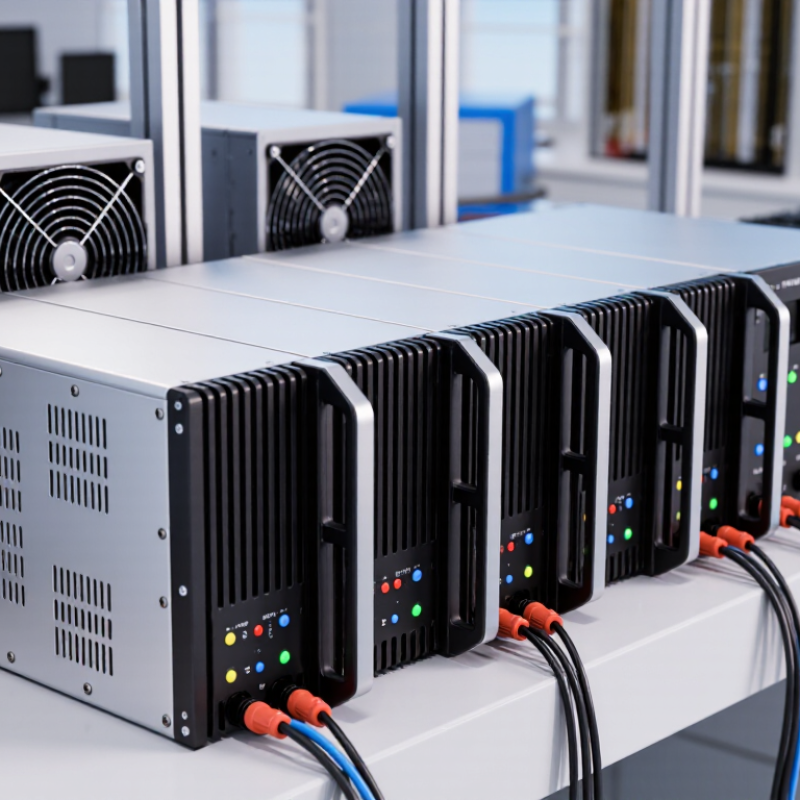
Capacitor charging power supplies are specialized units that raise voltage and store electrical energy in capacitors. Unlike ordinary DC supplies, they manage charging speed, current, and final voltage with close control. A typical unit uses an input stage, transformer, rectifier, switching circuit, and feedback controller. The controller measures capacitor voltage continuously and adjusts the output.
The charging process begins with limited current, which protects the capacitor from excessive stress. As voltage increases, the control circuit reduces current and prevents overshoot. When the target voltage is reached, the supply may enter a hold mode or stop switching. Stored energy follows the formula E = ½CV². Therefore, a small voltage increase can create a large energy change. That detail matters during equipment testing and maintenance.
When comparing the top 10 suppliers, engineers should examine regulation accuracy, charging time, ripple, isolation, cooling, and service documentation. Practical testing should include an unloaded check, a full-capacitance test, and repeated charging cycles. Temperature rise is also important. A unit that performs well briefly may struggle in continuous operation.
One common mistake is choosing power only by peak voltage. Capacitance, repetition rate, load behavior, and duty cycle also affect performance. Real systems are less tidy. Cable resistance and capacitor leakage can change results. Reliable suppliers provide clear specifications, protection features, and measurable test data, although no datasheet replaces verification in the actual application.
A technical comparison of common capacitor-charging power-supply supplier categories, operating ranges, charging methods, and application requirements. The specifications below represent typical industry ranges rather than a company ranking or brand-specific performance.
| Rank | Supplier Category | Typical Output Voltage | Typical Charging Power | Common Charging Method | Voltage Regulation | Typical Repetition Rate | Primary Applications | Key Selection Considerations |
|---|---|---|---|---|---|---|---|---|
| 1 | Industrial Pulse-Power Suppliers | 5–100 kV DC | 1–100 kW | Resonant inverter | Typically ±0.1% to ±1% | Single-shot to 100 Hz | Pulse modulators, high-energy testing, pulsed-power laboratories | Energy per pulse, insulation coordination, arc protection, and controlled discharge timing |
| 2 | Pulsed-Laser Power Supply Suppliers | 1–40 kV DC | 0.5–20 kW | High-frequency switching | Typically ±0.2% to ±1% | 1–10,000 Hz | Flashlamp-pumped lasers, laser marking, industrial laser systems | Low output ripple, rapid recharge, pulse-to-pulse stability, and trigger synchronization |
| 3 | Medical X-Ray Power Supply Suppliers | 20–150 kV DC | 5–100 kW | High-frequency transformer | Typically ±1% or better | Intermittent or regulated exposure cycles | X-ray generators, radiography, computed tomography, inspection equipment | Exposure accuracy, low ripple, safety interlocks, cooling, and medical compliance requirements |
| 4 | Flashlamp and Photographic Power Supply Suppliers | 300–10,000 V DC | 0.1–10 kW | Capacitor-reservoir charger | Typically ±1% to ±3% | 0.1–100 Hz | Studio flash, photography, stroboscopy, high-intensity illumination | Recharge time, flash energy consistency, lamp compatibility, and discharge-current control |
| 5 | Radar and RF Pulse-Modulator Suppliers | 1–50 kV DC | 1–50 kW | Resonant or hard-switched | Typically ±0.1% to ±1% | 1 Hz–10 kHz | Radar transmitters, RF amplifiers, microwave sources, test systems | Low jitter, electromagnetic compatibility, pulse synchronization, and high-voltage isolation |
| 6 | Marx Generator and Pulse-Forming Suppliers | 10 kV–1 MV system charging potential | 0.1–100 kW average charging power | Modular DC charging | Typically ±0.5% to ±2% | Single-shot to several hundred Hz | High-voltage pulse generation, electromagnetic launch research, material testing | Isolation between stages, charging uniformity, crowbar protection, and discharge safety |
| 7 | Electrostatic and Ionization Equipment Suppliers | 1–60 kV DC | 10 W–5 kW | Flyback or resonant converter | Typically ±1% to ±5% | Continuous or low-frequency pulsed | Electrostatic precipitators, ionizers, corona-treatment systems | Current limiting, load regulation, arc recovery, contamination tolerance, and ventilation |
| 8 | Research and Laboratory HV Supply Suppliers | 1–100 kV DC | 50 W–10 kW | Linear-assisted switching | Typically ±0.01% to ±1% | Continuous or programmable | University laboratories, detector systems, vacuum equipment, scientific instruments | Programmability, measurement accuracy, low ripple, remote control, and interlock functions |
| 9 | Aerospace and Defense Pulse-Power Suppliers | 1–100 kV DC | 0.5–50 kW | Ruggedized switching | Typically ±0.1% to ±2% | Single-shot to several kHz | Electronic countermeasures, airborne radar, directed-energy research, qualification testing | Shock and vibration resistance, thermal management, EMI control, fault logging, and service life |
| 10 | Custom OEM Capacitor-Charger Suppliers | 100 V–100 kV DC | 10 W–100 kW | Application-specific topology | Defined by system requirements | Single-shot to continuous operation | Specialized automation, analytical instruments, prototype systems, and integrated equipment | Mechanical integration, connector configuration, firmware, qualification testing, and lifecycle support |
How capacitor-charging power supplies work: The supply converts AC or DC input into a controlled high-voltage output, then transfers energy into a capacitor through a switching converter, transformer, rectifier, and current-limiting or resonant charging circuit. Feedback continuously monitors voltage and current so the capacitor reaches a defined target voltage without excessive ripple or overvoltage. When the stored energy is required, an external switch or trigger releases it as a controlled pulse. Stored energy can be estimated with the formula E = ½CV², where C is capacitance and V is charging voltage.
It raises voltage and stores electrical energy inside a capacitor. It controls current, charging speed, and final voltage. Think of it as a careful electrical pump.
The supply begins with limited current. As voltage rises, the controller reduces current. This helps prevent stress, overshoot, and possible damage. Protection is not magic.
A typical unit includes an input stage, transformer, rectifier, switching circuit, and feedback controller. The controller continuously checks capacitor voltage and adjusts output.
Stored energy follows E = ½CV². Capacitance is measured in farads, and voltage is squared. A small voltage increase can create a surprisingly large energy change.
Compare regulation accuracy, charging time, ripple, isolation, cooling, and service documentation. Also review capacitance range, repetition rate, and duty cycle. Peak voltage alone is inadequate.
Test the unit without a load first. Then use the full capacitance and repeat charging cycles. Measure temperature rise, recovery time, ripple, and voltage stability.
Short demonstrations may hide thermal limits. Repeated charging creates heat in switching components, cables, and cooling systems. Ambient temperature can worsen the result. Real conditions are messier.
Request waveform records, sample test reports, calibration information, spare-part details, and response times. Verify performance in the actual application. A brochure is not proof.
This guide explains what Capacitor Charging Power Supplies are, how they store and deliver controlled electrical energy, and why they are essential in applications requiring rapid, precise, and repeatable charging. It outlines the main operating principles, including voltage regulation, current control, energy efficiency, safety protection, and reliable discharge management. Readers will also learn how to evaluate suppliers using practical criteria such as technical performance, product quality, customization capability, certifications, production capacity, technical support, delivery reliability, and total cost of ownership.
The article presents a carefully structured comparison of the top 10 suppliers without focusing on brand promotion. It examines how leading suppliers differ in areas such as charging speed, output stability, power density, control interfaces, cooling design, scalability, and long-term durability. Finally, it offers guidance for selecting the most suitable supplier according to application requirements, operating environment, integration needs, budget, maintenance expectations, and future expansion plans.