UK / Europe: +44 1268 568200 USA / Canada: +1 877 215 8463
in

CE Certified EMI Filter Suppliers & Exporter

Industrial-Grade Electromagnetic Compatibility (EMC) Architecture, High-Voltage Power Attenuation & Precision Rectification Components for Global Mission-Critical Systems

Precision Component Portfolio

Featured EMI Suppression & Power Semiconductor Modules

Certified component-level building blocks for industrial inverters, high-frequency induction heating, motor drives, and compliance-critical OEM power equipment.
High Current Diode 2CLG20KV/50A-WT High Voltage Rectifier Diode
High Voltage / EMI Safe

High Current Diode 2CLG20KV/50A-WT High Voltage Rectifier Diode 20KV Rectifier Diode Block

Contact Us
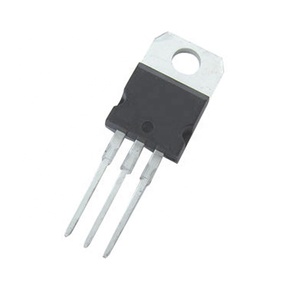
SCR 25A TO-220 Silicon Controlled Rectifier
Phase Control Switching

SCR 25A TO-220 Silicon Controlled Rectifier

Contact Us
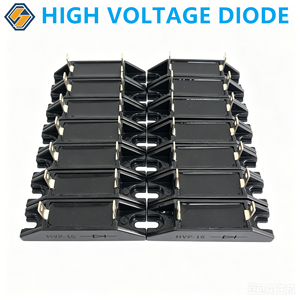
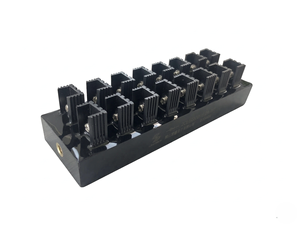
HVP-16 High Voltage Silicon Stack Rectifier
RF / Induction Duty

HVP-16 High Voltage Silicon Stack Rectifier 17.5KV HV diode for Industrial RF Equipment HF Induction Heating rectifier assembly

Contact Us
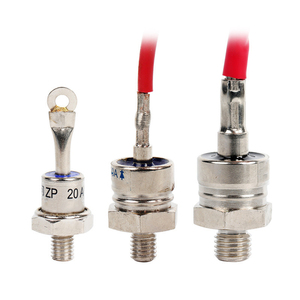
Spiral Diode ZP100A 1600V Silicon High Power Rectifier Diode
Industrial Electrolysis

Spiral Diode ZP100A 1600V 2CZ Silicon High Power Rectifier Diode Chrome Plating Rectifier Power Supply

Contact Us
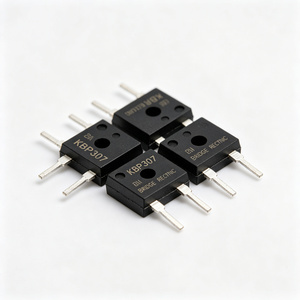
KBP307 KBP 4-pin Through-Hole Bridge Rectifier Diode
Converter Noise Filter

KBP307 KBP 4-pin Through-Hole Bridge Rectifier Diode 1000V 3A Silicon for Inverter/Converter Applications

Contact Us
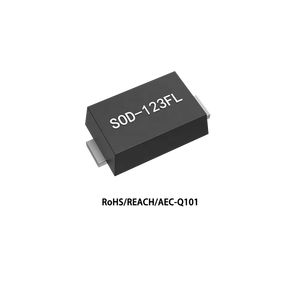
1N4006W SOD-123FL Silicon General Rectifier
SMD Line Filter Duty

1N4006W SOD-123FL Silicon General Rectifier 100% Original & Traceable Lot Code

Contact Us
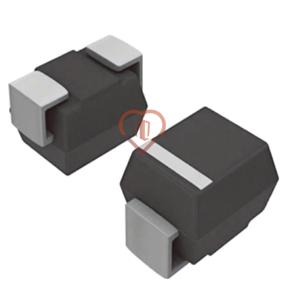
P0080TA-MC SMA Surface Mount Silicon Zener Diodes
Fast Transient Protection

Hot Sales P0080TA-MC SMA Surface Mount Silicon Zener Diodes Fast Recovery Rectifiers 2.2A 10V for Consumer Electronics

Contact Us
OEM Brand Silicon Controlled Rectifier Brake Input
Heavy Motor Brake Assembly

OEM Brand Silicon Controlled Rectifier Brake Input 400VAC Output 180VDC Model M400 MGM 90 Days Warranty

Contact Us
100 dB
Max Insertion Loss Attenuation
200 kV
High Voltage Isolation Grade
ISO 9001
Certified Quality Management
CE / MIL
Compliance Verification Standards

Whitepaper: Advanced EMI Attenuation & Harmonic Suppression in Modern Power Electronics

In high-density power conversion systems, the relentless increase in switching frequencies enabled by Silicon Carbide (SiC) and Gallium Nitride (GaN) power devices has introduced unprecedented levels of high-frequency electromagnetic interference (EMI). As a premier global supplier and exporter of CE certified EMI filters and power conversion assemblies, our engineering directive is structured around mitigating both conducted emissions and radiated interference across complex industrial topology interfaces.

Electromagnetic compatibility (EMC) compliance under the European Low Voltage Directive (LVD 2014/35/EU) and Electromagnetic Compatibility Directive (EMCD 2014/30/EU) requires rigorous suppression of Common Mode (CM) and Differential Mode (DM) noise generated by high $dv/dt$ and $di/dt$ switching nodes. Without precision-designed line filtering, high-frequency transients propagate back to the AC utility grid, corrupting digital control signals, degrading sensor fidelity, and exceeding mandatory CISPR 11 / CISPR 32 limits.

Key Engineering Metric: Industrial equipment operating under EN 61000-6-4 (Generic Emissions Standard for Industrial Environments) must demonstrate conducted emissions suppression down to quasi-peak thresholds of 79 $dB\mu V$ across 150 kHz – 500 kHz, and 73 $dB\mu V$ from 500 kHz to 30 MHz. Achieving this performance in multi-megawatt electrolysis or heavy drive applications necessitates bespoke filter topologies utilizing nanocrystalline core magnetic materials.

Topological Mechanics: Common-Mode vs. Differential-Mode Filtering

Effective filter architecture differentiates between differential mode noise—which flows in opposite directions through the supply lines—and common mode noise, which flows in the same direction through line/neutral conductors and returns via the protective earth (PE) ground path.

Noise Category Physical Origin Dominant Component Suppression CE Standard Focus
Differential Mode (DM) Pulsed switching currents, bridge rectification harmonics, phase control firing. X-Capacitors ($C_x$), Differential Chokes, Series Inductors. EN 55011 / EN 55032 Class A & B (150 kHz–30 MHz)
Common Mode (CM) Stray capacitance to ground from semiconductor heatsinks, long motor leads, high $dv/dt$. Common-Mode Chokes (CMC) with Nanocrystalline cores, Y-Capacitors ($C_y$). IEC 60939-3, IEC 61000-4-6 (Conducted Immunity)
Transient Surges Lightning strikes, inductive load switching, grid fault interruptions. Metal Oxide Varistors (MOVs), TVS Diodes, Gas Discharge Tubes (GDT). IEC 61000-4-5 (Surge Immunity 2kV/4kV)

Enterprise Superiority: Over 30 Years of Power Electronics Authority

Leveraging deep industrial heritage from our UK-based design facilities and global distribution network, our technical footprint spans thyristor-controlled transformer rectifiers, high-voltage power supplies (up to 200 kV), and specialized MIL-COTS filter modules. We do not simply supply off-the-shelf components; we engineer application-led electrical ecosystems that guarantee compliance and continuous operational uptime.

ISO 9001 Quality Control & Traceability

Every standard component and custom EMI filter line undergoes full automated functional testing, high-potential (Hi-Pot) insulation verification, thermal imaging under rated load, and batch-level lot code traceability to protect OEM supply chains.

In-House EMC & High-Voltage Laboratories

Our engineering validation facilities feature pre-compliance spectrum analyzer suites, surge generators, and thermal chamber testing capability up to megawatt-scale industrial profiles, reducing OEM time-to-market for CE marking.

Severe Environment & MIL-STD Compliance

For aerospace, defense, and offshore naval applications, our high-reliability filter product lines are hardened against vibration, humidity, and extreme thermal cycling in compliance with MIL-STD-461G (EMC) and MIL-STD-1275/704 transient power requirements.

Custom Value-Added Engineering

When mechanical footprint constraints prohibit standard chassis-mount filters, our power design teams create integrated busbar-mounted active filter assemblies optimized for thermal dissipation and minimal parasitic inductance.

Next-Generation EMI Filter Technology & R&D Trends (2025–2030)

The global transition toward green hydrogen production, high-density EV ultra-fast chargers, electric marine propulsion, and renewable microgrids is radically transforming the requirements for electromagnetic filtering infrastructure. Emerging R&D trends focus heavily on solving issues introduced by mega-watt switching circuits:

  • Wide-Bandgap (GaN/SiC) Switching Noise Management: As switching speeds cross 500 kHz to 2 MHz, high harmonic peaks shift into the high-frequency MHz region. Advanced EMI filter design now incorporates hybrid multi-stage topologies utilizing low-loss amorphous alloy magnetic cores to prevent core saturation under extreme high-frequency pulse density.
  • Active EMI Filtering (AEF) Integration: Hybrid passive-active filter architectures use operational amplifiers and current-sensing feedback loops to inject counter-phase current vectors into the line, canceling low-frequency common mode noise without requiring bulky passive chokes. This reduces total filter footprint by up to 60%.
  • High-Temperature Nanocrystalline Cores: Modern high-power industrial applications demand magnetic cores capable of operating at continuous Curie temperatures exceeding 120°C without thermal runaway or permeability degradation, ensuring zero attenuation loss in harsh ambient conditions.
  • Smart Condition-Monitored Filters: Integration of IoT-enabled current transformers and thermal sensors within high-voltage filter units allows predictive monitoring of capacitor degradation (ESR increase) and ground leakage currents prior to catastrophic insulation failure.

Strategic Industrial Procurement Trends: Managing TCO & Regulatory Risk

Global procurement teams for capital equipment manufacturers are undergoing a paradigm shift from simple initial purchase price evaluation to comprehensive Total Cost of Ownership (TCO) and compliance risk insulation. Sourcing CE-certified power components and EMI filters requires multi-faceted vendor auditing:

1. Nearshoring & Multi-Hub Logistics

To insulate against global freight disruptions, tier-1 OEMs are establishing long-term master supply agreements with vendors maintaining dual stocking hubs across the UK, European Union, and North America.

2. Regulatory Auditing & Material Compliance

Importers into the EU face strict enforcement of EU REACH, RoHS 3, and Conflict Minerals declarations. Procurement must demand verified material test reports alongside CE technical files.

3. Parasitic Power Consumption Reduction

High-current line filters exhibit DC resistance ($DCR$) in choke windings. Specifying custom ultra-low DCR copper ribbon conductors saves thousands of kilowatt-hours annually in 24/7 continuous chemical or electrolysis plants.

4. Modular Platform Standardization

Standardizing on scalable modular filter topologies allows engineering departments to utilize unified mounting dimensions across variable power spectrums (10 kW to 500 kW), drastically reducing SKU complexity and spare parts inventory.

Engineering & Procurement FAQ: CE EMI Filter Selection

Q: What documentation is required to verify legitimate CE certification for EMI filters exported to Europe?
A: Legitimate CE compliance requires an official Manufacturer's Declaration of Conformity (DoC) listing compliance with the Low Voltage Directive (2014/35/EU), EMC Directive (2014/30/EU), and applicable harmonized standards such as EN 60939-1/-2 (Passive filter units for electromagnetic interference suppression). Additionally, third-party laboratory test reports validating insertion loss data (CISPR 17) and dielectric safety (Hi-Pot test) should be available upon request.
Q: How do leakage current limits affect Y-capacitor selection in CE-certified industrial EMI filters?
A: Y-capacitors ($C_y$) connected between phase conductors and protective earth (PE) provide high-frequency common-mode attenuation, but allow low-frequency (50/60Hz) AC leakage currents to flow to ground. Medical standards (IEC 60601-1) restrict leakage current to ultra-low levels (<10 to 100 $\mu A$), requiring minimal or zero Y-capacitance. Industrial equipment operating on Residual Current Devices (RCDs) typically restricts ground leakage to <3.5 mA or <10 mA to prevent nuisance tripping while still maintaining CISPR emissions compliance.
Q: What is the difference between single-stage, two-stage, and multi-stage EMI filter topologies?
A: Single-stage filters contain one common-mode choke and one set of X/Y capacitors, suitable for equipment with moderate noise generation. Two-stage filters incorporate two distinct magnetic choke assemblies separated by capacitor networks, delivering substantially higher insertion loss (up to 80-100 dB attenuation) across broad frequency bands. Multi-stage and matrix filters are engineered for high-power inverters, variable frequency drives (VFDs), and heavy industrial rectifiers operating in harsh electromagnetic environments.
Q: How does ambient operating temperature influence EMI filter current derating?
A: Filter nominal current ratings ($I_n$) are typically specified at ambient temperatures of 40°C or 50°C. Operating at elevated temperatures degrades magnetic core permeability and increases copper conductor $I^2R$ resistive heating. Derating curves dictate that operating at 70°C ambient may require reducing working current to 70-80% of nominal rating unless active forced-air cooling or custom high-temperature insulation class (Class H/N) magnetics are utilized.
Q: Can standard AC line filters be deployed on high-voltage DC bus applications?
A: Not without thermal and dielectric validation. DC bus applications exhibit sustained high DC voltages that stress capacitor dielectric materials differently than AC sinusoidal waveforms. Furthermore, interrupting high DC fault currents requires specialized DC-rated terminal blocks, discharge resistors, and internal fuse clearances compliant with IEC 60939-3 DC standards to prevent arcFlash or dielectric breakdown.
Q: What custom modification options are available for OEM power applications?
A: Customization options include engineered busbar terminal geometry, custom IP65/IP67 weather-sealed enclosures, integrated surge protection networks (MOVs/TVS), customized discharge resistor time constants, zero-leakage medical configurations, and integrated voltage/current sensing transformers tailored to specific mechanical cabinet constraints.

Need Custom EMI Filtering or High-Voltage Power Solutions?

Engage directly with our senior electrical application engineering team. We assist OEMs globally with custom system design, EMC pre-compliance guidance, and volume export supply agreements.

Contact Us