Precision-engineered diodes, SCR modules, and high-voltage stacks designed for mission-critical inverter and converter systems.
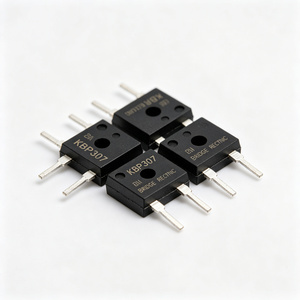
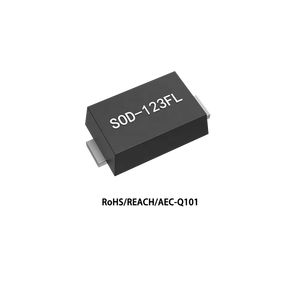
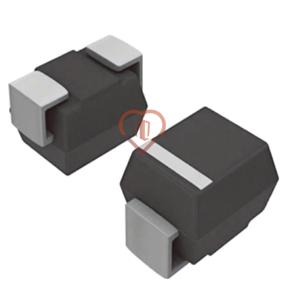
As a premier CE Certified Power Inverter Manufacturer & Supplier, our operational architecture is grounded in over three decades of advanced power electronics engineering. Combining legacy UK manufacturing precision with modern industrial scale, we specialize in high-reliability AC-DC, DC-DC, and DC-AC power conversion platforms engineered for environments where operational failure is not an option.
Unlike commodity commercial suppliers, our system designs prioritize information gain, thermal resilience, and full component-level traceability. From heavy-duty thyristor-controlled transformer rectifiers scaled into multi-megawatt ranges to specialized SiC-based high-frequency pure sine wave inverters, every platform undergoes full load burn-in testing and comprehensive electromagnetic compliance validation before deployment.
Our value-added engineering team modifies standard power converter topologies or constructs clean-sheet power architectures from the ground up. Whether integrating custom high-voltage diode stacks or configuring specific digital control buses (CANbus, RS485, Modbus), we engineer around your exact load dynamics.
Operating under rigorous ISO 9001 certified quality controls, all power inverter units comply strictly with European Union Directives. We maintain rigorous compliance records for Low Voltage Directive (LVD 2014/35/EU) and Electromagnetic Compatibility (EMC 2014/30/EU), backed by full lot traceability.
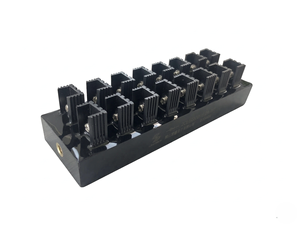
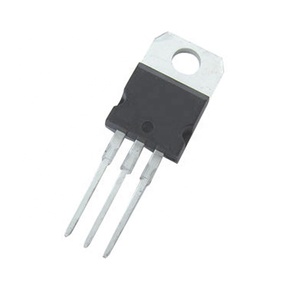
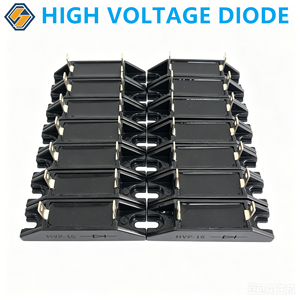
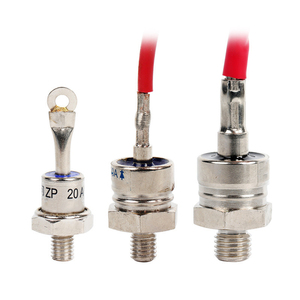
We utilize premium semiconductor devices—such as 20KV 50A high-voltage diode blocks, TO-220 SCR silicon-controlled rectifiers, and low-THD bridge rectifiers—to guarantee superior MTBF (Mean Time Between Failures) across harsh industrial, marine, and defence operations.
An in-depth engineering review of DC-AC conversion topologies, total harmonic distortion control, thermal mitigation, and European regulatory compliance.
In modern industrial power grids and localized renewable storage systems, converting direct current (DC) into pristine alternating current (AC) requires high-frequency Pulse Width Modulation (PWM) combined with advanced solid-state switching matrices. Standard square-wave or modified sine-wave inverters generate substantial Total Harmonic Distortion (THD), leading to inductive motor overheating, transformer core saturation, and sensitive medical/defence instrument corruption.
Our industrial CE certified power inverters utilize unipolar and bipolar Sinusoidal Pulse Width Modulation (SPWM) driven by high-speed Insulated Gate Bipolar Transistors (IGBTs) or Silicon Carbide (SiC) MOSFETs. Operating at switching frequencies from 20 kHz to over 100 kHz allows LC output filters to be significantly miniaturized while keeping total output voltage THD under 2% for linear loads and under 3% for non-linear dynamic loads.
Affixing the CE mark to an industrial power inverter is not merely a label—it represents rigorous verification against harmonized European Norms (EN). Our inverter systems undergo extensive laboratory evaluation across two foundational pillars:
Low Voltage Directive (LVD 2014/35/EU): Evaluated under EN 62109-1 (Safety of power converters for use in photovoltaic power systems) and EN 61010-1 (Safety requirements for electrical equipment). Key parameters include creepage and clearance distances, high-voltage breakdown protection, double/reinforced insulation barriers, and touch-current leakage thresholds.
Electromagnetic Compatibility (EMC 2014/30/EU): Certified under EN 61000-6-2 (Immunity for industrial environments) and EN 61000-6-4 (Emission standard for industrial environments). Specialized input LC differential filters and active surge protection (via heavy-duty fast recovery Zener diodes and metal-oxide varistors) prevent conducted power line feedback and radiated wireless interference.
| Performance Benchmark | Commercial Off-The-Shelf (COTS) Inverters | Our Industrial CE-Certified Inverters | Engineering Impact on Plant Infrastructure |
|---|---|---|---|
| Output Voltage Waveform | Modified Sine Wave / High THD (>5%) | Pure Sine Wave (<1.5% THD) | Eliminates motor hum, reduces winding heat, extends load lifespan. |
| Semiconductor Switching Topology | Standard Silicon Metal MOSFETs | Wide Bandgap (SiC / GaN) & High-Volt Diodes | Achieves 96.5%+ peak conversion efficiency; drastically lowers heat footprint. |
| Galvanic Isolation Barrier | Non-isolated or Low-cost Optical | Reinforced High-Frequency Transformer Isolation | Protects DC batteries/electrolysers from AC grid transients up to 5 kV AC RMS. |
| Overload & Short-Circuit Protection | Single-stage fuse / Thermal trip | Dual-stage Cycle-by-Cycle DSP Overcurrent + SCR Crowbar | Instantaneous (<2 microseconds) shutdown prevents destructive cascade failures. |
| Operating Ambient Temperature | -10°C to +40°C (Un-derated) | -40°C to +65°C (Full industrial duty) | Ensures uninterrupted continuous operation in harsh offshore or desert environments. |
Strategic foresight into how green hydrogen transition, wide-bandgap semiconductors, and smart telemetry are reshaping global procurement.
Global enterprise buyers are rapidly shifting procurement specifications toward Silicon Carbide (SiC) and Gallium Nitride (GaN) switching stages. WBG devices operate efficiently at elevated switching frequencies with lower switching losses, enabling a 40% reduction in physical inverter enclosure volume while boosting system efficiency past 98%.
Modern factory automation and Green Hydrogen plants demand dual-function power hardware capable of seamless bi-directional conversion. Future-proof power inverters now incorporate grid-forming algorithms, allowing plant operators to alternate between drawing grid power for direct DC electrolysis and feeding stored battery power back into local AC microgrids.
Procurement officers are no longer selecting standalone analog hardware. Today's industrial procurement standards require fully digitalized power systems equipped with onboard ARM Cortex microcontrollers, RS485/Modbus, and CANbus protocols. Real-time monitoring of junction temperature, THD, and diode state predictive diagnostics ensures zero unplanned downtime.
Clear, direct technical answers addressing common engineering inquiries, qualification standards, and OEM manufacturing protocols.
Consult directly with our senior power electronics design engineers. Send us your input/output voltage targets, ambient thermal constraints, and compliance requirements for a rapid technical solution.