
Explore our CE-certified rectifying components, high-voltage diode stacks, and silicon-controlled rectifiers designed for continuous heavy-duty conversion.
In modern industrial power electronics, high-efficiency AC-to-DC conversion is the backbone of critical process automation, heavy chemical electrolysis, surface finishing, and high-voltage RF induction equipment. As global industries accelerate toward decarbonization and electrical grid modernization, selecting an authoritative, CE-certified power rectifier supplier is no longer merely a purchasing decision—it is a core risk-mitigation strategy for plant operational continuity.
Power rectifiers convert alternating current (AC) into direct current (DC) through semiconductor junction devices such as standard silicon diodes, Schottky barriers, Fast Recovery Diodes (FRD), and Silicon-Controlled Rectifiers (SCR thyristors). For industrial-scale installations operating in continuous 24/7/365 environments, rectifier performance directly determines energy efficiency, Total Harmonic Distortion (THD), thermal management overhead, and system longevity.
Industrial power rectification spans discrete discrete component assemblies to massive transformer-rectifier (TR) cabinets. Depending on voltage range, current density, and control response required, engineering design teams utilize distinct semiconductor architectures:
A fundamental requirement for deploying industrial rectifiers within the European Economic Area (EEA) and global markets accepting European standards is full compliance with CE Marking Directives. As a leading power conversion supplier, our engineering processes adhere strictly to the dual pillars of CE compliance: electrical safety and electromagnetic compatibility.
| Directive / Standard | Technical Focus & Governance | Engineering Compliance Criteria |
|---|---|---|
| LVD 2014/35/EU (Low Voltage Directive) |
Electrical safety for equipment operating between 50–1000 VAC or 75–1500 VDC. | Creepage/clearance verification, dielectric withstand up to 200kV, arc flash protection, thermal stress testing. |
| EMC 2014/30/EU (Electromagnetic Compatibility) |
Limiting electromagnetic emissions and ensuring industrial immunity. | EN 61000-6-2 (Industrial Immunity) & EN 61000-6-4 (Industrial Emissions). Suppression of conducted harmonic spikes. |
| IEC/EN 60146-1-1 | Semiconductor converters – General requirements and line-commutated converters. | Validation of overload capability, thermal duty cycles, insulation coordination, and short-circuit protection. |
| RoHS 2011/65/EU & WEEE | Restriction of hazardous substances and electronic waste management. | Lead-free soldering compliance, 100% traceable component lot codes, recyclable structural metals. |
High-voltage power rectifiers deployed in industrial RF induction equipment or heavy industrial converters face extreme electric field gradients and high voltage spikes ($dV/dt$). Safety design requires rigorous creepage and clearance distance calculations according to IEC 61010-1 pollution degree 2 and 3 environments.
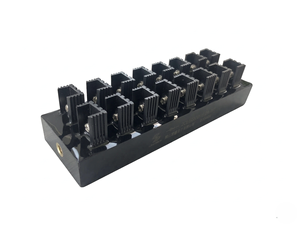
For high-power silicon stack diodes (such as the 20KV 50A units), internal isolation barriers use vacuum-epoxy encapsulation, preventing internal partial discharge even during intense grid disturbances. Every batch undergoes 100% factory Hi-Pot dielectric testing and thermal imaging verification under full load before dispatch.
The industrial procurement landscape for power conversion equipment is undergoing a major structural shift driven by four global mega-trends: the green hydrogen energy transition, adoption of wide-bandgap (WBG) semiconductors, digital twin integration, and localized supply chain resilience.
Electrolyser stacks (PEM and Alkaline) require ultra-low-ripple DC power measured in multi-megawatts. B2B buyers are prioritizing heavy-duty thyristor rectifiers and multi-pulse (12-pulse, 24-pulse) transformer-rectifier systems that optimize power factor ($\cos\phi > 0.95$) and eliminate grid harmonics.
While traditional silicon (Si) rectifiers remain dominant for heavy industrial currents, hybrid topologies incorporating Silicon Carbide (SiC) Schottky diodes are accelerating fast. SiC diodes offer zero reverse recovery losses, allowing higher switching frequencies and smaller magnetics.
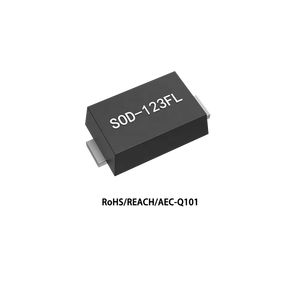
Counterfeit components pose severe risks to industrial power plants. Procurement specifications now mandate 100% traceable lot codes, original manufacturer certificates of conformity (CoC), and strict compliance with ISO 9001 quality controls for discrete devices like 1N4006W SOD-123FL rectifiers.
Modern procurement executives evaluate rectifiers based on Total Cost of Ownership (TCO) rather than initial capital expenditure (CAPEX). A 1% gain in rectifier efficiency over a 15-year operational lifecycle for a 10 MW hydrogen plant yields hundreds of thousands of Euros in electricity savings, easily dwarfing the initial procurement cost of premium CE-certified hardware.
Choosing the correct rectifying element depends on system operating voltage, continuous current demand, thermal dissipation constraints, and desired output regulation responsiveness.
| Rectifier Type | Typical Voltage / Current Range | Primary Industrial Applications | Key Engineering Advantages |
|---|---|---|---|
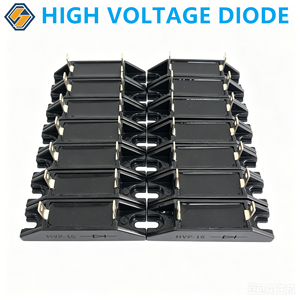
| High Voltage Silicon Stacks (e.g., 2CLG20KV, HVP-16) |
12 kV – 20 kV RMS 50mA – 50A |
Industrial RF equipment, HF induction heating, electrostatic precipitators, medical X-ray. | High PIV resistance, low reverse leakage, compact epoxy modular encapsulation. |
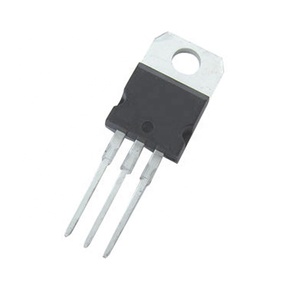
| Thyristors / SCR Modules (e.g., SCR 25A TO-220, M400 Brake) |
400 VAC – 1600V 25A – 5000A+ |
Electroplating, motor brake control, regulated DC power supplies, electrochlorination. | Controllable phase firing, high surge current capacity ($I_{FSM}$), robust thermal overload tolerance. |
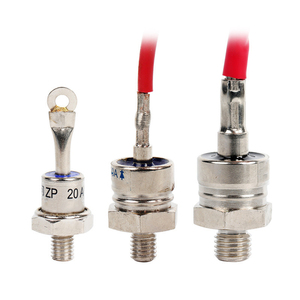
| Spiral Stud Rectifier Diodes (e.g., ZP100A 1600V) |
600V – 2400V 100A – 500A |
Heavy chrome plating rectifiers, battery charging stations, general industrial power supplies. | Direct stud mounting for minimal thermal resistance, high continuous current capability. |
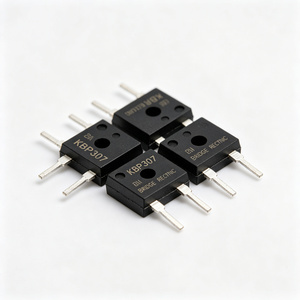
| Bridge Rectifier Modules (e.g., KBP307 1000V 3A) |
100V – 1000V 1A – 50A |
Inverter front-ends, auxiliary power supplies, industrial control cabinet supplies. | Integrated 4-diode full-wave bridge, compact through-hole PCB footprint. |
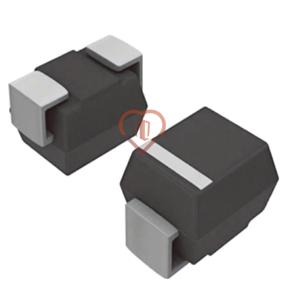
| Surface Mount Diodes (e.g., 1N4006W SOD-123FL, SMA Fast Recovery) |
10V – 1000V 0.5A – 3A |
SMPS snubber circuits, consumer electronics, signal rectification, automotive comms. | Ultra-small footprint, low inductance lead frame, automated SMT assembly compatible. |
Backing by over three decades of power conversion engineering, our organization combines British design heritage (originating with Powerstax PLC) with global manufacturing controls. We support engineering teams from initial topology selection and electromagnetic simulation through to volume manufacturing and site acceptance testing (SAT).
Every rectifying component and custom power supply system manufactured within our facilities adheres to an uncompromised quality management framework:
Every shipment includes an official EU Declaration of Conformity (DoC), technical datasheets specifying peak inverse voltage (PIV), forward voltage drop ($V_F$), thermal resistance specs, and material compliance certificates (RoHS / REACH). Full test reports (Hi-Pot, isolation resistance, and EMC immunity) are provided upon request for engineering OEMs.
Choose a standard Diode (such as the ZP100A or KBP307) when fixed, non-variable AC-to-DC conversion is required with minimal control complexity. Choose an SCR (Silicon Controlled Rectifier) when your system requires variable DC output voltage, dynamic current regulation, or controlled soft-starting under heavy capacitive/inductive loads, such as in electroplating or brake control systems.
High-voltage silicon rectifier stacks operating at high continuous currents generate localized heat within their series-connected silicon junctions. Adequate forced-air cooling (minimum 3 m/s airflow) or oil-immersion cooling must be maintained. Heatsink mounting surfaces must be flat within 0.05 mm and coated with premium thermal grease or phase-change materials.
Yes, but careful engineering is required. Parallel connection requires matched forward voltage drop ($V_F$) characteristics to prevent current hogging. Series connection requires high-value equalization resistors (or voltage-sharing capacitors) across each diode to ensure uniform distribution of the peak inverse voltage (PIV) during reverse blocking.
Standard discrete components (such as SOD-123FL, SMA, and TO-220 SCRs) are typically available from stock for rapid dispatch. Custom configured high-voltage stacks or bespoke thyristor-controlled transformer rectifiers typically carry a 6 to 10 week lead time from initial drawing approval through ISO 9001 factory acceptance testing (FAT).
Our ERP system tracks component lot codes from raw semiconductor wafer processing through to final package reel labeling. Every dispatch is assigned a unique batch identifier, allowing full retrospective traceability of silicon material, diffusion lot, and factory test data.
Contact our application engineering team to discuss your electrical specifications, thermal requirements, CE compliance needs, or volume procurement tenders.
Contact Us