Explore our core range of OEM high-voltage rectifier blocks, silicon-controlled rectifiers (SCR), bridge rectifiers, and custom power conversion solutions engineered for maximum operational uptime.
In the rapidly evolving global industrial landscape, mission-critical applications demand specialized power conversion systems that exceed off-the-shelf catalog specifications. From megawatt-scale green hydrogen electrolysis facilities and high-frequency induction heating systems to defence-grade MIL-COTS DC-DC modules, the requirement for tailored power electronics architecture has moved from a premium option to a fundamental design prerequisite.
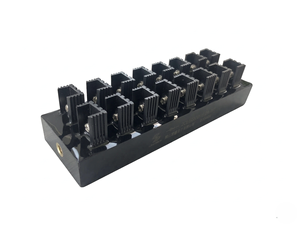
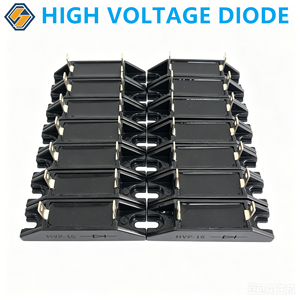
As leading custom power manufacturers based in China, our engineering methodology bridges high-power semiconductor discrete component manufacturing with system-level power assembly. By mastering component-level device physics—such as specialized high-voltage silicon stack rectifiers (HVP series), high-current thyristor blocks (2CLG), and precision silicon-controlled rectifiers (SCR)—we maintain total control over thermal performance, electrical isolation, harmonic distortion, and long-term reliability.
Modern power systems operate under harsh stress factors, including extreme ambient temperatures, dynamic load cycling, electromagnetic interference (EMI), and aggressive environmental conditions. Engineering custom power supplies for these environments requires deeply integrated engineering workflows that encompass topology selection, magnetic design, thermal management, regulatory compliance (IEC/EN 61010, ISO 9001, MIL-STD-461/704/1275), and rigorous automated functional testing.
Selecting the optimal power topology depends on efficiency targets, isolation requirements, form factor, dynamic load response, and environmental ruggedness.
| Topology / Family | Primary Power Range | Efficiency Rating | Core Semiconductor Tech | Target Application Domains |
|---|---|---|---|---|
| Thyristor Transformer Rectifiers (TR) | 10 kW to Megawatt (MW) Scale | 94.5% - 97.8% | Silicon Controlled Rectifiers (SCR) / High-Current Diodes | Green Hydrogen Electrolysis, Electrochlorination, Plating, Cathodic Protection |
| High-Voltage DC Supplies (HVDC) | Up to 150 kW / 200 kV | 91.0% - 95.5% | Multi-stage Silicon Stack HV Diodes (HVP/2CLG) | RF Equipment, HF Induction Heating, Industrial X-Ray, Research Accelerators |
| Modular AC-DC Converters | 500 W to 10 kW per Chassis | 93.0% - 96.5% | Wide-Bandgap (SiC MOSFETs / GaN HEMTs) | Industrial Control Cabinets, Communications, Telecommunications Base Stations |
| Isolated DC-DC Bricks & Modules | 50 W to 7.2 kW | 88.0% - 94.0% | Silicon / SiC Switching Devices | Rail Transportation, Renewable Microgrids, Commercial Avionics |
| MIL-COTS Spec Power Modules | 100 W to 3.5 kW | 89.0% - 93.5% | Hermetic / Ruggedized Silicon Components | Defence Ground Vehicles, Airborne Systems, Tactical Deployable Shelters |
Combining decades of power electronics expertise with vertically integrated manufacturing infrastructure to deliver fully qualified, low-risk custom power solutions.
Unlike simple assembly houses, our facility manufactures silicon diode chips, high-voltage stacks, and SCR components in-house. This direct component control guarantees component traceability, minimizes supply chain disruption, and ensures absolute thermal and electrical matching within full custom power supply enclosures.
Every custom OEM project follows strict ISO 9001:2015 design and manufacturing controls. We execute 100% automated full-load burn-in, high-voltage dielectric withstand testing (Hi-Pot), surge immunity validation, and preliminary EMC testing to guarantee compliance with CE, UL, IEC/EN 61010, and MIL-STD parameters.
We solve complex integration constraints through custom enclosure design (NEMA/IP ratings, liquid cooling cold plates, forced-air ducting) and programmable digital interfaces (PMBus, CANopen, Modbus RS485). Our engineering team turns rapid prototypes into certified volume production seamlessly.
The power conversion sector is experiencing a structural technology shift driven by energy transition mandates, wide-bandgap (WBG) semiconductors, and advanced digital telemetry. Industrial buyers must evaluate custom power partners based on their ability to integrate these emerging innovations:
The replacement of traditional legacy silicon MOSFETs with SiC and GaN switching devices allows custom power supplies to operate at vastly higher switching frequencies (200 kHz to 1 MHz+). This dramatically reduces the volumetric size of passive magnetic components (transformers and inductors), raising power density from 15 W/in³ up to 50+ W/in³ while lowering heat dissipation losses by up to 40%.
With global investment scaling up for green hydrogen production, custom thyristor-controlled transformer rectifiers are undergoing significant optimization. Water-cooled, low-ripple DC power supplies engineered specifically for Proton Exchange Membrane (PEM) and Alkaline electrolyser stacks are crucial to maximize stack operational lifespans and maintain efficiency under fluctuating renewable input power.
Industrial power supplies are moving away from passive analog black-box designs toward smart digital power nodes. Integrating digital microcontrollers enables real-time voltage/current monitoring, phase-angle SCR firing control, operating temperature diagnostics, and predictive failure warnings over industrial Ethernet, CANbus, or Modbus protocols.
Navigating global procurement requires balancing total cost of ownership (TCO), lead-time predictability, custom design responsiveness, and risk mitigation. Key procurement trends shaping the OEM power landscape include:
Procurement teams are increasingly favoring "modified-standard" development models over clean-sheet designs. Utilizing pre-qualified base topologies and modifying output voltages, cable harnesses, or mechanical mounting plates reduces initial NRE costs by up to 60% and shortens time-to-market from 12 months down to 12–16 weeks.
To combat global supply disruptions, premier Chinese custom power factories maintain strategic component safety stock and direct relationships with silicon wafer foundries. Full material traceability (lot code tracking) for critical components—such as diodes, SCRs, and magnetic cores—ensures long-term program continuity for 10+ year product lifecycles.
Common technical, commercial, and operational questions answered by our power engineering team.
Our manufacturing plant engineers and builds power supplies spanning from low-power PCB-mount discrete rectifiers up to 10 kW AC-DC chassis systems, 7.2 kW DC-DC converters, 150 kW / 200 kV high-voltage power supplies, and multi-megawatt thyristor-controlled transformer rectifiers for heavy industrial electrolytic processes.
Every custom OEM project follows a structured engineering gate process: initial technical scope definition (electrical, thermal, mechanical, interface), circuit simulation (SPICE, PLECS), thermal modeling (CFD), rapid prototype construction, pre-compliance testing (EMC, safety), and ISO 9001-controlled pilot production.
100% of manufactured units undergo automated testing, including dielectric high-potential safety isolation testing (Hi-Pot), full-load dynamic thermal burn-in at elevated ambient temperatures, output ripple/noise measurements, and transient load response testing to guarantee zero-defect delivery.
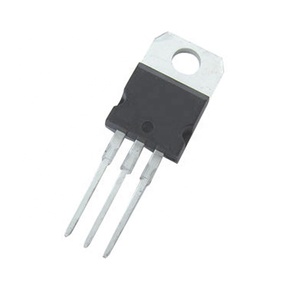
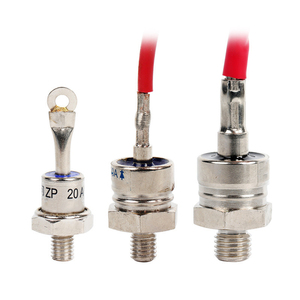
Yes. As a vertically integrated manufacturer of discrete silicon devices (such as 2CLG high voltage diodes, ZP series spiral diodes, and TO-220/TO-247 SCRs), we can modify reverse voltage ratings, recovery times (trr), current handling capacities, and packaging footprints to match exact custom equipment specifications.
We engineer ruggedized power modules designed to comply with MIL-STD-704 (aircraft electrical power characteristics), MIL-STD-1275 (surges and transients in 28V DC vehicle power), and MIL-STD-461 (EMC control). Enclosures feature conformal coating, potting, extended operating temperature ranges (-40°C to +85°C), and high-vibration structural reinforcement.
Modified-standard prototype samples are typically delivered within 4 to 6 weeks. Ground-up clean-sheet custom power system developments average 8 to 14 weeks, including prototype verification. Once qualified, volume production runs operate on predictable 6-to-8-week rolling replenishment schedules.
Submit your electrical specifications, target input/output voltages, environmental constraints, and compliance requirements to our senior power engineering team. Receive technical feedback and detailed catalog documentation promptly.
Get Catalog