Engineered for low ripple, maximum conversion efficiency, and continuous duty in harsh electrolytic chemical applications.
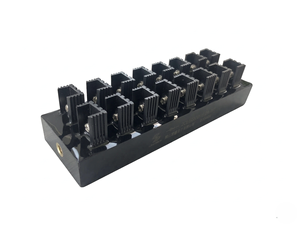
Ultra-high voltage epoxy-molded diode block designed for heavy industrial RF equipment, plasma generation, and specialized high-voltage stacks.
Contact Us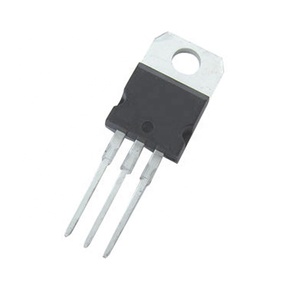
High-reliability 25A SCR in compact TO-220 packaging for phase-control rectification, soft starters, and power switching modules.
Contact Us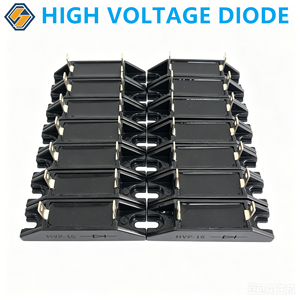
Heavy-duty industrial silicon stack rectifier rated for 17.5KV, built specifically for high-frequency induction heating and RF rectifiers.
Contact Us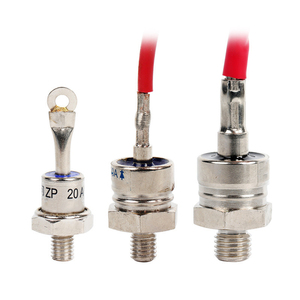
Stud-mounted 100A high-power rectifier diode for continuous electroplating power supplies and high-current chemical electrolysis.
Contact Us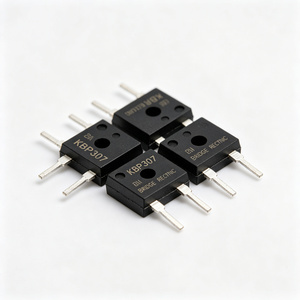
Industrial-grade single-phase bridge rectifier providing highly efficient AC to DC power conversion for control systems and inverters.
Contact Us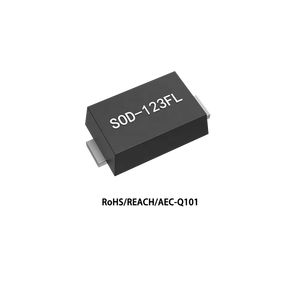
Surface-mount general-purpose rectifier featuring low forward voltage drop and 100% original traceable lot code for precision driver circuits.
Contact Us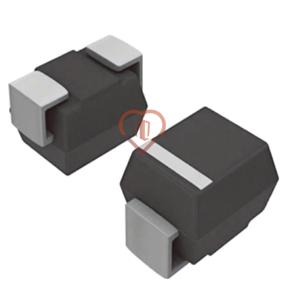
Fast response surface-mount Zener and rectifier diode array delivering fast surge suppression and transient overvoltage protection.
Contact Us
Model M400 heavy-duty thyristor power regulation module engineered for high-torque industrial motor braking and DC bus rectifiers.
Contact UsAn authoritative analysis of power conversion topology, electrical ripple mitigation, and total cost of ownership (TCO) in green hydrogen production.
In large-scale commercial hydrogen generation—spanning Alkaline (ALK), Proton Exchange Membrane (PEM), and Solid Oxide Electrolysis Cells (SOEC)—the direct current (DC) power supply system represents between 15% and 25% of total plant capital expenditure (CAPEX), while dictating over 90% of long-term operational expenditure (OPEX). As China's premier electrolyzer power manufacturer and exporter, our engineering paradigm is governed by Faraday's law of electrolysis and Ohm's law: electrolyzer cells require massive DC current at relatively low cell voltages to drive the electrochemical reduction of hydrogen ions.
However, the raw conversion of grid AC electricity (typically 10kV to 35kV medium voltage) to ultra-high DC current (up to 50,000A) introduces power quality challenges. Peak efficiency is not merely a matter of nominal thermal losses within power semiconductors; it hinges on the DC Ripple Factor ($\mathbf{I_{ripple}}$). High current ripple causes parasitic heating inside the catalytic membrane assembly, induces accelerated catalyst degradation (specifically iridium oxide anode degradation in PEM stacks), and leads to unrecoverable overpotential voltage drops.
Key Technical Insight: Reducing DC current ripple from 5% to under 0.5% directly improves overall stack thermodynamic efficiency by up to 2.8%, translating into millions of dollars in annual electricity cost savings for a typical 100MW green hydrogen production plant.
Furthermore, grid compliance standard IEEE 519 and IEC 61000-3-6 demand stringent Total Harmonic Distortion (THD) management at the Point of Common Coupling (PCC). Modern utility grids feeding multi-megawatt electrolyzers cannot tolerate severe lagging reactive power or low-order current harmonics. Our advanced Transformer-Rectifier (TR) power units incorporate multi-pulse thyristor configurations (12-pulse, 24-pulse) alongside active IGBT chopper technology to preserve a high power factor ($\cos\phi \ge 0.98$) without requiring massive passive harmonic filter banks.
Selecting the optimal power conversion topology depends heavily on the specific electrolyzer stack chemistry, grid stability, dynamic ramping demands, and capital budget. The table below delineates the primary engineering metrics governing the three dominant industrial rectifying topologies designed by our team:
| Performance Metric | 12/24-Pulse Thyristor (SCR) Rectifier | PWM IGBT Switched-Mode Rectifier | Hybrid SCR + Active Chopper Architecture |
|---|---|---|---|
| Peak Conversion Efficiency | 98.2% – 98.8% | 95.5% – 96.8% | 97.5% – 98.1% |
| DC Current Ripple ($\mathbf{I_{rms}/I_{dc}}$) | 2.5% – 5.0% (Requires Choke Filters) | < 0.5% (Inherently Low) | < 1.0% (Filtered Output) |
| Grid Power Factor ($\cos\phi$) | 0.82 – 0.92 (Varies with Phase Angle) | > 0.99 (Unity Power Factor) | > 0.97 (Stable Across Range) |
| Ramp Rate & Dynamic Response | Slow (100ms – 500ms) | Ultra-Fast (< 5ms) | Fast (10ms – 20ms) |
| Target Application | Large-Scale Base-Load ALK Electrolyzers | Dynamic Renewable PEM & SOEC Stacks | Utility-Scale Hybrid Green H2 Plants |
| CAPEX per MW ($/kW) | Lowest (Cost-Effective Base) | Moderate to High | Optimal TCO Balance |
While traditional 12-pulse SCR transformer rectifiers offer unmatched robust reliability and maximum efficiency at 100% nominal continuous load, their power factor degrades when throttled down to partial load (e.g., during low solar/wind availability). Conversely, our PWM IGBT Chopper systems maintain an exceptional power factor and near-zero current ripple across a 5% to 120% dynamic operating window, making them ideal for direct coupling with variable renewable energy (VRE) assets.
As global hydrogen project scale escalates from 10MW pilot plants to multi-gigawatt green ammonia and steel complexes, power supply procurement guidelines are evolving rapidly. Technical buyers and EPC contractors must account for four decisive technological vectors:
A. Direct High-Voltage Medium Voltage (MV) Grid Interfacing: Traditional low-voltage step-down transformers are being replaced by integrated MV dry-type transformers directly feeding multi-phase rectifier bridge units. Operating at primary voltages of 11kV, 22kV, or 35kV drastically reduces line copper losses, minimizes switchgear footprint, and simplifies civil engineering on-site.
B. Containerized Liquid-Cooled Modular Power Blocks: Heat dissipation is a crucial challenge when handling 50kA+ continuous currents. The industry trend is moving away from forced-air cooled indoor cabinets toward outdoor IP54/IP65 containerized power stations utilizing deionized water-glycol closed-loop cooling systems. Water cooling increases power density by up to 300%, isolates semiconductor junction temperatures from extreme desert or offshore environments, and extends operational lifespan (MTBF > 100,000 hours).
C. Digital Twin Integration & Predictive AI Maintenance: Modern megawatt rectifiers are no longer isolated hardware components. Our custom power systems feature integrated Modbus-TCP, Profinet, and EtherCAT communication interfaces that transmit high-speed oscillography data to central SCADA systems. Real-time monitoring of thyristor junction thermal rise, internal busbar vibration, and electrolytic capacitor health enables predictive maintenance prior to stack trips.
Combining 30+ years of power electronics expertise, rigorous ISO 9001 quality controls, and full custom manufacturing capabilities.
Fully certified quality management controls covering electrical engineering, thermal modeling, EMC testing, and volume manufacturing under strict IEC, CE, and UL standards.
From clean-sheet power topologies to bespoke mechanical enclosures, our R&D team customizes voltage/current curves, phase counts, and digital control protocols to match your exact electrolyzer stack profile.
Decades of experience exporting heavy power units to Europe, the Americas, the Middle East, and Asia-Pacific, backed by factory acceptance testing (FAT), site acceptance testing (SAT), and global commissioning engineers.
Equipped with state-of-the-art high-voltage isolation bays, impulse generators, and full-load burn-in stations to ensure 100% operational safety and zero field failures.
Our power systems inherently comply with rigid utility grid codes (IEEE 519, G5/4, IEC 61000), mitigating voltage flicker and harmonic pollution at the grid connection point.
By optimizing conversion efficiency by just 0.5% and reducing maintenance downtime through modular hot-swappable architectures, our solutions maximize project internal rate of return (IRR).
Addressing key engineering questions from technical buyers, EPC engineers, and plant operators.
DC current ripple ($\mathbf{I_{ripple}}$) directly causes non-functional thermal losses within the catalyst layers of ALK and PEM electrolyzers. High current ripple disrupts the uniform electrochemical reaction across cell plates, increasing catalyst dissolution rates (especially iridium and platinum) and creating localized hotspots. Keeping DC ripple below 1% to 2% extends overall stack service life by up to 30% and minimizes specific energy consumption ($kWh/Nm^3 H_2$).
Multi-pulse transformer-rectifier systems utilize specialized phase-shifting transformers (e.g., Delta-Star and Delta-Delta secondary windings for 12-pulse) to cancel low-order harmonic currents (such as the 5th and 7th harmonics). A 24-pulse system further eliminates the 11th, 13th, 17th, and 19th harmonics, resulting in a naturally smooth AC input current waveform that easily satisfies strict utility grid standards like IEEE 519 without massive external filter banks.
Liquid cooling (using deionized water or water-glycol loops) offers a significantly higher volumetric heat capacity than forced air. This allows power semiconductors (IGBTs, thyristors, diodes) to operate at lower, highly stable junction temperatures, dramatically increasing MTBF. Additionally, liquid-cooled enclosures can be completely sealed to IP65 ratings, protecting internal electronics from corrosive chemical plant atmospheres, dust, and outdoor weather extremes.
Yes. Our IGBT-based switched-mode power supplies and hybrid chopper units feature sub-10 millisecond response times. They are designed to seamlessly follow fast-changing power curves generated by intermittent wind and solar assets, maintaining high efficiency and full power factor compensation even down to 5% partial load.
We provide comprehensive Factory Acceptance Testing (FAT) including full-power thermal runs, insulation resistance testing, dielectric withstand testing up to 200kV, harmonic spectrum analysis, and short-circuit testing. Every export unit is accompanied by ISO 9001 test reports, CE compliance certificates, material traceability sheets, and full technical operating manuals.
Whether you require a single high-voltage component or a complete 50MW containerized transformer-rectifier station, our technical sales engineers are ready to assist.
Contact Us