Engineered for extreme grid reliability, low power loss, and international IEC/UL/CE compliance across industrial, commercial, and renewable applications.
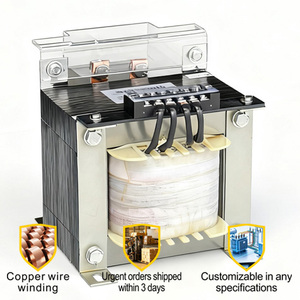
An in-depth analysis of high-voltage step-down topology, core loss optimization, dielectric selection, and international procurement standards for utility and industrial deployment.
Executive Summary: Power transformers form the critical backbone of global energy transition, grid modernization, and industrial electrification. Choosing the right China transformer manufacturer requires a comprehensive understanding of magnetic core loss economics, insulation thermal limits, harmonic suppression, and international compliance standards including IEC 60076, IEEE C57, and UL 1561. This guide examines technical selection criteria, total cost of ownership (TCO) models, and future manufacturing innovations.
At the center of electrical power distribution is the electromagnetic core. Modern high-efficiency power transformers manufactured in China rely on cold-rolled grain-oriented (CRGO) silicon steel sheets or advanced amorphous metal alloys. The choice of core material directly affects the transformer's no-load losses (iron losses, $P_0$), magnetizing current, and noise emissions.
In step-down applications—such as transitioning high-voltage transmission levels (110kV or 33kV) down to distribution voltages (11kV, 6.6kV, or 0.4kV)—core loss mitigation is paramount. Premier OEM factories employ step-lap core stacking configurations with 45-degree mitered joints. This structural refinement optimizes the magnetic flux path along the grain direction, reducing core losses by up to 15% and lowering total harmonic distortion (THD) under light load conditions.
| Core Material & Topology | No-Load Loss ($P_0$) Efficiency | Thermal Stability Index | Primary Application Profile |
|---|---|---|---|
| CRGO Silicon Steel (M4/HiB Grade) | Standard High Efficiency (S11 / SCB12) | Up to 180°C (Class H Compliant) | Regional substations, industrial plants, heavy machinery. |
| Amorphous Metal Alloy Core | Ultra-Low Loss (60-70% lower than CRGO) | Up to 150°C (Class F Rated) | Green hydrogen plants, solar farms, data centers. |
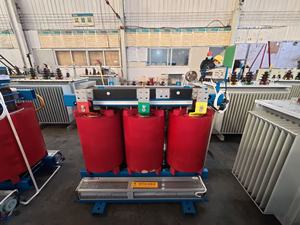
| Cast Resin Dry-Type Core (SCB14/18) | Optimized Low-Loss & Self-Extinguishing | Class F (155°C) & Class H (180°C) | Indoor commercial towers, subways, explosive mine sites. |
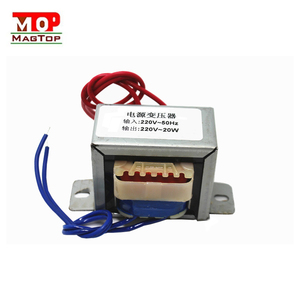
| Toroidal & Split-Phase Low Frequency | Low Stray Magnetic Field Flux | Up to 130°C (Class B/F) | Precision medical equipment, audio/control electronics. |
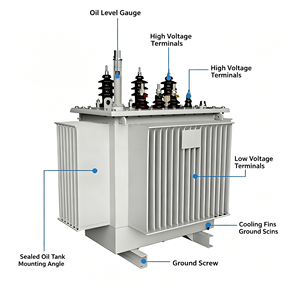
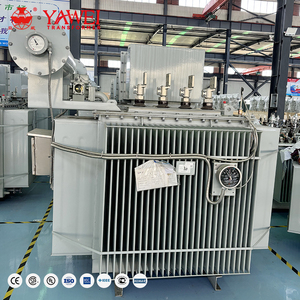
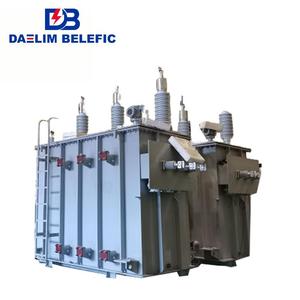
Selecting between oil-immersed power transformers and cast resin dry-type transformers depends on site environment, fire safety protocols, and load profiles. Oil-immersed units utilize mineral oil or synthetic ester fluids for dual-purpose dielectric strength and convection heat transfer. Advanced ONAN (Oil Natural Air Natural) and ONAF (Oil Natural Air Forced) cooling systems ensure continuous rated kVA delivery without exceeding maximum winding temperature rise limits (typically 65K over 40°C ambient per IEC 60076).
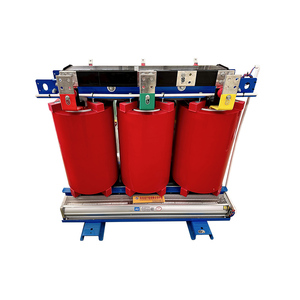
Conversely, cast resin dry-type transformers (such as SCB12, SCB14, and SCB18 series) utilize epoxy resin vacuum casting under full negative pressure. This process eliminates micro-voids within the winding lattice, yielding partial discharge rates under 10 pico-coulombs (pC). Dry-type units offer moisture resistance, zero risk of fluid leakage, and self-extinguishing fire safety, making them ideal for high-density urban infrastructure and underground installations.
The global power infrastructure sector is shifting toward decarbonization and digitized real-time asset tracking. Procurement engineers sourcing transformers from China are specifying advanced features to ensure long-term grid integration:
Transitioning from traditional mineral oils to natural and synthetic ester fluids with flash points above 300°C. Esters offer 100% biodegradability and extend insulation paper life by absorbing moisture.
Integration of Dissolved Gas Analysis (DGA) sensors, fiber-optic winding hot-spot probes, and micro-processor On-Load Tap Changers (OLTC) for predictive maintenance via SCADA networks.
Custom winding designs rated for K-Factor loads (K-4 to K-20) to handle non-linear harmonics generated by EV fast-charging hubs, variable frequency drives (VFDs), and large solar inverters.
When procuring power transformers, initial purchase price represents only a fraction of lifetime operating cost. Enterprise buyers evaluate vendor proposals using Total Cost of Ownership formulas that monetize iron and copper losses over a 25-to-30-year operational life:
Total Cost of Ownership Equation:
$$\text{TCO} = C_{\text{purchase}} + (A \times P_0) + (B \times P_k)$$
Where:
• $C_{\text{purchase}}$ = Capital procurement cost (CIF/FOB price)
• $P_0$ = Guaranteed No-Load Loss (kW)
• $P_k$ = Guaranteed Load Loss at rated temperature (kW)
• $A$ = Capitalized value of no-load loss ($/kW, typically $4,000–$8,000/kW based on utility rates)
• $B$ = Capitalized value of load loss ($/kW, typically $1,500–$3,000/kW based on duty cycle)
By engineering transformers with high-purity oxygen-free copper conductors (E-CU) and automated core stacking, our manufacturing facility delivers reduced $P_0$ and $P_k$ parameters that save up to $45,000 per unit in grid operational costs over its lifetime.
Backed by decades of power electronics expertise, state-of-the-art testing bays, and rigorous international quality controls.
From single-phase isolation units to 75 MVA regional substation transformers, our team modifies standard platforms or builds custom turn-ratio, vector group, and enclosure configurations.
Every unit undergoes induced over-voltage withstand testing, lightning impulse test, partial discharge measurement, and temperature rise verification in accordance with IEC 60076 standards.
With decades of export experience across North America, Europe, Africa, and Southeast Asia, we handle heavy-lift logistics, seaworthy packaging, and on-site commissioning guidance.
Engineered to withstand extreme ambient temperatures (-40°C to +55°C), high altitude, seismic vibration, and corrosive marine or industrial chemical environments.
Technical answers to common international procurement, specification, and logistics queries.
To receive an precise engineering design and commercial proposal, provide: Rated Capacity (kVA or MVA), Primary and Secondary Nominal Voltages (e.g., 11kV to 0.4kV), Vector Group (e.g., Dyn11, Ynd11), Short-Circuit Impedance percentage (%Z), Type of Cooling (ONAN, ONAF, AN, AF), Tapping Range and Type (Off-Circuit Tap Changer or On-Load Tap Changer), Winding Material (Oxygen-Free Copper or Aluminum), Ambient Operating Environment, and applicable Standards (IEC, IEEE/ANSI, UL, CSA).
The SCB series designation in Chinese standard specifications denotes energy efficiency tiers. SCB12 represents standard energy efficiency with optimized loss control. SCB14 reduces no-load losses by approximately 15% and load losses by 10% compared to SCB12. SCB18 is an ultra-low loss platform compliant with the latest global green grid directives, utilizing ultra-thin grain-oriented core sheets or amorphous alloys to minimize operational carbon footprints.
Every manufactured unit includes a Factory Routine Test Report detailing: Winding Resistance Measurement, Voltage Ratio and Phase Displacement Verification, Short-Circuit Impedance and Load Loss Measurement, No-Load Loss and Magnetizing Current Test, Separate-Source AC Withstand Voltage Test, Induced Overvoltage Withstand Test, and Insulation Resistance / Partial Discharge Checks. Type tests (such as Temperature Rise and Full-Wave Lightning Impulse tests) and Special tests (Short-Circuit Withstand Capability) can be conducted by third-party laboratories (KEMA, CNAS, Intertek) upon request.
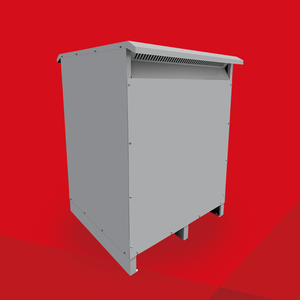
Single-phase and three-phase isolation transformers (such as 220V/16V or split-phase enclosed units) physically separate the primary and secondary electrical circuits through galvanic isolation. This stops ground loops, attenuates common-mode electrical noise, prevents high-voltage spikes from damaging sensitive industrial controllers, CNC units, and medical instruments, and ensures safety in damp or conductive environments.
Units are shipped either fully assembled with dielectric oil or nitrogen-filled under positive pressure for large power ratings to prevent core moisture absorption during sea transit. External radiator panels, bushings, and conservator tanks are disassembled, color-coded, and packed in heavy-duty IP65 wooden crates. Tanks feature anti-vibration anchor points and impact-monitoring sensors to guarantee mechanical integrity upon arrival at port.
Connect directly with our senior transformer engineering team to calculate core losses, evaluate vector groups, and receive factory-direct FOB/CIF pricing for your upcoming project.
Get Catalog