UK / Europe: +44 1268 568200 USA / Canada: +1 877 215 8463
in

China Best Solar Inverter Manufacturers & Factories

Strategic B2B Sourcing Guide, Power Electronics Architecture & Enterprise Procurement Benchmarks

Featured Solar Inverter Rectifiers & Power Electronics

High-reliability silicon-controlled rectifiers, fast recovery diodes, and high-voltage modules critical for grid-tied, hybrid, and industrial solar inverter platforms.
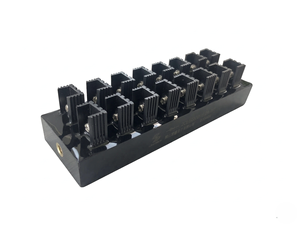
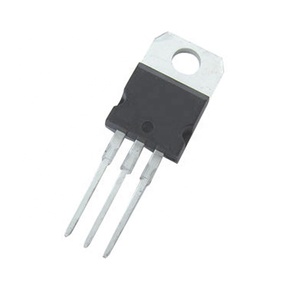
HIgh Current Diode 2CLG20KV/50A-WT High Voltage Rectifier Diode

High Current Diode 2CLG20KV/50A-WT High Voltage Rectifier Diode 20KV Block

Voltage: 20KV | Current: 50A | High Surge Capacity
Send an Inquiry
SCR 25A TO-220 Silicon Controlled Rectifier

SCR 25A TO-220 Silicon Controlled Rectifier for Inverter Soft Start & Switching

Package: TO-220 | Current: 25A | High Thermal Efficiency
Send an Inquiry
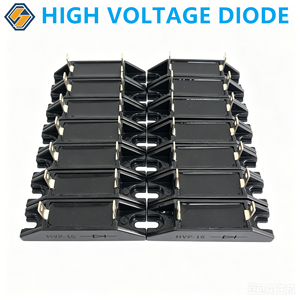
HVP-16 High Voltage Silicon Stack Rectifier 17.5KV HV diode

HVP-16 High Voltage Silicon Stack Rectifier 17.5KV HV Diode Assembly

Rating: 17.5KV | Fast Recovery | Industrial Grade
Send an Inquiry
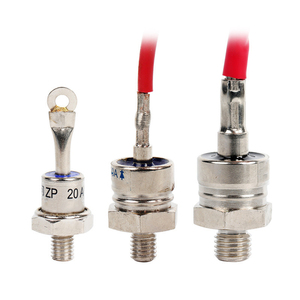
Spiral Diode ZP100A 1600V 2CZ Silicon High Power Rectifier Diode

Spiral Diode ZP100A 1600V 2CZ Silicon High Power Rectifier Diode

Voltage: 1600V | Current: 100A | Heavy-Duty Stud Mount
Send an Inquiry
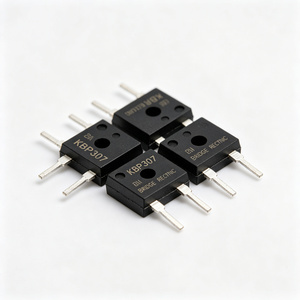
KBP307 KBP 4-pin Through-Hole Bridge Rectifier Diode 1000V 3A

KBP307 KBP 4-pin Through-Hole Bridge Rectifier Diode 1000V 3A Silicon

Voltage: 1000V | Current: 3A | Inverter Auxiliary Board
Send an Inquiry
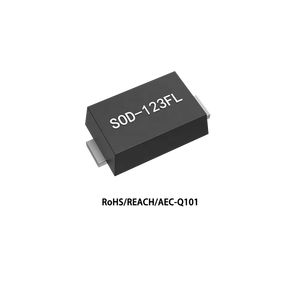
1N4006W SOD-123FL Silicon General Rectifier

1N4006W SOD-123FL Silicon General Rectifier (100% Traceable Lot Code)

SMD SOD-123FL | AEC-Q Qualification | Ultra-Compact
Send an Inquiry
P0080TA-MC SMA Surface Mount Silicon Zener Diodes

P0080TA-MC SMA Surface Mount Silicon Zener Fast Recovery Rectifier 2.2A

Package: SMA | Voltage: 10V | Transient Voltage Suppression
Send an Inquiry
OEM Brand Silicon Controlled Rectifier Brake Input 400VAC

OEM Silicon Controlled Rectifier Module 400VAC Input 180VDC Output (Model M400)

Input: 400VAC | Output: 180VDC | 90 Days Industrial Warranty
Send an Inquiry
30+
Years Power Engineering
99.4%
Inverter Conversion Efficiency
200kV
High Voltage Capability
ISO9001
Traceable Manufacturing

Executive Summary: Navigating China’s Solar Inverter Manufacturing Ecosystem

The global renewable energy infrastructure relies fundamentally on the conversion efficiency, thermal resilience, and grid compliance of solar power inverters. As utility-scale solar farms, commercial energy storage systems (BESS), and residential microgrids expand globally, evaluating China’s best solar inverter manufacturers and OEM/ODM factories becomes a critical strategic initiative for EPC (Engineering, Procurement, and Construction) firms, solar developers, and system integrators.

China dominates over 75% of the global solar inverter supply chain, offering an unmatched combination of semiconductor integration, magnetics manufacturing, scale economies, and rapid R&D cycles. However, navigating this massive ecosystem requires precise technical criteria beyond initial unit cost. Procurement leaders must evaluate topology designs (string inverters vs. central inverters vs. microinverters), total cost of ownership (TCO), thermal dissipation mechanisms, mean time between failures (MTBF), and adherence to international grid codes such as IEC 62109, IEEE 1547, and EN 50549.

High-Efficiency Conversion

Integration of Wide Bandgap (WBG) semiconductors like Silicon Carbide (SiC) and Gallium Nitride (GaN) push European Efficiency benchmarks past 98.8%, minimizing switching losses across high-frequency MPPT channels.

Grid-Forming Stability

Advanced firmware control enables virtual synchronous generator (VSG) behavior, supporting weak grid networks, providing inertia emulation, and performing ultra-fast black-start recovery routines.

BESS & Hybrid Coupling

Multi-port bidirectional architectures seamlessly interface high-voltage battery storage (LiFePO4) with solar PV arrays, optimizing self-consumption, peak shaving, and microgrid resiliency.

Power Electronics Architecture: The Core of Chinese Inverter Superiority

The operational longevity of a solar inverter is determined by the quality of its internal power semiconductor devices, passive components, and thermal dissipation systems. Chinese tier-1 factories have transitioned from basic topology replication to pioneering advanced multi-level switching topologies.

1. Multi-Level Neutral Point Clamped (NPC) Topologies

Modern 1500V DC string inverters utilize 3-level NPC and Active NPC (ANPC) topologies. By reducing voltage stress ($dV/dt$) across IGBT switches, these designs decrease harmonic distortion (THD < 1.5%), cut choke inductor size by 40%, and achieve peak conversion efficiencies exceeding 99.0%.

2. Robust Rectification and Soft-Start Protection

Auxiliary power supply units (SMPS) and surge mitigation circuits inside industrial inverters depend on high-reliability semiconductors. Components like Silicon Controlled Rectifiers (SCRs), high-voltage rectifier stacks, and fast-recovery Zener diodes protect sensitive digital signal processors (DSPs) from grid transients, lightning surges, and initial capacitive inrush currents.

3. Thermal Management & Ingress Protection

Factories in China's power electronics hubs (Shenzhen, Suzhou, Hefei, Yueqing) employ advanced thermal modeling. By pairing phase-change thermal interface materials (TIM) with IP66/NEMA 4X die-cast aluminum enclosures and smart forced-air cooling channels, operating junction temperatures remain well within safe limits even at 50°C ambient temperatures without derating.

E-E-A-T Quality Principle: Traceability in Semiconductor Sourcing

Top-tier Chinese OEM manufacturers enforce strict wafer-level traceability (100% traceable lot codes). Using automated optical inspection (AOI), X-ray void analysis for soldered IGBT modules, and 100% full-load burn-in testing under elevated temperatures (50°C for 48 hours), quality-first factories drastically reduce early life failures (Infant Mortality Rate).

Future Solar Inverter Procurement & Technology Trends (2025–2030)

B2B procurement teams must look beyond immediate project requirements to align with macro technology shifts occurring across solar power conversion infrastructure. Key procurement trends include:

  • Dominance of 1500V DC and Higher Voltage Platforms: Utility solar systems are rapidly shifting from 1000V DC to 1500V DC architecture, reducing Balance of System (BOS) cabling costs by up to 20%. Research labs in China are actively prototyping 2000V DC inverter architectures for next-generation utility fields.
  • Grid-Forming vs. Grid-Following Requirements: As renewable energy penetration exceeds 50% in major electrical grids, utilities require inverters with active grid-forming capabilities. Inverters must regulate voltage and frequency autonomously without relying on a stable external grid signal.
  • Integration of Silicon Carbide (SiC) Power Switches: SiC MOSFETs enable switching frequencies up to 5x higher than traditional Si IGBTs, allowing dramatic reductions in magnetics weight and size while boosting high-temperature efficiency.
  • AI-Driven Predictive Maintenance & AFCI: Arc Fault Circuit Interrupters (AFCI) powered by deep-learning algorithms detect micro-arcing events within 200 milliseconds, meeting stringent UL 1699B safety standards to mitigate fire risks in rooftop C&I installations.
  • Comprehensive Battery Energy Storage System (BESS) Synergy: Hybrid inverters featuring DC-coupled storage ports are replacing standalone solar string inverters, allowing direct DC-to-DC charging of energy storage units to avoid redundant AC conversion losses.

Comparative Evaluation Matrix: Solar Inverter Technologies

Understanding the operational trade-offs between different solar inverter topologies is critical for selecting the appropriate Chinese manufacturing partner:

Inverter Topology Typical Power Range Peak Efficiency Best Application Key Semiconductor Needs
Microinverters 300W – 2.2kW 96.5% – 97.5% Residential Rooftops, Shaded Areas High-speed SMD Diodes, Low-RDS MOSFETs
C&I String Inverters 20kW – 125kW 98.4% – 98.7% Commercial Rooftops, Carports, Small Utility Discrete SiC MOSFETs, Fast Recovery Rectifiers
Utility String Inverters 150kW – 350kW 99.0% – 99.2% Large Scale Ground-Mount Solar Arrays 3-Level ANPC IGBT Modules, High Current Diodes
Central Inverter Stations 1.5MW – 4.4MW 98.8% – 99.1% Flat Terrain Massive Utility Plants Heavy Duty Thyristor/SCR Blocks, High Voltage Stacks

Why Partnering with Proven Power Engineering Factories Matters

Combining over three decades of high-voltage power conversion expertise, rigorous UK/EU compliance standards, and precision Chinese semiconductor manufacturing facilities.

30+ Years Power Electronics Engineering

Engineered power solutions built on decades of experience in thyristor-controlled rectifiers, AC-DC converters, isolated DC-DC modules, and ultra-high voltage power supplies reaching up to 200kV.

ISO 9001 & ISO 14001 Quality Controls

Full lifecycle quality auditing from incoming raw component inspection (IQC) to automated in-circuit testing (ICT), high-potential insulation safety tests, and final factory acceptance testing (FAT).

Custom OEM/ODM Engineering Flexibility

Whether modifying standard inverter topologies or designing clean-sheet custom power conversion systems for hydrogen electrolysis or high-altitude solar farms, experienced power design teams accelerate time-to-market.

Frequently Asked Questions (FAQ)

Addressing key technical, compliance, and supply-chain inquiries for international buyers sourcing solar inverters and power components from China.

How do I evaluate the reliability of a Chinese solar inverter manufacturer?
To properly evaluate a manufacturing site, request documentation covering: 1) ISO 9001 certification and auditing reports; 2) Third-party laboratory test reports for IEC 62109-1/-2, IEC 61000-6 EMC compliance, and grid code compliance (UL 1741 SA, IEEE 1547); 3) Component Bill of Materials (BOM) transparency verifying semiconductor origins (e.g., tier-1 IGBTs, long-life 105°C electrolytic or film capacitors); and 4) Highly Accelerated Life Testing (HALT) data verifying thermal cycle endurance from -40°C to +65°C.
What is the difference between string inverters and central inverters for utility projects?
String inverters (typically 100kW–350kW) convert DC electricity from smaller clusters of PV panels. They offer higher system granularity, independent MPPT tracking (minimizing losses from partial shading), easier maintenance (plug-and-play replacement without total plant shutdown), and higher system availability. Central inverters (1.5MW–4.4MW) consolidate DC power into massive containerized units; while offering lower initial capital cost per watt for vast, flat solar farms, a single central failure results in significant localized power output loss.
Why are Silicon Controlled Rectifiers (SCRs) and Diodes critical in solar inverters?
High-voltage diodes, bridge rectifiers, and Silicon Controlled Rectifiers (SCRs) perform essential conditioning, surge suppression, and soft-starting functions. During grid connection or sudden irradiance spikes, heavy-duty rectifiers limit severe inrush currents that could otherwise destroy delicate power MOSFETs or IGBT driver boards. Additionally, high-voltage diodes prevent reverse current flow from battery banks or DC buses back into solar panels during nighttime conditions.
Can Chinese solar inverter factories provide customized OEM/ODM brand manufacturing?
Yes. Leading factories offer extensive OEM/ODM customization services. This includes customized exterior housing colors and metalwork, branded user interfaces (LCD screens and mobile app branding), tailored firmware matching specific regional grid codes, custom communication protocols (Modbus RS485, SunSpec, Ethernet, CAN bus), and specialized packaging for global export markets.
What warranties and spare-parts support should be negotiated in B2B inverter contracts?
Standard B2B inverter warranties range from 5 to 10 years, with optional extended warranties up to 20 or 25 years for string units. Procurement contracts should explicitly specify: 1) Advance replacement SLA (Service Level Agreement) terms; 2) Availability of field-replaceable units (FRUs) such as fan assemblies, surge protection devices (SPDs), control boards, and power modules; and 3) Guaranteed minimum spare-parts availability for 10–15 years post-production run.
How does thermal dissipation affect total cost of ownership (TCO) in hot climates?
In high-ambient environments (desert installations, tropical locations), inadequate cooling forces the inverter into automatic power derating, cutting total megawatt-hour (MWh) generation during peak sunlight hours. Premium inverters utilizing redundant smart fans, isolated cooling channels, or liquid-cooling blocks maintain 100% rated output up to 45°C or 50°C without derating, delivering significantly higher financial yield over a 25-year plant lifecycle.

Partner with Leading Power Conversion Engineers

Connect directly with expert power electronics specialists to review your solar inverter project, custom semiconductor requirements, or OEM contract specifications.

Send an Inquiry