High-reliability power semiconductor building blocks manufactured under strict ISO 9001 compliance for industrial induction heating, electrolysis, cathodic protection, and high-voltage power supplies.
Silicon Controlled Rectifiers (SCRs) and thyristor modules remain the backbone of heavy industrial power conversion, megawatt-scale rectification, electrical grid control, and electrochemical processing. As global supply chains seek high-efficiency power semiconductors with elevated mean time between failures (MTBF), China’s best thyristor module factories and suppliers have transitioned from basic discrete assembly to advanced semiconductor packaging, Direct Bonded Copper (DBC) substrate integration, and automated glass passivated wafer fabrication.
This technical white paper evaluates the architectural innovations, thermal dynamics, procurement risk mitigations, and performance benchmarks necessary for power systems engineers, procurement heads, and OEM designers when sourcing thyristor power modules, diode stacks, and phase-control assemblies from top-tier Chinese manufacturing ecosystems.
Selecting an industrial SCR or thyristor-diode module requires rigorous matching of electrical stress profiles against thermal dissipation capabilities. When auditing China thyristor factories, engineering teams must evaluate six critical semiconductor parameters:
Ensuring voltage margins of 2.2x to 2.5x over line operational AC voltage prevents destructive avalanche breakdowns during grid transients and inductive load switching.
High-frequency electromagnetic interference (EMI) can trigger unwanted SCR turn-on. Premium Chinese suppliers offer passivated chips with $dv/dt$ ratings exceeding 1000 V/µs.
Short-circuit withstand capabilities are dictated by the silicon die size and internal wire bonding. Top-tier modules sustain surge pulses up to 10–15 times rated continuous current.
Understanding the internal electrical topology is essential when matching thyristor and diode modules to industrial power supply units (PSUs), soft starters, and motor brake controls.
| Module Topology Type | Typical Current Range | Primary Industrial Applications | Thermal & Electrical Advantage |
|---|---|---|---|
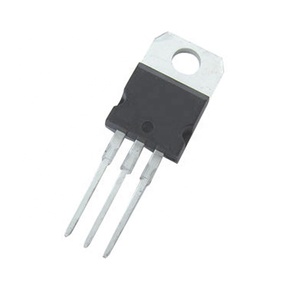
| Dual SCR Module (MCC / MTC) | 100A – 1000A | AC Motor Soft Starters, Phase-Controlled Rectifiers | Complete isolated baseplate; isolated gate drive simplifies multi-phase wiring. |
| SCR / Diode Hybrid (MDC / MDA) | 50A – 800A | Plating Power Supplies, Unregulated/Regulated Front-Ends | Cost-effective half-bridge control; optimizes gate driver complexity. |
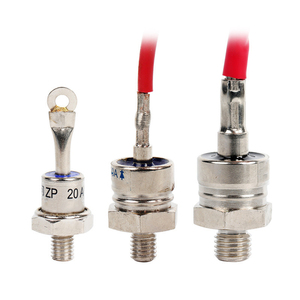
| Stud & Spiral Disc Thyristor / Diode | 100A – 4000A+ | Megawatt Electrolysis, HVDC Transmission, Induction Heating | Ultra-high surge handling; double-sided liquid/forced-air cooling options. |
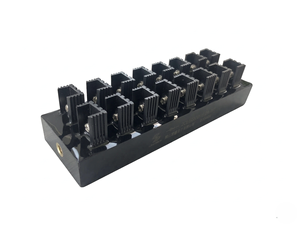
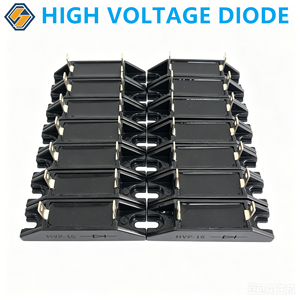
| High Voltage Stack Rectifier (HVP / 2CLG) | 10mA – 50A / 10kV–200kV | RF Generators, Electrostatic Precipitators, Medical X-Ray | Multi-chip series encapsulation for high dielectric breakdown endurance. |
The global shift toward green energy conversion—specifically Green Hydrogen Production via water electrolysis, high-efficiency electrochlorination, and carbon capture facilities—is driving major technical shifts in thyristor packaging:
Traditional soldered power modules suffer from solder fatigue under thermal cycling. Leading Chinese factories supplying high-end industrial programs are standardizing on pressure-contact design. By eliminating solder joints between the silicon die and the copper baseplate, thermal cycle life is increased by up to 10-fold, rendering the modules virtually immune to mechanical fatigue in 24/7 continuous duty cycles.
While silicon thyristors remain unbeatable for ultra-high voltage and current conduction ($>5000\text{V}, >3000\text{A}$), dynamic switching losses ($E_{on}, E_{off}$) are being mitigated by combining silicon SCR main junctions with SiC auxiliary trigger circuits. This hybrid architecture lowers switching losses by 20% in high-frequency induction heating and pulse power systems.
Procurement specifications for Industry 4.0 factories now demand smart modules equipped with embedded NTC thermistors and direct optical-fiber gate triggers. This allows real-time telemetry of junction temperatures ($T_j$), enabling predictive maintenance before catastrophic thermal breakdown occurs.
Sourcing power semiconductors from China requires looking beyond initial unit price. Technical directors and global procurement managers must implement a holistic total cost of ownership (TCO) evaluation framework:
Ensure your supplier enforces 100% wafer lot traceability. Raw silicon ingot origin, passivation chemistry, and packaging batch codes must be certified to prevent counterfeit components from entering mission-critical assembly lines.
Verify compliance with international standards including IEC 60747-6 for thyristors, UL94V-0 for flame-retardant housing encapsulation, and RoHS/REACH environmental safety directives.
Choose manufacturers capable of custom lead forming, customized gate trigger currents ($I_{GT} < 50\text{mA}$), specialized heatsink integration, and tailored reverse recovery parameters ($t_{rr}$).
Referencing decades of industrial power conversion experience, our allied manufacturing facilities in China combine European-tier quality management with agile, high-capacity manufacturing. Whether building custom megawatt transformer rectifiers for electrolysis or supplying discrete high-voltage rectifier stacks for induction heating, our operations deliver distinct operational strengths:
Thyristor SCR modules excel in ultra-high power, low switching frequency applications (< 1 kHz) where extremely high surge current capacity ($I_{TSM}$), high voltage handling (up to 6500V), and minimal conduction losses ($V_T \approx 1.0\text{V}-1.4\text{V}$) are required—such as electrolysis, motor soft starting, and heavy-duty AC-DC phase control. IGBT modules are preferred for high-frequency switching (> 10 kHz) applications requiring rapid pulse-width modulation (PWM), such as variable frequency drives (VFDs) and high-frequency uninterruptible power supplies (UPS).
Proper thermal management is critical to prevent thermal runaway. The heatsink surface must be machined to a flatness of $\le 30\,\mu\text{m}$ and a roughness of $R_z \le 6.3\,\mu\text{m}$. A uniform layer of high-performance thermal conductive paste (1.5 W/m·K to 3.0 W/m·K) applied at a controlled thickness of 50–100 µm is necessary. Screws must be tightened in a two-step cross pattern using calibrated torque wrenches according to the manufacturer's specific torque ratings (typically 3–5 N·m for standard M5/M6 modules).
When operating thyristor modules in parallel or series strings, tight tolerance matching of gate trigger current ($I_{GT}$) and forward voltage drop ($V_T$) ensures simultaneous firing and equal current distribution. Unmatched gate characteristics lead to localized current concentration, localized overheating, and premature module failure. Leading Chinese suppliers provide pre-sorted, matched-pair modules for high-reliability parallel arrays.
Standard OEM documentation must include: 1) Wafer diffusion lot certificates; 2) 100% electrical parameter inspection reports ($V_{DRM}, V_{RRM}, I_{DRM}, I_{RRM}, V_{TM}, I_{GT}, V_{GT}$); 3) Baseplate isolation breakdown test certificates (typically 2.5kV AC to 3.6kV AC for 1 minute); and 4) RoHS / REACH material safety compliance declarations.
Yes. Leading Chinese manufacturing partners offer clean-sheet OEM/ODM development as well as form-fit-function drop-in replacements for obsolete European or American power semiconductors. This includes custom copper baseplate stamping, internal busbar modifications, specialized epoxy potting, and tailored $dv/dt$ or $di/dt$ characteristics.
Partner with a verified leader in high-power thyristor modules, high voltage rectifiers, and custom power conversion solutions. Connect with our technical application team today for customized quotations and complete product documentation.
