
1. Technical Executive Summary: The Evolution of Toroidal Power Magnetics in China
In modern industrial power electronics, medical diagnostic systems, green energy electrolysis, and high-reliability aerospace installations, toroidal transformers represent the peak of efficiency, electromagnetic compatibility (EMC), and compact form-factor magnetics. Unlike traditional E-I laminated core transformers, toroidal transformers utilize a continuous ring core made of high-permeability Grain-Oriented Silicon Steel (CRGO), amorphous metals, or ultra-fine nanocrystalline alloys. This continuous core topology eliminates air gaps, reducing magnetic flux leakage by up to 90% and minimizing magnetostrictive acoustic hum to near-zero decibels.
China has firmly established itself as the global manufacturing epicenter for advanced toroidal magnetics and integrated power conversion assemblies. By combining domestic access to high-grade magnetic steels with automated toroidal precision-winding technology, top-tier Chinese manufacturers deliver industrial-grade power transformers engineered to strict international standards, including IEC/EN 61010, IEC 60601-1 for medical platforms, UL 5085, and MIL-STD environments.
Core Procurement Insight: Sourcing toroidal transformers from qualified OEM/ODM partners in China allows engineering teams to achieve high power density (up to 98% efficiency) while customizing winding schemes, thermal potting compounds, dielectric insulation barriers, and integrated rectifier semiconductor stacks within unified enclosures.
2. Structural Advantages & Physics of Toroidal Magnetic Designs
Understanding why global OEMs specify toroidal transformers over traditional rectangular core topologies requires evaluating key magnetic efficiency parameters:
Low Stray Magnetic Field
The symmetrical circular winding evenly distributes magnetic flux throughout the closed-loop core. This results in minimal external electromagnetic interference (EMI), critical for sensitive audio, medical imaging, and RF induction heating equipment.
High Energy Efficiency
No-load losses (core losses) are reduced by up to 80% compared to E-I laminations. The continuous grain direction of CRGO steel allows operating magnetic flux densities up to 1.6 to 1.8 Tesla with minimal excitation current.
Compact Form Factor
Toroidal units deliver equivalent KVA ratings at approximately 50% of the weight and volume of conventional transformers, allowing compact mechanical integration into 1U/2U rackmount chasses or custom process skids.
3. Comprehensive Comparison: Toroidal vs Traditional Magnetics
The following engineering data table highlights why leading global OEMs transition their power supply architectures toward toroidal solutions:
| Performance Parameter | Standard E-I Laminated Transformer | C-Core Transformer | Precision Toroidal Transformer |
|---|---|---|---|
| Operating Efficiency | 80% – 88% | 88% – 93% | 95% – 98.5% |
| Stray Magnetic Field (EMI) | High (Requires Heavy Shielding) | Moderate | Ultra-Low (< 10% of E-I) |
| No-Load Core Loss (Watts) | Baseline (100%) | Approx. 60% | 15% – 25% of Baseline |
| Weight & Volume Ratio | 100% (Bulky) | Approx. 75% | 50% – 60% (Ultra-Compact) |
| Acoustic Noise (Hum) | 40 – 55 dBA | 30 – 40 dBA | < 20 dBA (Silent Operation) |
| Thermal Dissipation Profile | Concentrated Hotspots | Uniform Core/Coil Boundary | 360° Uniform Heat Dissipation |
4. Integration of Toroidal Magnetics with High-Power Rectifiers
Toroidal transformers rarely work in isolation; they form the magnetic heart of complex AC-DC power supplies, high-voltage stack rectifiers, and industrial pulse-power networks. Sourcing integrated systems from experienced Chinese suppliers ensures seamless electrical matching between primary/secondary transformer turns and downstream semiconductor stacks.
High-Voltage Diode & Silicon Controlled Rectifier (SCR) Topologies
In applications such as high-frequency induction heating, electrochlorination, cathodic protection, and green hydrogen electrolysers, raw AC voltage from the toroidal secondary winding must be rectified and regulated under harsh dynamic loads. Topologies frequently integrated by Chinese OEM manufacturers include:
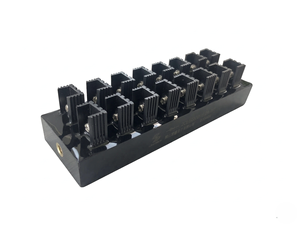
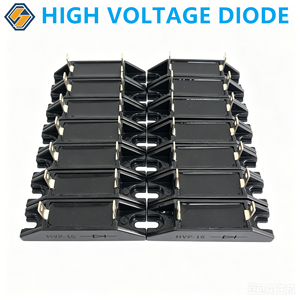
- High-Voltage Diode Blocks (e.g., 2CLG20KV/50A-WT & HVP-16 Series): Applied in secondary high-voltage multipliers for RF equipment, industrial corona treaters, and electrostatic precipitators. These stacked silicon modules withstand severe reverse voltage transients (up to 20kV+) without avalanche breakdown.
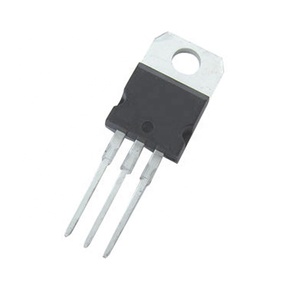
- Silicon Controlled Rectifiers (e.g., 25A TO-220 & OEM M400 MGM Drives): Thyristor-controlled phase-angle firing circuits enable precise continuous voltage and current regulation. When combined with center-tapped or multi-phase toroidal secondaries, SCR assemblies provide low-ripple output essential for electroplating, battery charging, and motor braking systems.
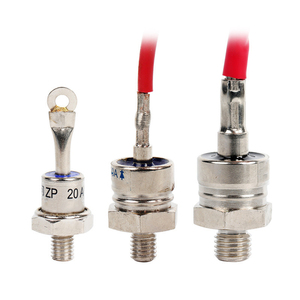
- Heavy-Duty Stud & Spiral Diodes (e.g., ZP100A 1600V): Mounted on extruded aluminum heat sinks with forced-air or liquid cooling, high-current spiral diodes handle continuous DC loads in excess of 100A to multi-kiloampere arrays for electroplating and chlor-alkali process cells.
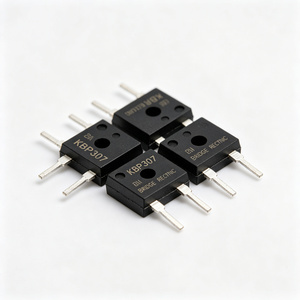
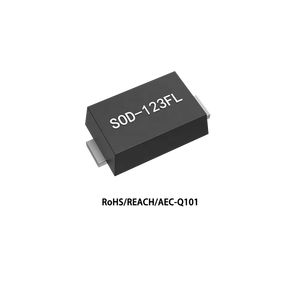
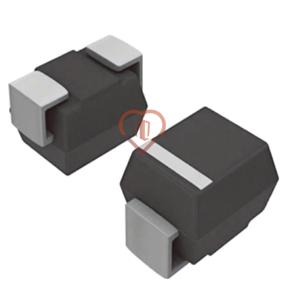
- Miniature & SMD Rectifiers (e.g., KBP307 Bridge, 1N4006W SOD-123FL, P0080TA-MC Zener/Fast Recovery): Embedded directly on auxiliary control PCBA modules to provide stable DC power for microcontrollers, feedback sensors, gate drivers, and digital communication buses.
5. Future Sourcing & Technical Procurement Trends (2025–2030)
As global industries transition toward decarbonization, high-density power conversion, and smart grid automation, the procurement landscape for toroidal magnetics is undergoing fundamental changes. B2B buyers evaluating Chinese manufacturers should align their procurement strategies with four key industry trends:
Trend 1: High-Frequency Nanocrystalline & Hybrid Toroidal Cores for Wide Bandgap (SiC/GaN) Power Electronics
With the widespread adoption of Silicon Carbide (SiC) and Gallium Nitride (GaN) switching devices operating at frequencies from 50 kHz to over 500 kHz, traditional silicon steel cores suffer excessive eddy current losses. Forward-thinking Chinese manufacturers are investing heavily in nanocrystalline ribbon-wound toroidal cores. These advanced cores feature magnetic permeability up to 100,000 and extremely low coercive force, enabling next-generation resonant transformers and coupled inductors for high-efficiency EV chargers and renewable energy microinverters.
Trend 2: MW-Scale Modular Rectifier Systems for Green Hydrogen Electrolysis
The rapid scale-up of Proton Exchange Membrane (PEM) and Alkaline water electrolysis plants demands direct-current power supplies delivering tens of thousands of Amperes at high power factors. Sourcing trends favor multi-pulse transformer-rectifier topologies (12-pulse, 18-pulse, and 24-pulse systems). Utilizing specialized toroidal phase-shifting transformers paired with thyristor rectifier banks cancels line-side harmonics, ensuring full compliance with IEEE 519 grid standards without bulky external harmonic filters.
Trend 3: Smart Transformers with IoT Thermal & Insulation Monitoring
Industry 4.0 integration requires power equipment to provide real-time operational telemetry. Modern industrial toroidal transformers are increasingly embedded with NTC thermistors, Fiber-Optic temperature probes, and micro-sensors for partial discharge detection. Smart digital monitoring cards transmit operating temperature, winding strain, and load status over Modbus RTU, CANopen, or Ethernet/IP to centralized SCADA systems, shifting maintenance from reactive schedules to predictive AI-driven algorithms.
Trend 4: Automated Precision Winding & Fully Encapsulated Epoxy Resin Castings
To eliminate human error in high-turns-ratio toroidal winding, leading Chinese suppliers have deployed 5-axis CNC toroidal shuttle winders. Furthermore, for harsh operational environments—such as offshore oil & gas platforms, subsea cathodic protection, and mining equipment—transformers are cast in vacuum pressure impregnated (VPI) polyurethane or thermal-epoxy resins, achieving IP67/IP68 ingress protection and Class H (180°C) or Class R (220°C) thermal insulation ratings.
6. Comprehensive Supplier Evaluation & Verification Framework
To establish a resilient, high-E-E-A-T supply chain with Chinese toroidal transformer manufacturers, engineering procurement managers must implement a rigorous four-stage audit process:
- Design & FEA Simulation Validation: Verify that the manufacturer utilizes Finite Element Analysis (FEA) software (e.g., ANSYS Maxwell) to simulate core saturation, thermal hot-spots, and leakage inductance prior to prototype fabrication.
- Raw Material Traceability & Compliance: Ensure 100% traceability for raw CRGO silicon steel coils, oxygen-free copper winding wire (Class 200 coated), thermal potting resins (UL 94-V0 certified), and semiconductor components. Request complete RoHS, REACH, and Conflict Minerals documentation.
- In-Line & End-of-Line Automated Testing: Certified production facilities must conduct mandatory automated testing on 100% of finished units, including:
- High-Potential (Hipot) Dielectric Withstand Voltage Test (up to 4 kV+ primary-to-secondary).
- Induced Over-Voltage and Inter-Turn Insulation Integrity Test.
- No-Load Excitation Current and Core Loss Measurement.
- Total Harmonic Distortion (THD) and Temperature Rise Verification under rated thermal load.
- Quality Management Certifications: Sourcing priority should be granted to facilities audited under ISO 9001:2015, ISO 14001 (Environmental), IATF 16949 (Automotive), and ISO 13485 (Medical Devices).
7. Enterprise Manufacturing Capabilities & Custom OEM Engineering
Representing the apex of power electronics manufacturing, our partner facilities deliver clean-sheet custom magnetics alongside off-the-shelf high-reliability modules. Building upon over 30 years of engineering excellence, our manufacturing capabilities bridge the gap between initial electrical specification and qualified mass production.
Whether your programme requires high-voltage power supplies up to 150 kW / 200 kV, custom capacitor charging units delivering up to 40 kJ/s, frequency converters (0–500 Hz up to 120 kVA), or ruggedized MIL-COTS DC-DC converters aligned with MIL-STD-704, MIL-STD-1275, and MIL-STD-461 standards, our value-added engineering team provides complete electrical design, thermal optimization, EMC compliance testing, and full lifecycle support.