Engineered to pass rigorous aerospace thermal stress, high-altitude isolation, and electromagnetic interference (EMI) screening standards.
The global aerospace sector is undergoing a profound paradigm shift toward the More Electric Aircraft (MEA) and All-Electric Aircraft (AEA) initiatives. Modern commercial airliners, military fighters, unmanned aerial vehicles (UAVs), and eVTOL platforms require increasingly complex electrical power distribution systems (EPDS). As traditional hydraulic and pneumatic flight control actuators give way to electromechanical systems, the demand for compact, ultra-reliable, high-density AC-DC power converters, transformer rectifiers (TRUs), and DC-DC converter bricks has reached an all-time high.
As China's premier manufacturer and custom supplier of defense-grade and industrial power components, our engineering facility bridges the gap between legacy 28V DC / 115V 400Hz AC power grids and emerging high-voltage DC (HVDC) distribution standards (such as 270V DC and 540V DC). Leveraging over three decades of power electronics expertise, our solutions are architected to withstand extreme environmental parameters—including thermal shock, wide altitude variations, partial discharge, intense electromagnetic interference (EMI), and severe mechanical vibration.
We do not merely supply standard part numbers. Our value-added power engineering team develops clean-sheet architectures—optimizing planar magnetics, liquid cold plates, and wide-bandgap (SiC/GaN) semiconductors to achieve maximum power density within tight SWaP-C (Size, Weight, Power, and Cost) constraints.
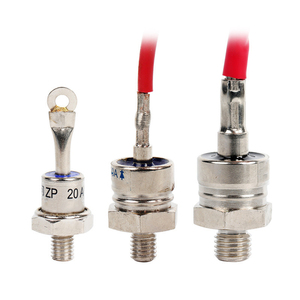
Every silicon controlled rectifier (SCR), high-voltage diode stack, and MIL-COTS converter module undergoes stringent lot screening, thermal cycling (ESS), and electrical stress testing under ISO 9001 and AS9100 quality management system controls, ensuring 100% component-level traceability.
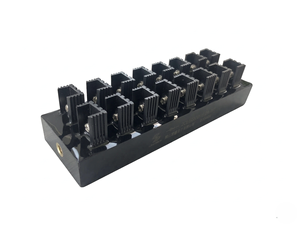
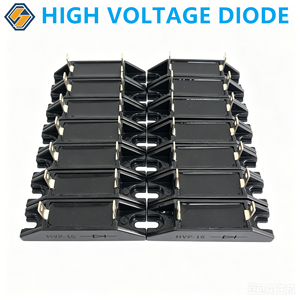
Engineered to meet stringent lightning transient (DO-160G Section 22) and power quality requirements (MIL-STD-704F), our high-voltage rectifier blocks (up to 20kV / 200kV power systems) guarantee corona-free operation and low ripple performance for radar, electronic warfare, and pulse loads.
Comparing primary power conversion architectures for airborne, ground support, and defense platform applications.
| Topology Platform | Typical Input Range | Output Capabilities | Efficiency Grade | Primary Avionics Application |
|---|---|---|---|---|
| 12-Pulse / 18-Pulse Transformer Rectifiers (TRU) | 115V / 230V AC, 400Hz 3-Phase | 28V DC (Up to 500A) / 270V DC | 92% – 95% | Main aircraft DC bus power, electro-hydraulic actuators (EHA), environmental control units (ECU). |
| High-Voltage Silicon Stack Rectifiers | Single-Phase / 3-Phase High Frequency AC | 5kV to 20kV DC (Custom to 200kV) | 94% – 97% | Airborne phased-array radar transmitters, traveling wave tube amplifiers (TWTA), high-power laser systems. |
| Phase-Shifted Full-Bridge (PSFB) Isolated DC-DC | 270V DC / 540V DC Bus | 28V DC / 48V DC / Custom Multi-rail | 95% – 98% (SiC / GaN Based) | Flight control data computers, mission avionics bays, communications transceivers. |
| Silicon Controlled Rectifier (SCR) Power Controllers | 115V AC / 400VAC 50/60/400Hz | Variable Controlled DC Output | 96% – 99% | Solid-state circuit breakers, dynamic brake actuation, de-icing system power control. |
| MIL-COTS Ultra-Wide Input DC-DC Bricks | 9V – 36V DC / 16V – 50V DC (MIL-STD-1275) | 3.3V, 5V, 12V, 15V, 28V Isolated | 88% – 93% | Targeting pods, UAV payload sensors, ruggedized tactical display units. |
As aerospace prime contractors and system integrators reshape their global tier-1 and tier-2 supply chains, four major procurement shifts dominate the landscape.
Traditional 28V DC systems suffer from severe $I^2R$ resistive wiring losses when powering high-wattage electromechanical loads. Modern aircraft architectures are rapidly standardizing on 270V DC bus architectures. Procurement engineers are systematically seeking qualified Asian manufacturing partners capable of delivering high-voltage rectifiers, low-loss fast recovery diodes, and isolated DC-DC converters rated for partial discharge breakdown resistance above 15,000 feet.
Clean-sheet custom power supply designs often carry long lead times and high non-recurring engineering (NRE) costs. Global buyers are moving toward MIL-COTS (Commercial Off-The-Shelf) platforms that feature pre-qualified compliance with MIL-STD-704 (aircraft electrical power characteristics), MIL-STD-461 (EMC emission & susceptibility), and MIL-STD-810 (environmental testing). Modular brick topologies allow fast adaptation to bespoke enclosure dimensions while maintaining strict qualification schedules.
Global aerospace OEMs are actively diversifying component procurement to prevent bottlenecks. Leading defense procurement managers prioritize China-based manufacturers that maintain robust raw material stocks (such as high-purity silicon wafers, oxygen-free copper, and advanced ceramic substrates) alongside transparent lot code traceability and counterfeit mitigation protocols (compliant with AS6081 standards).
While Silicon Carbide (SiC) MOSFETs offer unprecedented switching frequencies and elevated junction temperature tolerances ($>175^\circ\text{C}$), legacy silicon high-voltage diode stacks remain unmatched in high-voltage robustness and surge current endurance. The current procurement trend favors hybrid power modules—pairing SiC active switches with high-voltage silicon rectifier stacks to balance peak efficiency with absolute fault tolerance.
In the pursuit of maximum gravimetric and volumetric power density, avionics power design is undergoing rapid technological evolution. Key technology development vectors include:
Traditional wire-wound transformers are being replaced by multilayer planar transformers integrated directly into high-density printed circuit boards (PCBs). This delivers consistent leakage inductance, superior heat dissipation, and a profile height reduction of up to 60%, essential for tight avionics bays.
Using Direct Bonded Copper (DBC) ceramic substrates, aluminum nitride (AlN) insulators, and vacuum encapsulation techniques, modern rectifiers achieve extremely low junction-to-case thermal resistance ($R_{th(j-c)}$), allowing reliable operation under ambient temperatures ranging from $-55^\circ\text{C}$ to $+125^\circ\text{C}$.
To comply with stringent airborne harmonic distortion limits (such as DO-160G Category M/H), power conversion systems incorporate active matrix PFC front-ends, achieving power factors $>0.98$ and total harmonic distortion (THD) $<3\%$ across variable generator frequencies (360Hz to 800Hz).
Frequently asked questions regarding technical compliance, qualification standards, custom engineering, and sourcing logistics.
Our manufacturing and screening processes are specifically structured for harsh operational profiles. Components and modules undergo rigorous Environmental Stress Screening (ESS), including thermal cycling ($-55^\circ\text{C}$ to $+125^\circ\text{C}$), random vibration testing (up to 20G peak), salt fog exposure, and high-altitude low-pressure flashover testing. Epoxy encapsulation and silicone potting compounds are vacuum-degassed to eliminate micro-voids, preventing partial discharge at altitudes up to 70,000 feet.
To provide an exact engineering proposal, our technical team requires: (1) Nominal & Peak Input Voltage/Frequency range; (2) Required DC Output Voltage, Continuous Current, and Peak Surge Current ($I_{FSM}$); (3) Dynamic reverse recovery time ($t_{rr}$) requirements; (4) Thermal dissipation method (conduction cold plate, forced air, or liquid-cooled); (5) Enclosure SWaP constraints; and (6) Applicable target compliance standards (e.g., MIL-STD-704F, DO-160G, IEC 61010).
Defense and avionics-grade components differ in wafer processing, glass passivating quality, structural hermeticity, and testing intensity. Avionics diodes feature glass-passivated die junctions, double-sided pressure contacts for high thermal cycling endurance, and 100% burn-in under high reverse voltage stress ($V_{RRM}$). Furthermore, every production batch includes full material certification, wafer lot traceability, and destructive physical analysis (DPA) options to ensure zero field failures in flight-critical assemblies.
High-altitude applications are exposed to elevated cosmic neutron fluxes that can trigger destructive single event burnout (SEB) in high-voltage silicon junctions. We mitigate SEB by utilizing optimized electric field limiting guard-ring structures, high-resistivity silicon wafers, and conservative voltage derating design guidelines (typically operating diodes at $50\% - 60\%$ of rated breakdown voltage $V_{BR}$ during high-altitude cruise).
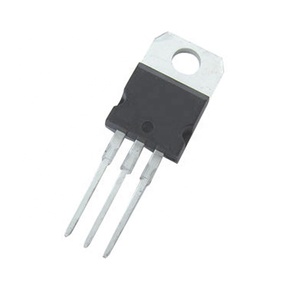
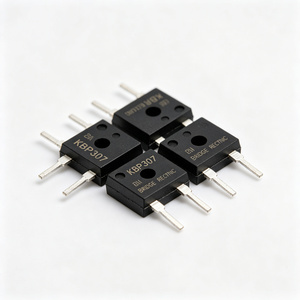
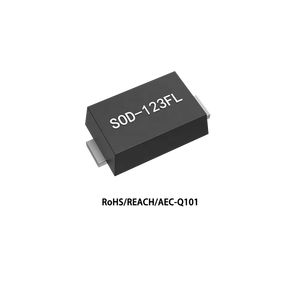
For standard components (such as SOD-123FL diodes, KBP bridge rectifiers, and TO-220 SCRs), we maintain safety stocks for immediate dispatch. For custom transformer rectifiers, high-voltage potted stacks, or modified-standard MIL-COTS converter assemblies, prototype sample delivery typically ranges from 4 to 6 weeks following engineering design freeze. We accommodate low-volume initial engineering evaluation runs (MOQ starting at 5–10 units for complex power modules) up to full-scale automated volume production.
Whether you require standard high-voltage rectifier components, custom transformer rectifiers, or qualified MIL-COTS power modules for airborne, marine, or defense programs, our engineering team is ready to assist your technical evaluation.
