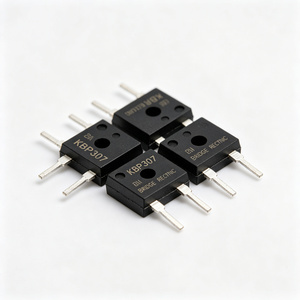
Direct access to high-reliability semiconductor blocks, silicon-controlled rectifiers (SCR), surface-mount Zener diodes, and customized power assemblies manufactured under rigorous ISO 9001 and traceable lot controls.
In modern high-power industrial electronics, a current regulator serves as the fundamental feedback-controlled power conversion system designed to maintain an unvarying, precise current level regardless of dynamic load impedance fluctuations or grid voltage variations. Unlike conventional constant-voltage power supplies, constant current regulators dynamically adjust output voltage in real-time to satisfy Ohm's law ($I = V/R$), making them critical components for electro-chemical synthesis, green hydrogen water electrolysis, induction furnace control, high-reliability cathodic protection, and critical semiconductor testing.
As global industries transition toward electrification and green energy processes, China has emerged as the premier manufacturing hub for advanced solid-state current regulators and heavy-duty thyristor-controlled transformer rectifiers (TCTR). Modern export-grade Chinese current regulators integrate state-of-the-art semiconductor physics, high-speed micro-controller feedback loops, and advanced thermal management to achieve microsecond step-response times, ultra-low current ripple, and total harmonic distortion (THD) suppression below 3%.
Technical Distinction: Industrial current regulators operate across three primary topologies: Thyristor-Controlled Phase Angle Regulation for megawatt-scale direct current processes, High-Frequency Switched-Mode Constant Current Sources (SMCCS) utilizing SiC/GaN MOSFETs for ultra-fast response, and Hybrid Magnetic-Semiconductor Linear Regulators for ultra-low noise high-voltage environments up to 200 kV.
Industrial buyers evaluating current regulator suppliers in China must weigh the operational trade-offs between Thyristor/SCR Phase-Controlled Assemblies and PWM Switched-Mode Power Converters:
Advanced closed-loop digital signal processors (DSP) maintain sub-millisecond dynamic regulation against 100% load step changes, safeguarding sensitive process cells.
Custom L-C filtering matrix reduces peak-to-peak output current ripple to less than 0.5%, optimizing electrolytic deposition uniformities and cell efficiency.
Hot-swappable power brick designs enable continuous uninterrupted process operation with automated fault isolation and parallel load sharing.
Below is a comparative breakdown of key engineering parameters across primary product families offered for global export:
| Current Regulator Category | Primary Semiconductor | Output Range | Current Stability | Key Industrial Applications |
|---|---|---|---|---|
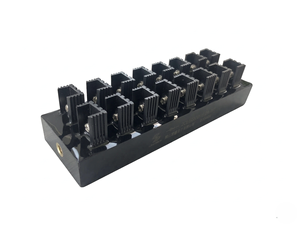
| High-Current HV Rectifier Blocks | 2CLG / HV Silicon Stacks | Up to 20kV / 50A | ± 0.5% | Industrial RF equipment, induction heating, radar transmitters. |
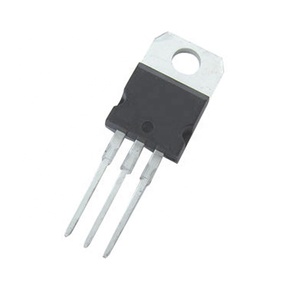
| Phase-Controlled SCR Modules | TO-220 / Puck SCRs | 25A to 5000A+ | ± 0.1% | Motor brake power units, AC/DC speed control, high-power heating. |
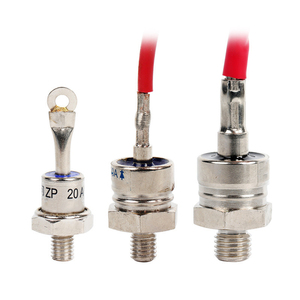
| Heavy Electroplating Rectifiers | Spiral / Stud Diodes (ZP100A) | 100A to 20,000A | ± 1.0% | Chrome plating, anodizing, metal refining, zinc electrowinning. |
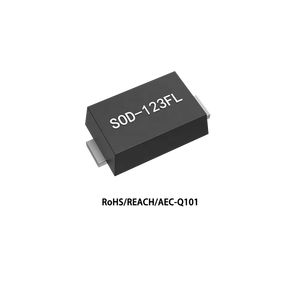
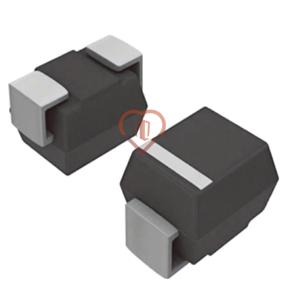
| Surface-Mount Precision Diodes | SMA / SOD-123FL Silicon | 1A to 3A / 1000V | Traceable Lot | Inverter power factor correction, consumer electronics SMPS. |
| High-Voltage DC Regulators | IGBT / SiC Switched Stacks | 150 kW / 200 kV | ± 0.05% | Medical imaging (Medistax®), electrostatic precipitators, lab research. |
Choosing the correct current regulator supplier requires complete confidence in thermal design integrity, magnetic design accuracy, component traceability, and stringent electromagnetic compatibility (EMC) compliance.
Manufacturing operations operate under ISO 9001 quality systems. MIL-COTS products adhere strictly to MIL-STD-704, MIL-STD-1275, and MIL-STD-461 specifications for environmental and electrical immunity.
Every manufactured current regulator block undergoes full-load thermal imaging, high-voltage breakdown verification, and multi-hour temperature-chamber burn-in before export dispatch.
Complete supply chain transparency. Every diode package, SCR die, and magnetics core is tracked with wafer-level and production-lot serialization for industrial quality audits.
As global energy sectors scale green hydrogen production, decarbonize heavy manufacturing, and deploy microgrids, current regulator procurement strategies are undergoing four major technological shifts:
The rapidly escalating demand for green hydrogen via Proton Exchange Membrane (PEM) and Alkaline water electrolysis requires heavy-duty current regulators scaled into multi-megawatt configurations. Electrolyser stacks exhibit non-linear dynamic internal resistance, requiring current regulators that deliver uninterrupted current stability under extreme grid fluctuations. Exporters in China are rapidly moving toward multi-phase thyristor bridge rectifiers combined with active harmonic filter units to achieve continuous DC output with minimal reactive power penalty.
Silicon Carbide (SiC) and Gallium Nitride (GaN) power devices are fundamentally transforming high-frequency current regulators. By elevating switching speeds beyond 100 kHz, new-generation regulators achieve up to 40% reductions in magnetic core mass while operating at ambient temperatures up to 85°C without current derating. Sourcing managers are increasingly specifying SiC-based current regulators to reduce total cost of ownership (TCO) and panel cabinet footprint.
Next-generation current regulators are no longer isolated analog black boxes. Industry 4.0 standards mandate embedded RS485 Modbus RTU, Ethernet/IP, and CANbus communication interfaces. Microprocessor-driven current regulators stream real-time operational telemetry—such as junction temperatures, dI/dt stress curves, input line harmonics, and cumulative operating hours—enabling predictive maintenance protocols before thermal runaway or component wear occurs.
Global EPC contractors and plant operators are rejecting monolithic single-block rectifiers in favor of rack-mounted, modular constant-current power banks. Modular N+1 architecture guarantees that if an individual power module encounters a fault, adjacent modules automatically compensate output current without interrupting continuous chemical or industrial processes. Additionally, strict adherence to RoHS, REACH, and WEEE directives ensures full material compliance for global market entry.
Need custom current regulator engineering, custom transformer rectifiers, or OEM voltage-to-current converters?
Get CatalogSupplying megawatt-scale constant current DC power supplies for high-capacity alkaline and PEM electrolyser plants worldwide.
Heavy-duty current regulated power systems for municipal water treatment and offshore sodium hypochlorite generation skids.
Precision ripple-controlled rectifiers utilizing ZP100A diodes for consistent chrome, gold, copper, and zinc metal deposition.
Impressed current cathodic protection (ICCP) regulators safeguarding underground cross-country pipelines and marine platforms.
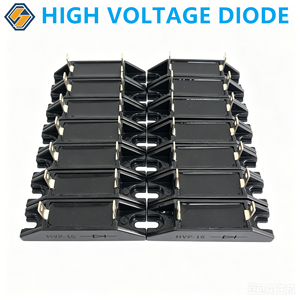
High-voltage silicon stacks (HVP-16) designed for high-frequency induction furnaces and industrial RF generator power racks.
Ruggedized, low-noise DC-DC current regulators engineered for 28V vehicle rails, radar shelters, and harsh field comms.
Answers to common engineering, quality assurance, and commercial inquiries from global technical buyers and procurement officers.
A voltage regulator maintains a constant voltage across the output terminals regardless of current drawn, adjusting current as load changes. Conversely, a constant current regulator continuously modifies output voltage to ensure current ($I$) flowing through the load remains absolutely fixed, regardless of dynamic load impedance variations.
Yes. OEM engineering capability includes clean-sheet electrical design, modified-standard platforms, thermal modeling, custom magnetics winding, custom mechanical enclosures, and compliance testing for CE, UL, IEC/EN 61010, and MIL-STD standards.
Industrial current regulators utilize liquid cooling (water/glycol), forced-air heatsink assemblies, or oil immersion for high-power units. Advanced thermal design ensures semiconductor junction temperatures ($T_j$) remain well below absolute maximums even at 50°C ambient operating environments.
All component shipments include 100% traceable lot codes, Certificate of Conformity (CoC), material compliance certificates (RoHS/REACH), factory acceptance test (FAT) reports, and burn-in verification data upon request.
Current regulator systems can be designed for worldwide AC mains voltages, including single-phase 110V/220V/240V, three-phase 380V/415V/480V, and heavy industrial medium-voltage transformer inputs for megawatt installations.
Current ripple is specified as a peak-to-peak percentage of maximum rated DC current. Standard industrial rectifiers deliver <5% ripple, while high-precision electroplating and electrochlorination applications typically require ultra-filtered outputs with <1% or <0.5% current ripple.
Standard catalog component items (like SCR modules, stud diodes, and bridge rectifiers) ship within 3 to 7 business days. Custom engineered power supply assemblies or megawatt-scale transformer rectifiers generally require 4 to 8 weeks for manufacturing, assembly, and FAT testing.
Standard products come with standard manufacturer warranties. Comprehensive lifecycle support options—including extended 2 to 5-year warranties, recommended spare parts kits (thyristor blocks, control boards, fuses), and remote engineering support—are fully available.
Connect with our senior power electronics engineering team today. Send your target voltage, current, ambient profile, and compliance parameters for an immediate technical route and official catalog download.
Get Catalog