Engineered for critical infrastructure, EV fast-charging stations, server data centers, industrial electrolysis, and field exploration units.
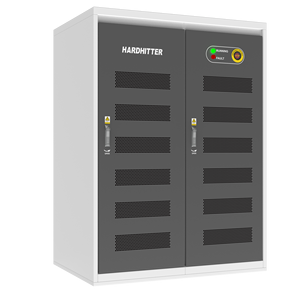
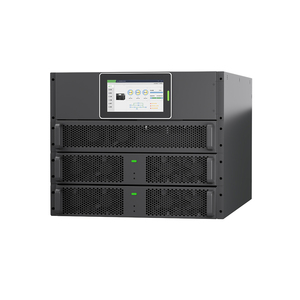
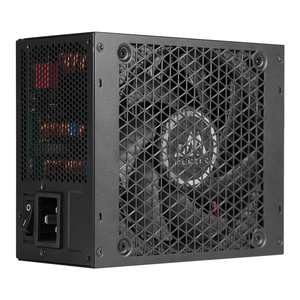
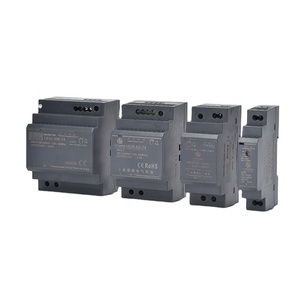

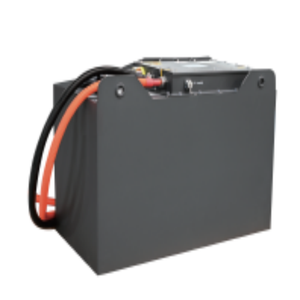
In modern industrial power electronics, transitioning from monolithic power supply architectures to N+1 scalable modular power conversion systems represents a pivotal milestone. Monolithic systems suffer from single-point failure vulnerabilities, thermal concentration, and poor efficiency during partial-load conditions. As global demand for clean energy, high-power DC fast-charging infrastructure, and hyperscale computing accelerates, power conversion efficiency and system uptime have become non-negotiable mission-critical KPIs.
As a leading Chinese manufacturer and global exporter, our engineering teams leverage advanced Third-Generation Semiconductors—specifically Silicon Carbide (SiC) MOSFETs and Gallium Nitride (GaN) switches—to push switching frequencies into the hundreds of kilohertz (kHz). Higher switching frequencies significantly shrink magnetics (transformers, inductors) and capacitive energy storage components, delivering power densities exceeding 45W/in³ inside standardized 19-inch rackmount topologies.
Key architectural breakthroughs include active Interleaved Power Factor Correction (PFC) stages operating at a power factor exceeding 0.99, alongside Phase-Shift Full-Bridge (PSFB) and LLC resonant converters. By executing Zero-Voltage Switching (ZVS) and Zero-Current Switching (ZCS), system thermal losses are reduced by up to 40% compared to legacy hard-switched silicon IGBT solutions.
Utilizing SiC planar power MOSFETs to lower ON-state resistance ($R_{DS(on)}$) at high operating temperatures, suppressing junction thermal degradation while yielding a flat efficiency curve across 10% to 100% load profiles.
High-speed DSP architecture executes real-time digital control loops, providing instantaneous voltage regulation, active current sharing ($\le 3\%$ imbalance between parallel modules), and robust CANbus/RS485/Modbus telemetry.
Triple-insulated planar transformers guarantee high dielectric isolation (up to 4000VAC). Built-in multi-stage EMI filter modules ensure compliance with EN 55032 Class B and MIL-STD-461 standards for harsh electromagnetic environments.
International B2B procurement managers and EPC contractors are executing systematic shifts in how power infrastructure assets are evaluated, specified, and imported from top-tier Chinese manufacturing hubs. The purchasing paradigm has moved from upfront Capital Expenditure (CAPEX) optimization toward whole-lifecycle Operational Expenditure (OPEX) minimization.
Key Emerging Procurement Vector 1: Megawatt-Scale EV Charging Architecture
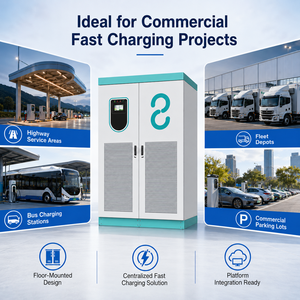
The EV industry is transitioning rapidly from standalone 60kW/120kW chargers to centralized, split-type charging stacks capable of 240kW to 960kW DC power outputs. By utilizing dynamic power allocation matrices, a central power cabinet allocates power dynamically in 20kW or 30kW increments based on the battery management system (BMS) requests of individual vehicles. Modules feature zero-standby power consumption modes and IP54 or higher sealed enclosures to withstand harsh ambient environments without premature degradation.
Key Emerging Procurement Vector 2: Data Center & Rack-Level PDU Modernization
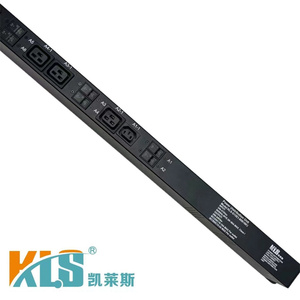
Hyperscale data centers require rack-mount Power Distribution Units (PDUs) capable of operating at elevated voltages (346V–415V 3-Phase). Integrating C13, C19, and high-current C20 sockets within high-density PDUs ensures seamless compatibility with high-draw AI server blade chassis. In parallel, internal server power supplies must achieve 80 PLUS Platinum or Titanium efficiencies (>94%) to cut thermal management overhead.
Key Emerging Procurement Vector 3: Microgrid & Field Hybrid Generation
Field exploration bases, mining operations, and off-grid remote installations are decoupling from pure diesel generation. Procurement teams now prioritize fast-response modular power stations that integrate solar PV inputs, battery energy storage systems (BESS), and auxiliary engines. Transient response speeds under 1 millisecond are essential to maintain stable AC/DC buses during heavy motor startups or sudden intermittent renewable generation drops.
A data-driven engineering evaluation comparing our Chinese modular factory standards against legacy industrial power conversion systems.
| Performance Parameter | Our Advanced Modular Power Systems | Conventional Monolithic Power Supplies | Operational Impact & Value Gain |
|---|---|---|---|
| Power Conversion Efficiency | 95.5% – 96.8% (80 PLUS Platinum / Titanium Level) | 85.0% – 89.0% | Up to 40% heat loss reduction; massive annual energy cost savings. |
| System Redundancy & Uptime | Hot-Swappable N+1 / N+X Parallel Redundancy | Single Point of Failure (N Architecture) | Zero downtime during module replacement; mean time to repair (MTTR) < 5 mins. |
| Power Density (kW/L) | 2.5 kW/L – 3.8 kW/L (SiC/GaN topologies) | 0.8 kW/L – 1.2 kW/L | Reduces equipment footprint by up to 60%; lowers freight & space costs. |
| Power Factor (PFC) & THDi | PFC ≥ 0.99, Total Harmonic Distortion < 3% | PFC ≈ 0.85, THDi > 12% | Eliminates grid pollution, reduces cable sizing requirements, avoids utility fines. |
| Protection & IP Rating | Conformal Coating / IP54 Sealed Cabinet Options | Basic IP20 Open-Frame Enclosures | Resists dust, humidity, salt spray, and corrosive field environments. |
| Control Interface & Telemetry | Digital DSP: CANbus 2.0B, RS485, Modbus, SNMP | Analog 0-10V or Relay contacts | Full integration with smart SCADA, cloud analytics, and predictive maintenance. |
Demonstrating solid Experience, Expertise, Authoritativeness, and Trustworthiness (E-E-A-T) is central to our operation as a premier Chinese exporter of high-capacity power solutions. Building on decades of precision power electronics manufacturing, our modern production base incorporates end-to-end quality management systems strictly audited under ISO 9001:2015, ISO 14001, and IATF 16949 standards.
Dual-lane Yamaha high-speed SMT lines achieve component placement accuracy of $\pm0.025\text{mm}$. High-frequency power transformers undergo full vacuum pressure impregnation (VPI) with Class H insulation varnish to eliminate micro-arcing and moisture ingress.
Every single power module undergo 24 to 72 hours of continuous full-load thermal stress testing inside elevated ambient temperature chambers ($50^\circ\text{C}$). Automatic Test Equipment (ATE) logs all input/output voltage regulation, dynamic load responses, and safety trip limits.
From clean-sheet mechanical enclosure design to custom firmware modification for specialized DC bus voltages (e.g., 0-48V, 346V-415V, or multi-kilovolt outputs), our in-house engineering team works side-by-side with global OEMs throughout prototyping, compliance testing, and mass volume delivery.
Comprehensive answers regarding modular power architecture, customization, compliance, and international logistics.
Connect directly with our senior power application engineers to request detailed technical datasheets, CAD 3D step files, OEM pricing schedules, or custom design consultations.
