Precision-engineered high-voltage diodes, silicon-controlled rectifiers (SCR), heavy-duty power blocks, and surface-mount rectifiers designed for offshore oil & gas, cathodic protection, and electrolysis applications.
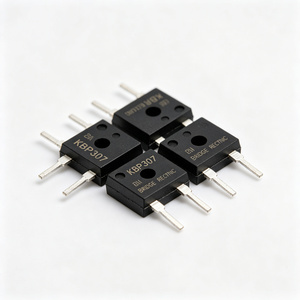
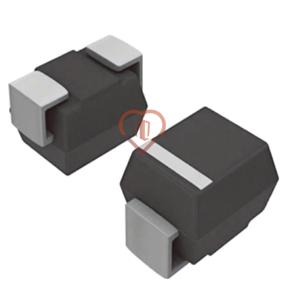
The modern offshore energy landscape—encompassing offshore wind platforms, floating oil & gas production units (FPSOs), subsea processing facilities, and offshore green hydrogen electrolysis installations—demands power conversion systems with uncompromised operational continuity. As China solidifies its position as the premier global hub for high-reliability offshore power equipment manufacturing and exporting, understanding the underlying semiconductor topologies, galvanic isolation techniques, and thermal dissipation strategies becomes vital for international procurement executives and system engineers.
Information Gain Insight: Unlike standard land-based industrial rectifiers, offshore power conversion modules must sustain continuous operation under extreme salt-spray mist (IEC 60068-2-52 standard), high-vibration maritime stress profiles, and severe electrical surges without derating or dielectric insulation breakdown over a 25-year service life.
Thyristor-controlled transformer rectifiers represent the backbone of heavy-duty industrial electrochemistry and marine cathodic protection. Utilizing multi-pulse silicon-controlled rectifier (SCR) bridge circuits—typically operating in 6-pulse, 12-pulse, or 24-pulse phase-shifted configurations—these systems convert medium-voltage AC grid power into tightly regulated high-current DC power. By utilizing phase-shifting transformers upstream of the SCR bridge, total harmonic distortion (THD) on the AC input side is minimized to below 5%, complying strictly with IEEE 519 and marine classification society guidelines (such as DNV, ABS, and Lloyd's Register).
In offshore hydrogen production facilities where megawatt-scale proton exchange membrane (PEM) or alkaline electrolyser stacks are deployed, precise ripple control is paramount. Excessive current ripple accelerates membrane degradation and reduces hydrogen generation efficiency. China's leading offshore power manufacturers integrate advanced digital firing circuits and heavy LC filtering chokes to deliver output ripple factors below 1.5% across the full 5% to 100% load regulation spectrum.
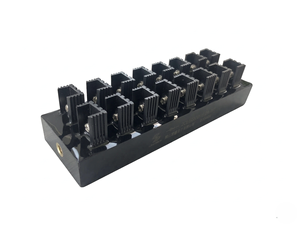
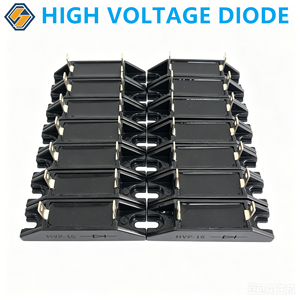
For high-voltage DC (HVDC) power supplies, electrostatic precipitators, radar pulse transmitters, and induction heating equipment, silicon stack rectifiers such as the HVP-16 (17.5KV) and 2CLG20KV/50A-WT diode blocks utilize series-connected diffused silicon wafers embedded within high-grade dielectric epoxy resins. The primary engineering challenge in high-voltage diode stacks is ensuring equal static and dynamic voltage distribution across every individual diode junction within the array.
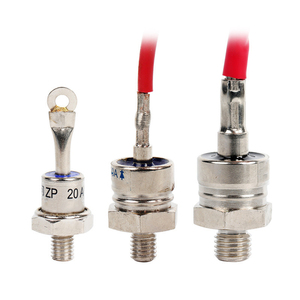
To prevent localized avalanche breakdown caused by capacitance imbalances during high-speed switching transients, manufacturers integrate internal RC voltage-equalizing networks directly into the encapsulated module. Furthermore, heavy chrome plating on stud-mounted high-power diodes like the ZP100A 1600V ensures low contact thermal resistance ($R_{th-ch}$) against copper heatsinks, preventing thermal runaway during continuous 100A forward current conduction under elevated ambient sea temperatures.
Multi-stage shielding and vacuum-impregnated isolation transformers meeting MIL-STD-461 conductive and radiated emission standards.
Forced-air, direct water-glycol cold plate, and transformer oil-immersed cooling for zero-derating performance up to 55°C ambient.
316L stainless steel enclosures with conformal poly-urethane PCB coatings rated for CX harsh coastal environment protection.
As international EPC contractors, OEM equipment builders, and marine energy developers evaluate strategic supply chain partners in China, procurement strategies are shifting from purely initial capital expenditure (CAPEX) calculations toward total cost of ownership (TCO) and long-term operating efficiency (OPEX). The next decade will witness five pivotal structural shifts in offshore power supply manufacturing and specification procurement:
While silicon-based SCRs and stud diodes remain dominant for ultra-high current applications, silicon carbide (SiC) MOSFETs and Schottky diodes are rapidly penetrating offshore AC-DC and DC-DC switched-mode power supplies. SiC devices allow switching frequencies to increase from traditional 20 kHz regimes to over 150 kHz, enabling a 40% reduction in passive magnetics weight and footprint—a critical factor for space-constrained offshore platform modules and subsea control canisters.
Modern offshore operations cannot afford catastrophic shutdowns resulting from single-point component failures. Future B2B procurement specifications mandate modular power conversion sub-racks equipped with active current-sharing buses and internal bypass relays. In the event of a power module anomaly, the system automatically isolates the fault while remaining modules dynamically ramp output power to maintain continuous plant operation without service interruption.
Legacy analog firing cards are being systematically replaced by high-speed Digital Signal Processors (DSP) and ARM Cortex controllers. These smart power conversion platforms support real-time digital communication protocols (Modbus TCP, Ethernet/IP, CANopen, and PROFIBUS). Advanced telemetry algorithms monitor semiconductor junction temperature gradients, leakage currents, and capacitor equivalent series resistance (ESR) degradation, triggering predictive maintenance alerts prior to operational failure.
Offshore wind-to-hydrogen conversion projects require rectifiers capable of delivering tens of thousands of amperes at lower DC voltages (under 1000VDC). Supply chains in China are expanding high-efficiency 24-pulse thyristor systems and modular liquid-cooled IGBT rectifiers that exhibit electrical efficiencies exceeding 97.5% at full load, directly lowering the cost per kilogram of green hydrogen produced at sea.
Global procurement directors increasingly demand that civilian marine power systems undergo qualification testing previously reserved for defence equipment. Key benchmarks include MIL-STD-810 for environmental shock/vibration, MIL-STD-704/1275 for DC bus voltage transients, and compliance with EU RoHS and REACH material environmental directives.
Rooted in over three decades of advanced power electronics innovation, our manufacturing facilities combine UK-heritage engineering rigor with China’s unmatched industrial supply chain speed and scalability. As an ISO 9001 certified power supply manufacturer and global exporter, we deliver standard catalog products, modified-standard platforms, and clean-sheet custom power solutions tailored to mission-critical applications.
From initial circuit simulation and thermal modeling to PCB layout, magnetic coil winding, and prototype qualification, our engineering team works directly with your technical personnel to fulfill exact electrical and mechanical specifications.
Every power supply assembly and rectifier module undergoes 100% full-load elevated temperature burn-in testing, high-voltage insulation dielectric withstand testing (Hi-Pot), and automated optical inspection (AOI) before export packaging.
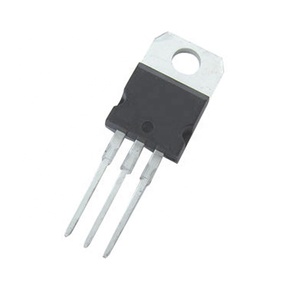
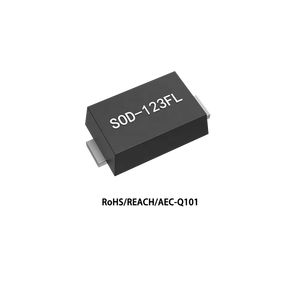
We maintain 100% original component lot traceability across all semiconductor lines, including SOD-123FL diodes and high-power SCRs. All products are delivered with complete factory test reports and CE, RoHS, and WEEE compliance certificates.
Detailed technical responses addressing common engineering inquiries, custom design scope, compliance standards, and commercial procurement terms for global buyers.
Whether you require standard high-voltage rectifier diodes, heavy SCR motor brake modules, or a fully customized megawatt-scale transformer rectifier system, our engineering team is ready to support your project from concept to commissioning.