Explore our core product portfolio manufactured to international IEC, IEEE, and MIL-STD specifications for critical power conversion systems.
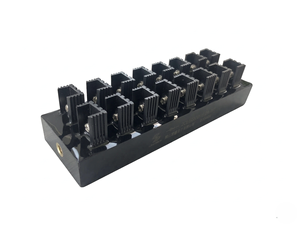
Engineered for extreme high-voltage duty (20KV/50A), featuring avalanche surge protection, ultra-low reverse leakage, and rugged epoxy resin encapsulation for RF generators.
Send an Inquiry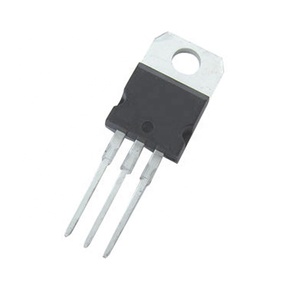
High-temperature planar passivated thyristor delivering dynamic dv/dt immunity, robust thermal cycling stability, and low junction resistance for phase control and AC motor drives.
Send an Inquiry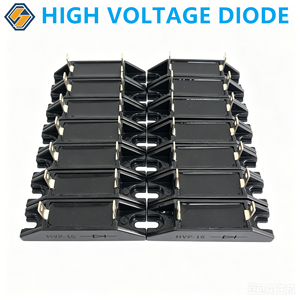
Specialized multi-junction silicon stack assembly optimized for industrial RF induction heating systems, high-frequency transmitters, and electrostatic precipitators.
Send an Inquiry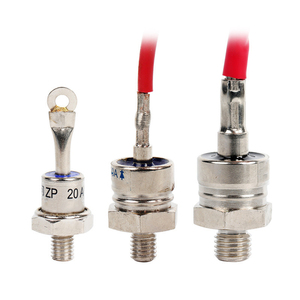
Heavy-duty stud version diode designed for electrolytic copper refining, chrome electroplating power supplies, battery charging stations, and industrial DC buses.
Send an Inquiry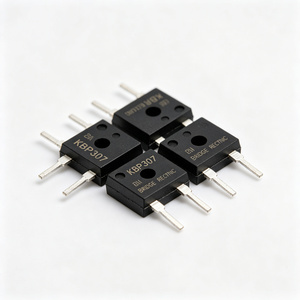
Compact PCB glass-passivated bridge rectifier for switched-mode power supplies (SMPS), solar micro-inverters, commercial LED drivers, and AC/DC power adapters.
Send an Inquiry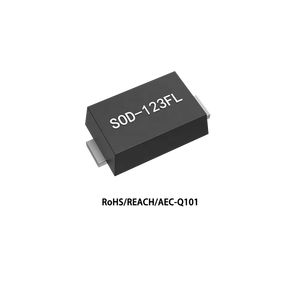
Automotive-grade surface mount silicon rectifier featuring high surge capability, ultra-low profile SOD-123FL packaging, and total lot-code traceability for high-density SMT lines.
Send an Inquiry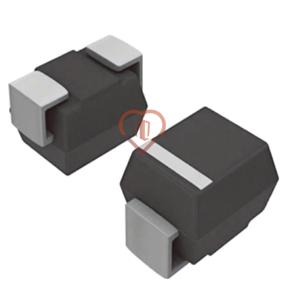
High-speed switching recovery time (trr) silicon diode for transient voltage suppression, telecommunication power modules, consumer electronics protection, and DC-DC converters.
Send an Inquiry
Heavy industrial brake rectifier module converts 400VAC input to 180VDC output, delivering fast response actuation and thermal overload endurance for electric motor brake units.
Send an InquiryA Comprehensive Engineering Guide for Systems Integrators, Procurement Directors, and OEM Power Supply Designers
Modern industrial silicon rectifiers must withstand extreme thermal cycling. Our solid-state junction diffusion technology ensures minimal thermal resistance ($R_{\theta JC}$) and maximized surge current capability ($I_{FSM}$), safeguarding equipment during downstream short circuits.
In high-frequency switched-mode converters, reverse recovery loss accounts for up to 40% of total switching dissipation. Our fast recovery rectifier series incorporates heavy metal doping techniques to achieve sub-nanosecond carrier recombination lifetimes.
High-voltage stacks (up to 20kV) and thyristors are housed in glass-passivated, vacuum-sealed ceramic or specialized epoxy enclosures, preventing ionic contamination and voltage breakdown under humid ambient conditions.
Silicon rectifiers serve as the foundational backbone of global power conversion infrastructure. From converting utility AC power into stable industrial DC for metal electroplating and water electrochlorination to high-voltage rectification in medical X-ray machines and RF induction furnaces, power semiconductor selection dictates overall system efficiency, harmonic distortion, and operational longevity.
When selecting a Chinese factory partner for silicon rectifiers, engineering buyers must evaluate raw wafer quality, die bonding integrity, and thermal management design. Standard off-the-shelf diodes often suffer from uneven current distribution across parallel chips, leading to localized hot spots and catastrophic thermal runaway. Leading exporters employ automated wafer slicing, planar diffusion, and 100% avalanche energy stress testing ($E_{RSM}$) to ensure uniform reverse breakdown characteristics across every production lot.
| Rectifier Topology | Voltage Range ($V_{RRM}$) | Current Range ($I_{F(AV)}$) | Thermal Resistance ($R_{\theta JC}$) | Primary Industrial Applications |
|---|---|---|---|---|
| High Voltage Diode Stacks | 5.0 kV – 20.0 kV | 500 mA – 50 A | < 0.5 °C/W | RF Induction Heating, Precipitators, HV Pulse Generators |
| Phase Control SCR Thyristors | 600 V – 3600 V | 25 A – 5000 A | < 0.015 °C/W | Green Hydrogen Electrolysers, Soft Starters, DC Drives |
| Stud Type Rectifier Diodes | 400 V – 2400 V | 50 A – 500 A | < 0.18 °C/W | Chrome Electroplating, Battery Chargers, Welding Inverters |
| SMD / Bridge Rectifiers | 100 V – 1000 V | 1 A – 25 A | < 2.5 °C/W | Switch-Mode Power Supplies (SMPS), Telecom Rectifiers, LED |
How Next-Generation Silicon Power Devices, Hybrid Topologies, and Green Energy Mandates are Shaping Power Electronics Procurement
Hydrogen production via Alkaline and PEM electrolysers demands ultra-high DC current (up to 50kA) with ripple factors below 2%. Future rectifier procurement focuses on multi-pulse (12-pulse, 24-pulse) thyristor transformer systems to maximize stack efficiency and minimize grid harmonics.
While Wide Bandgap (SiC/GaN) semiconductors dominate low-power high-frequency applications, high-power silicon rectifiers remain unrivaled in surge current capacity and cost-per-watt metrics. Emerging systems utilize hybrid topologies combining Si rectifiers for conduction efficiency and SiC MOSFETs for fast switching.
Industrial rectifiers are increasingly integrated with embedded thermistors and IoT telemetry. Real-time temperature monitoring at the heat-sink junction interface allows predictive maintenance routines, preventing unscheduled shutdowns in hazardous offshore oil & gas platforms.
Global Tier-1 OEMs demand 100% component-level lot code traceability. Leading Chinese semiconductor factories are deploying laser wafer etching and blockchain supply tracking to ensure complete compliance with international conflict mineral regulations and automotive AEC-Q101 standards.
One of the most critical oversights in high-power semiconductor procurement is failing to account for thermal derating under actual field operation. Standard datasheet parameters for maximum forward current ($I_{F(AV)}$) are typically specified at a case temperature ($T_C$) of 25°C or 85°C. However, in enclosed industrial power cabinets or high-ambient tropical environments, heat sink temperatures frequently exceed 100°C.
To calculate the effective continuous current capacity of a silicon rectifier, design engineers must apply the formula:
T_J = T_C + (P_D × R_{\theta JC}) ≤ T_{J(max)}
Where $T_J$ is the internal semiconductor junction temperature, $P_D$ is total power dissipation ($V_F \times I_F$), and $R_{\theta JC}$ is thermal resistance from junction to case. If $T_J$ exceeds maximum rated limits (typically 150°C for standard silicon, 175°C for advanced planar chips), protective oxide layers degrade, triggering localized avalanche breakdown and total device shorting.
For high-reliability programs such as hydrogen electrolysis, cathodic protection for subsea pipelines, and military vehicle auxiliary power systems, our engineering team recommends maintaining a minimum 30% safety margin on forward continuous current and a 50% margin on peak inverse reverse voltage ($V_{RRM}$).
Why Tier-1 Power Engineering Companies Partner With Our Certified Chinese Factory Operations
Our state-of-the-art semiconductor fabrication facilities strictly adhere to ISO quality management systems. Every manufacturing step—from cleanroom wafer slicing to automated epoxy transfer molding—is audited for zero-defect yield optimization.
Backed by over 30 years of power conversion engineering heritage, our R&D center customizes diode stacks, thyristor heat-sink assemblies, and high-voltage modules tailored precisely to your mechanically constrained chassis or extreme ambient requirements.
Every batch undergoes rigorous test protocols including High-Temperature Reverse Bias (HTRB), High-Temperature Gate Bias (HTGB), thermal shock cycling (-40°C to +150°C), salt spray corrosion analysis, and full-load burn-in validation before export shipment.
Expert Answers to Help Purchasing Directors and Power Electronics Engineers Make Informed Component Decisions
Industrial silicon rectifiers are engineered for harsh electrical and environmental conditions. Unlike commercial diodes, industrial devices feature glass-passivated chip junctions, higher surge current ratings ($I_{FSM}$ up to 5000A), wider junction operating temperature ranges ($T_J = -40^\circ\text{C}$ to $+175^\circ\text{C}$), and robust thermal interface packaging (such as stud-mounting or press-pack ceramic pucks) to handle severe thermal cycling without die delamination.
A standard diode bridge provides fixed DC output voltage proportional to the AC input. Select an SCR (thyristor) when dynamic control of output voltage or current is required—such as in variable-speed DC motor drives, industrial heating control, battery charging systems, and phase-controlled electrolysis. SCRs allow precise gate-firing angle control, enabling variable power delivery without needing heavy external autotransformers.
We provide full custom design of high-voltage silicon rectifier stacks. Engineering parameters customizable upon inquiry include reverse voltage rating ($V_{RRM}$ up to 50kV), forward current capacity, reverse recovery time ($t_{rr}$ down to ultrafast nanosecond ranges), specific mounting terminal geometries, epoxy resin encapsulation grade for oil-immersed vs. air-cooled environments, and integrated transient voltage suppression (TVS) networks.
Every export shipment from our factory includes full Quality Assurance Documentation: Certificate of Conformity (CoC), Material Test Reports, Lot Traceability Codes, Mill Test Certificates for copper heat sinks, and ROHS/REACH compliance documentation. Automotive or aerospace-grade programs can request PPAP (Production Part Approval Process) Level 3 documentation and HTRB/HTGB burn-in test logs.
Standard discrete diodes and bridge rectifiers stocked in our warehouse ship within 3–5 business days. Custom OEM silicon stacks, specialized thyristor modules, or customized heat-sink assemblies typically have a 2- to 4-week prototyping lead time. We offer flexible MOQs tailored for low-volume high-mix industrial projects as well as high-volume automated production lines.
Our semiconductor power assemblies are designed to minimize high-frequency reverse recovery noise ($dI_R/dt$) and parasitic inductance. By incorporating low-inductance packaging and advising on external RC snubber design, our products enable end-equipment compliance with CE EMC Directives, MIL-STD-461, and FCC Class A industrial radiation limits.
Partner with China's leading silicon rectifier factory and exporter. Submit your technical specifications, required voltage/current ratings, or custom project outline—our senior power electronics application engineers will respond within 24 hours.