Tested under rigorous IEC 61643-11, UL 1449 5th Edition, and MIL-STD parameters for heavy industrial, electrolysis, renewable energy, and power grid infrastructure.
Modern electrical infrastructure faces severe threats from atmospheric lightning discharges, inductive load switching transients, and grid harmonic instability. Transient overvoltages rising in fractions of a microsecond ($dV/dt > 10,000 V/\mu s$) can instantaneously destroy delicate electronic assemblies, break down insulation barriers in high-power transformers, and cause catastrophic downtime in industrial production plants.
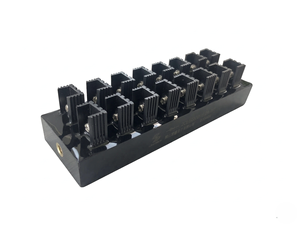
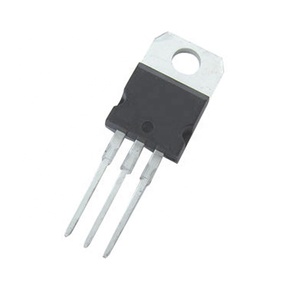
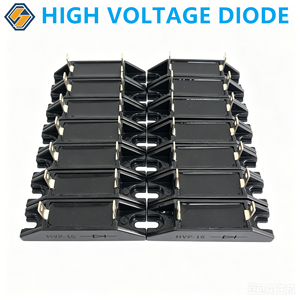
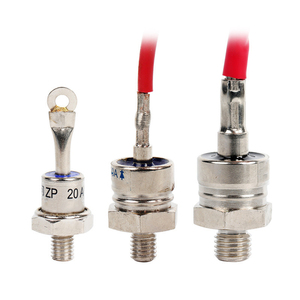
As top global OEMs, EPC contractors, and electrical utilities optimize their supply chains, China’s top surge protector factories and component exporters have evolved from contract assemblers into world-class R&D hubs for advanced overvoltage protection components. By combining proprietary high-density Metal Oxide Varistor (MOV) ceramic formulations, heavy-duty Gas Discharge Tubes (GDT), fast-acting Transient Voltage Suppression (TVS) silicon arrays, and high-power thyristor/diode clamping modules, Chinese manufacturers deliver unrivaled performance-to-cost ratios backed by international certifications (UL 1449, IEC 61643-11, CE, CSA).
Non-linear zinc-oxide ceramic disks engineered for primary power line protection. Offers mass current handling up to 100kA per module with thermal disconnection safeguards.
Hermetically sealed spark gap devices providing ultra-high insulation resistance under normal conditions, breaking down rapidly to divert extreme lightning surges ($10/350 \mu s$).
Solid-state avalanche diodes delivering sub-nanosecond response times (<1 ps) for low-voltage signal, RS485, Ethernet, and sensitive DC microgrid control logic.
B2B procurement directors and chief electrical engineers must look beyond legacy catalog specifications to evaluate vendor capabilities against emerging technology shifts over the next decade. Industry analysts highlight four key trends driving the global surge protector market:
Legacy SPDs fail silently or rely on simple mechanical flags. Next-generation smart SPDs incorporate micro-sensors monitoring leakage current ($I_{pe}$), transient shock counts, operating temperature, and MOV aging parameters via RS485/Modbus or wireless IoT modules, triggering preventative maintenance before breakdown.
Standalone MOVs exhibit inherent degradation under continuous low-level transient stresses. Tier-1 Chinese exporters are pioneering multi-stage hybrid SPDs combining GDTs (for zero leakage current), fast MOVs (for high pulse capacity), and SiC TVS diodes (for precise low residual clamping voltage $U_p$).
With the exponential expansion of green hydrogen electrolysers, solar PV farms (1500VDC), and battery energy storage systems (BESS), surge protection must mitigate DC arc extinguishment challenges. Specialized DC SPDs with integrated magnetic blowout fuses are replacing traditional AC designs.
Under sustained Temporary Overvoltage (TOV) conditions caused by grid neutral line loss, standard MOVs enter thermal runaway and pose fire risks. Leading Chinese factories utilize patented thermo-dynamic disconnections with arc shielding technology and VO-grade flame retardant thermoplastic housings to meet stringent UL 1449 5th Edition safety guidelines.
To assist procurement managers in matching component specifications with target applications, the table below outlines technical parameters, wave shapes, and recommended protection zones according to IEC 62305 / EN 61643 standards:
| Class / Type | Waveform Tested | Nominal Current Range | Primary Component Topology | Target Application & Installation Zone |
|---|---|---|---|---|
| Class I / Type 1 | 10/350 µs (Direct Lightning) | $I_{imp}$ = 12.5 kA – 50 kA/phase | Heavy Duty GDT + Encapsulated Spark Gap | Main Service Entrance, LPZ 0A to LPZ 1 boundary, Substation Feeders |
| Class II / Type 2 | 8/20 µs (Indirect Lightning/Switching) | $I_n$ = 20 kA – 40 kA, $I_{max}$ = 80 kA | Metal Oxide Varistor (MOV) + Thermal Fuse | Sub-distribution Boards, Inverter Cabinets, LPZ 1 to LPZ 2 boundary |
| Class III / Type 3 | 1.2/50 µs Voltage & 8/20 µs Current | $U_{oc}$ = 6 kV – 20 kV | Hybrid MOV + Fast TVS Diode Block | Terminal Equipment, Sensitive PLC / Automation Controllers, LPZ 2 to 3 |
| DC High-Power | 8/20 µs & Continuous DC Clamping | $I_{total}$ up to 100 kA @ 1500VDC | Multi-MOV with Rotary Thermal Fuse & Arc Chute | Solar PV String Boxes, BESS Container Inverters, Electrolysis Power Supplies |
| Semiconductor Clamping | Fast Pulses ($t_r < 10 ns$) | Peak Impulse Power $P_{pp}$ up to 15 kW | Silicon Controlled Rectifiers (SCR) & TVS Arrays | Motor Brake Controls, RF Heating Power Units, Data/Telecom Line Protection |
To ensure total dielectric safety of downstream equipment, the surge protective device's clamped residual voltage $U_p$ must be strictly lower than the equipment impulse withstand voltage capacity ($U_{w}$):
U_p (at I_n) ≤ 0.8 × U_w
Example: For a 400V industrial PLC cabinet with an impulse withstand voltage rating ($U_w$) of 2.5 kV, the selected Type 2 SPD must guarantee a Voltage Protection Level ($U_p$) of less than 2.0 kV at nominal discharge current ($I_n$).
Building on over three decades of power conversion engineering expertise, our affiliated manufacturing plants combine British design rigor with scale manufacturing in China. Our state-of-the-art facilities produce everything from high-voltage rectifier stacks to complete surge mitigation panel solutions.
Every batch undergoes 100% automated optical inspection (AOI), high-potential insulation breakdown testing, and strict leakage current screening. Full lot code traceability is backed by complete compliance documentation (CE, UL, RoHS, REACH).
Our R&D center operates high-energy impulse current generators capable of simulating $8/20 \mu s$ and $10/350 \mu s$ lightning waveform strikes up to 100 kA, alongside thermal stability chambers and TOV endurance test benches.
We work directly with industrial OEMs to design customized surge protection PCB modules, customized high-voltage diode blocks (up to 200 kV), and specialized thyristor power converters tailored for unique envelope dimensions and harsh operating climates.
When sourcing surge protectors from Chinese factories for global export, ensure products comply with the following mandatory safety and performance benchmarks:
Understanding these two parameters is crucial for preventing SPD premature failure or equipment damage:
Maximum Continuous Operating Voltage ($U_c$): The maximum RMS or DC voltage that may be continuously applied to the SPD's protection mode without causing thermal degradation or tripping the internal disconnector. For a standard 230/400V AC TN-S power system, an $U_c$ rating of at least 275V to 385V is typically selected to accommodate utility voltage fluctuations.
Voltage Protection Level ($U_p$): The maximum residual voltage recorded across the SPD terminals during the passage of a specified surge impulse current (e.g., at nominal current $I_n$). Lower $U_p$ values provide superior voltage clamping, offering safer voltage margins for downstream microelectronics.
Metal Oxide Varistors (MOVs) exhibit a finite lifespan. Repeated transient absorption or prolonged Temporary Overvoltage (TOV)—often caused by transformer neutral loss or phase faults—causes the zinc-oxide ceramic structure to conduct high continuous leakage currents. This generates intense local heating.
A certified thermal disconnector acts as a mechanical temperature fuse. When the MOV overheats, low-temperature solder joints melt, disconnecting the degraded MOV from the AC line before thermal runaway causes smoke or fire. A dedicated backup miniature circuit breaker (MCB) or fuse is also installed upstream to safely clear high short-circuit fault currents if an MOV suffers instantaneous short-circuit breakdown.
In heavy industrial equipment—such as RF induction heaters, DC electroplating power supplies, green hydrogen electrolysers, and high-power motor drives—surge protection operates at both the AC grid level and the internal DC power stage:
Tier-1 manufacturing partners offer extensive OEM/ODM white-label customization services, including:
To ensure long-term operational reliability, insist on the following vendor verification steps during supplier audits:
Standard export lead times for standard DIN-rail SPDs and semiconductor diodes range between 2 to 3 weeks. Custom OEM builds (with specialized tooling or custom enclosure molds) typically require 4 to 6 weeks. Minimum Order Quantities (MOQ) start as low as 100 units for standard products, with flexible trial orders supported for engineering evaluations.
Need customized technical advice, detailed engineering datasheets, or competitive direct factory pricing for industrial surge protectors and high-voltage semiconductor rectifiers?