High-performance silicon power rectifiers, thyristors, and surge suppression assemblies manufactured under strict ISO 9001 and MIL-SPEC quality standards for industrial ICCP systems.
Cathodic protection (CP) represents a critical electrochemical mitigation strategy utilized globally to prevent localized and uniform corrosion on metallic structures buried underground or submerged in aquatic environments. From long-distance hydrocarbon pipelines and offshore oil platforms to reinforced concrete marine piers and municipal water distribution networks, structural integrity depends fundamentally on continuous, uninterrupted electro-chemical polarization.
As a premier wholesale exporter and manufacturing partner based in China, our engineering group works at the intersection of high-power semiconductor design and long-term asset protection. This technical whitepaper explores the electrochemistry of Impressed Current Cathodic Protection (ICCP), the critical semiconductor selection criteria (SCRs, high-voltage blocking diodes, and silicon rectifier stacks), and the operational optimization required for modern industrial infrastructure.
Key Engineering Takeaway: Cathodic protection efficiency relies not only on current output, but on precise ripple reduction, reverse-voltage blocking capacity, and environmental thermal dissipation. High-grade silicon controlled rectifiers (SCRs) and low-ripple power conversion topologies extend structural lifespan while minimizing power consumption.
Corrosion occurs through an electrochemical reaction involving four primary components: an anode, a cathode, a metallic path, and an electrolyte. In an unprotected steel structure submerged in seawater or moist soil, microscopic galvanic cells form across the metal surface due to crystal lattice impurities, mechanical stress, or oxygen concentration differentials. The iron oxidation reaction ($Fe \rightarrow Fe^{2+} + 2e^-$) leads to metal degradation and structural failure.
Cathodic protection neutralizes this mechanism by supplying external direct current (DC) to render the protected structure entirely cathodic relative to the surrounding electrolyte. Cathodic protection systems are classified into two primary topologies:
| Parameter / Parameter Category | Galvanic Anode Protection (SACP) | Impressed Current Cathodic Protection (ICCP) |
|---|---|---|
| Driving Voltage Range | Low fixed potential ($0.2\text{ V} - 0.7\text{ V}$) | High controllable potential ($10\text{ V} - 150\text{ V}+$) |
| Current Output Capacity | Limited ($< 5\text{ Amperes}$ per bed) | High scalable output ($10\text{ A} - 500\text{ A}+$ per rectifier unit) |
| Soil / Water Resistivity Suitability | Restricted to low-resistivity environments ($< 10,000\ \Omega\cdot\text{cm}$) | Versatile; functions across high-resistivity dry soil and deep wells |
| Semiconductor Power Electronics | Not required (Passive electrochemical corrosion) | Silicon Rectifiers, SCRs, High-Voltage Diodes, Filtering Stacks |
| Control & Automation Potential | Static (Manual potential measurement) | Dynamic closed-loop IoT monitoring, automated potential regulation |
| Capital vs. Operational Expenditure | Low CAPEX / High replacement OPEX over time | Moderate CAPEX / Highly efficient OPEX for long lifespan ($> 30\text{ years}$) |
The core of any industrial ICCP system is the continuous power conversion unit. Transforming primary AC grid supply (or solar/wind power) into stable, low-ripple DC current requires heavy-duty silicon components designed to survive environmental extremes, lightning surges, and back-EMF spikes.
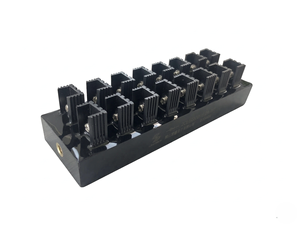
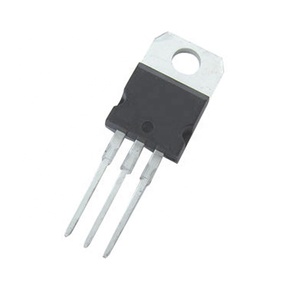
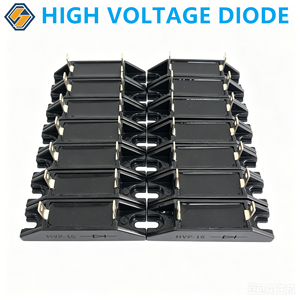
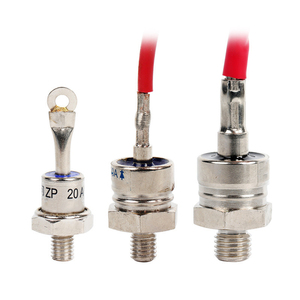
Key semiconductor building blocks deployed in cathodic protection rectifier power units include:
Cathodic protection rectifiers are often installed in remote, aggressive environments—ranging from saline coastal installations to high-temperature desert pumping stations. Thermal management is therefore paramount. Modern wholesale export rectifier units utilize heavy copper magnetics, aluminum heat sinks with high surface emissivity, and forced oil-immersed (NEMA 4X / IP66) designs to ensure semiconductor junction temperatures remain well below critical limits ($T_j < 125^\circ\text{C}$).
Furthermore, managing output DC ripple is essential. Unfiltered full-wave rectified DC exhibits a ripple factor of approximately 48%. High AC ripple components induce stray AC corrosion on steel pipelines and reduce effective polarization. Utilizing secondary choke inductors, LC filter banks, and high-frequency PWM switching reduces output ripple below 3%, improving polarization kinetics and lowering overall electrical consumption.
The industrial power conversion landscape is shifting rapidly towards digital intelligence, wide-bandgap semiconductors, and sustainable green energy integration.
Procurement teams increasingly specify rectifiers equipped with integrated 4G/5G and satellite telemetry. Automatic potential control units continuously adjust SCR firing angles to maintain pipe-to-soil potential strictly within the $-850\text{ mV}$ to $-1150\text{ mV}$ CSE protection window, reducing site visits and compliance audit overhead.
While traditional 50/60Hz transformer rectifiers remain industry workhorses, Silicon Carbide (SiC) MOSFET and high-voltage diode architectures are revolutionizing switch-mode cathodic protection (SMPS-CP). Higher switching frequencies ($>100\text{ kHz}$) shrink magnetic weight by 70% while raising efficiency beyond 94%.
The global expansion of green hydrogen production electrolysers and remote pipeline corridors demands modular, renewable-ready CP rectifiers. Direct DC-DC converter integration allows seamless coupling with solar PV arrays and wind generation without efficiency-robbing dual conversion steps.
Combining over three decades of British power engineering legacy with China's high-efficiency wholesale manufacturing ecosystem.
As a specialized wholesale exporter and manufacturer, our group provides end-to-end power conversion engineering designed specifically for demanding environmental profiles. Whether sourcing discrete semiconductors—such as high-voltage diodes, bridge rectifiers, and silicon controlled rectifiers—or complete turnkey thyristor-controlled transformer rectifiers, our OEM infrastructure offers distinct competitive advantages:
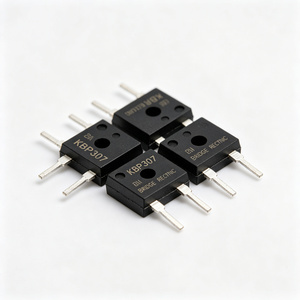
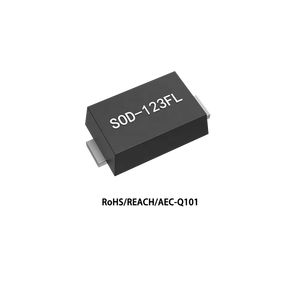
Every semiconductor diode, SCR, and power module leaves our manufacturing facility with 100% batch lot traceability. Standard catalog lines such as 1N4006W SOD-123FL, KBP307 Bridge Rectifiers, and high-power spiral diodes undergo rigorous burn-in and reverse voltage breakdown testing prior to dispatch.
Our quality management system is certified to ISO 9001, governing electrical design, magnetic winding, thermal stress analysis, and EMC compliance testing. We specialize in harsh-environment modules that satisfy MIL-STD-704, MIL-STD-1275, and MIL-STD-461 standards for defense and heavy industrial deployments.
When off-the-shelf power supplies fail to meet physical footprint or thermal constraints, our application engineering team delivers custom value-added solutions. From oil-cooled high-current transformers to custom-encapsulated HV rectifier stacks up to 200 kV, we design to your exact specification.
Technical and commercial guidance for engineering procurement managers, cathodic protection specialists, and system integrators.
High-voltage blocking diodes (such as 1600V spiral diodes or multi-kV stack blocks) prevent dangerous back-feed currents from damaging the transformer-rectifier assembly. They protect against induced AC transients caused by parallel high-voltage transmission lines, lightning surges, and galvanic back-EMF when the main AC power is de-energized.
Air-cooled rectifiers (NEMA 3R / IP54) rely on natural convection or fan ventilation and are suitable for clean, non-aggressive inland environments. Oil-immersed rectifiers (NEMA 4X / IP66) house the transformer, SCRs, and diode stacks inside a sealed steel tank filled with dielectric oil. Oil-immersed units provide total protection against corrosive salt air, desert sandstorms, high humidity, and chemical plant atmospheres.
Silicon Controlled Rectifiers (SCRs) allow automated, stepless adjustment of DC voltage and current by varying the phase angle of the AC waveform. Integrated with reference electrode feedback (e.g., $Cu/CuSO_4$), the control firing circuit automatically raises or lowers output current to compensate for soil moisture changes, preventing under-protection (corrosion) or over-protection (hydrogen embrittlement and coating disbondment).
Sensitive analog feedback lines connected to reference cells require ultra-fast surge suppression. Surface-mount silicon Zener diodes, transient voltage suppressors (TVS), and fast recovery rectifiers (such as the P0080TA-MC series) clamp high-speed voltage spikes induced by lightning strikes or ground fault currents before they reach the electronic control card.
Yes. Our export rectifiers can be custom-wound for any global input power configuration, including 110V/220V/240V single-phase, or 380V/415V/480V/600V three-phase systems operating at 50Hz or 60Hz. Input tap changers or wide-input switch-mode front-ends ensure seamless operation across unstable grid networks.
Unfiltered DC ripple containing significant AC waveform components can cause micro-pulsing at the metal-electrolyte interface. This AC ripple contributes to localized corrosion, accelerates anode degradation, and interferes with accurate Instant-Off pipe-to-soil potential measurements. Quality rectifiers utilize LC smoothing filters to maintain ripple factors under 5% (and under 3% for sensitive applications).
All wholesale exports include comprehensive quality dossiers: ISO 9001 Certificate of Compliance, factory acceptance test (FAT) reports, material mill certificates, semiconductor lot traceability sheets, and full insulation/hi-pot test logs. CE, RoHS, and WEEE compliance documentation is provided for European destinations.
Simply submit your technical parameters—including required output voltage (V DC), current (A DC), input phase, cooling preference, control mode (manual/automatic reference control), and ambient operating temperature—via our live chat inquiry portal. Our engineering team will review the specifications and issue a complete technical proposal and quotation.
Whether you require bulk silicon diodes, SCR modules, or engineered megawatt-scale cathodic protection rectifiers, our team is ready to support your technical specification.
Send an Inquiry