Direct OEM wholesale supplies of traceable semiconductor devices, high-power silicon stack rectifiers, and thyristor assemblies built to strict ISO 9001 quality controls.
The global demand for high-efficiency, high-reliability industrial power electronics has transitioned from standard off-the-shelf catalog components to engineered power conversion architectures. As industries accelerate electrification, renewable hydrogen generation, carbon capture, and high-frequency induction processing, the role of specialized silicon controlled rectifiers (SCRs), high-voltage silicon stacks, and custom heavy-duty rectifiers has become central to system uptime and energy conservation. Enterprise procurement directors and power electronics design engineers seeking reliable China Wholesale Industrial Power Manufacturers & Suppliers demand not only competitive unit economics but also uncompromising component traceability, advanced thermal dissipation, and rigorous compliance with international standards such as IEC 61010, CE, RoHS, and MIL-STD environments.
Modern industrial power manufacturing involves deep vertically integrated capabilities. From raw silicon wafer slicing and glass-passivated chip (GPP) diffusion to vacuum soldering, hermetic packaging, and automated thermal-cycling burn-in, Chinese industrial power semiconductor foundries lead the market in delivering high-volume consistency. By combining robust European and American engineering standards—such as those inherited from legacy industrial power powerhouses—with China's scaled manufacturing infrastructure, global OEMs gain access to state-of-the-art power conversion modules optimized for continuous, 24/7 mission-critical operations.
Glass-Passivated Process (GPP) wafer techniques minimize reverse leakage current at elevated junction temperatures up to 150°C, ensuring breakdown stability under inductive surges.
Engineered copper stud bases and heavy internal wire bonding allow components like the ZP100A to withstand non-repetitive surge currents over 10 times rated nominal amps.
100% original component lot tracking from ingot batch to finished tape-and-reel or custom module, backed by ISO 9001 quality inspection protocols.
Selecting the precise industrial power semiconductor requires a clear understanding of device topologies, switching dynamics, thermal impedances ($R_{thJC}$), and mechanical mounting form factors. Below is an engineering breakdown of the core device categories supplied for industrial applications:
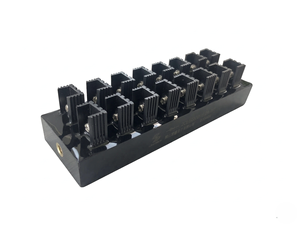
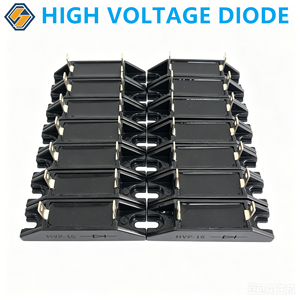
High-voltage silicon stacks are engineered by cascading multiple avalanche-damped diode chips in series within a high-dielectric epoxy resin body. Modules like the 2CLG20KV/50A-WT and HVP-16 17.5KV are specifically designed for high-frequency induction heating, industrial RF generators, electrostatic precipitators (ESP), and X-ray high-voltage power supplies. Key performance parameters include rapid reverse recovery time ($t_{rr}$), exceptional transient voltage insulation, and low thermal drift under high ambient electromagnetic radiation.
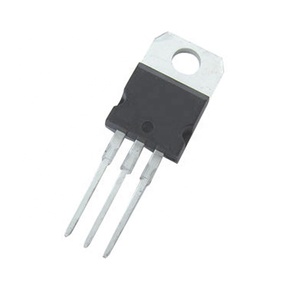
Silicon Controlled Rectifiers remain the backbone of AC-to-DC controlled conversion, motor soft-starters, industrial heater control, and electro-magnetic braking systems. The 25A TO-220 SCR provides precise phase angle control in compact PCB layouts, whereas specialized heavy-duty assemblies like the Model M400 MGM Brake Rectifier (400VAC Input / 180VDC Output) incorporate integrated transient voltage suppressors (TVS) to safely handle high inductive flyback energy generated during rapid motor braking in industrial cranes, hoists, and automated production machinery.
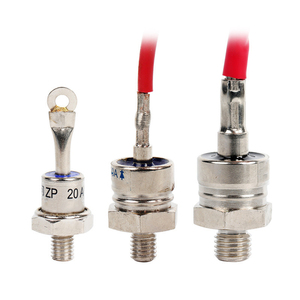
For heavy electro-chemical applications such as chrome plating, electro-refining, battery formation racks, and electrolysis power supplies, stud-mounted diodes such as the ZP100A 1600V offer unmatched mechanical robustness and low forward voltage drop ($V_F$). The nickel-plated copper stud acts simultaneously as an electrical terminal and a direct thermal conduit to external liquid-cooled or forced-air heat sinks, allowing continuous full-load conduction with low power dissipation.
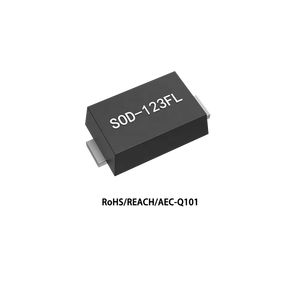
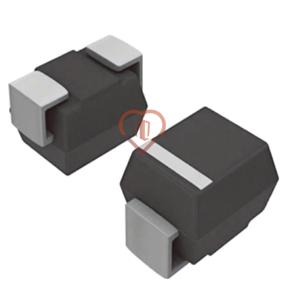
Modern power supply control circuitry, auxiliary gate drivers, and industrial IoT sensors rely on compact surface-mount technology (SMD). Devices like the 1N4006W in SOD-123FL package offer a space-saving alternative to traditional axial leaded diodes while maintaining a 800V-1000V blocking voltage capability. Fast recovery Zener and protection diodes in SMA packaging safeguard sensitive microcontroller logic against grid-borne voltage spikes and ESD transients.
To assist system integrators and procurement engineers in matching power devices to their operational envelope, the matrix below details electrical thresholds and primary industrial duty cycles:
| Device Series / Model | Package / Form Factor | Voltage Rating ($V_{RRM}$) | Current Rating ($I_{F(AV)}$) | Primary Technical Advantage | Target Industrial Application |
|---|---|---|---|---|---|
| 2CLG20KV/50A-WT | Encapsulated HV Block | 20,000 V (20kV) | 50 A | Ultra-high voltage insulation, low leak | Industrial RF Equipment, Plasma Generators |
| HVP-16 Assembly | High Voltage Silicon Stack | 17,500 V (17.5kV) | High Surge Custom | Fast recovery $t_{rr}$, dielectric epoxy | HF Induction Heating, Vacuum Furnaces |
| ZP100A 1600V | Threaded Copper Stud (2CZ) | 1,600 V | 100 A | Direct heatsink mount, low $V_F$ | Chrome Plating, Electro-winning, Anodizing |
| TO-220 25A SCR | TO-220 Through-Hole | 600 V - 1200 V | 25 A | Precise gate trigger, high $dv/dt$ | Phase Control, AC Dimming, Motor Starters |
| M400 MGM Module | Enclosed Brake Module | 400 VAC In / 180 VDC Out | Industrial Heavy Duty | Integrated flyback absorption TVS | Motor Brake Controls, Crane Hoist Drives |
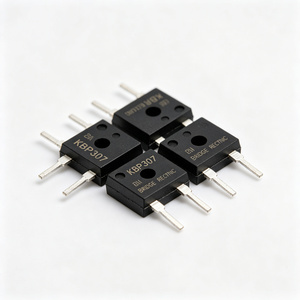
| KBP307 Bridge | 4-Pin Through-Hole DIP | 1,000 V | 3.0 A | Compact glass passivated bridge | Power Inverters, SMPS Input Stages |
| 1N4006W | SOD-123FL Surface Mount | 800 V | 1.0 A | Traceable lot codes, miniature profile | Auxiliary Power Supplies, Smart Meters |
| P0080TA-MC | SMA (DO-214AC) SMD | 10 V Clamping / 2.2A | 2.2 A Surge | Ultra-fast recovery clamping speed | Consumer Electronics Protection, DC Bus TVS |
The industrial power landscape is experiencing a paradigm shift driven by decarbonization, process automation, and energy efficiency mandates. Wholesale buyers and OEMs must align with manufacturers who integrate forward-looking technological trends into their product development roadmaps:
The global transition toward green hydrogen via Proton Exchange Membrane (PEM) and Alkaline water electrolysis requires colossal direct current (DC) power units operating at low voltage and extreme current scales (tens of thousands of amperes). Power supplies for hydrogen generation must deliver smooth continuous DC with negligible current ripple (<2%). High-ripple current induces thermal stress and degrades catalyst coatings inside electrolysis stacks. China's leading wholesale manufacturers are pioneering thyristor-controlled transformer rectifiers combined with active harmonic filtering and multiphase phase-shifting transformers to achieve electrical efficiencies exceeding 96% while maintaining strict grid compliance (IEEE 519).
While Silicon Carbide (SiC) MOSFETs and Schottky diodes dominate high-frequency, low-power SMPS designs, heavy industrial applications are increasingly adopting hybrid power topologies. In high-power converter front-ends, traditional robust Silicon Thyristors handle the bulk line-frequency phase rectification, while SiC anti-parallel diodes handle high-speed freewheeling commutation. This hybrid approach significantly reduces switching losses without compromising the extreme surge capability and cost-effectiveness of heavy silicon substrates.
Modern industrial power supplies are no longer isolated black boxes. Intelligence is now built directly into the thyristor trigger card and power stack controller. Integrated CANbus, Modbus RTU, and Industrial Ethernet interfaces enable remote monitoring of junction temperature ($T_j$), heatsink airflow rates, real-time AC line balance, and cumulative thermal fatigue. This data feeds into factory-wide Digital Twins, allowing predictive maintenance schedules that prevent catastrophic plant downtime before a semiconductor failure occurs.
Sourcing high-power components from wholesale Chinese manufacturers requires a structured procurement protocol to ensure quality assurance, supply chain longevity, and international compliance. Enterprise buyers should mandate the following key validation steps during vendor qualification:
Glass Passivation (GPP) applies a high-purity glass frit over the semiconductor P-N junction, protecting it against ambient moisture, ionic contaminants, and mechanical oxidation. GPP diodes exhibit significantly lower reverse leakage currents at high temperatures ($T_j = 150^\circ C$) and higher avalanche breakdown resilience compared to legacy chemical-etched (TJ) junctions, making them ideal for high-reliability industrial power supplies.
Stud-type diodes (like the ZP100A) offer exceptional mechanical durability and simple single-component replacement on heavy aluminum or copper heatsinks in high-vibration environments (such as electroplating lines). Module packages consolidate multiple isolated semiconductor dies (e.g., diode-diode or thyristor-diode pairs) onto an electrically isolated copper baseplate, simplifying assembly, reducing enclosure space, and allowing multiple modules to share a single ungrounded heatsink.
Yes. As a primary manufacturer, we offer full OEM/ODM value-added engineering. We can modify blocking voltages ($V_{RRM}$ up to 200kV in custom stack configurations), adjust reverse recovery parameters ($t_{rr}$), supply pre-assembled heatsink assemblies with forced-air or liquid cooling blocks, and tailor control interfaces to match your system’s PLC or digital controller.
When installing stud rectifiers like the ZP100A, ensure the heatsink mounting surface is machined flat to within 0.05 mm and free of burrs. Apply a thin, uniform layer of high-thermal-conductivity silicone grease (thermal paste) to the threads and seating surface. Use a calibrated torque wrench to tighten the stud according to specified Newton-meter ($N\cdot m$) limits to prevent crushing the internal silicon wafer while ensuring minimal thermal contact resistance ($R_{thCH}$).
Every high-voltage stack undergoes rigorous 100% functional testing, including high-potential dielectric withstand voltage testing (Hi-Pot), maximum reverse voltage leakage testing at rated $V_{RRM}$, forward voltage drop measurement, and pulse surge endurance testing. Testing certificates and lot traceability reports are provided with commercial shipments.
Standard discrete components (such as SOD-123FL, TO-220 SCRs, and KBP bridge rectifiers) are maintained in buffer stock for immediate dispatch (typically 3 to 7 business days). High-voltage custom stacks, heavy-duty stud diodes, and bespoke thyristor rectifier systems have a typical manufacturing lead time of 2 to 4 weeks, depending on component qualification and batch sizing requirements.
Building mission-critical power systems demands a manufacturing partner with proven engineering heritage, robust capital equipment investment, and unwavering adherence to quality control. Our manufacturing infrastructure is engineered around delivering total reliability for global industry leaders: