High-reliability power conversion assemblies, thyristor modules, high-voltage silicon rectifiers, and fast-recovery diodes engineered for tough railway surge environments.
Designing heavy-duty 6-pulse, 12-pulse, and 24-pulse thyristor-controlled transformer rectifiers for 750V DC and 1500V DC urban transit lines and main-line passenger railways.
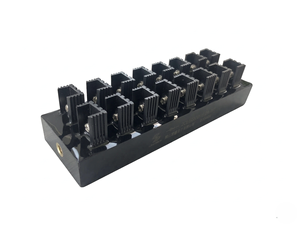
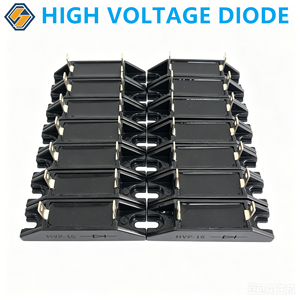
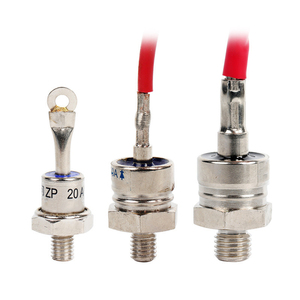
Supplying avalanche-tested silicon stacks, stud-mount ZP100A rectifiers, and high-voltage diodic blocks capable of withstanding critical dI/dt stresses and voltage spikes.
Full alignment with EN 50163 railway supply voltages, EN 50125-1 environmental parameters, IEEE 1653.2 traction substation specs, and IEC 62236 EMC standards.
Modern electrical railway networks—spanning high-speed rail (HSR), light rail transit (LRT), heavy freight corridors, and underground metro systems—depend fundamentally on ultra-reliable power conversion systems. As global transport infrastructure pivots toward electrification and carbon neutrality, traction power substations (TPSS), onboard auxiliary power units (APUs), and trackside signaling systems require unprecedented thermal resilience, electromagnetic compatibility (EMC), and electrical power quality.
As an established OEM/ODM exporter and wholesale manufacturer located in China's advanced power electronics production cluster, our technical capabilities merge decades of silicon-level component manufacturing with full system-level power conversion architecture. This comprehensive guide reviews the critical engineering specs, component topologies, market procurement dynamics, and future technological vectors shaping high-performance railway power supplies.
Core Procurement Insight: Reliability in rail systems is calculated over 25-to-30-year lifecycle operational profiles. Selecting traction rectifiers and semiconductor components requires zero compromise on reverse breakdown margins ($V_{RRM}$), surge current capacity ($I_{FSM}$), junction thermal management ($T_j$), and compliance with EN 50163 voltage fluctuation limits.
Railway power systems are structurally split between static ground infrastructure (traction substations and auxiliary power stations) and mobile onboard equipment (locomotive converters and car-body auxiliary systems). Power electronics engineered for these domains must convert high-voltage AC grid inputs (e.g., 110kV/220kV utility grids or 25kV 50/60Hz overhead catenaries) into tightly regulated DC or AC buses.
DC-electrified transit networks (predominantly 750V DC third-rail or 1500V DC catenary) rely heavily on diode and thyristor transformer rectifiers to supply traction energy to trains. To minimize total harmonic distortion (THD) injected into the utility grid and eliminate low-frequency ripple on the DC bus bar, standard designs employ 12-pulse or 24-pulse phase-shifting transformers coupled with heavy-duty silicon rectifier stacks.
Rolling stock equipment requires dedicated auxiliary converters to transform the primary catenary supply into stable 380V 3-phase AC or 110V/24V DC for HVAC, pneumatic compressors, safety signaling, lighting, and battery charging circuits. In addition, dynamic braking systems utilize heavy-duty braking modules—such as the OEM Silicon Controlled Rectifier Brake Units—to convert AC regeneration energy or control electromagnetic friction brakes safely during emergency decelerations.
Choosing the correct semiconductor topology is critical for achieving optimal Mean Time Between Failures (MTBF) and thermal endurance in railway power supplies. Below is a comparative performance matrix across critical rail application nodes:
| Component Type | Voltage Rating ($V_{RRM}$) | Current Rating ($I_{FSM}$ / $I_{T}$) | Key Operational Topology | Target Railway System Node |
|---|---|---|---|---|
| HV Silicon Stack (2CLG / HVP) | 17.5kV – 20kV+ | 50A – 200A Surge | Multi-junction avalanche series stack | Substation HV isolation, RF heating, spark protection |
| Stud/Spiral Rectifier (ZP100A) | 1200V – 2500V | 100A – 1000A Continuous | Hermetic ceramic/copper stud mount | Substation main rectifiers, heavy plating, battery chargers |
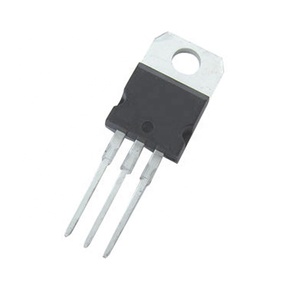
| Silicon Controlled Rectifier (SCR) | 600V – 1800V | 25A – 600A RMS | Phase-controlled thyristor switching | EM brake controllers, soft-starters, inrush limiters |
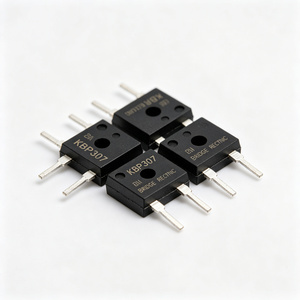
| Bridge Rectifier (KBP / KBPC) | 600V – 1000V | 3A – 50A Forward | Single-phase / 3-Phase encapsulated bridge | APU switch-mode supplies, control board front-ends |
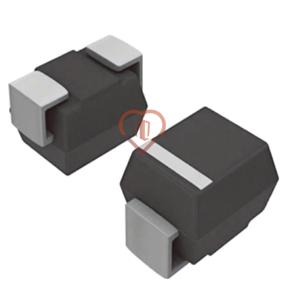
| Fast Recovery TVS / SMA Diodes | 10V – 1000V | 2.2A Clamping Peak | Ultra-fast recovery junction ($t_{rr} < 50\text{ns}$) | Signaling line surge protection, sensor bus decoupling |
The global railway equipment market is experiencing rapid technological evolution driven by efficiency mandates, space constraints inside locomotive car-bodies, and digital asset monitoring. Procurement officers and chief systems engineers must align their component selection with the following structural trends:
While traditional silicon rectifiers (such as the ZP100A spiral diodes and silicon-controlled rectifiers) remain the gold standard for high-current, low-frequency substation rectification, Wide Bandgap (WBG) materials—specifically Silicon Carbide (SiC) MOSFETs and Schottky Diodes—are dominating new APU and traction inverter developments. SiC devices offer 10x higher breakdown electric field strength and significantly lower switching losses, allowing APU operating frequencies to jump from 5kHz to over 20kHz. This frequency scaling dramatically reduces the weight and size of magnetic transformers and inductors onboard high-speed trains.
Traditional diode rectifiers only permit unidirectional power flow from the utility grid to the train. When trains brake dynamically, vast quantities of kinetic energy are converted into electrical energy. Modern railway substations are rapidly migrating toward Active Front End (AFE) architectures utilizing PWM-controlled IGBT/IGCT thyristor bridges. AFEs allow regenerative braking energy to be fed back into the high-voltage public AC grid in real-time with unity power factor ($PF \approx 0.99$) and near-zero harmonic pollution.
Railway environments are characterized by cyclic thermal stresses, vibration, and mechanical shock (governed by EN 61373). Standard solder-bonded power modules often suffer from substrate delamination over 100,000 thermal cycles. Consequently, press-pack semiconductor packaging—which utilizes pressure-contact technology without bond wires—is becoming mandatory for heavy freight and high-speed locomotive traction converters, ensuring immune operations against thermal fatigue.
Strategic sourcing managers face a changing landscape marked by supply chain vulnerability, tightening environmental regulations, and total cost of ownership (TCO) evaluation models. Sourcing railway power supplies from certified Chinese wholesale manufacturers offers distinct strategic advantages when integrated with robust quality oversight.
In railway infrastructure tenders, initial component acquisition cost (CAPEX) accounts for less than 15% of the long-term operational expense. System downtime caused by a failed diode bridge or burned-out SCR control module can halt an entire metro line, resulting in thousands of dollars per minute in penalties. Leading transit operators now mandate reliability indicators such as Mean Time Between Failures (MTBF > 500,000 hours) and Mean Time to Repair (MTTR < 30 minutes) through modular plug-and-play power blocks.
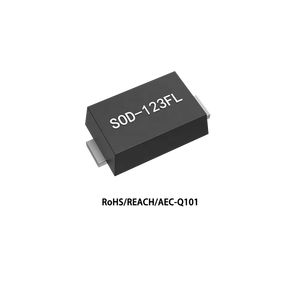
Global rail operators demand full lot-code traceability for every semiconductor component—from discrete SMD diodes (like the 1N4006W SOD-123FL) up to multi-kilovolt rectifier stacks. Suppliers must maintain rigorous batch testing records, including wafer origin certificates, burn-in test curves, and environmental stress screening (ESS) data. International Railway Industry Standard (IRIS / ISO/TS 22163) compliance is rapidly becoming the non-negotiable benchmark for wholesale exporters.
Because trainsets remain in active revenue service for three decades, component obsolescence is a major risk factor. Unlike consumer electronics that refresh annually, railway power suppliers must guarantee Form-Fit-Function (FFF) direct replacement components—such as legacy stud-mount diodes, high-voltage silicon rectifiers, and specific 400VAC brake controllers—for decades after initial project commissioning.
As a specialized manufacturer and global exporter of high-power rectifiers, transformer rectifiers, and rail-grade power supplies, our facility integrates vertical engineering design with rigorous quality controls.
We do not merely sell off-the-shelf component part numbers. Our value-added engineering team modifies standard power converter platforms or designs clean-sheet architectures tailored to your specific mechanical envelopes, cooling methods (forced-air, natural convection, or liquid cold-plate), and control interfaces (CANopen, Modbus, or analog 4-20mA).
Every batch of power supplies and semiconductor components undergoes exhaustive verification testing prior to export shipping:
Our operational management adheres strictly to ISO 9001:2015 quality standards, with material compliance fully certified under RoHS and REACH guidelines. Every shipment includes comprehensive certificates of conformance (CoC), traceable batch test reports, and technical datasheets.
Need custom traction rectifiers, high-voltage diode blocks, or high-reliability power modules for your next transit project? Connect with our senior power engineering team today to review your technical specifications, request datasheets, or obtain factory-direct wholesale quotations.
