Explore our engineering-grade silicon and silicon carbide semiconductor solutions, meticulously qualified for ultra-high reliability, thermal endurance, and precise current management.
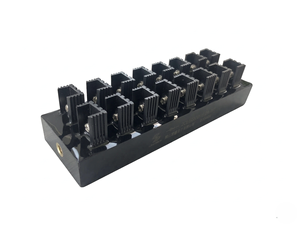
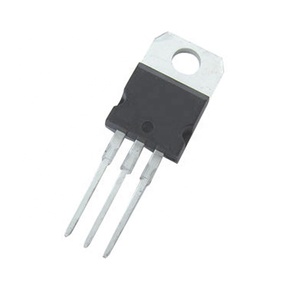
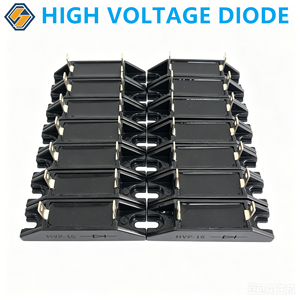
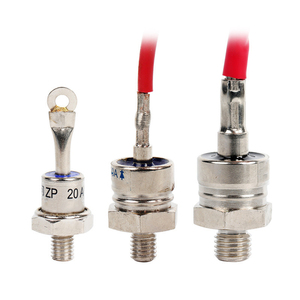
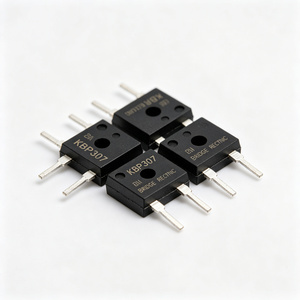
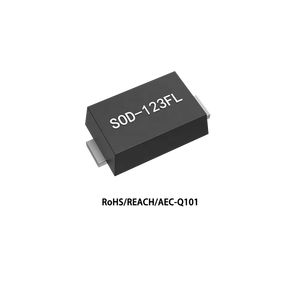
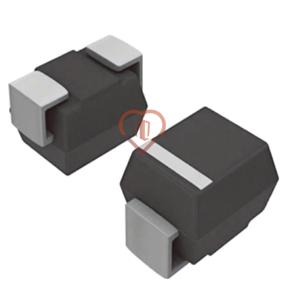
In modern power conversion ecosystems—spanning green hydrogen electrolysers, megawatt-scale industrial RF induction heating, electrochlorination units, and aerospace power conversion—the standard off-the-shelf discrete diode frequently fails to fulfill stringent thermal, electromagnetic, and mechanical density requirements. As a premier Custom OEM Diode Module Manufacturer & Supplier, our engineering philosophy revolves around solving system-level semiconductor constraints through bespoke package topologies, thermal co-design, and tailored silicon junction physics.
High-power diode modules serve as the critical rectification backbone across demanding direct-current (DC) conversion stages. Whether operating as high-frequency flywheel diodes, transient voltage suppression networks, or ultra-high-voltage rectifier stacks capable of sustaining up to 200 kV isolation, the underlying design must balance three fundamental parameters: forward conduction losses ($V_F$), reverse recovery dynamics ($t_{rr}$ / $Q_{rr}$), and junction-to-case thermal resistance ($R_{th(j-c)}$).
Selecting the appropriate wafer physics determines operational efficiency across varying switching frequencies. While conventional Silicon P-N junction diodes offer exceptional surge current capability ($I_{FSM}$) for bulk 50/60Hz line rectification, modern high-frequency inverter-fed rectifiers demand Silicon Carbide (SiC) Schottky diode modules.
| Electrical & Physical Parameter | Silicon (Si) Standard Rectifiers | Silicon Fast Recovery (FRED) | Silicon Carbide (SiC) Schottky |
|---|---|---|---|
| Junction Breakdown Field | 0.3 MV/cm | 0.5 MV/cm | 2.8 MV/cm (9x Higher) |
| Reverse Recovery Time ($t_{rr}$) | 1.5 µs – 3.0 µs | 25 ns – 100 ns | Zero Reverse Recovery (Near 0 ns) |
| Max Operating Temperature ($T_{j,max}$) | 150°C | 175°C | 200°C – 250°C |
| Thermal Conductivity | 1.5 W/cm·K | 1.5 W/cm·K | 4.9 W/cm·K |
| Primary Target Application | Line frequency rectification, high-surge AC-DC | SMPS, Snubber networks, Motor Drives | Ultra-high-density inverters, RF heating, EV power |
Die attachment technology directly impacts thermal fatigue resistance and operational longevity under cyclical loading conditions. Traditional soft-soldered interfaces suffer from delamination over thousands of thermal cycles due to Coefficient of Thermal Expansion (CTE) mismatches between silicon ($2.6 \times 10^{-6}/\text{K}$) and copper baseplates ($16.5 \times 10^{-6}/\text{K}$).
Our custom OEM diode modules employ advanced Direct Bonded Copper (DBC) Alumina ($\text{Al}_2\text{O}_3$) or Aluminum Nitride ($\text{AlN}$) substrate technology paired with silver sintering techniques. This isolation topology delivers dielectric breakdown resistance exceeding 4000 V RMS while ensuring optimal thermal transfer paths directly into integrated liquid-cooling channels or forced-air heatsink assemblies.
Custom power conversion requires application-specific tuning. We build diode modules, thyristor rectifiers, and high-voltage stacks tailored to your exact mechanical footprint and electrical envelope.
Engineered multi-chip parallel arrangements capable of swallowing destructive surge currents up to 50x nominal current, protecting upstream transformers and downstream DC loads.
Potting compounds engineered for extreme environments: chemical-resistant silicone gels and epoxy formulations rated for subsea oil & gas, marine corrosion, and high vibration.
Proprietary platinum-doped junction architectures minimizing reverse recovery charge ($Q_{rr}$), lowering EMI signatures and switching losses in high-frequency SMPS stages.
Series-connected avalanche-matched diode arrays featuring external voltage-equalizing resistor-capacitor networks for radar transmitters, electrostatic precipitators, and RF heating.
Integrated busbars, screw terminals, press-fit pins, or flexible copper leads customized to align seamlessly with existing customer chassis layouts and automated assembly lines.
Modules manufactured under ISO 9001 systems, fully traceable down to the wafer lot level, adhering to MIL-STD-704, MIL-STD-1275, and MIL-STD-461 specifications.
As global power electronics markets accelerate toward decarbonization, electrification, and Industry 4.0 automation, purchasing managers and principal electrical engineers are restructuring their semiconductor procurement strategies. The historical reliance on commodity off-the-shelf components is giving way to strategic, application-tailored OEM partnerships.
Procurement cycles for industrial equipment—especially green hydrogen electrolysis power supplies, EV fast chargers, and renewable energy grid tie-ins—are heavily prioritizing Silicon Carbide (SiC) diode module topologies. Lower thermal losses directly yield smaller system footprints, reducing total enclosure shipping weight and overall cooling energy expenditure by up to 35% over a 10-year operating life.
Geopolitical uncertainties and component counterfeit risks have heightened the necessity for absolute wafer-to-assembly supply chain transparency. Tier-1 buyers now mandate 100% Traceable Lot Codes and full material passports conforming to REACH, RoHS, and WEEE standards. Sourcing directly from verified OEM manufacturers guarantees component authenticity and secures guaranteed long-term production availability for legacy maintenance cycles.
Rather than assembling discrete diodes, heatsinks, snubber capacitors, and busbars individually, OEM engineering teams are increasingly outsourcing the entire rectification sub-assembly. Purchasing fully integrated, factory-tested diode bridge modules drastically lowers internal manufacturing assembly time, minimizes localized inventory strain, and transfers thermal/EMC compliance liability directly to the component specialist.
The relentless demand for higher current densities in increasingly constrained physical enclosures is driving key technological shifts in diode module manufacturing:
Electrolysers require continuous high-current DC (tens of thousands of Amperes) with minimal current ripple to optimize cell life. Thyristor-controlled transformer rectifiers and multi-phase diode blocks deliver ultra-stable DC conversion under continuous 24/7 duty cycles.
High-voltage silicon rectifier stacks (such as the HVP-16 series rated to 17.5kV and above) provide reliable power supplies for high-frequency industrial heating, plasma generators, and vacuum processing systems.
Operating in harsh coastal or marine conditions, specialized diode rectifiers deliver precise impressed-current cathodic protection (ICCP) to prevent structural corrosion on pipelines, offshore platforms, and water treatment plants.
Leveraging over three decades of power conversion innovation (established 1992), our organization delivers world-class power solutions spanning standard modular bricks, high-voltage assemblies up to 200 kV, and megawatt-scale industrial transformer rectifiers.
Every diode module and rectifier assembly undergoes rigorous quality control, automated electrical stress testing, thermal imaging, and 100% burn-in before dispatch.
Our experienced power engineers work alongside your R&D team to engineer custom housing profiles, custom thermal interface materials, and bespoke mechanical busbar layouts.
From initial prototype simulation to volume manufacture, calibration to traceable standards, preventative maintenance, site acceptance testing (SAT), and spare parts availability.
Expert insights into specifying, customizing, and procuring industrial diode modules for high-reliability applications.
To deliver an optimized custom design, our engineering team requires: Nominal and peak forward current ($I_{F(AV)}$, $I_{FSM}$), repetitive peak reverse voltage ($V_{RRM}$), switching frequency ($f_{sw}$), target junction-to-case thermal resistance ($R_{th(j-c)}$), isolation voltage requirements ($V_{ISO}$), cooling method (forced air or liquid), and physical mounting dimensions.
When connecting diode dies in series for multi-kilovolt applications (e.g., 20kV+ stacks), inherent variations in reverse leakage current ($I_R$) can cause disproportionate voltage stress on single diodes. We integrate matched voltage-equalizing resistor-capacitor (RC) networks across each junction to guarantee dynamic and static voltage symmetry.
Our high-power modules utilize Direct Bonded Copper (DBC) ceramics mounted onto high-density aluminum or copper heatsinks. For ultra-high current densities, we engineer liquid-cooled cold plates featuring micro-channel internal geometries to maintain junction temperatures ($T_j$) well below the safe 125°C threshold.
Yes. All custom modules are manufactured under ISO 9001 certified protocols and strictly conform to EU RoHS and REACH environmental mandates. Furthermore, we provide full lot traceability back to raw silicon wafer batches along with certificate of conformance documentation upon request.
Standard modified modules can be prototyped within 3 to 5 weeks. Fully custom clean-sheet designs—requiring unique mechanical tooling, thermal simulation modeling, and custom busbar fabrication—typically require 6 to 10 weeks for qualified prototype delivery, followed by rapid scaling into volume production.
We provide comprehensive standard warranties backed by complete technical lifecycle support. Because we manufacture long-life industrial assets, we guarantee long-term spare part availability, component refurbishment services, and recalibration support throughout the service life of your equipment.
Consult directly with our senior power conversion engineering team today. Share your target current, voltage, thermal, and space parameters to receive a qualified technical proposal and customized product catalog.
Get Catalog