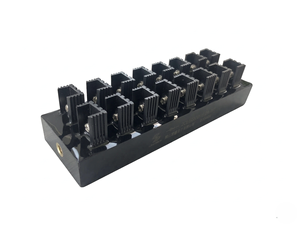
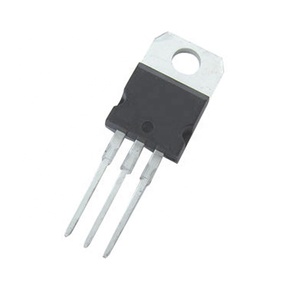
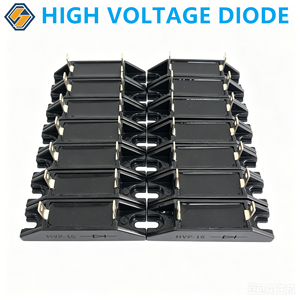
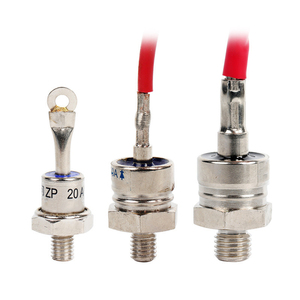
High-reliability power modules, silicon-controlled rectifiers (SCR), and high-voltage diode stacks specified for electrochlorination, seawater electrolysis, and heavy industrial duty.
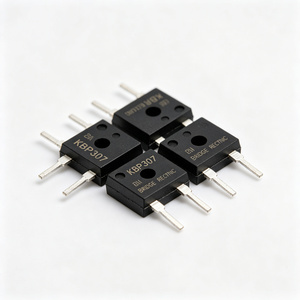
Electrochlorination represents the cornerstone of modern biofouling prevention, ballast water management, municipal water disinfection, and offshore oil/gas cooling water treatment. At its fundamental chemical level, electrochlorination utilizes direct current (DC) electrolysis to convert natural chloride ions present in seawater or prepared brine into active sodium hypochlorite ($\text{NaOCl}$). The efficiency, cell longevity, operating expenditure (OPEX), and system reliability of any commercial electrochlorination plant depend directly upon the electrical architecture of the power rectifiers feeding the electrolytic cell stack.
To execute this reaction continuously under extreme industrial ambient conditions—ranging from high humidity offshore platform topsides to hypersaline coastal power stations—power supply systems must deliver precise current density regulation, ultra-low current ripple, robust transient voltage suppression, and long-term thermal equilibrium. As an established custom OEM electrochlorination system manufacturer and global exporter, our engineering approach combines thyristor-controlled transformer rectifiers (TR), switch-mode power supply (SMPS) technology, and custom magnetics engineered specifically to eliminate Faraday efficiency losses.
Selecting the optimal conversion topology requires balancing capital expenditure (CAPEX), total harmonic distortion (THD), physical footprint, and electrolyte environmental conditions. Below is an engineering comparison matrix for OEM specification consideration:
| Performance Parameter | Thyristor-Controlled Rectifiers (SCR / TR) | High-Frequency Switch-Mode (SMPS) | Hybrid Modular OEM Systems |
|---|---|---|---|
| Power Rating Capacity | Megawatt (MW) Scale (Up to 150kW per unit / Scalable) | Compact Chassis (Up to 10kW – 50kW Modular) | Multi-Megawatt Parallel Arrays |
| DC Current Output Ripple | < 3% - 5% (with LC filtering) | < 1% Low Ripple Output | < 1.5% Optimized Output |
| Energy Efficiency (Full Load) | 90% - 94% | 93% - 96% | 94% - 96% |
| Dynamic Reverse Polarity | Heavy-Duty Mechanical / Solid-State Contactors | Integrated Electronic Switching | Programmable Automatic Descaling SCR Matrix |
| Harsh Environment Tolerance | Exceptional (Immune to high ambient vibration & dust) | Requires Sealed IP65 / Liquid Cooled Enclosure | Custom Encapsulated / Liquid Cooled Modular Racks |
| Primary OEM Application | Power Plant Intakes, Large Ballast Water, Refinery Cooling | Compact Marine Skids, Commercial Pools, Water Utilities | Heavy Industrial & Hydrogen/Chlorine Electrolysis |
By controlling current density per square meter of titanium electrode surface ($A/m^2$), our custom rectifiers prevent localized overheating of Precious Metal Oxide (PMO) coatings (e.g., RuO₂/IrO₂ ruthenium-iridium oxide anodes). Maintaining stable DC current within precise hysteresis limits prevents early catalytic layer passivation, extending active electrolyzer stack life from the typical 3-year replacement cycle to over 7–10 years of un-degraded service.
From initial circuit design, magnetics winding, thermal modeling, and EMC compliance testing to global containerized export—our manufacturing operations deliver full-stack technical sovereignty.
Electrochlorination equipment operates across vastly different chemical environments. To guarantee optimal electrical-to-chemical conversion efficiency, system procurement managers must align system topology with specific operational parameters:
Shipboard space constraints require exceptionally high power density and light weight. Our switched-mode high-frequency rectifiers (SMPS) offer compact 19-inch rack mounting, high ambient operating temperatures up to 55°C, and active Power Factor Correction (PFC > 0.98), minimizing engine room generator harmonic stress in compliance with IMO D-2 standards.
Coastal power generating stations handling massive seawater intake volumes ($>10,000\text{ m}^3/\text{hr}$) demand heavy-duty, continuous MW-class DC power. For these facilities, our heavy-duty Thyristor-Controlled Transformer Rectifiers (TR) deliver uncompromised durability. Featuring oil-cooled or forced-air heat exchangers, robust SCR firing circuits, and high pulse counts (12-pulse / 24-pulse ripple reduction configurations), these units reduce grid side THD below 5% without expensive harmonic filters.
Ex-d explosion-proof or pressurized ATEX/IECEx certified control enclosures are essential for hazardous offshore zones. Our customized OEM electrochlorination rectifiers incorporate isolated control electronics, dual-redundant cooling fans, salt-mist anti-corrosion cabinet coatings (C5-M specification), and certified over-current/over-voltage protection stacks.
As global environmental regulations enforce stricter biocide effluent limits and marine protection mandates, procurement strategies for electrochlorination assets are undergoing major shifts. Engineering procurement directors must evaluate the following macro-trends:
Historical procurement focused strictly on initial capital expenditure (CAPEX). However, because electrical power accounts for over 70% of the lifetime operating cost of an electrochlorination plant, modern procurement protocols prioritize energy conversion efficiency. Upgrading from conventional 6-pulse diode rectifiers to 12-pulse SCR or high-frequency switch-mode platforms yields a 4% to 8% reduction in total kWh consumed per kilogram of equivalent chlorine produced—resulting in full capital payback within 18 to 24 months of continuous operation.
Plant downtime in municipal drinking water disinfection or power plant biofouling control is unacceptable. Modern OEM specifications increasingly demand modular switch-mode power arrays featuring hot-swappable sub-units. If a single 10kW module encounters a thermal fault, the remaining parallel modules dynamically adjust current output, ensuring uninterrupted chemical dosing while maintenance teams replace the module during routine operation.
Advanced electrochlorination facilities are capitalizing on hydrogen byproduct capture. Because hydrogen gas ($\text{H}_2$) is liberated at the cathode during hypochlorite generation, strategic buyers are specifying power rectifiers designed to integrate with automated gas monitoring systems, enabling safe hydrogen compression, storage, and clean fuel utilization.
The convergence of power electronics, materials science, and digital intelligence is driving the next generation of electrochlorination infrastructure:
The transition from standard Silicon (Si) IGBTs and SCRs to wide-bandgap Silicon Carbide (SiC) switches represents a major leap forward. SiC semiconductors allow switching frequencies to exceed 100 kHz with negligible switching losses. This drastically reduces the physical footprint of inductors and transformers by up to 60%, delivering ultra-compact OEM rectifiers perfect for maritime and skid-mounted mobile equipment.
Our ongoing R&D embeds Internet-of-Things (IoT) sensor arrays directly within the rectifier power stage. By continuously measuring junction temperatures, ripple voltage drift, winding vibration, and electrolytic cell voltage-current characteristic curves, embedded machine learning algorithms predict anode coating wear and transformer insulating oil degradation months before component failure occurs.
Get immediate, clear answers from our power engineering team regarding custom system design, integration, and ordering specifications.
Connect directly with our senior power conversion application engineers. We will analyze your duty cycle, electrolyte salinity, and spatial constraints to deliver a qualified technical proposal within 24 hours.
Inquire Now