Explore specialized silicon diodes, SCR modules, and high-voltage rectifiers designed for heavy industrial, defense, medical, and process chemistry applications.
Every standard platform, custom topology modification, and high-voltage semiconductor stack undergoes full thermal profile modeling, burn-in validation, and traceable lot inspection under strict European and North American engineering standards.
An engineering treatise on topology selection, thermal stress management, harmonic mitigation, and semiconductor integration in modern OEM energy systems.
Power conditioning equipment serves as the fundamental backbone for mission-critical industrial processes worldwide. From megawatt-scale green hydrogen electrolysis facilities to high-precision medical diagnostic equipment and harsh-environment defense platforms, raw grid power (AC) must be transformed, stabilized, filtered, and regulated into tightly controlled direct current (DC) or specialized alternating current (AC) waveforms. As custom OEM power conditioning manufacturers and global exporters, our engineering discipline focuses on delivering maximum efficiency, minimal total harmonic distortion (THD), and extended operational lifespan under severe continuous electrical and environmental stress.
When engineering bespoke power conversion systems for global procurement teams, selecting the appropriate conversion topology is the critical initial decision point. Industrial power conditioning broadly splits into heavy-duty Thyristor-Controlled Transformer Rectifiers (TR) and High-Frequency Switched-Mode Power Supplies (SMPS).
| Parameter / Feature | Thyristor-Controlled Rectifiers (TR) | Switch-Mode Power Supplies (SMPS) | Hybrid SCR-Switch Mode Assemblies |
|---|---|---|---|
| Power Capacity Range | 10 kW to Multi-Megawatt (MW) Scale | Sub-1 kW to 150 kW Rack Modules | 50 kW to 500 kW Configurable Chassis |
| Primary Application | Electrolysis, Plating, Cathodic Protection | RF Equipment, Telecom, Defense MIL-Spec | Heavy Industrial Automation & Induction |
| Ruggedness & Overload | Extremely High (Handles 300% Inrush Surge) | Moderate (Requires Rapid Electronic Trip) | High (Integrated Thermal & Surge Networks) |
| Conversion Efficiency | 92% – 97% at full load | 88% – 94% depending on switching freq. | 94% – 96% optimized across load curve |
| Harmonic Distortion (THD) | Higher low-order harmonics (requires filtering) | Low line-frequency THD (Active PFC) | Mitigated via 12-Pulse / 24-Pulse phase shifting |
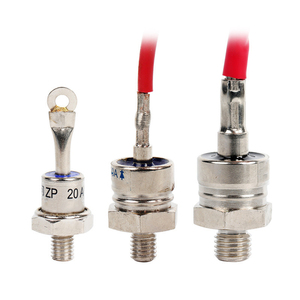
For high-current electrochemistry—such as chlor-alkali production, electroplating, and PEM hydrogen electrolysers—Thyristor-Controlled Transformer Rectifiers remain the gold standard due to their unmatched reliability under continuous heavy conduction. Utilizing heavy-duty spiral diodes like the ZP100A 1600V alongside robust Silicon Controlled Rectifiers (SCRs) enables precise phase-angle regulation across widely fluctuating load impedances.
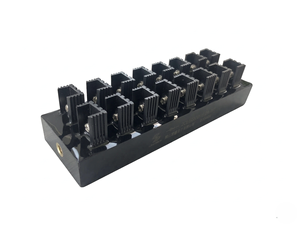
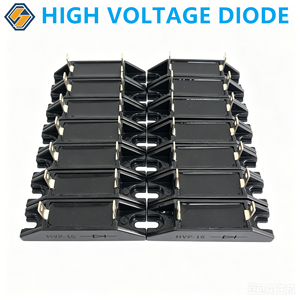
In high-voltage power conditioning—exceeding multi-kilovolt thresholds for industrial RF generators, induction heating, and electrostatic precipitation—individual diode junction limitations dictate array engineering. Devices such as the 2CLG20KV/50A-WT High Voltage Diode Block and the HVP-16 17.5KV High Voltage Silicon Stack Rectifier utilize internal series-connected avalanche diode junctions encapsulated within high-thermal-conductivity epoxy bodies.
Proper integration of high voltage silicon stacks requires thorough consideration of:
Integration of surface-mount Zener arrays like the P0080TA-MC SMA Fast Recovery Series safeguards control microprocessors and sensing lines against fast atmospheric transients and inductive kickback spikes.
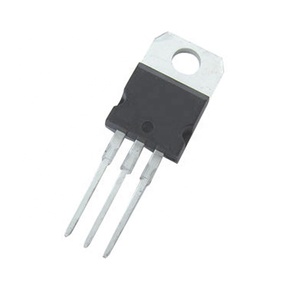
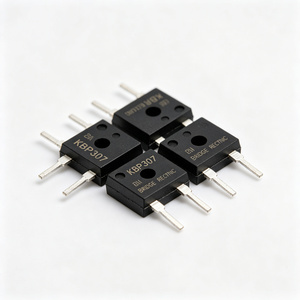
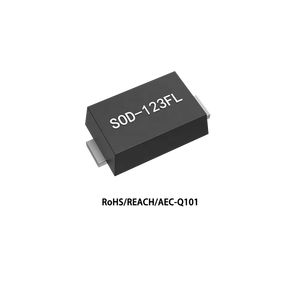
From low-power SMD rectifiers like the 1N4006W SOD-123FL to bulk bridge rectifiers like the KBP307, all OEM components carry verifiable lot codes preventing counterfeit parts in critical supply chains.
Custom transformer windings featuring phase-shifting configurations (Delta-Wye / Interphase transformers) suppress input current harmonics to comply with IEEE 519 and IEC 61000-3-12 grid standards.
Key evolution vectors driving global OEM power supply procurement over the next decade.
While silicon diodes and SCRs remain dominant for high-power low-frequency phase control, Silicon Carbide (SiC) and Gallium Nitride (GaN) devices are revolutionizing switch-mode front-ends. Higher switching frequencies (above 100 kHz) dramatically reduce magnetic core volume and filter capacitor footprints, yielding power densities exceeding 40 W/in³ in modular AC-DC converters.
The rapid expansion of clean hydrogen production requires ultra-high-current DC rectifiers (up to 10,000 A per cell stack). Procurement trends emphasize multi-pulse thyristor topologies (12-pulse, 24-pulse) and active front-end (AFE) rectifiers that deliver low DC ripple (< 2%) to maximize electrolyser membrane life and prevent premature stack degradation.
Modern OEM power conditioning units are transitioning from simple analog control loops to fully digitized ARM/DSP-driven architectures. Native MODBUS RTU, CANbus, and Ethernet/IP protocols transmit real-time thermal readings, diode forward voltage drop deterioration, and capacitor ESR values to enable predictive maintenance long before catastrophic plant shutdown.
Global power utilities are enforcing severe financial penalties for harmonic injection and lagging power factors. Global exporters of OEM power units must supply integrated active PFC modules or multi-stage passive LC filters capable of maintaining Power Factor (PF) above 0.98 and total harmonic distortion below 5% across full load variation.
Over three decades of precision manufacturing, engineering agility, and rigorous compliance infrastructure.
Our in-house R&D team modifies existing power platforms or builds bespoke clean-sheet power architectures covering electrical topology, PCB artwork, custom magnetics, mechanical enclosures, and compliance routing.
We guarantee long-term component availability, diagnostic calibration, on-site commissioning, operator training, and refurbishment services to keep critical assets operating past their original design lifespan.
With established operations across Europe and North America, our products comply with CE, UL, MIL-STD-704/1275/461, IEC/EN 61010, and RoHS/REACH environmental standards for effortless international integration.
Technical guidance for system integrators, electrical engineers, and OEM purchasing directors.