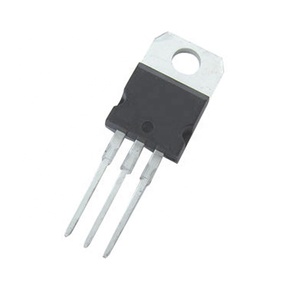
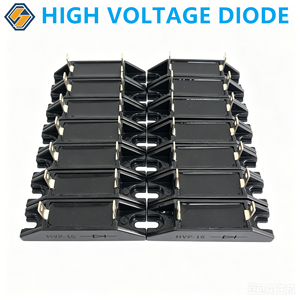
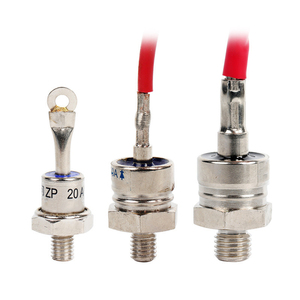
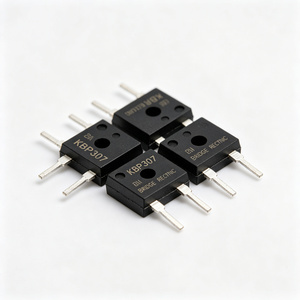
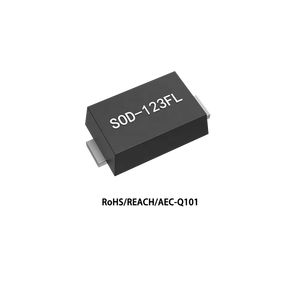
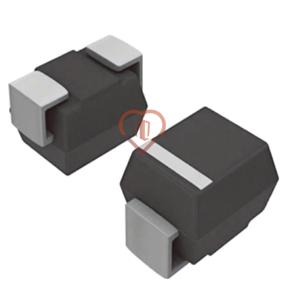
Integrate certified high-power diodes, silicon controlled rectifiers (SCR), and bridge rectifier blocks engineered for megawatt-scale grid power conversion and industrial inverter stability.
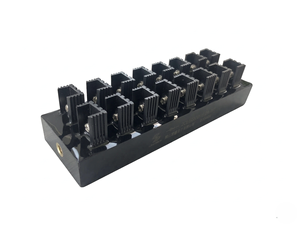
In the modern energy ecosystem, grid-tied inverters serve as the critical interface between direct current (DC) energy generation systems—such as photovoltaic arrays, battery energy storage systems (BESS), and green hydrogen electrolyser feeds—and the high-voltage alternating current (AC) electrical grid. As global electrical grids shift toward higher renewable penetration, the technical requirements for grid inverters have evolved far beyond simple DC-to-AC power conversion. Today's commercial, industrial, and utility-scale grid-tied inverters must deliver exceptional thermal efficiency, low total harmonic distortion (THD < 1.5%), active grid-support capabilities (grid-forming and grid-following operational modes), and uncompromising reliability across decades of operation.
As a premiere OEM/ODM Grid Inverter Supplier and Exporters with over three decades of British power conversion expertise, our engineering teams build custom grid topologies engineered to withstand hostile ambient conditions, complex inductive/capacitive grid loads, and rapid thermal cycling. High-reliability power conversion starts at the semiconductor silicon layer, utilizing robust components including high-voltage silicon rectifiers, thyristor assemblies, and advanced silicon carbide (SiC) MOSFET stacks.
Selecting the optimal grid inverter topology depends heavily on the installation scale, fault tolerance requirements, and economic lifecycle parameters:
We deliver tailored power hardware, customized firmware, and mechanical packaging designed around your system load requirements and local grid interconnect codes.
Full modification of AC/DC stages, high-voltage transformer winding ratios, active harmonic filtering networks, and isolated DC-DC converters rated up to 200 kV handling capacity.
NEMA 4X / IP65 and IP66 enclosure engineering with direct liquid cold-plate cooling or forced air heat pipe exchangers for desert, offshore marine, and high-altitude operations.
Complete regulatory approval execution including IEC 62109-1/-2, UL 1741 SB, IEEE 1547 grid compliance, CE marking, MIL-STD environmental testing, and ISO 9001 factory controls.
To assist procurement managers, EPC contractors, and system integrators in defining contract boundaries, the following comparative engineering matrix details the scope allocation between Original Equipment Manufacturing (OEM) and Original Design Manufacturing (ODM) grid inverter projects:
| Engineering Dimension | OEM Custom Manufacturing | ODM Clean-Sheet Development | Standard Off-the-Shelf Platform |
|---|---|---|---|
| Schematic & Topology Ownership | Client Provided / Adapted | Supplier Custom Design | Supplier Standard Catalog |
| Semiconductor & Diode Selection | Client Qualified BOM | Optimized by Supplier R&D | Fixed Factory BOM |
| Enclosure & Mechanical IP Rating | Built to Client CAD Specs | Co-engineered (IP54 to IP66) | Standard IP65 Chassis |
| Firmware & Grid Code Adaptation | Custom Protocol Flashing | Full DSP / FPGA Code Creation | Pre-loaded Regional Grid Code |
| NRE (Non-Recurring Engineering) | Low to Moderate | Moderate to High | Zero NRE Charge |
| Time to Mass Production | 8 – 14 Weeks | 16 – 26 Weeks | Immediate Stock / 2 Weeks |
| Minimum Order Quantity (MOQ) | 50 – 100 Units | 100 – 500 Units | 1 Unit |
The operational lifespan of a grid-tied power inverter—typically expected to reach 20 to 25 years in utility environments—is directly governed by the degradation rates of its discrete semiconductor components, magnetic elements, and DC-bus capacitors. Power surges caused by grid switching transients, lightning strikes, or sudden load rejections place intense dv/dt and di/dt strain on the primary inversion bridge and auxiliary rectifiers.
Our custom OEM/ODM inverter platforms integrate high-grade silicon components specifically selected to mitigate failure modes:
The global grid-tied inverter market is undergoing a massive structural shift driven by decarbonization mandates, decentralization of generation assets, and supply chain security initiatives. Global procurement executives and EPC engineers must account for five pivotal technological and economic trends over the next decade:
While traditional silicon (Si) IGBTs remain the workhorse for high-power low-cost applications, Silicon Carbide (SiC) MOSFETs and Gallium Nitride (GaN) devices are rapidly dominating premium inverter designs. SiC allows switching frequencies to increase from 10–20 kHz up to 100+ kHz, dramatically shrinking the physical footprint and weight of copper magnetics and filtering inductors. This transition enables ODM manufacturers to increase inverter power density by over 40% while reducing thermal losses by 30%.
Traditional solar and storage inverters are "grid-following" (GFL); they rely on a stable voltage and frequency signal provided by central thermal or hydroelectric generators. As fossil-fuel plants retire, grid inertia decreases, raising the risk of rapid frequency instability. Modern OEM procurement mandates now specify Grid-Forming (GFM) inverter firmware capabilities. GFM inverters emulate synthetic inertia using internal voltage-source algorithms, allowing inverter fleets to stabilize grid voltage and frequency during major grid disturbances.
To reduce balance-of-system (BOS) cabling costs and lower $I^2R$ conduction losses, solar arrays and utility storage installations are transitioning rapidly from 1000V DC operating voltages to 1500V DC, with 3000V DC architectures currently in pilot testing. This progression requires specialized high-voltage rectifiers, enhanced creepage/clearance distance engineering, and high-voltage isolation components capable of withstanding severe continuous dielectric stress.
Procurement specifications now heavily emphasize smart diagnostics embedded directly into inverter control firmware. Advanced IoT telemetry monitors capacitor health, junction temperatures, fan degradation, and harmonic pollution in real time. Predictive machine learning models identify component wear months before an actual hardware breakdown occurs, converting emergency downtime into planned preventative maintenance windows.
Geopolitical shifts and regulatory policies—such as the European Union’s Carbon Border Adjustment Mechanism (CBAM) and US NDAA/FEOC rules—have made supply chain transparency a critical procurement evaluation metric. Exporters and suppliers offering fully traceable Bill of Materials (BOM), certified ISO 9001 quality controls, and localized assembly alternatives hold significant competitive advantages in international project tenders.
Detailed technical responses to common questions encountered during commercial and industrial grid inverter sourcing.
Building mission-critical energy hardware requires an OEM partner with deep domain experience, continuous quality management, and transparent engineering controls. Established over 30 years ago in the United Kingdom, our manufacturing legacy encompasses high-reliability power supplies, transformer rectifiers, and bespoke grid conversion architectures operating across Europe, the Americas, Asia, and global offshore installations.
Every step of our production pipeline—from magnetic transformer winding and component SMT pick-and-place to high-voltage burn-in testing—is strictly executed within ISO 9001 certified facilities. When you source grid inverters and semiconductor assemblies from us, you gain direct access to senior power engineers dedicated to optimizing your system efficiency, regulatory compliance, and market speed.
Consult directly with our senior power electronics team. Submit your electrical requirements, target grid codes, and target volume timelines today to receive a comprehensive technical proposal and BOM quote.
Get a Quote