Engineered to deliver exceptional thermal resilience, ultra-low ripple voltage, dynamic line/load regulation, and total operational reliability across medical, industrial, telecom, and defense sectors.
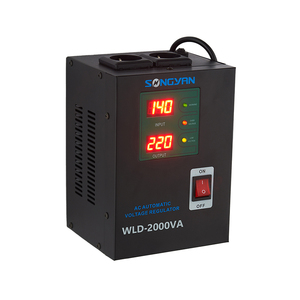
Advanced digital microprocessor-controlled AVR designed for clean sine-wave output stabilization under erratic generator supply conditions.
Get Catalog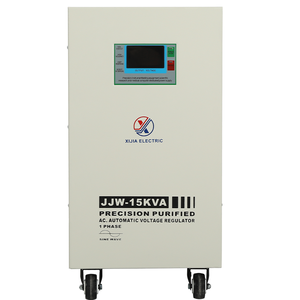
Ultra-precise 1% regulation featuring sine-wave energy purification technology for sensitive medical imaging and laboratory instruments.
Get Catalog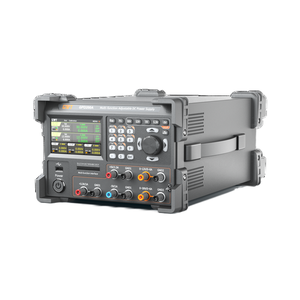
Benchtop linear DC power supply with ultra-low residual ripple noise, fine current/voltage adjustment, and integrated auxiliary output.
Get Catalog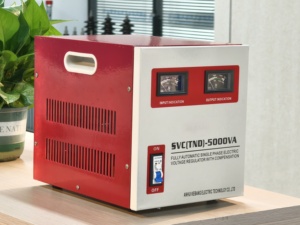
Dual-stage frequency and voltage auto-regulator configured specifically for harmonic suppression in field generator infrastructure.
Get Catalog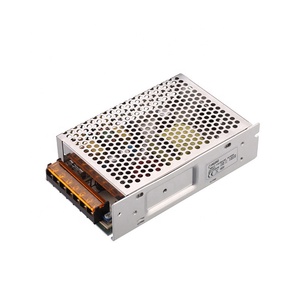
Multi-channel fuse-protected switching power enclosure designed for industrial telemetry, surveillance, and automated control cabinets.
Get Catalog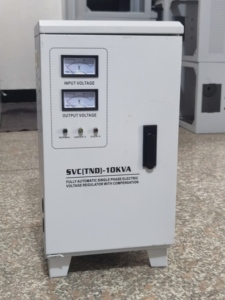
Heavy-duty servo-motor transformer voltage stabilizer engineered for continuous high-load industrial machinery protection.
Get Catalog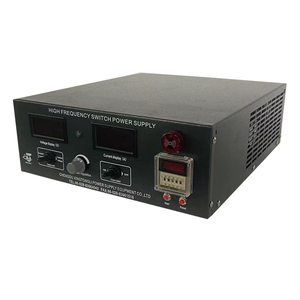
High-power density programmable SMPS platform supporting wide voltage/current range output for automated test equipment (ATE).
Get Catalog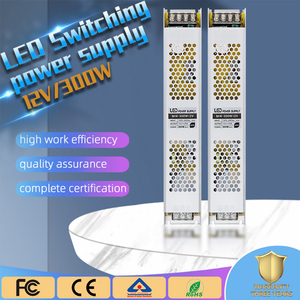
Slimline aluminum enclosed switching driver delivering 90%+ thermal efficiency for industrial display lighting and control panels.
Get CatalogModern electrical grids and industrial automation architectures operate under severe environmental, electrical, and thermal stresses. As a premier original equipment manufacturer (OEM) and original design manufacturer (ODM), our power engineering division provides fully integrated end-to-end power conversion solutions tailored precisely to original equipment specifications. Rather than forcing standard off-the-shelf catalog units into complex industrial frameworks, we design clean-sheet power electronics systems that prioritize efficiency, thermal dissipation, electromagnetic compatibility (EMC), and operational longevity.
Our manufacturing footprint adheres to ISO 9001 quality management protocols, governing every stage from schematic capture, PCB layout, custom transformer magnetics design, and thermal finite element analysis (FEA) to volume manufacturing, stress screening, and functional testing. We serve tier-one enterprise clients in sectors including green hydrogen electrolysis, medical equipment manufacturing, defense platforms, cathodic protection, carbon capture, and telecommunications infrastructure.
We work collaboratively with OEM procurement directors, systems integrators, and principal design engineers to modify standard platforms or engineer entirely bespoke power supplies. Our capabilities encompass:
Expert implementation of AC-DC, DC-DC, LLC Resonant, Phase-Shifted Full Bridge (PSFB), and Thyristor phase-controlled transformer rectifier topologies.
In-house winding and poting of high-frequency transformers, chokes, and inductors tuned for low core losses and superior thermal conduction.
Pre-compliance verification and design hardening for IEC/EN 61010, IEC 60601 (medical 2xMOPP), MIL-STD-704/1275/461, and CE/UL safety standards.
As industrial automation systems migrate toward Smart Factory standards and low-carbon energy transition platforms, procurement teams must evaluate power supply vendors based on long-term technological alignment. Key global trends shaping regulated power procurement include:
1. Adoption of Wide Bandgap (WBG) Semiconductors (GaN & SiC): Next-generation power conversion architectures are rapidly replacing legacy Silicon MOSFETs with Silicon Carbide (SiC) and Gallium Nitride (GaN) devices. WBG semiconductors allow significantly higher switching frequencies, reducing the physical volume of passive magnetic components while boosting overall power density and thermal performance up to 96%+ efficiency levels.
2. Transition from Analog Control Loops to Digital DSP Architectures: Modern regulated power units are increasingly specified with embedded Digital Signal Processors (DSP) and ARM Cortex microcontrollers. Digital control loops enable real-time adaptability to dynamic load changes, soft-programmable regulation profiles, and seamless digital bus communications via PMBus, CANbus, and Modbus TCP for predictive maintenance telemetry.
3. Modular N+1 Redundancy & Hot-Swappable Configurations: Industrial process lines cannot tolerate unprogrammed downtime. Procurement specifications are prioritizing modular, rack-mounted power conversion systems configured with integrated ORing diodes/FETs that allow live hot-swapping of power modules without interrupting critical plant operations.
4. Total Cost of Ownership (TCO) & Energy Loss Minimization: While initial capital expenditure (CAPEX) remains an important metric, enterprise buyers are placing greater weighting on operational expenditure (OPEX). A 3% improvement in power conversion efficiency across a megawatt-scale industrial installation yields massive energy cost savings and carbon footprint reduction over a 10-to-15-year lifecycle.
The global power electronics industry is undergoing rapid transformation driven by strict efficiency mandates and grid power quality standards. Engineering trends dominating the market include:
Modern industrial equipment must comply with stringent harmonic distortion limits (IEC 61000-3-2). Advanced active PFC circuits achieve power factors greater than 0.99 with Total Harmonic Distortion (THD) below 5%.
Sensitive diagnostics, scientific research lasers, and semiconductor fabrication tools require DC stability with peak-to-peak ripple noise measured in millivolts. Precision linear and hybrid switching-linear topologies meet these critical criteria.
Power supplies engineered for harsh outdoor environments, marine cathodic protection, and offshore oil platforms feature conformal coating, IP65 enclosure sealing, and wide operational temperature envelopes (-40°C to +85°C).
Connect directly with our senior power conversion engineering team to discuss custom OEM/ODM specifications, request product catalogs, or submit technical RFQs.
Get Catalog