UK / Europe: +44 1268 568200 USA / Canada: +1 877 215 8463
in

Top 10 Linear Rectifier Manufacturer & Exporter

Global Engineering & Procurement Whitepaper: High-Voltage Silicon Stacks, Fast-Recovery Diodes, SCR Assemblies & Linear Power Conversion Systems

Featured Semiconductor Portfolio

Industrial Rectifiers & Silicon Power Modules

Direct manufacturer supply of traceable, high-reliability silicon controlled rectifiers, high voltage stacks, and power diode modules optimized for linear conversion regimes.
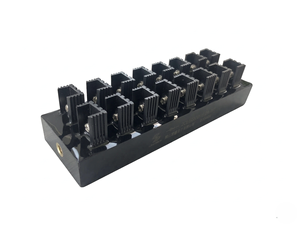
2CLG20KV/50A-WT High Voltage Rectifier Diode Block

High Current Diode 2CLG20KV/50A-WT High Voltage Rectifier Diode Block

Designed for heavy industrial RF heating and power conversion, featuring 20KV repetitive peak reverse voltage and 50A continuous surge tolerance.
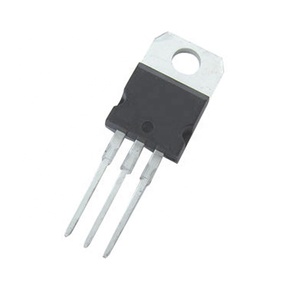
SCR 25A TO-220 Silicon Controlled Rectifier

SCR 25A TO-220 Silicon Controlled Rectifier

Standard TO-220 AB encapsulated thyristor engineered for phase-control AC power regulation, motor drives, and industrial heating switches.
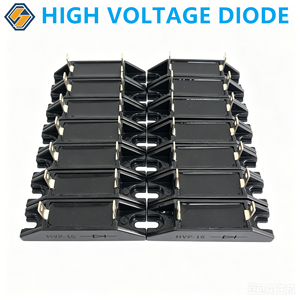
HVP-16 High Voltage Silicon Stack Rectifier 17.5KV

HVP-16 High Voltage Silicon Stack Rectifier 17.5KV HV Diode

Ultra-fast recovery high voltage diode stack optimized for industrial RF generators, induction heating transformers, and plasma power equipment.
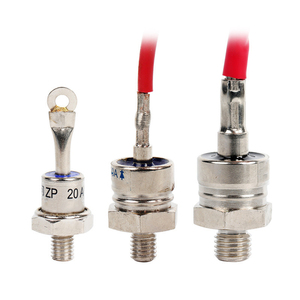
Spiral Diode ZP100A 1600V Silicon Rectifier

Spiral Diode ZP100A 1600V Silicon High Power Rectifier Diode

Heavy-duty stud-mount 100A 1600V chrome plating power supply rectifier offering exceptional forward surge capacity and thermal dissipation.
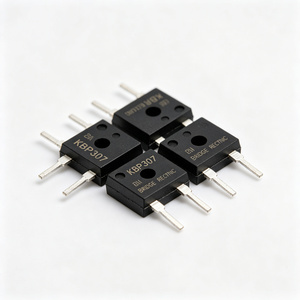
KBP307 Bridge Rectifier Diode 1000V 3A

KBP307 KBP 4-Pin Through-Hole Bridge Rectifier Diode 1000V 3A

Compact single-phase glass-passivated bridge rectifier for AC-to-DC rectification in switch-mode converters, linear front-ends, and auxiliary drives.
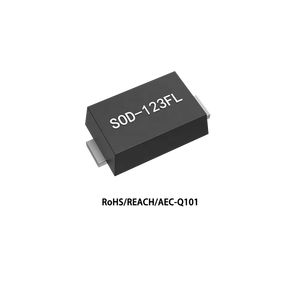
1N4006W SOD-123FL Silicon General Rectifier

1N4006W SOD-123FL Silicon General Rectifier (100% Traceable)

Surface-mount general-purpose rectifier diode featuring low reverse leakage current, optimized for automated SMT line assembly with full lot control.
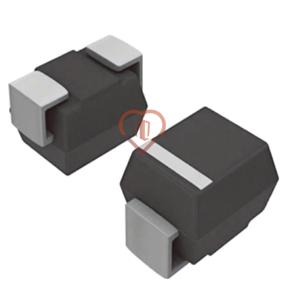
P0080TA-MC Fast Recovery Rectifiers SMA

P0080TA-MC SMA Silicon Zener & Fast Recovery Rectifiers 2.2A 10V

Surface-mount transient suppressor and fast-recovery rectifier combination module for overvoltage protection in industrial electronics.
M400 Silicon Controlled Rectifier Brake Supply

Silicon Controlled Rectifier Brake Block M400 (400VAC Input / 180VDC)

Industrial OEM motor brake control rectifier converting 400VAC input to 180VDC output, designed for heavy duty electric motor holding brakes.

Proven Reliability & Scale

Global Power Conversion Engineering Standard

Backbone power hardware engineered for applications where electrical failure is not an option. Operating under rigorous ISO 9001 controls with full material traceability.

30+ Yrs
Linear & Power Design Heritage
200 kV
High Voltage Isolation Peak
MW-Scale
Electrolysis & Heavy Duty Power
ISO 9001
Certified Quality Management

Executive Overview: The Role of Linear Rectification in Modern High-Reliability Infrastructure

In high-power industrial electronics, RF induction heating, hydrogen electrolysis, and mission-critical defense hardware, the linear rectifier remains an essential component of electrical architecture. While switch-mode power supplies (SMPS) have gained market share due to density, linear rectifiers and thyristor-controlled transformer rectifiers offer unsurpassed low-noise profiles, instantaneous transient resilience, and exceptional electromagnetic compatibility (EMC).

As global OEM procurement teams navigate the transition toward green hydrogen, high-frequency industrial plasma processing, and high-reliability aerospace grids, selecting a certified linear rectifier manufacturer and exporter requires evaluating thermal management, reverse recovery characteristics ($t_{rr}$), junction degradation limits, and long-term supply chain origin compliance.

Linear Rectification vs. Switching Topologies: Engineering Benchmarks

Selecting the correct rectification topology directly affects overall system power factor, Total Harmonic Distortion (THD), and parasitic electromagnetic interference. Below is a comparative engineering baseline established from extensive laboratory bench testing under standard IEC 61010 and MIL-STD-461 protocols:

Electrical Parameter Linear / Transformer Rectifier Switch-Mode Power Supply (SMPS) Silicon Controlled Rectifier (SCR)
Output Ripple Voltage Ultra-Low (< 0.1% RMS with filter) Moderate to High (High-Frequency Noise) Low-Frequency Ripple (Phase Dependent)
EMC / EMI Radiation Near-Zero High-Frequency EMI Requires Complex EMI Suppression Filters Low Conducted EMI (Low Switching Frequency)
Overload & Transient Resilience Exceptional (High $I_{FSM}$ Surge Current Capacity) Moderate (Fast Electronic Overcurrent Trips) Superior (Solid-State Robustness)
Mean Time Between Failures (MTBF) > 200,000 Operating Hours 80,000 – 120,000 Hours > 300,000 Operating Hours
Maintenance Profile Passive Cooling / Minimal Maintenance Active Fans / Electrolytic Capacitor Degradation Rugged Chassis / Heavy Industrial Duty

Traceable Lot Control & Integrity

Every linear diode, surface-mount rectifier (1N4006W, SMA series), and high-power stud module is backed by 100% wafer-level testing, serial lot tracking, and material certifications matching military and industrial aerospace requirements.

High Voltage Stack Technology

Specialized high-voltage silicon stack rectifiers (such as the 2CLG20KV and HVP-16 ranges) incorporate glass-passivated junction chips encased in flame-retardant epoxy resins, providing stable blocking voltage up to 20kV for RF plasma generation.

Custom OEM Power Modification

Beyond off-the-shelf semiconductors, our power engineering group configures complete linear transformer rectifiers, thyristor phase control stacks, and customized motor brake modules tailored to customer physical and thermal envelopes.

Strategic Procurement Trends: Linear & Power Rectification (2025–2030)

The global industrial rectifier market is undergoing a major structural evolution driven by energy transition mandates, automated manufacturing systems, and defense modernization projects. Key trends shaping procurement specifications include:

  • 1. Wide-Bandgap Hybrid Topologies (SiC/GaN Integration): While traditional silicon diodes dominate heavy linear rectifiers, hybrid linear systems are increasingly integrating Silicon Carbide (SiC) Schottky diodes. This hybrid configuration reduces reverse recovery losses while retaining the zero-noise characteristics of a linear continuous-conduction front end.
  • 2. Real-Time Telemetry and Thermal Digital Twins: High-power spiral rectifiers (e.g., ZP100A series used in heavy chrome electroplating and hydrogen electrolysis) are now routinely ordered with integrated fiber-optic thermal monitoring. This allows predictive maintenance control platforms to compute real-time junction degradation ($T_j$) and prevent thermal runaway before catastrophic breakdown occurs.
  • 3. Compliance with Stringent Energy Directives (EU Ecodesign & RoHS 3): Procurement managers must verify that high-voltage diodes and SCR assemblies comply with lead-free soldering directives, REACH chemical compliance, and RoHS 3 standards, ensuring unhindered entry into European and North American production environments.
  • 4. Demand for High Surge Current ($I_{FSM}$) Resilience: With grid volatility increasing due to intermittent renewable feeds, industrial buyers prioritize rectifiers with high surge current ratings to absorb unexpected line transients without requiring auxiliary surge suppression arrays.

Industry Application Vectors: Where Precision Rectification Matters

Industrial linear rectifiers and SCR modules serve specialized sectors where voltage ripple or high-frequency noise would compromise process outcomes or sensitive measurements:

A. High-Frequency RF Induction Heating & Plasma Equipment: Devices like the HVP-16 (17.5KV) and 2CLG20KV/50A-WT diode blocks provide stable DC voltage under high ambient temperatures. Their fast reverse recovery prevents harmonic distortion from reflecting back into industrial RF vacuum tubes and solid-state high-frequency oscillators.

B. Heavy Electroplating & Industrial Electrolysis: In high-current applications such as continuous chrome plating or hydrogen electrolyser stacks, stud-mounted spiral diodes (e.g., ZP100A 1600V) deliver high continuous forward current ($I_{F(AV)}$) with minimal internal forward voltage drop ($V_F$), directly translating to reduced electrical operating costs.

C. Automated Motor Braking and Industrial Control: Silicon Controlled Rectifiers engineered into dedicated brake modules (such as the M400 400VAC Input to 180VDC Output) supply reliable, fast-response DC excitation current to electromagnetic safety brakes on industrial cranes, elevators, and heavy CNC machinery.

Engineering Knowledge Base

Frequently Asked Technical & Sourcing Questions

Essential guidance for component engineers, supply chain directors, and technical buyers specifying linear rectifiers.

Q What is the primary technical advantage of a linear rectifier stack over a switch-mode power converter in high-voltage industrial applications?
Linear rectifiers and high-voltage transformer rectifier stacks generate near-zero high-frequency electromagnetic interference (EMI) and radio frequency interference (RFI). In sensitive applications such as RF induction heating, high-power radar transmitters, and medical diagnostic imaging, the switching noise of an SMPS can distort control signals or cause electromagnetic coupling issues. Linear rectifiers deliver clean, low-ripple DC power with extreme reliability and simple thermal management.
Q How does reverse recovery time ($t_{rr}$) impact performance in high-voltage silicon rectifiers like the HVP-16 or 2CLG series?
Reverse recovery time ($t_{rr}$) measures the duration required for a diode to transition from forward conduction to the reverse blocking state. In high-frequency or transient-heavy environments (such as induction heating tank circuits), a prolonged $t_{rr}$ results in severe power dissipation during switching transitions, causing localized junction overheating. High-voltage fast-recovery diode stacks utilize passivated silicon wafers to minimize $t_{rr}$, reducing internal thermal dissipation and enhancing system efficiency.
Q What critical parameters must be evaluated when sourcing Silicon Controlled Rectifiers (SCRs) for motor brake circuits?
When specifying SCR motor brake rectifiers (e.g., M400 models converting 400VAC input to 180VDC output), engineers must evaluate:
  • Peak Repetitive Reverse Voltage ($V_{RRM}$): Must exceed line voltage spikes by at least 2.5× safety margin.
  • Non-Repetitive Surge Current ($I_{FSM}$): Crucial for inductive coil energization spikes.
  • Thermal Resistance ($R_{\theta JC}$): Determines heatsink sizing for continuous holding brake duty.
Q How do you ensure lot-code traceability for surface-mount rectifiers (1N4006W, SMA series) in high-volume SMT manufacturing?
Every reel of surface-mount linear diodes is dispatched with standardized 2D barcode lot tracking tied directly to the silicon wafer batch ID, diffusion run logs, and final parametric test reports. This guarantees 100% traceability for automotive, defense, and medical OEM customers operating under ISO/IATF 16949 quality protocols.
Q What thermal mounting precautions are required for stud-mount spiral diodes (e.g., ZP100A 1600V)?
Stud-mount spiral rectifiers require precise torque specifications when mounting to copper or aluminum heatsinks. Thermal interface material (TIM) with high thermal conductivity (> 3.0 W/m·K) must be applied evenly across the threads and mounting flange. Over-tightening can deform the internal silicon wafer junction, while under-tightening leads to inadequate heat transfer and premature thermal failure under continuous heavy load ($100\text{A}+$ continuous current).
Q Can linear transformer rectifiers be customized for defense environments governed by MIL-STD-704 and MIL-STD-461?
Yes. Custom linear transformer rectifier units can be built with military-grade ruggedization, potted high-voltage encapsulation, conformal coating against humidity and salt fog, and integrated EMI filters designed to comply with MIL-STD-461 for electromagnetic compatibility and MIL-STD-704 for aircraft/vehicle electrical power characteristics.

Consult with an OEM Power Electronics Engineer

Submit your technical parameters—including peak voltage, forward current, thermal envelope, and target compliance standards. Our engineering team will review your specification and provide a complete technical proposal.

Inquire Now