Engineered for high power density, thermal efficiency, and mission-critical performance across industrial, defense, medical, and electrolysis applications.
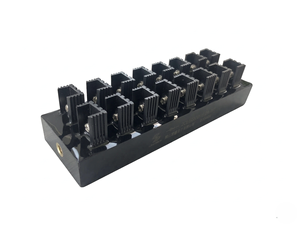
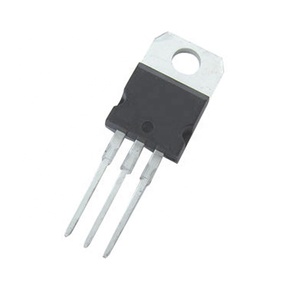
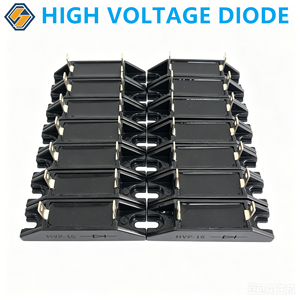
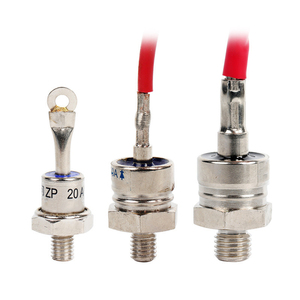
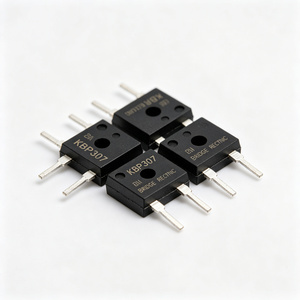
The global power module market is undergoing a seismic architectural transition driven by decarbonization, green hydrogen production, grid-scale electrification, defense modernization, and ultra-fast electric vehicle (EV) charging networks. Power modules—encapsulated assemblies of discrete semiconductor devices such as IGBTs, SiC MOSFETs, GaN HEMTs, and High-Voltage Rectifiers—serve as the heart of modern electrical conversion systems.
According to recent industry research, the global power module market is projected to expand at a compound annual growth rate (CAGR) of over 9.4% through 2030, exceeding a market evaluation of $18.5 Billion. Thermal dissipation efficiency, switching speed, power density per cubic centimeter (W/cm³), and total cost of ownership (TCO) remain the primary performance vectors evaluated by senior procurement heads and lead power systems engineers.
Selecting the right power module vendor requires evaluating technical domain expertise, manufacturing yield control, customization capabilities, and compliance standards (such as ISO 9001, MIL-STD-704/1275/461, and IEC 60601). Below is the benchmark analysis of the top global suppliers leading power semiconductor and module innovation.
| Manufacturer | Primary Technology Focus | Key Strengths & Topologies | Target Sector Application |
|---|---|---|---|
| Powerstax / Tyten Energy | Custom PSUs, High Voltage & TR Systems | Thyristor TRs, HV DC (200kV), MIL-COTS, Electrolysis Rectifiers | Green Hydrogen, Defense, Medical, Process Industries |
| Infineon Technologies | IGBT Modules & SiC MOSFETs (CoolSiC) | EconoDUAL, PrimePACK, high current density packaging | Automotive EV, Wind Turbines, Solar Inverters |
| Wolfspeed | Silicon Carbide (SiC) Bare Die & Modules | XM3 & CAB module platforms, extreme high-temp performance | EV Traction Inverters, Heavy Machinery, Aerospace |
| STMicroelectronics | GaN & SiC Power Modules (ACEPACK) | Integrated gate drivers, compact molded modules | Consumer Fast Chargers, Industrial Automation |
| Semikron Danfoss | Medium to High Power Modules (SKiM, SEMITRANS) | Sintering technology, pressureless bonding, solderless contacts | Drives, Renewable Energy, Commercial Vehicles |
| Mitsubishi Electric | HVIGBTs & Intelligent Power Modules (IPM) | Internal protection logic, high isolation breakdown voltage | Traction Drives, High Voltage DC Transmission |
| Vicor Corporation | High Density Modular DC-DC / Factorized Power | ChiP and VIA packaging, extreme power density per cubic inch | Data Center AI Compute, Mil-Aero, Robotics |
| ROHM Semiconductor | Full SiC Power Modules & Gate Drivers | Trench-structure MOSFETs, low switching loss design | Industrial Power Supplies, Solar String Inverters |
| ON Semiconductor (onsemi) | VE-Trac Automotive & Industrial Modules | Direct liquid cooling integration, dual-sided cooling | Automotive Electrification, Energy Storage Systems |
| Fuji Electric | 7th Gen IGBT Modules & Rectifier Assemblies | Low forward voltage drop, integrated thermal sensors | Industrial Uninterruptible Power Supplies (UPS), Elevators |
While mega-tier silicon foundries excel at mass-market automotive electrification volumes, specialized engineering leaders like Powerstax bridge the critical gap for mission-critical bespoke industrial, high-voltage research, military defense, and green hydrogen electrolysis deployments where standardized off-the-shelf catalog parts cannot meet rigid environmental or electrical operational specs.
System integrators and procurement directors face rapid changes in material sourcing, component design, and environmental compliance. Understanding technical purchasing vectors is crucial to preventing legacy system obsolescence and ensuring long-term project viability.
Silicon Carbide (SiC) and Gallium Nitride (GaN) are replacing traditional Silicon (Si) IGBTs. Sourcing teams prioritize vendors delivering SiC/GaN modules that offer 10x higher switching frequencies, lower thermal dissipation losses, and 50% smaller magnetic component footprints.
Air cooling reaches its physical limits above 50 kW per chassis. Procurement strategies now favor power modules with integrated pin-fin baseplates designed for direct liquid cooling, silver/copper sintering, and eliminated solder layers to withstand severe thermal cycling.
Geopolitical volatility and strict defense requirements (MIL-STD compliance) make 100% lot traceability mandatory. Sourcing managers demand verified component provenance, ISO 9001 quality controls, and dual-region engineering support.
To maximize system efficiency and operational lifespan, engineering teams must evaluate modern topological breakthroughs that directly influence thermal stress and power yield.
Green hydrogen production via PEM and Alkaline electrolyser stacks demands continuous, high-current direct current (DC) power with minimal AC ripple content (<2%). Thyristor-controlled transformer rectifiers scaled into megawatt ranges are critical for stack longevity and stack yield optimization.
Defense and military vehicle applications mandate adherence to MIL-STD-704 (aircraft electrical power), MIL-STD-1275 (vehicle 28V DC input limits), and MIL-STD-461 (EMC immunity). Embedded hold-up modules, transient voltage suppressors (TVS), and sealed IP67 enclosures are essential.
Industrial RF equipment, plasma generation, and flash lamp medical diagnostic devices require high-voltage DC supplies capable of delivering up to 200 kV and continuous capacitor charging speeds up to 40 kJ/sec with microsecond pulse stability.
Leveraging over 30 years of specialized power conversion engineering expertise, Powerstax designs, builds, and qualifies high-reliability AC-DC converters, isolated DC-DC bricks, thyristor rectifiers, and high-voltage power systems for applications where system downtime is unacceptable.
We do not force rigid off-the-shelf part numbers onto complex system requirements. Our engineering team custom-configures electrical topologies, magnetics, thermal management strategies, and control interfaces around your specific electrical load profile.
Operated under strict ISO 9001 certified quality management systems, all products undergo rigorous functional testing, elevated-temperature burn-in, and full compliance qualification for IEC/EN 61010, IEC 60601 (medical), WEEE, and RoHS compliance.
From precision high-voltage DC modules outputting up to 200 kV down to heavy industrial thyristor-controlled transformer rectifiers delivering thousands of amperes for water electrolysis and electroplating, our engineering scaling capabilities are field-proven globally.
We stand behind our power equipment with comprehensive life-cycle support, including calibration traceable to international standards, preventative maintenance, rapid component replacement, on-site commissioning, and factory refurbishment services.
Answers to critical questions asked by power supply designers, procurement officers, and system architects during vendor evaluation.
Power modules consolidate power semiconductor dies, isolation substrates (DCB/AMB), and internal gate interconnects into a single thermally optimized package. Key metrics include parasitic inductance ($L_s$), thermal resistance from junction to case ($R_{th(j-c)}$), isolation voltage rating ($V_{isol} \ge 3.0\text{ kV}$), and repetitive peak reverse voltage ($V_{RRM}$). Modules reduce stray inductance, simplify cooling mechanical layout, and improve MTBF compared to discrete designs.
Silicon Carbide (SiC) modules operate at significantly higher switching frequencies (reducing external inductor and capacitor sizing by 40-60%), demonstrate lower conduction and switching energy losses ($E_{on}/E_{off}$), and withstand higher junction temperatures ($T_j \ge 175^\circ\text{C}$). This enables power system overall efficiency gains up to 98.5% in solar, EV charging, and high-frequency induction heating.
For power levels below 5 kW, forced-air cooling with aluminum extruded heatsinks is typical. Beyond 10 kW to megawatt levels (such as electrolysis transformer rectifiers), direct liquid cooling using water-glycol mixtures or closed-loop phase-change cooling is recommended to prevent thermal runaway and maintain die temperature uniformity across heavy duty cycles.
No. Standard COTS modules lack the input voltage transient suppression, hold-up time, and electromagnetic interference (EMI) filtering required for defense platforms. Dedicated MIL-COTS modules compliant with MIL-STD-704, MIL-STD-1275, and MIL-STD-461 must be specified to withstand severe input voltage spikes, mechanical vibration, shock, and extreme ambient operating temperatures (-40°C to +105°C).
In PEM and Alkaline hydrogen electrolysis, excess AC ripple voltage in the output DC supply causes thermal stress on catalyst membrane electrodes, leading to premature cell degradation and reduced gas output purity. High-end transformer rectifiers and switch-mode modules maintain ripple factors below 2-3%, safeguarding long-term capital investments in electrolyser stacks.
Industrial projects typically demand a minimum product availability guarantee of 10 to 15 years to prevent unexpected redesigns. Procurement teams should verify that suppliers maintain structured component obsolescence monitoring, full material lot traceability, and clear engineering change notification (ECN) protocols.
Have specific voltage, current, ambient, or compliance targets? Contact our power conversion engineers today to review your schematics, receive custom module quotes, or request technical datasheets.
Inquire Now