Engineered for extreme pulse duty cycles, precision laser systems, industrial plasma, and high-frequency induction power conversion. Explore our top-tier export-grade power semiconductors and custom assemblies.
In the rapidly evolving landscape of advanced industrial automation, pulsed power physics, medical laser engineering, and semiconductor processing, the demand for precision high-voltage Capacitor Charging Power Supplies (CCPS) has witnessed unprecedented growth. As global original equipment manufacturers (OEMs) seek higher power density, sub-millisecond voltage recovery, and exceptional pulse-to-pulse stability, identifying a premier Top China Capacitor Charger Exporter has shifted from a cost-reduction strategy to a critical supply chain advantage.
Modern capacitor chargers operate under strenuous transient electrical regimes, requiring power supplies that can transition seamlessly from a total short-circuit condition (at the start of a charge cycle) to open-circuit voltage regulation within milliseconds. Traditional linear power topologies and non-resonant switched-mode power supplies (SMPS) suffer from prohibitive thermal losses, massive magnetic volume, and severe electromagnetic interference (EMI). China's industrial power ecosystem—backed by extensive research into wide-bandgap (SiC and GaN) semiconductors, automated magnetic winding technologies, and rigorous ISO 9001 manufacturing controls—has emerged as the world's leading exporter of state-of-the-art capacitor charging solutions.
To provide concrete engineering value, the table below outlines the critical operational benchmarks comparing legacy transformer rectifiers with modern resonant solid-state capacitor chargers exported from top-tier Chinese manufacturing facilities.
| Performance Benchmark | Legacy Transformer Rectifiers | Modern Series Resonant LCC Chargers | Next-Gen SiC Solid-State CCPS |
|---|---|---|---|
| Peak Charge Rate (kJ/s) | 1.0 to 5.0 kJ/s | 10.0 to 40.0 kJ/s | > 50.0 kJ/s (Modular Parallel) |
| Conversion Efficiency | 68% – 78% | 88% – 92% | 94% – 97.5% |
| Pulse Repeatability Accuracy | ± 1.0% to ± 2.5% | ± 0.1% to ± 0.05% | < ± 0.01% (Sub-ppm control) |
| Switching Frequency | 50 Hz / 60 Hz Line Frequency | 20 kHz – 50 kHz (Silicon IGBT) | 100 kHz – 300 kHz (SiC MOSFET) |
| Power Factor (PFC) | 0.65 – 0.75 (Uncorrected) | 0.92 – 0.95 (Active Phase) | > 0.99 (Active Three-Phase PFC) |
| Power Density (W/in³) | Low (Bulk Transformer heavy) | Moderate (Rackmount 3U/6U) | Ultra-High (Compact OEM Module) |
A true engineering whitepaper must address the fundamental circuit challenges inherent in charging capacitive loads. Capacitors act as absolute short circuits ($V_{cap} = 0$) at the inception of every pulse cycle. Standard constant-voltage sources encounter severe current spikes and catastrophic thermal runaway under these conditions.
By integrating a series-parallel LCC resonant tank, the inverter naturally limits output current during initial short-circuit conditions while achieving Zero Voltage Switching (ZVS) across all primary semiconductor switches. This eliminates turn-on switching losses and minimizes high-frequency EMI emissions.
Boucherot cell networks convert a constant voltage source into an inherent constant current source without complex feedback loops. This provides inherent immunity against instantaneous load flashovers and arc discharges in industrial plasma reactors.
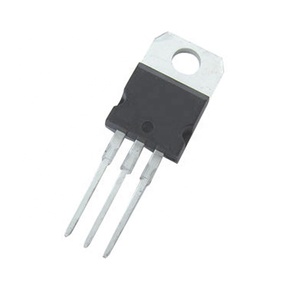
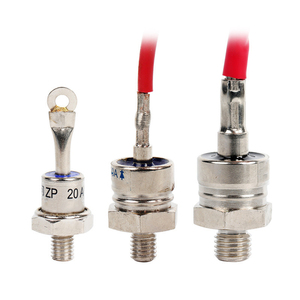
Replacing legacy gas spark gaps with high-voltage silicon controlled rectifiers (SCRs) and fast-recovery stacks guarantees jitter-free pulse triggering (sub-nanosecond range) across millions of continuous discharge operations without contact erosion.
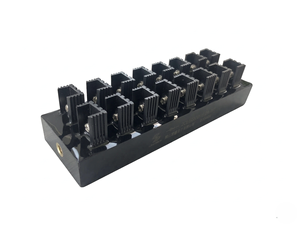
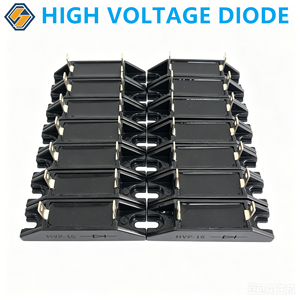
Furthermore, leading Chinese exporters utilize high-voltage silicon diode stacks—such as the 2CLG20KV/50A-WT and HVP-16 17.5KV assemblies—integrated directly into oil-insulated or solid-epoxy resin potted transformer secondary stages. This insulation strategy prevents partial discharge (PD < 5 pC at rated voltage) and dramatically extends system lifespan in high-humidity ambient environments.
As global industries shift toward decarbonization, electrification, and precision manufacturing, procurement teams must align with technical trends shaping the next decade of high-voltage capacitor charger architecture. Key development trajectories include:
Silicon Carbide (SiC) MOSFETs allow switching frequencies to exceed 200 kHz while operating at elevated junction temperatures (>175°C). This allows high-voltage magnetic cores (planar ferrite structures) to shrink by up to 60% in volume while elevating charging efficiencies beyond 97%.
For excimer lasers, lithography tools, and medical cancer therapy accelerators, voltage accuracy must remain virtually drift-free regardless of thermal ambient swings. Microprocessor-driven pulse-to-pulse active dumping circuits ensure every charge cycle halts within ±0.01% of the target setpoint.
Next-generation chargers exported from China are equipped with embedded Modbus-TCP, EtherCAT, and RS-485 interfaces. Real-time monitoring of insulation dielectric health, ripple frequency shift, and junction temperature allows predictive maintenance before hardware failure occurs.
Instead of single monolithic high-power units, modern systems utilize N+1 redundant hot-swappable 3U rack units. Master-slave active current-sharing algorithms allow power engineers to scale total charging speed from 10 kJ/s up to megawatt-level pulsing fields effortlessly.
Selecting an international exporter for high-voltage power electronics requires strict evaluation of manufacturing rigor, testing capability, and long-term compliance support. Top-tier Chinese manufacturers offer uncompromised engineering value across five critical pillars:
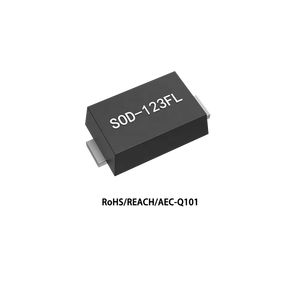
Every semiconductor component—from discrete SOD-123FL diodes to heavy-duty SCR blocks—undergoes 100% incoming inspection, automated optical inspection (AOI), and lot-code traceability.
In-house test centers feature high-voltage automated test stations capable of full-load 40 kJ/s endurance testing, corona breakdown diagnostics, and 48-hour continuous elevated temperature burn-in.
Full compliance with international standards including IEC/EN 61010-1 (Safety for Electrical Equipment), IEC 60601-1 (Medical EMC/Safety), RoHS, REACH, and CE directives for effortless customs clearance.
Partner with China's foremost exporter of high-voltage rectifiers, silicon controlled rectifiers, and custom capacitor charging power supplies. Contact our power application specialists now to receive detailed technical datasheets, CAD models, and factory-direct pricing.
Inquire Now