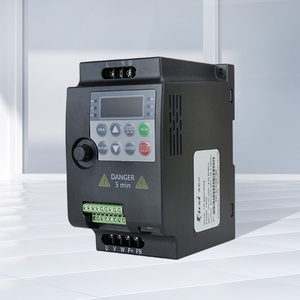
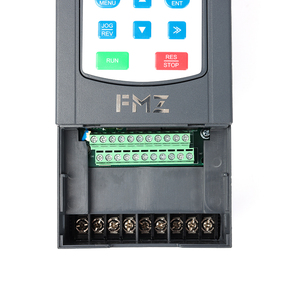
In modern industrial automation, the demand for precise motor control, operational efficiency, and grid-friendly power electronics has elevated the variable frequency drive (VFD) from a basic speed regulator to a core asset in smart manufacturing ecosystems. China's frequency converter manufacturing sector has undergone a massive technological transformation. Moving far beyond cost-competitive assembly, leading Chinese manufacturers now deliver world-class vector control algorithms, wide frequency spectrum modulation (0–500Hz/1200Hz high-speed applications), and robust thermal management systems designed for ultra-demanding environments.
This technical whitepaper provides industrial engineers, system integrators, OEM machinery designers, and procurement leaders with an exhaustive analysis of China's top frequency converter offerings, technological trends, manufacturing standards, and future procurement strategies.
Key Engineering Takeaway: Modern frequency inverters manufactured in China integrate sensorless vector control (SVC), Direct Torque Control (DTC), and advanced EMC filtering (IEC/EN 61800-3 Category C2/C3) directly into compact enclosures, enabling energy savings upwards of 30% to 50% in HVAC, pumping, processing, and heavy conveyor operations.
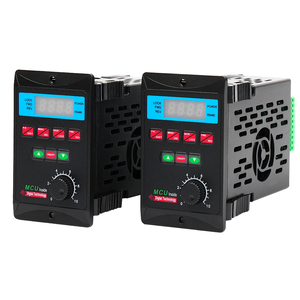
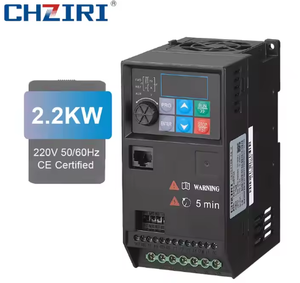
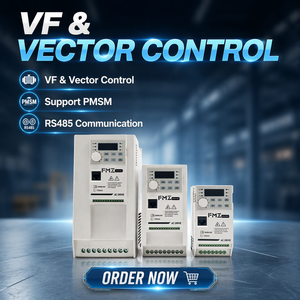
Explore our flagship series of industrial Variable Speed Drives, single-to-three phase converters, and compact motor speed controllers engineered for high reliability and maximum torque efficiency.
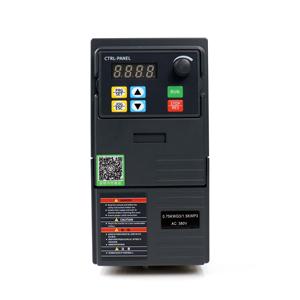
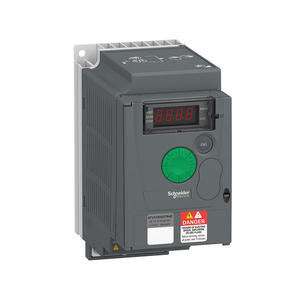
Why top global engineering firms, distributors, and original equipment manufacturers source frequency conversion hardware directly from our advanced facilities in China.
Every VFD unit undergoes rigorous multi-stage burn-in tests under full electrical load, thermal stress chamber cycling, and strict EMC testing to meet CE, UL, and RoHS standards.
Our drives feature advanced DSP chips capable of dual sensorless vector algorithms and Direct Torque Control (DTC), delivering up to 180% starting torque at 0.5Hz for heavy-duty starting loads.
Engineered for global power networks, our inverters accommodate wide input voltage tolerances (-15% to +15%) across 110V, 220V, 380V, 460V, and 690V single-phase and three-phase supplies.
The global frequency converter landscape is accelerating toward higher power density, integration of Wide Bandgap (WBG) semiconductors (Silicon Carbide - SiC and Gallium Nitride - GaN), and decentralized intelligence. Understanding these development vectors is essential for engineering procurement managers aiming to future-proof their automated plant infrastructure.
Traditional silicon IGBT-based VFDs suffer from switching power losses and thermal bottlenecks when operated above 16kHz carrier frequencies. The adoption of SiC MOSFET modules in high-end Chinese frequency converters allows carrier frequencies up to 32kHz and higher without derating current output. This yields ultra-low motor acoustic noise, drastically reduced harmonic losses in motor windings, and up to 40% reduction in physical chassis footprint.
Modern VFDs are no longer isolated motor actuators. Leading factories in China are embedding RS485 (Modbus-RTU), CANopen, Profinet, and Ethernet/IP protocols natively onto the drive mainboard. Embedded microprocessors analyze motor vibration spectrums, winding temperature spikes, bearing wear, and line voltage sags in real-time. By utilizing edge analytics, the converter predicts mechanical failures before they cause unexpected downtime.
In applications such as cranes, hoists, centrifuges, and downhill conveyors, braking energy traditionally wasted through resistor grids is now captured using Active Front End (AFE) technology. Regenerative frequency converters feed excess kinetic energy back into the facility power grid with less than 5% Total Harmonic Distortion (THD), meeting IEEE 519 standards and drastically lowering overall plant energy bills.
| Feature Parameter | Standard V/f Control Inverters | Sensorless Vector Control (SVC) | Direct Torque Control (DTC) Series |
|---|---|---|---|
| Speed Accuracy | ±2% to ±3% | ±0.2% to ±0.5% | ±0.01% to ±0.1% |
| Low-Frequency Torque | 100% at 3.0Hz | 150% at 0.5Hz | 200% at 0.0Hz (Zero-speed lock) |
| Torque Response Time | > 100 ms | < 20 ms | < 2 ms |
| Primary Applications | Fans, standard pumps, light conveyors | Extruders, CNC tools, wire drawing | Cranes, winders, heavy industrial mills |
| Energy Saving Ratio | 20% - 35% | 30% - 45% | Up to 55% (with AFE regeneration) |
Global supply chains are increasingly shifting toward strategic value partnerships with tier-1 Chinese manufacturers. When procuring frequency converters for large-scale automation projects, international buyers should focus on three critical procurement pillars:
Expert technical answers to common engineering questions regarding frequency converter selection, single-to-three phase conversion, and factory procurement.
Whether you require standard off-the-shelf variable speed drives, specialized 110V-to-220V booster converters, or custom OEM industrial inverters, our engineering team is ready to support your technical specifications.
Get a Quote