UK / Europe: +44 1268 568200 USA / Canada: +1 877 215 8463
in
Industry Whitepaper & Buyer's Guide

Top China Hydrogen Rectifier Factories & Suppliers

Engineering Analysis of High-Power DC Rectification, Electrolyzer Load Matching, and Global Procurement Benchmarks

High-Performance Hydrogen Electrolysis Rectifiers

Factory-direct DC power systems engineered for Alkaline (AWE), PEM, and SOEC water electrolysis installations worldwide.
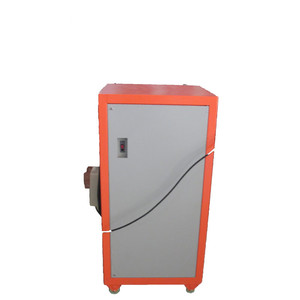
Alkaline Water Electrolyzer Hydrogen Generator Used Cell Power Stack

Alkaline Water Electrolyzer Hydrogen Generator Used Cell Rectifier Power Unit

Alkaline Stack High Current Low Ripple
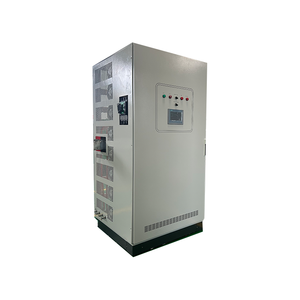
LIYUAN 1000A 50V Industrial Hydrogen Electrolytic Rectifier

LIYUAN 1000A 50V Industrial Hydrogen Electrolytic Rectifier Water Electrolysis System

1000A / 50V 50Hz Output Thyristor Control
Customizable 15V 12000A DC Power Supply IGBT Rectifier

Customizable 15V 12000A High-Current IGBT Rectifier for Hydrogen Production

12000A Heavy Duty IGBT Switch Mode Fast Response
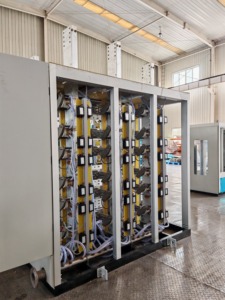
High-Performance Stabilizer For Electrolysis Applications 96V 27KA Rectifier

High-Performance Electrolysis Voltage Stabilizer 96V 27KA Copper Bus Rectifier

27000A Mega Capacity 96V DC Copper Conductor
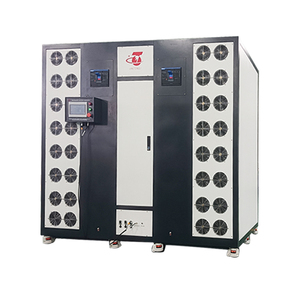
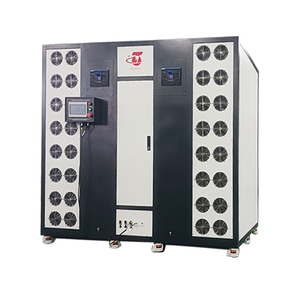
High Power 400V 2500A 1000KW Rectifier Industrial Hydrogen

High Power 400V 2500A 1000KW Industrial Water Electrolysis Rectifier System

1000KW MW-Scale 400V Output Industrial Class
Ac/dc Igbt High Power 10000A Rectifiers for Industrial Hydrogen Production

AC/DC High-Power 10000A IGBT Rectifier Skid for Green Hydrogen Farms

10000A IGBT High Power Factor Low Distortion
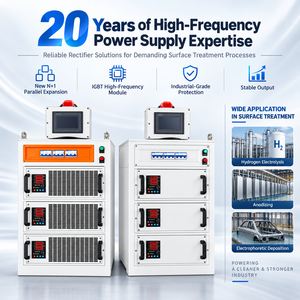
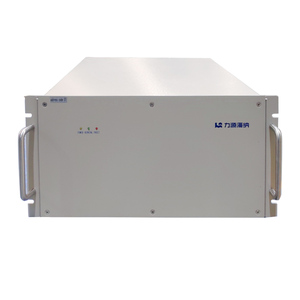
air Cooled 100V 500A Rectifier for Hydrogen Gas Electrolysis

Compact Forced Air-Cooled 100V 500A DC Power Supply for Electrolyzers

500A / 100V Air Cooling Modular Chassis
CE ISO9001 High Voltage DC Power Supply 400V 2500A 1000KW Single IGBT

CE ISO9001 400V 2500A 1000KW Single IGBT Hydrogen Rectifier with RS-485

RS-485 Modbus Water/Air Cooled CE & ISO9001
98.5%
Peak Electrical Efficiency
< 2%
DC Current Ripple Factor
> 0.98
Grid Power Factor (IGBT)
MW-Scale
Stack Power Scalability

1. Engineering Fundamentals: High-Power DC Rectification for Hydrogen Electrolysis

In green hydrogen generation, the power conversion subsystem functions as the operational core connecting the AC utility grid (or renewable microgrid) to the low-voltage, high-current electrolysis stack. Whether driving Alkaline Water Electrolysis (AWE), Proton Exchange Membrane (PEM), or Solid Oxide Electrolysis Cells (SOEC), hydrogen rectifiers must deliver stable, high-efficiency direct current while enduring continuous duty cycles under variable thermal and electrical stresses.

The electrochemical breakdown of water ($2\text{H}_2\text{O} \rightarrow 2\text{H}_2 + \text{O}_2$) requires massive direct current at relatively low stack voltages. To optimize specific energy consumption—typically measured in kilowatt-hours per normal cubic meter of hydrogen produced ($\text{kWh/Nm}^3\text{ H}_2$)—the rectifier must maintain exceptional dynamic power control, minimal residual current ripple, and maximum power factor at the grid interface.

Technical Gain Insight: Excess current ripple in hydrogen electrolysis leads to parasitic thermal heating within the cell stack, accelerated degradation of catalytic membrane electrodes, and premature stack failure. Leading Chinese rectifier manufacturers are solving this by pairing multi-pulse phase-shifting transformers with high-frequency PWM IGBT switch-mode topologies.

Key Engineering Parameters for Rectifier Selection

When evaluating hydrogen rectifier factories and suppliers in China, OEM project managers and EPC contractors must benchmark manufacturers against six key performance vectors:

  • Current Output Capability & Modularity: Continuous ratings ranging from 500A compact skids up to 30,000A single-chassis thyristor or parallel IGBT units.
  • Harmonic Distortion (THD): Strict alignment with IEEE 519 standards to prevent feedback harmonic contamination into the regional AC grid.
  • Dynamic Response Speed: Sub-millisecond response rates necessary for tracking rapid power fluctuations from direct solar PV and wind turbine coupling.
  • Thermal Dissipation Strategy: Deionized water cooling (liquid-to-liquid heat exchangers) vs. heavy-duty forced air cooling depending on ambient plant classification.
  • System Energy Efficiency: Conversion efficiency matching or exceeding 97.5% across full current regulation ranges (10% to 110% rated load).

2. Technology Comparison: Thyristor (SCR) vs. IGBT Switch-Mode Rectifiers

The Chinese industrial rectifier market offers two primary power conversion architectures: traditional Thyristor (SCR) Controlled Transformer Rectifiers and modern IGBT High-Frequency Switching Power Supplies. Selecting the optimal power conversion path requires balancing capital expenditure (CAPEX), operational efficiency (OPEX), grid harmony, and dynamic tracking performance.

Thyristor / SCR Rectifiers High Power / Multi-MW

  • Topology: 6-pulse, 12-pulse, or 24-pulse phase-shifting transformer with phase-controlled SCR bridges.
  • Best Suited For: Ultra-large scale industrial Alkaline (AWE) plants (5MW to 100MW+) operating under continuous baseload conditions.
  • Efficiency: High full-load efficiency (up to 98.5%), but drops at reduced firing angles.
  • Robustness: Extreme thermal mass, immunity to electrical transients, decades-long operational life in harsh chemical plants.
  • Grid Impact: Requires external active/passive power factor correction (PFC) and harmonic filtering at partial loads.

IGBT Switch-Mode PSUs Dynamic / High Precision

  • Topology: High-frequency PWM active front-end (AFE) combined with isolated DC-DC conversion stage.
  • Best Suited For: PEM electrolysers, containerized hydrogen systems, and direct renewable-to-hydrogen microgrids.
  • Current Ripple: Ultra-low DC ripple (< 1%), minimizing chemical stack heating and degradation.
  • Dynamic Speed: Millisecond ramp rates capable of tracking instantaneous solar irradiance changes.
  • Power Factor: Near-unity power factor (> 0.98) across full load range without external capacitor banks.

3. Strategic Procurement & Future Development Trends (2025–2030)

As the global green hydrogen market shifts from pilot projects to gigawatt-scale production hubs, procurement managers sourcing power hardware from China face evolving technical requirements. The market is moving beyond standalone power supplies toward integrated power-to-gas electrification packages.

Trend 1: Direct Coupling with Off-Grid Renewable Energy

Traditional rectifiers rely on stable AC utility grids. However, modern green hydrogen farms connect directly to off-grid solar PV fields and offshore wind turbines. Top Chinese factories are now integrating Direct DC-DC Converter Architectures, bypassing intermediate AC distribution steps to boost total system energy efficiency by 3% to 5%.

Trend 2: Wide Bandgap (SiC) Semiconductor Adoption

Silicon Carbide (SiC) MOSFET technology is entering high-current hydrogen rectifiers. SiC devices allow switching frequencies to exceed 50 kHz, drastically reducing the physical volume of magnetics (transformers and inductors) by over 40% while raising energy conversion efficiency beyond 98.8%.

Trend 3: Smart Grid Digitalization & Predictive Maintenance

Modern hydrogen production facilities require real-time telemetry and automated load balance across multiple electrolyzer modules. Industrial China rectifiers are standardizing digital communication interfaces, including RS-485 Modbus-RTU, Profinet, EtherCAT, and CANopen, paired with IoT edge controllers that track thermographic profiles and ripple degradation in real time.

-40%
Footprint Reduction via SiC
< 10ms
Renewable Dynamic Tracking
25 Years
Designed Operational Lifespan
ISO 9001
Certified Quality Standard

4. Enterprise Capabilities & Manufacturing Quality Assurance

Leveraging over three decades of power conversion engineering expertise, premier Chinese rectifier suppliers offer fully customized turnkey power solutions for chemical processing, electrochlorination, electroplating, and green hydrogen production. Operating under stringent ISO 9001:2015, ISO 14001, and CE compliance frameworks, our featured manufacturing facilities ensure every unit undergoes extensive factory acceptance testing (FAT) prior to global dispatch.

Comprehensive Engineering & Customization Capabilities

  • Custom Mechanical & Electrical Architecture: Tailored enclosure IP ratings (IP21 to IP55), custom busbar configurations, air-to-air, air-to-water, or direct water cooling skids engineered to meet harsh chemical plant atmospheres.
  • Full Factory Load Testing: Every megawatt-class hydrogen rectifier undergoes full-load thermal endurance burn-in and surge endurance testing using high-capacity automated load banks.
  • Global Compliance & Certifications: Built in accordance with international electrotechnical standards including IEC 60146, IEC 61010, IEEE 519, and CE directives for low voltage and electromagnetic compatibility (EMC).
  • Long-Term Lifecycle Support: Complete spare parts inventory, on-site commissioning, field calibration to traceable standards, and remote diagnostic assistance across North America, Europe, and Asia-Pacific.
Send an Inquiry

5. Hydrogen Rectifier Procurement & Technical FAQ

Q1: What power supply parameters are required when requesting a customized hydrogen rectifier quote?
To provide an accurate engineering proposal, suppliers need: (1) Total DC Output Current (Amperes) and Voltage range (Volts), (2) Electrolyzer chemistry type (Alkaline, PEM, or SOEC), (3) Local AC utility input voltage and frequency (e.g., 380V/415V/11kV at 50Hz/60Hz), (4) Preferred cooling method (Air-cooled or Deionized Water-cooled), (5) Target enclosure IP rating and ambient operational temperature, and (6) Required digital communication protocols (RS-485 Modbus, Profinet, etc.).
Q2: Why is DC current ripple control critical for hydrogen electrolyzer stacks?
DC current ripple creates AC harmonic components within the electrolytic cell stack. This non-productive energy causes localized thermal heating, accelerates catalyst loss on the electrode surfaces, reduces overall Faraday efficiency, and can significantly shorten the lifetime of expensive membrane electrode assemblies (MEA). High-performance rectifiers keep current ripple below 2%.
Q3: How do 12-pulse and 24-pulse thyristor rectifiers improve grid quality?
Phase-shifting transformers divide the input AC power into phase-offset secondary windings. A 12-pulse configuration cancels out the 5th and 7th harmonic orders, while a 24-pulse system further eliminates the 11th and 13th harmonics. This dramatically lowers Total Harmonic Distortion (THD) on the incoming AC line, allowing compliance with utility grid standards like IEEE 519 without requiring massive passive external filter banks.
Q4: What cooling system is recommended for high-power hydrogen rectifiers above 1MW?
For multi-megawatt systems, closed-loop deionized liquid cooling (water-to-water or water-to-air) is strongly recommended. Water cooling provides far superior volumetric heat transfer compared to forced air, allowing for compact, totally sealed enclosures (IP54/IP55) that protect sensitive power electronics from harsh ambient dust, humidity, and corrosive chemical vapors present at hydrogen generation facilities.
Q5: Can Chinese hydrogen rectifiers seamlessly integrate into automated plant control systems?
Yes. Modern industrial hydrogen rectifiers manufactured in China come equipped with industrial-grade microcontrollers and standard industrial fieldbus interfaces. They support real-time digital current setting, voltage feedback, system fault alarms, and temperature logging via RS-485 Modbus, Profibus-DP, Ethernet/IP, or CAN communications directly interfacing with central Distributed Control Systems (DCS) or PLC platforms.

Ready to Engineer Your Hydrogen Power Conversion Solution?

Connect directly with our senior power electronics engineering team. Receive customized engineering drawings, electrical schematics, thermal calculations, and competitive factory-direct pricing for your project.
Send an Inquiry