High-reliability rectifiers, thyristors, and power semiconductor stacks for inverter, converter, and industrial OEM applications.
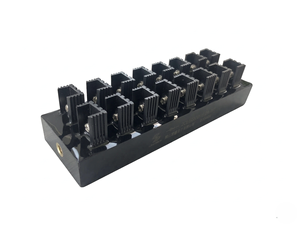
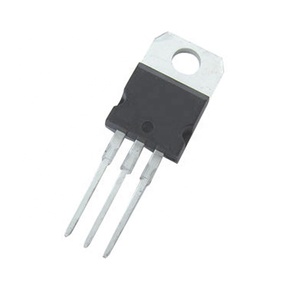
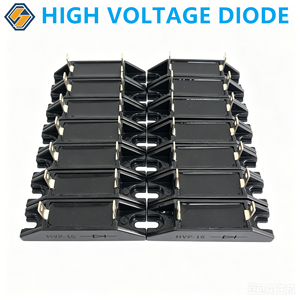
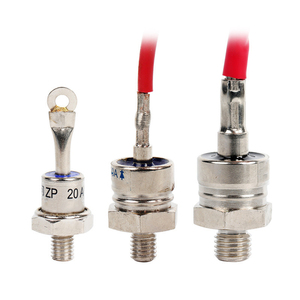
The global power semiconductor market is undergoing a seismic structural shift. Insulated Gate Bipolar Transistors (IGBTs)—often referred to as the "CPU of power electronics"—serve as the foundational switching element in modern electrical conversion systems, spanning electric vehicle (EV) traction inverters, renewable energy solar photovoltaics (PV), wind power converters, high-voltage DC (HVDC) transmission, and industrial variable frequency drives (VFDs). As worldwide demand for energy efficiency intensifies under net-zero mandates, China's semiconductor manufacturing ecosystem has scaled rapidly to become a primary global hub for IGBT wafer fabrication, module packaging, and advanced power testing.
Historically, global IGBT production was dominated by European, Japanese, and American integrated device manufacturers (IDMs). However, over the past decade, strategic capital investment, massive domestic market demand, and continuous technological iteration have propelled leading Chinese IGBT module factories into elite tier-1 status. Today, Chinese semiconductor foundries and packaging specialists operate advanced 8-inch and 12-inch wafer fabrication lines with specialized Trench-Gate Field-Stop (FS) process nodes, offering global OEMs direct equivalence to legacy Western part numbers alongside significant lead-time stability and total cost-of-ownership (TCO) advantages.
Key Strategic Takeaway for Procurement Directors: China's IGBT module manufacturers have transitioned from low-cost second-source alternatives to technological co-innovators, offering cutting-edge SiC-hybrid topologies, Direct Copper Bonding (DBC) substrates, and AEC-Q101 qualified automotive modules with scalable supply chain resilience.
Evaluating and partnering with top China IGBT module factories requires a deep technical understanding of wafer design, packaging substrates, thermal dissipation methodologies, and quality assurance frameworks. This comprehensive white paper examines the core engineering capabilities, technical roadmaps, procurement trends, and quality protocols defining top-tier Chinese power module suppliers.
Understanding the technological generation of an IGBT chip and its packaging substrate is critical when selecting an OEM factory. Top Chinese factories utilize 6th and 7th generation Trench-FS chip technologies integrated with high-thermal-conductivity ceramic substrates.
| IGBT Tech Generation | Wafer Architecture | Vce(sat) Typical (V) | Max Tj (°C) | Substrate / Packaging Tech | Primary Industrial Applications |
|---|---|---|---|---|---|
| Gen 4 (Standard Planar/FS) | N-Buffer Field-Stop | 1.9 - 2.3 V | 150°C | Al2O3 DBC / Soldered Wire-Bond | Standard Motor Drives, UPS, General Inverters |
| Gen 5 (Trench-FS I) | Fine-Pitch Trench Gate | 1.6 - 1.8 V | 175°C | AlN DBC / Copper Wire-Bonding | Solar PV Inverters, Wind Converters, Industrial VFD |
| Gen 6 / 6.5 (Trench-FS II) | Carrier Storage Trench | 1.35 - 1.5 V | 175°C | AMB Si3N4 / Silver Sintering | EV Traction Inverters, Commercial Vehicles |
| Gen 7 (Micro-Pattern Trench) | Sub-Micron MPT Field-Stop | 1.2 - 1.4 V | 175°C - 200°C | AMB Substrate / Pin-Fin Direct Liquid Cooling | High-Power EV Platforms, Ultra-Fast EV Charging |
| SiC Hybrid (IGBT + SiC SBD) | Silicon IGBT + SiC Diode | 1.4 - 1.6 V | 175°C | Low-Inductance Co-Planar Package | High-Frequency Medical, Induction Heating, Energy Storage |
As international OEMs align their supply chains to mitigate global disruptions and lower carbon footprints, procurement trends within the Chinese semiconductor sector are evolving rapidly. Procurement executives must evaluate these key macroeconomic and technological shifts when auditing Chinese power module factories:
Leading Chinese foundries are progressively migrating IGBT fabrication from traditional 8-inch (200mm) lines to advanced 12-inch (300mm) wafer lines. This migration significantly increases die output per wafer, narrows dimensional tolerances, enhances yield rates beyond 98%, and stabilizes long-term component pricing for global high-volume buyers.
To support higher power densities and elevated junction temperatures ($T_{vj} = 175^\circ\text{C}$), top factories are replacing standard Direct Copper Bonding ($\text{Al}_2\text{O}_3$ DBC) with Active Metal Brazing Silicon Nitride ($\text{Si}_3\text{N}_4$ AMB) and die-attach silver sintering. This yields a 3x improvement in thermal cycling life and superior mechanical toughness.
While pure Silicon IGBTs remain the workhorse for sub-20kHz switching, Chinese fabs are rapidly introducing Hybrid IGBT modules (Silicon Trench IGBT co-packaged with Silicon Carbide Schottky Barrier Diodes) and full SiC MOSFET modules. These hybrids dramatically drop switching losses ($E_{off}$) by up to 45%, offering a bridge to high-efficiency power conversion.
The reliability of an IGBT module in demanding operational environments—such as marine propulsion, wind power generation, or automotive power trains—depends fundamentally on the factory's advanced packaging capabilities. A top-tier Chinese IGBT module factory implements multiple state-of-the-art manufacturing innovations:
Modern Chinese fabs leverage sub-micron photolithography to achieve ultra-dense trench cell patterns. By engineering fine-pitch gate structures combined with optimized carrier storage layers, modern chips achieve an extremely low saturation voltage ($V_{CE(sat)} \approx 1.35\text{V} - 1.5\text{V}$), drastically minimizing conduction losses while preserving robust short-circuit withstand times ($t_{sc} \ge 8 - 10\,\mu\text{s}$).
High switching speeds ($di/dt$) create destructive voltage spikes if stray internal inductance ($L_{\sigma}$) is present. Leading factories utilize multi-layer copper busbar interconnects inside the module, reducing stray inductance to under $10\text{ nH}$. Furthermore, for EV traction applications, direct liquid-cooled baseplates featuring integrated 3D Pin-Fin arrays are cast directly beneath the DBC/AMB substrate, eliminating thermal interface material (TIM) degradation and optimizing thermal resistance ($R_{th(j-c)}$).
Traditional aluminum wire bonds suffer from thermal fatigue push-off under continuous power cycling. Chinese factories specializing in automotive and heavy industrial grades have converted production lines to Ultrasonic Heavy Copper Wire Bonding and Thick Copper Ribbon Bonding. Copper-to-copper bond interfaces match thermal expansion coefficients far better than aluminum-to-copper, delivering a tenfold increase in power cycling durability ($N_f$).
When auditing a Chinese IGBT module manufacturer, technical procurement teams must verify that the fab operates under internationally recognized quality standards and rigorous failure-analysis protocols. A world-class IGBT facility is characterized by the following cleanroom standards and test capabilities:
Wafer dicing, die-attach, and wire bonding must occur within ISO Class 5 (Class 100) to ISO Class 7 cleanrooms with strict electrostatic discharge (ESD) management systems. Automated Optical Inspection (AOI) systems analyze 100% of wire bonds for loop height, bond placement, and pull-strength integrity.
Every single module off the assembly line undergoes high-potential (Hi-Pot) insulation isolation testing, dynamic switching test ($E_{on}, E_{off}, Q_{rr}$), gate charge measurement ($Q_g$), and short-circuit capability validation before final encapsulation and potting with high-purity silicone gel.
For automotive-grade supply chains, top factories certify their modules under AQG 324 and AEC-Q101 guidelines. Stress testing includes High Temperature Reverse Bias (HTRB), High Temperature Gate Bias (HTGB), Temperature Cycling (TC), and Intermittent Operational Life (IOL) exceeding 1,000 hours.
Leading suppliers utilize Enterprise Manufacturing Execution Systems (MES) where every semiconductor die, DBC ceramic substrate, and housing lot is matrix-coded. Complete material lineage and test data records are archived for over 15 years for absolute end-to-end industrial traceability.
Address common technical, sourcing, and operational questions when procuring IGBT modules and power semiconductors from Chinese factories.
Submit your electrical requirements—voltage, current, topology, switching frequency, thermal constraints, and target target cross-references—directly to our application engineering team for rapid technical evaluation and sample qualification.
Inquire Now