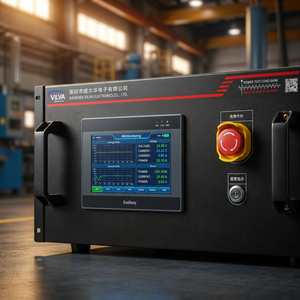
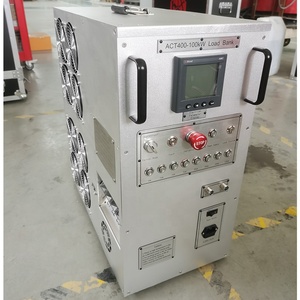
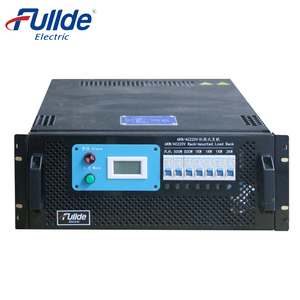
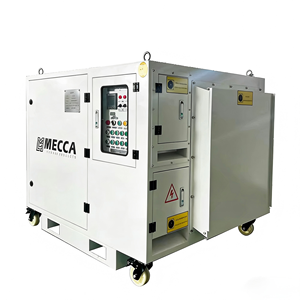
Engineering-grade power testing solutions: Resistive, Inductive, Reactive, and Liquid-Cooled Load Banks scaled for MegaWatt data centers, grid validation, and critical marine power generation.
200kV
High Voltage Test Rig
5000kW+
Containerized Capacity
ISO9001
Quality Certified Controls
30+ Yrs
Power Conversion R&D
Flagship Hardware Portfolio
Industrial-Grade Load Testing Equipment
Explore China’s leading portfolio of high-capacity load banks engineered for critical power validation, generator testing, UPS battery commissioning, and advanced fluid-cooled thermal simulation.
Liquid Cooled
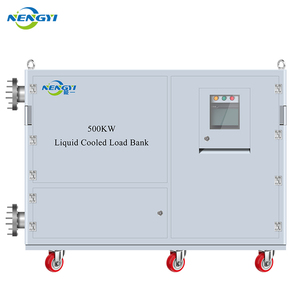
550KW Liquid Cooled Load Bank 3P4W 380VAC 50/60Hz for Large Scale Power Testing
Comprehensive Strategic White-Paper: Sourcing Load Banks from China
In the era of hyper-scale AI data centers, rapid grid expansion, green hydrogen electrolysis infrastructure, and mission-critical power generation, load testing equipment has transitioned from standard auxiliary hardware to indispensable reliability infrastructure. Evaluating emergency standby generators, uninterruptible power supply (UPS) systems, dynamic energy storage systems (BESS), and microgrids requires testing equipment capable of precise thermal management, rapid transient response, and high power-density absorption.
China has consolidated its position as the global manufacturing hub for heavy electrical load banks. China's top load bank manufacturers supply over 45% of the worldwide demand for medium-voltage, containerized, and liquid-cooled testing systems. This white-paper outlines the engineering architectures, procurement frameworks, and technological shifts defining the load bank manufacturing market in China today.
Key Information Gain Insight: Direct Liquid-Cooling Evolution
Traditional forced-air load banks encounter physical density limits in modern high-density data centers. Air heat dissipation requires massive ducting and high airflow volume, introducing acoustic noise exceeding 85 dBA. Leading Chinese manufacturers are now deploying closed-loop liquid-cooled load banks (30kW to 550kW+) that extract heat directly from nickel-chromium resistor bundles using dielectric fluids or water-glycol mixtures. This yields a 400% increase in power density per cubic meter while reducing acoustic emissions by over 60%.
Core Load Bank Topologies & Electrical Engineering Classifications
When procuring industrial load banks from Chinese original equipment manufacturers (OEMs), engineering procurement teams must evaluate systems across four primary electrical load configurations:
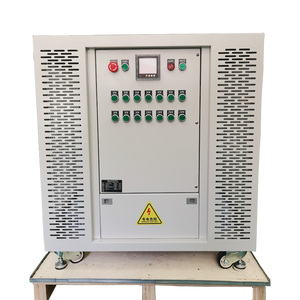
Resistive Load Banks (Unity Power Factor, PF = 1.0): Utilized for converting electrical energy entirely into thermal energy via alloy resistor elements (such as stainless-steel alloy or sheath-wrapped NiCr elements). Essential for wet-stacking prevention in diesel generators, engine break-in, and prime-mover power verification.
Inductive & Reactive Load Banks (Lagging Power Factor, PF = 0.8): Incorporate iron-core copper/aluminum reactors alongside resistive elements. These simulate real-world inductive motor loads, transformer magnetizing currents, and complex industrial facility power draw, providing holistic alternator transient performance testing.
Capacitive Load Banks (Leading Power Factor): Engineered to simulate non-linear IT infrastructure loads, long-distance transmission line capacitance, and specialized solar inverter VAR capabilities.
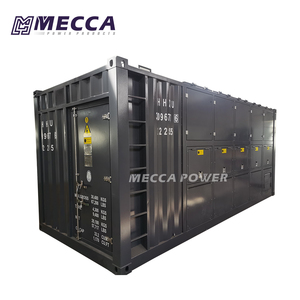
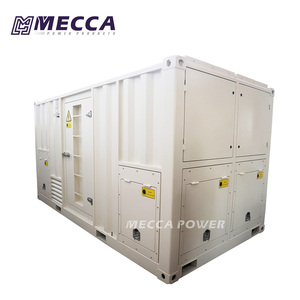
High-Voltage Direct-Connect Systems (10.5kV to 20kV): Eliminates the need for bulky step-down transformers during utility-scale generator or substation commissioning. High-voltage containerized load banks integrate specialized vacuum circuit breakers, SF6 or air-insulated switchgear, and high-creepage ceramic isolation inside weatherproof ISO 20ft/40ft enclosures.
Manufacturing Rigor & Enterprise Advantages of Leading Chinese Suppliers
Top Chinese exporters distinguish themselves through vertical integration, rigorous quality control protocols, and comprehensive custom engineering capabilities. Drawing upon advanced power conversion heritage—combining AC-DC, DC-DC converter technology, high-voltage transformer manufacturing, and military-standard (MIL-spec) isolation techniques—tier-1 Chinese load bank plants feature:
ISO 9001 & CE Certified Assembly Lines: Standardized production operating under stringent quality control steps, including 100% full-power burn-in testing, insulation resistance verification at double rated voltage, and thermal imaging checks across all busbar connections.
Advanced PLC & SCADA Smart Integration: Modern Chinese load banks replace simple manual toggles with programmable logic controllers (PLCs), Modbus RTU/TCP interfaces, and PC-based automatic testing software. Users can execute automated ISO 8528 transient load steps (0-25%-50%-75%-100%-110%), record millisecond-level voltage dips and frequency recovery curve responses, and export certified PDF test reports automatically.
Extreme Environmental Ruggedization: Heavy-duty load banks designed for offshore oil platforms, desert mining sites, and arctic installations feature IP55/IP66 enclosure ratings, anti-corrosive marine paint coats (C4/C5 grade), salt-spray resistant stainless steel heating elements, and forced vibration dampening under MIL-STD testing guidelines.
Technical Competence
Why Engineering Teams Partner with Top Chinese OEM Exporters
Delivering structural engineering, high-voltage safety clearance, and customized thermal design tailored to global enterprise requirements.
High Voltage Direct Testing (Up to 20kV)
In-house test cells engineered for 10.5kV, 11kV, 13.8kV, and 20kV direct-connect load banks up to 6000kW per module. Enables factory acceptance testing (FAT) without external step-down transformers.
Custom Structural & Thermal R&D
Bespoke engineering covering fluid dynamics (CFD) heat simulations, custom rack-mount footprints for AI server testing (e.g., 208V 6kW to 30kW 19-inch rack units), and containerized mobile trailers.
Military & ISO Compliance
Strict manufacturing processes aligned with ISO 9001 quality frameworks, WEEE/RoHS material safety, and shock/vibration standards for defense, aerospace, and marine installations.
Future Technology Trends & Global Procurement Drivers
1. The Transition to Liquid Cooling in High-Density Testing
As hyperscale data centers shift from air-cooled server chassis to direct-to-chip liquid cooling (DLC) and immersion cooling technology, load testing must mirror these physical environments. Traditional air-blowing dummy loads generate thermal plumes that disrupt ambient data center commissioning.
Chinese manufacturers are leading the commercialization of compact liquid-cooled resistor load banks (such as the 30kW rack-mountable and 550kW modular systems). These units connect directly to facility secondary cooling loops or external liquid-to-air heat exchangers (CDUs), absorbing immense power in ultra-compact rack dimensions while keeping operational spaces quiet and cool.
2. Digital Twins, Smart Sensing & IoT Cloud Remote Commissioning
Modern power infrastructure project teams frequently operate across multiple continents. Procurement trends favor load bank systems equipped with remote telemetry, cloud-connected data logging, and digital twin simulation interfaces:
Real-Time Harmonic Analysis: Built-in power quality analyzers measuring THD (Total Harmonic Distortion), voltage unbalance factors, phase angles, and crest factors during transient load steps.
Automated Safety Interlocks: Multi-layer sensor arrays monitoring element overheat, fan airflow loss, door open states, phase reversal, and over/under voltage conditions. Upon detecting an anomaly, high-speed circuit breakers trip in under 10 milliseconds to safeguard both load bank and power source.
3. Total Cost of Ownership (TCO) & Supply Chain Dynamics
Overseas buyers from Europe, North America, Southeast Asia, and the Middle East prioritize Total Cost of Ownership rather than initial capital outlay alone. Chinese exporters offer distinct strategic advantages:
Upfront CAPEX Savings: Direct factory sourcing from China provides 30% to 50% cost efficiencies compared to Western OEMs without sacrificing component quality (utilizing Schneider/ABB switchgear, Siemens PLCs, and high-grade alloy resistors).
Modular Expansion: Containerized load bank architectures allow operators to start with a 1000kW or 2000kW module and master-slave link up to 10 units in parallel to reach 20MW or 50MW capacity when facility expansion demands it.
Global Logistics & Service Support: Complete containerized designs built inside standardized CSC-plated ISO freight containers enable fast sea freight logistics and simplified site installation worldwide.
Technical Clarifications
Frequently Asked Sourcing & Engineering Questions
Essential answers regarding load bank selection, power factor adjustments, liquid cooling integration, and factory acceptance procedures.
What is the key difference between a Resistive Load Bank and a Reactive (RLC) Load Bank?
A Resistive Load Bank tests the power generator or UPS at a Unity Power Factor (PF = 1.0), drawing 100% real electrical power (kW) and converting it to heat. This evaluates engine fuel delivery, exhaust systems, and thermal cooling capacity. A Reactive (RLC) Load Bank incorporates inductors and capacitors alongside resistors to test at lagging (PF = 0.8) or leading power factors. This evaluates total apparent power (kVA) and tests alternator magnetic saturation, voltage regulation response, and transient response under realistic industrial load profiles.
When should a High-Voltage (10.5kV - 20kV) Load Bank be chosen over low-voltage testing with transformers?
Direct high-voltage load banks are recommended for large power station commissioning, utility grid testing, and mega-data centers operating 10.5kV, 11kV, 13.8kV, or 20kV distribution systems. Direct HV connection eliminates the heavy capital expense, cabling complexity, and efficiency losses associated with step-down transformers. Furthermore, HV load banks enable accurate evaluation of the generator's native protective relays and high-voltage circuit breakers under full load conditions.
How does a Liquid-Cooled Load Bank handle heat dissipation compared to forced air?
Liquid-cooled load banks circulate a liquid coolant (such as treated water-glycol or specialized dielectric fluid) around sealed heat-sink channels housing high-density resistor elements. Heat is transferred via liquid conduction to a heat exchanger or chilled water loop, achieving up to 4x higher energy absorption per cubic meter compared to air-cooled models. This drastically reduces unit footprint, eliminates massive air-exhaust ductwork, and allows silent indoor server rack testing.
Can multiple load bank units be connected in parallel for high-megawatt power testing?
Yes. Intelligent Chinese load bank systems feature master-slave communication networks (via Modbus RS485, CAN bus, or Ethernet TCP/IP). A single operator handheld remote or central PC software can master-control multiple parallel units—for instance, chaining five 5000kW containerized load banks together to execute a synchronized 25MW full load step test.
What custom engineering options can be requested from Chinese manufacturers?
Custom options include non-standard voltage ratings (e.g., 208V, 380V, 415V, 480V, 690V, 10.5kV, 20kV), custom dual frequency (50Hz/60Hz or 400Hz aerospace), specialized container footprints, custom color/branding, integration of automatic motorized cable reels, ambient operating ranges (-40°C to +55°C), anti-seismic internal bracings, and custom SCADA software control protocols.
What Factory Acceptance Testing (FAT) documentation is provided prior to shipment?
Standard FAT protocols include full-power thermal stability reports, insulation resistance test certificates (Megger test), high-voltage withstand dielectric testing, step load response curves, component calibration certificates, and video recording of the full load operation. Third-party inspection reports (e.g., SGS, BV, TUV) can also be coordinated upon request.
Request a Custom Load Bank Technical Proposal
Partner with China's premiere power conversion engineers. Share your voltage, load step resolution, cooling preference, and control requirements for a technical quote within 24 hours.