Precision-engineered silicon controlled rectifiers, high-voltage diode blocks, and heavy-duty power supplies optimized for harsh mining environments, electro-winning, and heavy industrial electrolysis.
Industrial mining, mineral processing, and smelting applications place extraordinary demands on heavy electrical infrastructure. Modern mining operations require uninterrupted continuous DC power for electro-winning processes, heavy material hauling, induction furnace heating, and underground ventilation control. Mining facilities operate under severe conditions: extreme dust loading, wide temperature fluctuations, thermal cycling, and high surge currents caused by cyclic motor starting and reactive load switching.
Designing power electronics for the mining sector requires deep experience with Thyristor Controlled Transformer Rectifiers, high-current silicon diodes, and surface-mount fast recovery suppressors. Power supply topologies must maintain minimal Total Harmonic Distortion (THD) while achieving electrical conversion efficiencies exceeding 98.5%. Failure of a single rectifier bridge or breakdown of a high-voltage stack can cause catastrophic process interruption, resulting in losses exceeding tens of thousands of dollars per hour of line downtime.
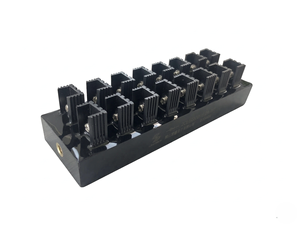
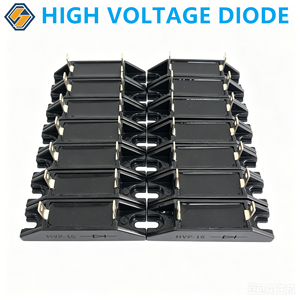
At the core of robust industrial mining power systems is advanced junction thermal management. Silicon Controlled Rectifiers (SCRs) and High-Voltage Rectifier Stacks (such as the 20KV 50A 2CLG series and 17.5KV HVP-16 models) face continuous thermal stresses. Junction temperatures ($T_j$) must be tightly controlled through optimized heatsink geometry, liquid-cooling loops, and press-pack ceramic puck designs.
By enforcing rigorous thermal modeling and transient voltage protection (TVS), top Chinese mining power manufacturers ensure that rectifiers can withstand severe voltage spikes (dv/dt) and overcurrent surges (di/dt) common in heavy industrial supply grids. Utilizing higher Peak Inverse Voltage (PIV) ratings and low forward voltage drop ($V_f$) components dramatically reduces power dissipation across the semiconductor junction, ensuring long-term operational MTBF (>100,000 hours).
Combining over three decades of power conversion engineering heritage with world-class ISO 9001 manufacturing standards, clean-sheet custom OEM design capabilities, and complete lot traceability.
Every mining installation faces unique grid constraints and mechanical dimensional boundaries. OEM engineering teams modify existing modular platforms or build custom power systems from clean-sheet architectures. Scope spans detailed electrical design, magnetic component winding (rectifier transformers up to multi-MW scale), thermal modeling, EMC compliance, and full environmental qualification testing.
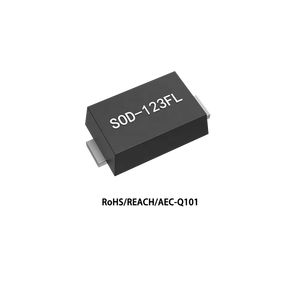
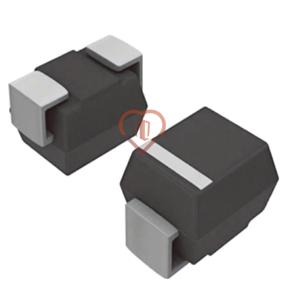
Quality reliability is non-negotiable in critical power applications. Certified manufacturing facilities adhere strictly to ISO 9001 standards. Every semiconductor batch—from small SOD-123FL surface mount rectifiers to 20kV high-voltage diode blocks—undergoes 100% automated parametric testing, dynamic burn-in, dielectric isolation checks, and complete lot-code traceability.
Full technical lifecycle support includes system calibration, preventative maintenance diagnostics, site acceptance testing (SAT), and rapid spare-parts deployment. Compliance engineering routes cover international safety standards including IEC/EN 61010, IEEE 519 harmonic control specifications, CE marking, and RoHS/REACH environmental compliance.
Detailed performance benchmarks for industrial high-voltage diodes, thyristor rectifiers, and power module assemblies specified for mining and heavy process applications.
| Product / Module Series | Primary Topology / Type | Voltage Rating ($V_{RRM}$) | Current Rating ($I_{FAV}$) | Thermal Resistance ($R_{thjc}$) | Target Industrial Application |
|---|---|---|---|---|---|
| 2CLG20KV/50A-WT Block | High Voltage Rectifier Diode Block | 20,000 V (20 kV) | 50 A | ≤ 0.15 °C/W | Heavy Electro-winning & HV Isolation Grids |
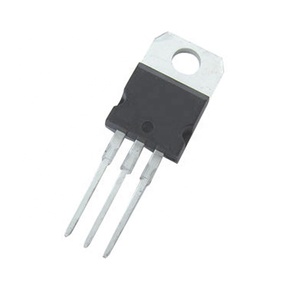
| SCR 25A TO-220 | Silicon Controlled Rectifier (SCR) | 600V - 1200V | 25 A | ≤ 1.1 °C/W | Motor Control & Soft Starters |
| HVP-16 Silicon Stack | HV Diode Stack Assembly | 17,500 V (17.5 kV) | 1.0 A - 3.0 A | ≤ 0.85 °C/W | RF Induction Heating & Smelting Equipment |
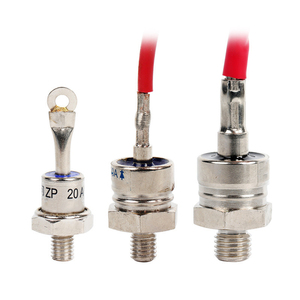
| ZP100A Spiral Diode | Chrome-Plated Stud Rectifier | 1600 V | 100 A | ≤ 0.30 °C/W | Plating Rectifiers & Heavy DC Power Supplies |
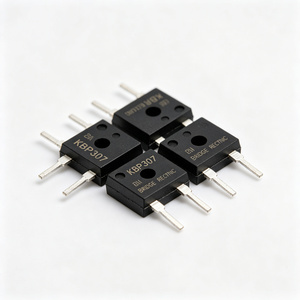
| KBP307 Bridge Diode | 4-Pin Single Phase Bridge | 1000 V | 3.0 A | ≤ 3.2 °C/W | Auxiliary Power Inverters & Controls |
| M400 MGM Brake Module | Thyristor Brake Control Rectifier | 400 VAC In / 180 VDC Out | 15 A Peak | Enclosed Module | Heavy Mining Hoist & Conveyor Braking Systems |
Mining majors worldwide are committing to net-zero carbon targets, accelerating the transition from diesel-powered fleets and processes to electrification and green hydrogen energy storage. This shift requires massive deployment of megawatt-scale Thyristor-Controlled Transformer Rectifiers and high-efficiency water-cooled DC power supplies for site-based water electrolysis (PEM and Alkaline electrolyser stacks).
Future power procurement contracts increasingly require rectifiers that deliver ultra-low current ripple (<1.5%), high power factor (>0.95 without external PFC banks), and direct integration with renewable microgrids (solar PV and wind power coupling).
While high-power silicon diodes and SCRs remain dominant for high-current applications, Silicon Carbide (SiC) and Gallium Nitride (GaN) devices are revolutionizing auxiliary power converters, high-frequency induction heating, and fast-charging infrastructure. SiC technology enables higher switching frequencies, drastically reducing the physical footprint of inductors and transformers by up to 40% while raising efficiency beyond 99%.
Simultaneously, power conversion systems are embedding IoT-enabled predictive health diagnostics. Smart rectifiers now continuously monitor junction temperatures, forward voltage drift, leakage currents, and fan vibration levels, broadcasting real-time data via MODBUS/TCP or CANopen to prevent unforeseen power disruptions.
A comprehensive step-by-step technical evaluation standard for industrial procurement officers, project engineers, and global B2B buyers.
Verify whether the supplier offers tailored conversion topologies—such as 6-pulse, 12-pulse, or 24-pulse phase-shifted thyristor rectifiers—to mitigate low-order harmonics on the main supply grid. Match peak surge capability ($I_{FSM}$) against your facility's motor start-up transients.
Request documented proof of ISO 9001 quality management, ISO 14001 environmental compliance, and UL/CE/RoHS certifications. Inspect the manufacturer’s automated optical inspection (AOI), high-voltage isolation test bays, and environmental stress screening (ESS) chambers.
Look beyond initial CAPEX. Evaluate overall efficiency gains, electrical loss reductions (kW losses per operating hour), cooling water consumption, spare parts availability, and guaranteed component longevity over a 10-to-15-year lifecycle in severe mining environments.
Leading Chinese manufacturers design and manufacture custom transformer rectifier systems scaled into the multi-megawatt (MW) range for heavy industrial electrolysis and mineral processing. High-voltage DC power supply systems can deliver up to 150 kW output at voltages reaching 200 kV, while high-current rectifier units can supply tens of thousands of amperes for electro-winning and heavy electro-plating lines.
Thyristor Controlled Rectifiers (SCRs) allow precise, dynamic phase-angle regulation of output voltage and current under varying load conditions. This flexibility is essential for applications such as electro-winning and arc smelting, where process impedance fluctuates continuously. SCR systems allow soft-starting, constant-current/constant-voltage regulation modes, and automated remote control via PLC interfaces.
Industrial-grade mining power supplies utilize heavy-duty NEMA 4X / IP65 sealed enclosures, conformal coating on all printed circuit board assemblies (PCBAs), encapsulated high-voltage silicone diode blocks, and liquid-to-air heat exchangers. Airflow paths for forced-air cooling are physically isolated from sensitive electronic control bays to prevent conductive mineral dust buildup.
Yes. Specialist OEM engineering teams specialize in form-fit-function replacements for legacy or obsolete power supplies. By analyzing existing mechanical mounting footprints, electrical busbar layouts, input AC voltage specs, and control signaling protocol (4-20mA, 0-10V, RS485, Profibus), manufacturers can drop in updated solid-state rectifier solutions without requiring costly structural modifications.
Standard compliance documentation includes ISO 9001 Factory Quality Certificates, Certificate of Origin (CO), Factory Acceptance Test (FAT) report, RoHS/REACH material safety compliance, CE conformity certificates, and full electrical calibration reports traceable to international standards.
Consult directly with our senior power conversion application engineers. Share your voltage, current, harmonic, and environmental requirements to receive a comprehensive technical proposal and custom OEM design route within 24 hours.
Contact Us