Explore our certified range of high-voltage rectifiers, thyristor modules, and precision conversion components built for continuous operational reliability.
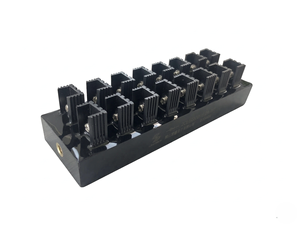
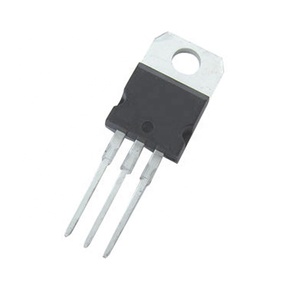
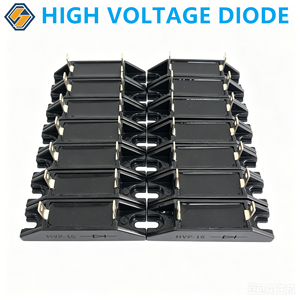
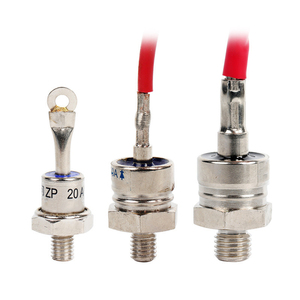
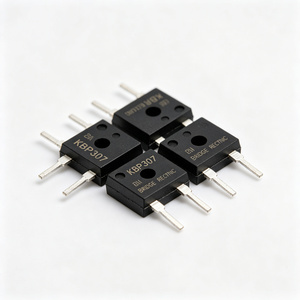
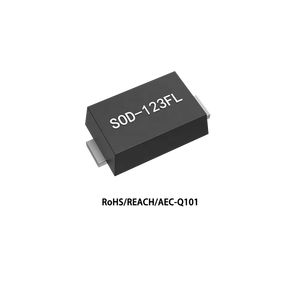
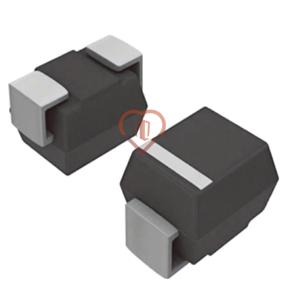
From phase-controlled thyristor stacks to ultra-fast zero-voltage switching (ZVS) topologies, our power supplies deliver maximized conversion efficiency across variable load spectrums.
Full lot-code traceability, WEEE/RoHS verification, and adherence to rigorous MIL-STD-704, 1275, and 461 standards ensure zero-defect reliability in harsh operational environments.
Our UK and global design teams specialize in clean-sheet power system architectures, developing custom thermal management, magnetic integration, and digital control loops.
In modern industrial manufacturing, green hydrogen generation, electrochlorination, medical diagnostic imaging, and defense system platforms, direct current (DC) power conversion forms the foundational core of operational stability. Selecting top-tier DC-DC converters, transformer rectifiers, and high-voltage power supplies requires an engineering-first evaluation process that moves far beyond basic voltage and current ratings. Industrial procurement specialists and system engineers must balance dynamic load profiles, thermal derating constraints, electromagnetic compatibility (EMC), harmonic distortion, and total cost of ownership (TCO).
As a global leader in power conversion engineering since 1992, Powerstax (operating under rigorous ISO 9001 controls) designs and manufactures high-density AC-DC modules, isolated DC-DC converters, thyristor-controlled transformer rectifiers, and high-voltage DC systems delivering up to 200 kV and megawatt-scale power outputs. This whitepaper analyzes critical technical parameters, wide-bandgap (WBG) technology integration, procurement trend forecasts, and engineering best practices for mission-critical industrial applications.
Core Engineering Takeaway: Power conversion reliability is governed by junction temperature control ($T_j$), dielectric isolation margin, and magnetic saturation limits. Off-the-shelf catalog converters frequently fail in industrial environments due to uncalculated pulsed load transients and ambient thermal derating.
When specifying high-power DC-DC converters and industrial rectifiers, engineering specifications must align with real-world operating stressors. The primary considerations include:
Galvanic isolation protects low-voltage digital control units (DSP/FPGA buses) from high-voltage DC rails and ground loops. In electrochemistry and cathodic protection applications, isolation voltages must withstand continuous common-mode voltage stress and high transient spikes. High-reliability brick converters incorporate planar magnetics with multi-layer isolation barriers capable of withstanding insulation test voltages exceeding 3,000 VAC to 15 kV DC depending on system classification.
Power conversion loss manifests primarily as thermal energy dissipated via internal MOSFETs, diodes, and core inductors. Heat dissipation strategies define system longevity. Standard air-cooled converters experience significant thermal derating when operating in ambient environments above 50°C. Advanced industrial converters utilize baseplate cooling, conduction-cooled aluminum chassis designs, or closed-loop liquid cooling blocks for high-power electrolysis installations. Calculating the thermal resistance ($\theta_{JA}$) from junction to ambient is critical to ensure semiconductor junction temperatures remain below 125°C under maximum continuous load.
For sensitive RF equipment, high-frequency induction heating, and pulsed-laser systems, output voltage ripple ($V_{p-p}$) and dynamic response to step loads determine operational performance. Low-noise switched-mode power supplies (SMPS) utilize multi-stage L-C filters combined with active ripple cancellation loops to achieve ripple figures below 0.5% RMS, preventing phase noise and process instability.
Selecting the appropriate conversion topology is direct function of output voltage, current demand, switching frequency, and target efficiency:
| Topology / Platform | Typical Input Range | Output Power / Voltage | Peak Efficiency | Primary Industrial Application |
|---|---|---|---|---|
| Thyristor Transformer Rectifier (TR) | 380V - 690V AC, 3-Phase | Up to Megawatt / 10V - 1000V DC | 95.5% - 97.5% | Green Hydrogen Electrolysis, Electroplating, CP |
| Isolated DC-DC Brick (Full-Bridge ZVS) | 18V - 75V DC / 180V - 400V DC | 50W - 7.2 kW / Regulated DC | 92.0% - 96.0% | Defense (MIL-STD-704/1275), Telecommunications |
| High-Voltage DC Supply (HVDC) | 230V Single / 400V 3-Phase AC | Up to 150 kW / 1 kV - 200 kV DC | 89.0% - 94.5% | Medical X-Ray, RF Equipment, HV Industrial Research |
| Modular AC-DC Front-End (SMPS) | 85V - 264V Universal AC | Up to 10 kW Per Chassis | 91.0% - 95.0% | Automation Cabinets, Process Control Systems |
The global power electronics market is undergoing a structural transition driven by decarbonization, electrification, and defense infrastructure modernization. B2B procurement leaders must factor the following technological trends into long-term sourcing strategies:
Silicon Carbide (SiC) and Gallium Nitride (GaN) power devices are rapidly replacing traditional Silicon (Si) MOSFETs and IGBTs. Wide-bandgap materials offer significantly higher breakdown electric fields, faster switching rates, and lower on-resistance ($R_{DS(on)}$). This transition enables DC-DC converters to operate at switching frequencies exceeding 500 kHz, reducing passive magnetic component size by up to 40% while pushing conversion efficiencies beyond 96%.
The acceleration of green hydrogen production via PEM (Proton Exchange Membrane) and Alkaline electrolysers requires ultra-high-current DC rectifiers. Electrolyser duty cycles demand low current ripple (to prevent membrane degradation), wide dynamic range control, and high input power factor (PF > 0.95). Sourcing thyristor-controlled and active PWM rectifier systems scaled into multi-megawatt configurations represents the largest capital expenditure trend in industrial electrochemical power.
Modern DC power supplies are transitioning from analog control loops to PMBus, CANbus, and Ethernet/IP digital interfaces. Integrated Microcontrollers allow real-time monitoring of internal thermal metrics, capacitor ESR degradation, output voltage drift, and operating hours. Procurement strategies increasingly prioritize converters equipped with predictive diagnostic telemetry to prevent unplanned downtime in automated continuous processing plants.
Global component shortages and counterfeit semiconductor risks require strict supply chain assurance standards. Sourcing critical power conversion equipment demands verification of component origin and manufacturing quality controls:
Powerstax enforces 100% component lot-code traceability across all manufactured assemblies. From discrete surface-mount devices (such as SOD-123FL rectifiers and SMA transient voltage suppressors) to heavy-gauge thyristor power modules, every part is logged into production quality databases under ISO 9001 certification. OEM procurement managers benefit from guaranteed long-term product lifecycle support, mitigating component obsolescence risks across multi-year defense and industrial programs.
Clear, authoritative answers to common engineering, compliance, and purchasing inquiries.
Our engineering portfolio covers standard and configured DC-DC converters up to 7.2 kW per system, AC-DC chassis platforms up to 10 kW, high-voltage DC power supplies reaching 150 kW / 200 kV, and thyristor-controlled transformer rectifiers scaled into multi-megawatt outputs tailored for industrial electrolysis and electroplating duty.
Our UK-based engineering team provides value-added custom design services. We modify standard platforms or build clean-sheet power architectures—covering electrical magnetics, thermal simulation, custom mechanical enclosures, EMC filtering, and compliance qualification (ISO 9001, IEC 61010, IEC 60601, MIL-STD) tailored to your exact mechanical and electrical envelope.
Our high-reliability MIL-COTS DC-DC modules and transient suppressor units are engineered to meet MIL-STD-704 (aircraft power characteristics), MIL-STD-1275 (surges and transients in 28V DC electrical systems for land vehicles), and MIL-STD-461 for electromagnetic interference (EMI) emissions and susceptibility.
High current ripple in electrochemistry causes harmonic heating, reduces current efficiency, and leads to premature electrolysis membrane degradation or uneven electroplating deposition. Our transformer rectifiers and switch-mode supplies incorporate specialized output filtering and phase-shifted thyristor bridge designs to maintain low ripple across full operating range.
Powerstax offers comprehensive aftermarket lifecycle support, including traceable calibration to national standards, preventative maintenance programs, site acceptance testing (SAT), asset refurbishment, long-term spare parts availability, and hands-on technical training for client maintenance crews.
Submit your electrical requirements—voltage, current, ambient profile, thermal environment, and compliance targets. Our engineering team will deliver a precise solution design.
Send an Inquiry