Direct factory-manufactured isolation diodes, silicon controlled rectifiers, and high-dielectric stacks engineered for demanding process lines and OEM equipment.
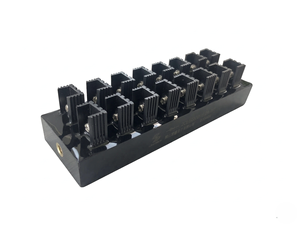
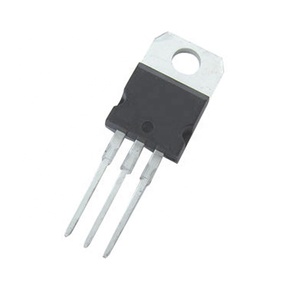
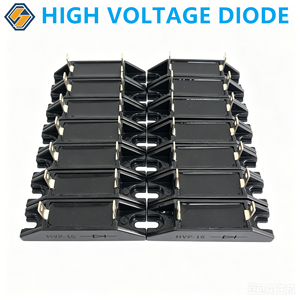
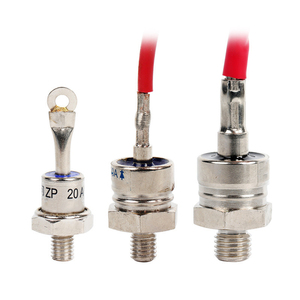
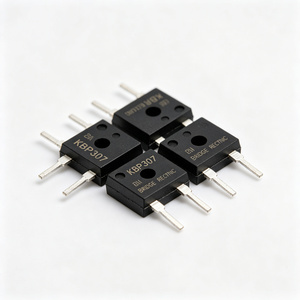
Modern electrical transmission, green hydrogen electrolysis, medical diagnostic imaging, and heavy industrial automation demand unprecedented levels of electrical safety, thermal stability, and transient voltage immunity. At the core of every high-reliability industrial power system sits the isolation component—a class of semiconductor and magnetic devices engineered specifically to separate high-voltage operational circuits from sensitive control electronics, human operators, and ground planes.
Selecting the right manufacturing partner among global isolation component factories requires an in-depth understanding of semiconductor physics, dielectric barrier performance, partial discharge withstand limits, and thermal stress management. This technical guide synthesizes over three decades of British power engineering experience to provide procurement executives, electrical engineering directors, and system integrators with actionable criteria for sourcing high-reliability isolation components and power semiconductor stacks.
“Galvanic isolation is not merely a component parameter; it is the fundamental safety barrier protecting megawatt-scale industrial infrastructure from catastrophic insulation breakdown, common-mode noise corruption, and high-voltage arc flash hazards.”
Industrial isolation components encompass a wide array of active and passive devices designed to prevent direct current (DC) flow between isolated circuit segments while permitting precise power or signal transmission. In high-power rectifier assemblies and switched-mode power supplies (SMPS), primary isolation technologies include:
Verified impulse withstand ratings up to 200 kV DC under IEC 60270 partial discharge testing criteria, ensuring structural dielectric integrity across decades of continuous energization.
Advanced junction passivating prevents false gate turn-on and insulation degradation under steep voltage transients exceeding 10,000 V/µs in noisy industrial environments.
Engineered junction-to-case thermal path ($R_{thj-c}$) utilizing vacuum-soldered molybdenum substrates to survive intensive thermal cycling without bond wire lift-off.
The global shift toward renewable electrification, green hydrogen production, offshore wind farms, and electric vehicle mega-charging stations has triggered a fundamental transition in isolation component manufacturing. Procurement teams must navigate four macro trends re-shaping factory standards worldwide:
Green hydrogen electrolyser stacks (PEM, Alkaline, and Solid Oxide) require low-ripple DC power running at tens of thousands of amperes. Isolation component factories must now produce heavy-duty thyristor transformer rectifiers capable of handling continuous electrolytic duty without dielectric breakdown caused by harsh ambient chemical exposure and high operational humidity.
While Silicon remains dominant in high-current low-frequency rectification, the integration of Wide Bandgap (WBG) semiconductors like Silicon Carbide (SiC) and Gallium Nitride (GaN) requires isolation components to operate at switching frequencies up to 500 kHz. Fast-recovery isolation diodes must exhibit near-zero reverse recovery time ($t_{rr}$) to minimize dynamic switching losses.
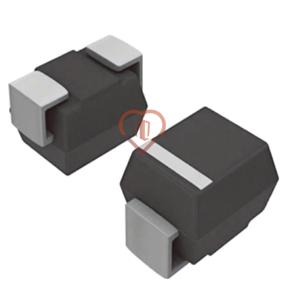
In aerospace, defense (MIL-STD-704 / MIL-STD-461), and medical equipment (IEC 60601-1), component failure is not an option. Enterprise buyers are mandating 100% factory-certified lot code traceability—exemplified by traceable surface-mount rectifiers like the 1N4006W—to protect supply chains against counterfeit silicon and uncertified wafer fabs.
Traditional high-pot testing (Hi-Pot) is no longer sufficient for high-voltage isolation components. Modern procurement specifications demand Partial Discharge (PD) extinction voltage testing above 1.5x working voltage. Factories incapable of providing automated PD test reports face rapid exclusion from Tier-1 OEM supply chains.
When selecting a manufacturing facility for custom high-voltage components, transformer rectifiers, or discrete silicon stacks, engineering procurement auditors must evaluate five critical production pillars:
As a premier British power conversion manufacturer established in 1992, Powerstax PLC stands at the forefront of high-voltage isolation design, custom transformer rectifiers, and high-reliability power assemblies. Powerstax provides end-to-end engineering support ranging from standard component supply to fully custom OEM power platforms.
Answers to critical technical queries regarding isolation ratings, custom stack configurations, thermal management, and procurement lead times.
Functional isolation is designed solely to ensure correct electrical operation of the circuit. Reinforced galvanic isolation provides a single insulation system that delivers equivalent safety protection against electric shock up to high impulse voltages, meeting stringent international safety standards such as IEC 61010-1 and IEC 60601-1.
High-voltage diodes achieve extreme peak inverse voltage (PIV) ratings by connecting multiple matched silicon junction wafers in series inside a single encapsulated housing. Precision factory wafer matching ensures even voltage distribution across all junctions during reverse bias conditions.
Yes. Our UK value-added engineering team designs bespoke silicon stack rectifiers, custom isolation transformers, and modular power assemblies tailored to your exact mechanical footprint, voltage barrier, thermal cooling (air or liquid), and control interface requirements.
Partial discharge occurs when localized electrical breakdown degrades air pockets inside an insulator without bridging the entire gap. Over time, PD erodes the epoxy matrix, leading to sudden catastrophic insulation failure. Automated PD testing guarantees zero internal voids before components are installed in critical industrial sites.
Stud-mounted diodes require precise mounting torque and thermal interface material (TIM) application to minimize junction-to-heatsink thermal resistance ($R_{thj-c}$). Proper heatsink sizing ensures the junction temperature remains below 150°C during continuous heavy plating or electrolysis loads.
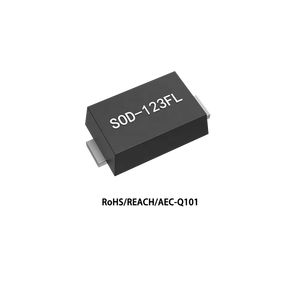
Absolutely. Every batch of silicon rectifiers—including SOD-123FL and SMA packages—is shipped with 100% traceable lot codes, Certificate of Conformance (CoC), and full RoHS/REACH material documentation to support strict ISO 9001 and defense traceability audits.
Need custom high-voltage isolation diodes, SCR thyristor assemblies, or megawatt rectifier systems? Share your technical specifications with our engineering team for rapid evaluation and quote generation.
Get a Quote