Engineered for maximum thermal efficiency, low THD, high power density, and continuous duty in harsh industrial environments.
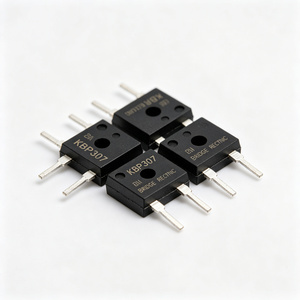
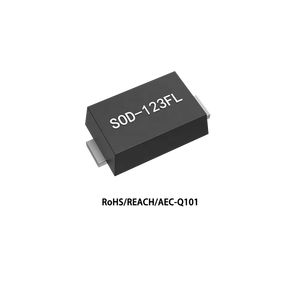
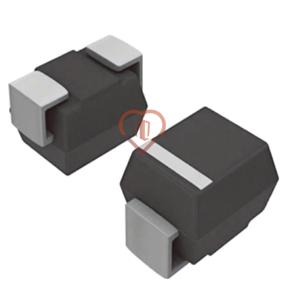
In modern heavy industry, green hydrogen electrolysers, marine cathodic protection, and high-frequency induction processing, electrical power conversion efficiency is no longer simply an operational metric—it is a critical determinant of system longevity, total cost of ownership (TCO), and thermal stability. As a premier global exporter and custom factory system integrator, our engineering architecture bridges the gap between raw grid-level alternating current (AC) and precision-regulated direct current (DC) or pulsed energy profiles.
High-power switching supplies and transformer rectifier assemblies rely on fundamental electromagnetic topologies tailored to specific load profiles. Traditional linear regulation yields excessive heat dissipated across semiconductor junctions, rendering it unviable for systems exceeding several hundred watts. Switch-Mode Power Supply (SMPS) architectures—incorporating Active Power Factor Correction (PFC), LLC resonant tanks, and Zero-Voltage Switching (ZVS) forward converters—achieve operational efficiencies upwards of 96%.
Technical Insight: High-frequency switching (>100 kHz) reduces planar magnetics volume by up to 65% compared to line-frequency 50/60 Hz transformers, while simultaneously decreasing current ripple to under 0.5% RMS—essential for electrolytic cell lifetime preservation.
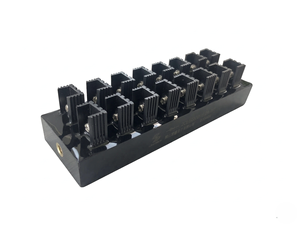
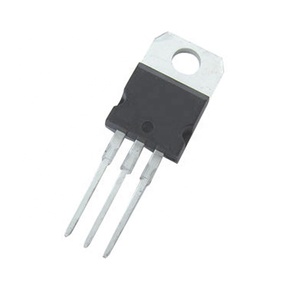
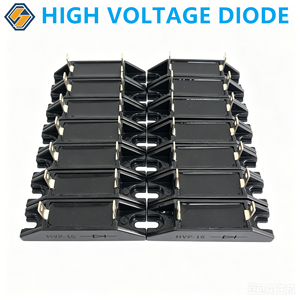
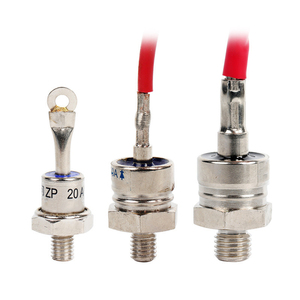
However, for megawatt-scale electrochlorination, metal electroplating, and green hydrogen production, high-current Thyristor-Controlled Transformer Rectifiers (TR) remain the gold standard due to their extreme robustness against line transients, short-circuit fault endurance, and minimal semiconductor component counts. By integrating advanced silicon-controlled rectifiers (SCRs) and fast-recovery high-voltage diodes, modern factory designs achieve seamless, phase-angle regulated DC outputs capable of supplying tens of thousands of continuous amperes.
Choosing the correct power conversion architecture depends on voltage scaling, switching dynamics, current ripple requirements, and ambient operational stresses. The table below outlines key parameters evaluated by OEM procurement and plant engineering teams:
| Topology Architecture | Typical Efficiency | Power Range | Primary Advantage | Typical Industrial Application |
|---|---|---|---|---|
| Thyristor-Controlled TR | 92% - 95% | 50 kW to 10 MW+ | Ultra-high ruggedness, transient surge tolerance | Hydrogen Electrolysis, Electroplating, CP Systems |
| LLC Resonant SMPS | 95% - 97.5% | 500 W to 20 kW | ZVS soft-switching, minimal EMI signature | Telecommunications, Medical Scanners, EV Charging |
| Hard-Switched Full Bridge | 88% - 93% | 1 kW to 50 kW | Simple control loop, high output voltage scaling | High Voltage HVDC Test Racks, RF Heating |
| Phase-Shifted PWM (PSFB) | 93% - 96% | 5 kW to 100 kW | High power density, scalable parallel modules | Process Automation, Carbon Capture Equipment |
As an established British and global manufacturing exporter operating under strict ISO 9001:2015 quality management controls, our production lines enforce traceability down to individual discrete wafer lot codes. Power electronics deployed in defence vehicles (MIL-STD-704 / MIL-STD-1275), offshore oil platforms, or medical imaging equipment must guarantee uninterrupted Mean Time Between Failures (MTBF) exceeding 100,000 hours under rated full-load conditions.
100% original semiconductor dies, traceable glass-passivated bridge chips, and vacuum-impregnated transformer magnetics to eliminate internal partial discharge.
Thermal cycling, highly accelerated life testing (HALT), dynamic vibration screening, and rigorous EMC immunity validation to IEC/EN 61010 and MIL-STD-461G.
Conformal coating, IP65-rated sealed enclosures, liquid-to-air heat exchangers, and forced oil cooling (ONAN/OFAF) for corrosive or high-dust atmospheres.
The landscape of industrial power export is undergoing a generational transition driven by wide-bandgap (WBG) semiconductors, industrial IoT integration, and decarbonization mandates. B2B procurement managers and system specifiers must evaluate the following four macro trends when selecting power manufacturing partners:
Silicon Carbide (SiC) MOSFETs and Gallium Nitride (GaN) HEMTs are replacing traditional Silicon IGBTs in high-frequency SMPS. WBG devices operate at elevated junction temperatures (>175°C) with significantly reduced switching losses, enabling ultra-compact power units with power densities surpassing 50 W/in³.
Global green hydrogen initiatives demand modular rectifiers operating in the 1 MW to 50 MW range. Modern power plants utilize 12-pulse or 24-pulse thyristor systems combined with active harmonic filters (AHF) to achieve total harmonic distortion (THD) under 3%, preventing power grid contamination.
Next-generation switching power supplies feature integrated RS485, CANbus, Modbus-TCP, or PMBus interfaces. Real-time telemetry monitoring of internal capacitor ESR, thermal gradient shifts, and phase imbalances allows predictive maintenance before catastrophic failure occurs.
Regulatory frameworks such as EU Tier 2 Eco-Design and 80 PLUS Titanium require standby losses below 0.5W and peak operational efficiencies exceeding 96%. Furthermore, connected industrial power units must adhere to IEC 62443 industrial cybersecurity protocols.
Whether you require bulk production of discrete fast-recovery rectifiers, custom MIL-COTS converter modules, or megawatt-scale hydrogen power systems, our power specialists are ready to review your specification sheet.
Inquire Now