Engineered to comply with CSA C22.2 and IEEE C62.41 standards. Direct factory-engineered surge suppressor blocks, silicon rectifiers, and high-voltage TVS assemblies built for Canadian heavy industry.
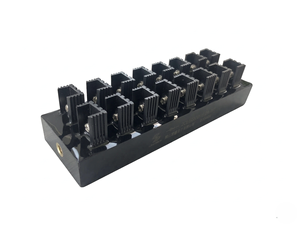
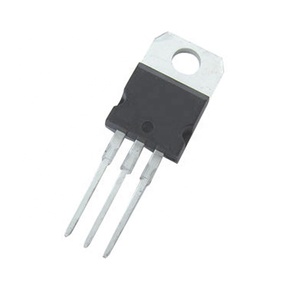
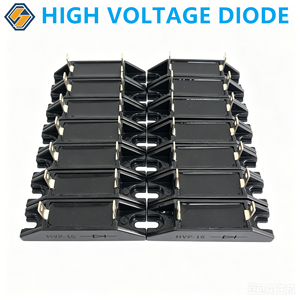
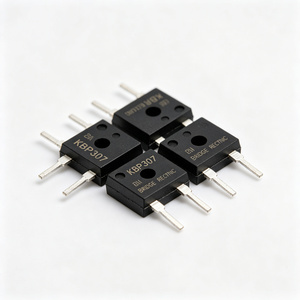
Transient voltage suppression is a fundamental pillar of power quality management across modern electrical engineering networks. As industrial infrastructure in Canada expands across remote mining fields, green hydrogen electrolyser plants, offshore platforms, and electrified transport networks, electrical systems face increasingly severe transient voltage spikes. These voltage surges—originating from direct or indirect lightning strikes, heavy inductive load switching, grid switching operations, and electrostatic discharges (ESD)—can cause catastrophic semiconductor failure, insulation breakdown, and severe equipment downtime if unmitigated.
As a leading China manufacturer and factory supplying the Canada market, our facility engineers high-capacity Silicon Avalanche Diode (SAD) TVS modules, thyristor-controlled surge suppression stacks, and metal-oxide hybrid protection circuits. Designed to deliver low clamping voltages ($V_C$), minimal leakage current ($I_R$), and extreme energy absorption capabilities, our products safeguard mission-critical power systems across North America.
Unlike standard Metal Oxide Varistors (MOVs) which exhibit gradual degradation after repeated energy dissipation events, Silicon Avalanche TVS diodes feature a true p-n junction operating in breakdown mode. This solid-state mechanism offers sub-nanosecond response times (<1 picosecond for discrete junction dies) and virtually non-degrading surge clamping capabilities when operated within rated thermal limits ($T_J \le 175^\circ\text{C}$).
To specify transient surge suppressors for heavy industrial applications in Canada, design engineers must analyze multiple critical parameters to guarantee circuit survival during 8/20 µs current impulses and 10/1000 µs high-energy voltage surges. Our manufacturing line custom-balances these parameters for specific OEM requirements:
| Electrical Parameter | Symbol | Engineering Significance in TVS Modules | Standard Rating Range |
|---|---|---|---|
| Reverse Stand-off Voltage | VRWM | Maximum continuous working voltage where TVS remains non-conductive. | 5.0V to 1600V+ |
| Breakdown Voltage | VBR | Point at which avalanche breakdown begins at specified test current (IT). | 6.8V to 2000V |
| Maximum Clamping Voltage | VC | Peak output voltage across TVS during maximum pulse current (IPP). | Low Ratio (VC / VBR < 1.35) |
| Peak Pulse Power Dissipation | PPP | Total transient power capability calculated as VC × IPP (10/1000µs). | 600W up to 150kW+ Modules |
| Junction Thermal Resistance | RθJC | Thermal transfer rate from semiconductor die to heavy copper/aluminum heat sink. | < 0.15 °C/W for High Power |
One of the primary challenges encountered in Canadian installations—specifically across Northern Ontario, Alberta's industrial hubs, Quebec's hydroelectric substations, and the Northwest Territories—is extreme ambient temperature variation. Standard surge modules often suffer package cracking, dielectric fluid freezing, or thermal runaway due to improper coefficient of thermal expansion (CTE) matching between silicon dies, ceramic substrates, and copper baseplates.
Our China factory implements high-reliability vacuum hermetic sealing, thermal gel potting compound tested down to -50°C, and nickel-plated copper baseplates. This ensures zero embrittlement of encapsulation resins and maintains stable breakdown voltages ($V_{BR}$) even when subjected to rapid thermal shock cycling according to IEC 60068-2-14 test standards.
Canada's rapid transition toward clean energy—demonstrated by megawatt-scale hydrogen electrolysis facilities in British Columbia and utility-scale solar/wind farms in Alberta—introduces complex power quality challenges. Inverter-based resources (IBR) generate high-frequency switching harmonics and rapid transient overvoltages (TOV) that degrade sensitive power electronics like IGBT gates and control PLCs.
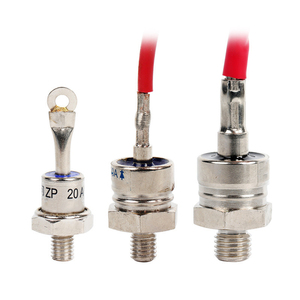
By pairing high-power TVS modules with low-inductance busbars and fast recovery rectifiers (such as our ZP100A and 2CLG20KV high-voltage stack modules), power engineers effectively clamp transient ringing spikes down to safe thresholds, preserving the life of expensive DC converter topologies and hydrogen stack power supplies.
Custom engineered TVS modules and rectifier blocks deployed across critical infrastructure sectors throughout Canada's Provinces and Territories.
Heavy machinery in Northern Ontario and Quebec gold/copper mines generates massive inductive transients during motor braking. Our high-current ZP series and SCR modules clamp transient spikes, preventing control cabinet downtime.
PEM and Alkaline electrolyser plants in British Columbia require extreme current stability. High-power TVS diode modules mitigate transformer switching surges, ensuring cell membrane integrity and power supply longevity.
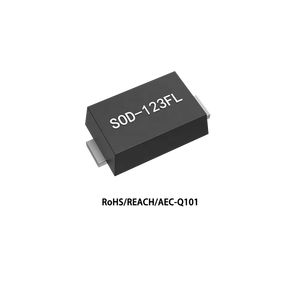
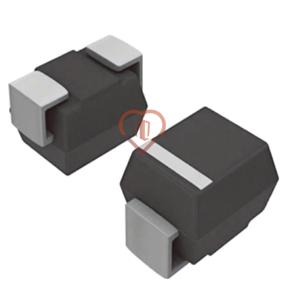
Elevated microwave stations in the Canadian Rockies are prone to direct lightning strikes. Our sub-nanosecond SOD-123FL and SMA TVS arrays provide critical signal line surge immunity down to -50°C.
Long-distance oil and gas pipelines across Alberta require continuous DC impressed current protection. Heavy-duty TVS rectifier stacks prevent lightning ground potential rise (GPR) from damaging transformer rectifiers.
Canada's expanding nationwide EV charging corridors demand ruggedized front-end TVS protection against utility grid switching surges and load dump events, guaranteeing station operational uptime.
Humid, high-salinity maritime environments in Atlantic Canada necessitate salt-spray resistant, moisture-proof TVS module enclosures engineered for continuous hydroelectric generator protection.
How evolving electrical safety codes and clean energy mandates are driving the demand for advanced TVS semiconductor technology across Canada.
Canadian electrical inspectors are increasingly mandating CSA C22.2 No. 269 compliant Surge Protective Devices (SPDs) across commercial and industrial distribution panels, accelerating the need for pre-certified OEM TVS modules.
The proliferation of microgrids, battery energy storage systems (BESS), and distributed solar arrays creates bidirectional power flows, exposing equipment to dynamic voltage swells that require high-precision avalanche TVS clamping.
Industrial OEM designers in Canada are replacing bulky discrete varistor networks with compact, high-power-density TVS modules capable of dissipating kilowatts of surge energy in small SMD or DIN-rail footprints.
Bridging elite Chinese semiconductor manufacturing efficiency with stringent North American engineering specifications.
From custom breakdown voltages ($V_{BR}$) to unique terminal block configurations, our engineers modify standard platforms to fit your exact enclosure constraints within 3-4 weeks.
Every single TVS module undergoes 100% high-voltage impulse testing, reverse leakage verification, and thermal burn-in before export packaging, guaranteeing zero-defect arrival in Canada.
We maintain 100% original die lot traceability. High-purity silicon wafers, silver-tin solder preforms, and copper heatsinks are sourced under strict ISO 9001 supply chain quality audits.
With streamlined air and sea freight logistics directly servicing Vancouver, Toronto, and Montreal ports, we provide dependable, tariff-optimized door-to-door delivery for Canadian OEMs.
Technical answers for Canadian procurement managers, system integrators, and electrical engineering teams.
Metal Oxide Varistors (MOVs) absorb high surge energies but degrade over time with every voltage spike, experiencing increased leakage current until failure. Silicon Avalanche TVS Diode Modules feature sub-nanosecond response times (<1 picosecond), lower clamping ratios, and do not degrade when operated within rated pulse limits. For critical industrial applications in Canada, hybrid designs pairing TVS for speed and MOV for extreme energy yield optimal protection.
Yes. All TVS modules produced in our China facility for export to Canada are manufactured using UL94-V0 flame-retardant encapsulation materials, high-dielectric ceramics, and heavy copper terminals compliant with CSA C22.2 No. 269 and UL 1449 4th Edition standards. We provide complete technical data packages, impulse test certificates, and drawing files to support your end-product CSA safety approval.
Our cold-climate TVS modules are engineered with low-CTE (Coefficient of Thermal Expansion) substrates and low-temperature flexible silicone potting compounds rated for continuous operation from -50°C to +125°C. Silicon breakdown voltage ($V_{BR}$) has a positive thermal coefficient, which our engineering team precisely calculates and documents in the datasheet so your system operates flawlessly during harsh Canadian winter months.
Standard catalog items (such as TO-220 SCRs, SOD-123FL components, and standard stud rectifiers) are available from stock or produced within 7-10 working days. Custom TVS block assemblies or specialized high-voltage stacks typically take 2-3 weeks for engineering prototyping and 3-4 weeks for mass production runs. Fast air freight delivery to Canadian destinations (YVR, YYZ, YUL) takes 4-6 business days.
To properly select a TVS module: (1) Ensure Reverse Stand-off Voltage ($V_{RWM}$) is equal to or greater than peak operating DC/AC circuit voltage; (2) Calculate peak pulse current ($I_{PP}$) based on circuit source impedance and maximum transient voltage spike; (3) Verify that Maximum Clamping Voltage ($V_C$) does not exceed the absolute maximum breakdown rating of downstream components; (4) Confirm Peak Pulse Power ($P_{PP}$) covers the energy pulse duration ($E = \int V_C \cdot i(t) dt$). Contact our application engineers for full circuit modeling assistance.
Partner with China's leading transient voltage suppressor manufacturer. Send us your electrical parameters ($V_{RWM}, V_C, I_{PP}$), thermal constraints, and mounting requirements for rapid engineering feedback.