Direct OEM & Export-Grade Diodes, SCR Modules, Bridge Rectifiers, and High-Voltage DC Linear Stacks engineered for Japanese manufacturing tolerances.
The Greater Nagoya Metropolitan Area—encompassing Aichi, Gifu, and Mie prefectures—represents the beating heart of Japanese industrial engineering. As the world’s premier cluster for automotive OEM manufacturing, high-precision machine tools, industrial robotics, and advanced semiconductor packaging, Nagoya's production facilities operate under non-negotiable standards of electrical stability, continuous thermal endurance, and ultra-low electromagnetic interference (EMI).
While Switched-Mode Power Supplies (SMPS) have gained market share due to compact form factors, Linear Rectifiers remain the gold standard for high-precision, ripple-sensitive, and high-reliability industrial applications across Nagoya’s manufacturing zones. Chinese power supply manufacturers and exporters serving Nagoya must deliver more than commoditized hardware; they must supply robust, low-noise, linear-regulated AC-to-DC conversion architectures that seamlessly integrate with Japanese 200V 3-phase industrial power grids and strict Japanese Industrial Standards (JIS).
Unlike switching topologies that introduce high-frequency switching noise (often exceeding tens of kilohertz), linear rectifiers operate by converting AC voltage through heavy-duty isolation transformers followed by solid-state rectification and linear pass-element regulation. The result is pure, continuous DC power featuring extremely low output ripple (<0.05%), instantaneous transient recovery times, and zero high-frequency radiation—critical for micro-arc oxidation, hard chrome electroplating, high-precision sensor testing, and servo brake controls in automotive assembly lines.
To assist Nagoya-based plant managers, power electronics procurement specialists, and system integrators in specifying the optimal power conversion topology, the table below contrasts core performance parameters across heavy-duty linear rectifiers, thyristor-controlled transformer rectifiers, and high-frequency switching power units.
| Performance Specification | Linear Regulated Rectifiers | Thyristor (SCR) Transformer Rectifiers | High-Frequency Switching (SMPS) |
|---|---|---|---|
| Output Ripple Voltage | Ultra-Low (< 0.05% RMS) | Low-to-Medium (1% - 3% with Choke Filter) | Moderate (0.5% - 1.5% with HF Noise) |
| EMI / RFI Radiation | Zero High-Frequency EMI (JIS Class B) | Low Phase-Angle Line Harmonics | Requires Heavy EMI Filtering |
| Transient Recovery Time | < 50 microseconds | 10 - 20 milliseconds | 200 - 500 microseconds |
| Thermal & Physical Robustness | Extremely High (Passive Copper/Silicon) | Maximum (Heavy Duty Industrial) | Moderate (Sensitive to Dust/Spikes) |
| Primary Application in Nagoya | Semiconductor, Micro-Plating, Sensors | Heavy Anodizing, Electro-Chemical, Electrolysis | Compact Enclosures, Auxiliary DC Supplies |
Exporters serving the Nagoya market must tailor power conversion specs to match the distinct requirements of sub-regional industrial hubs across Aichi Prefecture. Chinese OEM manufacturing partners work directly with Japanese tier-1 and tier-2 suppliers across four primary localized industrial corridors:
Precision electroplating of fuel injection components, piston rings, and transmission gears requires non-pulsating direct current. Linear rectifiers deliver micro-ampere level stability, eliminating pinhole defects and ensuring uniform film thickness across chrome, nickel, and zinc plating lines.
Next-generation automotive sensors (LiDAR, radar modules, and power MOSFETs) undergo thermal and electrical characterization. Linear rectifiers provide clean, noise-free biasing voltages preventing false ripple-induced measurement artifacts.
Industrial articulated robots operating on multi-axis assembly lines require precise DC brake activation. Modules like the OEM SCR M400 Rectifier deliver clean 400VAC input to 180VDC output conversion, ensuring zero-latency holding brake engagement.
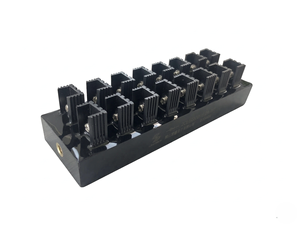
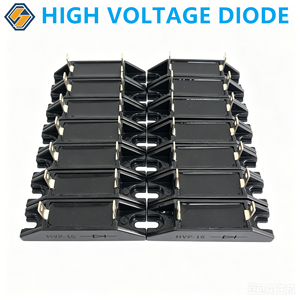
Heavy machinery metal heat treatment demands high-voltage silicon stack rectifiers (such as the HVP-16 series) capable of withstanding intense reverse breakdown voltages (up to 17.5KV) during rapid thermal cycling.
Aichi Prefecture’s regional decarbonization strategy requires industrial plants to minimize idle electrical losses and reduce harmonic distortion fed back into Chubu Electric Power Company's grid. Leading Chinese linear rectifier suppliers are integrating high-efficiency multi-tap toroidal isolation transformers alongside digital SCR phase controllers to maintain power factors above 0.92 under variable load conditions.
To overcome the historical weight and efficiency trade-offs of pure linear rectifiers, modern OEM power systems engineered for export to Japan utilize a hybrid approach: a Silicon Carbide (SiC) pre-regulator stepping down high line voltages followed by a high-current linear post-regulator stage. This preserves ultra-low ripple characteristics while improving overall power density by up to 35%.
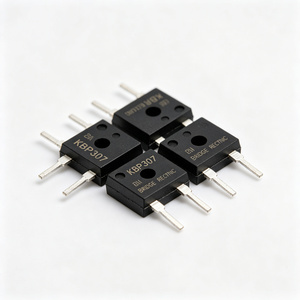
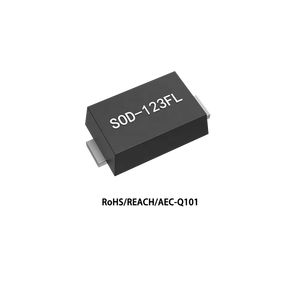
With Japan's rigorous Quality Management Systems (QMS), component-level traceability is mandatory. Discerning Nagoya procurement teams require suppliers to provide full traceability lot codes on every discrete component—from 1N4006W SOD-123FL general rectifiers up to 50A high-voltage diode blocks—ensuring zero counterfeit components enter critical automotive or medical supply chains.
Combining decades of power conversion engineering expertise with scalable Chinese manufacturing facilities, we deliver linear rectifiers, thyristor systems, and custom DC power units that meet the uncompromising technical expectations of Japanese industrial buyers.
From custom output voltages (0–1000V DC) to specialized enclosure IP ratings for corrosive plating shop environments, our engineering team custom-configures platforms around your exact load profile.
All rectifiers undergo rigorous 100% full-load burn-in testing. Designs comply with Japanese 200V/400V 3-phase grid frequency requirements (50Hz/60Hz dual compatibility) and international EMC/safety standards.
We maintain full batch-level lot code traceability across all silicon diodes, SCRs, and heat-sink assemblies, providing guaranteed spare parts availability and technical warranty coverage.
Our experienced export team manages specialized sea freight packaging, air-freight express delivery directly to Chubu Centrair International Airport or Nagoya Port, handling all customs documentation smoothly.
Frequently asked questions by Japanese industrial buyers, OEM integrators, and procurement officers regarding Chinese linear rectifier sourcing.
Yes. Our industrial linear rectifiers and SCR power supplies destined for the Nagoya market are custom-wound with primary transformers rated specifically for Japan’s dual 200V / 220V 3-phase grid voltages at both 50Hz and 60Hz. We ensure stable output voltage regardless of local line voltage fluctuations.
Linear rectifiers provide zero high-frequency switching ripple and fast transient response. In precision electroplating (such as micro-connector plating or automotive hard chrome), switching noise causes micro-discontinuities in metal deposition. Linear units produce smooth, pure continuous DC, yielding superior surface uniformity and corrosion resistance.
Every shipment is accompanied by a Factory Acceptance Test (FAT) report, Certificate of Conformity (RoHS / REACH compliance), and ISO 9001 quality audit documentation. Component lot codes (such as for SOD-123FL rectifiers or high-current diodes) are fully traceable to original silicon wafer batches.
Standard components and modular diode stacks ship within 3 to 7 working days via air freight to Chubu Centrair Airport. Custom-engineered heavy industrial transformer rectifiers generally require 3 to 4 weeks for fabrication, full-load testing, and sea freight transport to Nagoya Port.
Yes. We manufacture direct drop-in replacement SCR brake rectifiers (such as our M400 series) designed to convert 400VAC input to 180VDC output, matching the physical footprint, mounting holes, and electrical specs of original Japanese equipment installed in automated production lines.
Connect directly with our senior power conversion engineering team. Send us your input/output voltage specs, ripple limits, duty cycle, and installation parameters for a rapid technical route and competitive wholesale quote.