Strategic Power Quality Assessment
Industrial Power Quality Landscape in Pakistan & The Imperative for OEM Active Filtering
Manufacturing facilities operating within Pakistan’s key industrial hubs—ranging from the textile clusters of Faisalabad and Sundar Industrial Estate Lahore to the heavy steel mills of Gujranwala and the chemical processing zones in Korangi/S.I.T.E Karachi—face severe power quality challenges. The national electrical distribution network, administered by regional DISCOs (such as LESCO, K-Electric, FESCO, MEPCO, and IESCO), is plagued by chronic voltage imbalance, high background voltage harmonic distortion (THDv), rapid frequency shifts, and unexpected utility brownouts.
When combined with the internal adoption of high-efficiency non-linear loads—such as 6-pulse and 12-pulse Variable Frequency Drives (VFDs), thyristor power controllers, arc furnaces, uninterrupted power supply (UPS) double conversions, and LED industrial lighting—the resulting current harmonic distortion (THDi frequently exceeding 35% to 50%) causes disastrous operational inefficiencies across plant infrastructure.
Transformer Overheating
Harmonic eddy current losses and skin effect resistance cause industrial step-down transformers (11kV/400V) to operate at elevated temperatures, leading to premature insulation breakdown and unexpected tripping.
Neutral Conductor Burnout
In 3-phase 4-wire systems, triplen harmonics (3rd, 9th, 15th orders) accumulate additively in the neutral line, causing neutral currents to exceed phase currents by up to 173%, posing immediate fire hazards.
NEPRA Power Penalties
Strict enforcement of Grid Code standards by the National Electric Power Regulatory Authority (NEPRA) subjects facilities with low power factor (<0.90) and high harmonic injection to substantial monthly financial surcharges.
As a specialized Custom OEM Active Filter Manufacturer & Supplier for Pakistan, our engineering team supplies custom-built Active Power Filters (APF) engineered specifically to withstand Pakistan’s harsh environmental and electrical operating parameters. Unlike standard off-the-shelf passive filters that risk anti-resonance with local utility grid impedances, our active harmonic mitigation systems utilize real-time Digital Signal Processor (DSP) and Field Programmable Gate Array (FPGA) control topologies to inject opposing harmonic cancellation currents dynamically, stabilizing your facility's power network instantly.
High-Performance Power Electronics Design
Technical Architecture of OEM Active Power Filters (APF)
Our OEM Active Power Filters operate on the principle of controlled current injection. High-precision Current Transformers (CTs) installed on the load or mains side measure the three-phase instantaneous currents. The internal DSP isolates the fundamental power component from non-linear harmonic orders (from the 2nd up to the 50th harmonic).
The control algorithm instructs high-frequency Insulated Gate Bipolar Transistors (IGBTs) arranged in a 3-Level Neutral-Point-Clamped (NPC) inverter topology to generate dynamic compensation currents that are exactly 180 degrees out of phase with the measured distortion. This effectively cancels out the harmonic noise at the point of common coupling (PCC).
Engineering Comparison: APF vs. Conventional Mitigation Topologies
| Performance Parameter |
OEM Active Power Filter (APF) |
Passive Tuned LC Filter (PHF) |
Static Var Generator (SVG) |
| Harmonic Mitigation Scope |
Selective 2nd to 50th order (Simultaneous) |
Single order (e.g., 5th or 7th only) |
Minimal (Focused primarily on VAR) |
| THDi Reduction Target |
< 3% to 5% (Guaranteed IEEE 519) |
12% to 15% (Load dependent) |
Not designed for high THDi |
| Response Delay |
< 50 Microseconds (Dynamic) |
Passive / Fixed impedance |
< 5 Milliseconds |
| Grid Resonance Risk |
Zero Risk (Immune to grid impedance) |
High Risk (Prone to harmonic amplification) |
Zero Risk |
| Power Factor Compensation |
Stepless (Stepless Leading & Lagging cos φ 0.99) |
Fixed stepped capacitive VAR |
Stepless Leading & Lagging |
| Pakistani Climate Rating |
Up to 50°C Heavy Derating Protection |
High thermal stress / Capacitor drying |
Up to 45°C standard rating |
For industrial plant managers and panel builders in Pakistan, our modular OEM architecture provides flexible integration options: wall-mounted sub-assemblies for compact machinery integration, or rack-mounted 50A, 100A, and 150A power modules scaled inside 19-inch IP54 floor-standing enclosures.
Industry Market Dynamics
Key Macro Trends Driving Power Quality Investment in Pakistan
The industrial power landscape in Pakistan is undergoing rapid structural transformations. Engineering procurement directors and plant chief engineers are actively integrating active filtering technologies due to four decisive macro trends:
- Surging Commercial & Industrial (C&I) Solar PV Integration: To combat rising electricity tariffs, thousands of factories across Pakistan have installed multi-megawatt rooftop solar PV arrays. However, grid-tied solar inverters introduce high-frequency voltage switching harmonics and cause low power factor issues during cloud transients or high solar generation periods. OEM APFs provide dynamic bidirectional reactive power and harmonic smoothing to stabilize grid-tie interconnect points.
- Escalating Electricity Tariffs & Peak Load Charges: With utility tariffs hitting record highs in Pakistan, eliminating harmonic losses (which manifest as heat in cables and transformers) delivers direct energy efficiency gains of 3% to 8%, yielding rapid capital payback on APF investments within 10 to 14 months.
- Enforcement of NEPRA Distribution Code Standards: NEPRA is enforcing mandatory power quality audits for industrial consumers connected at 11kV and 132kV supply points. Facilities failing to maintain Total Harmonic Distortion within IEEE 519-2022 limits (<5% THDd) face severe financial penalties and potential grid disconnection.
- Modular Hot-Swappable OEM Architecture Adoption: Industrial panel builders in Pakistan are transitioning away from heavy, fixed passive filter banks toward modular active filter enclosures. Modular designs allow plant engineers to expand filtering capacity (e.g., from 100A to 500A) seamlessly as manufacturing output increases.
Manufacturing Expertise & Quality Control
Why Partner With Us for OEM Active Filter Manufacturing
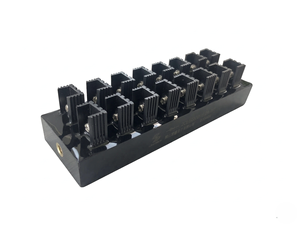
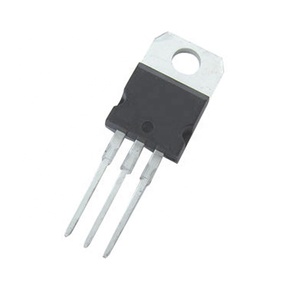
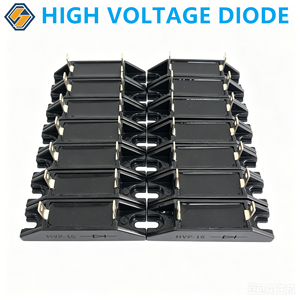
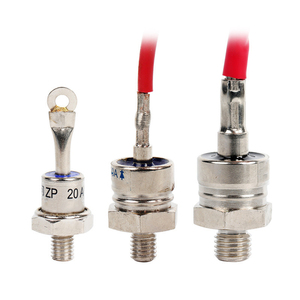
Building on decades of custom power conversion heritage—specializing in high-voltage rectifiers, thyristor-controlled transformer rectifiers, high-current diode blocks, and isolated power modules—our manufacturing facilities deliver rigorous OEM production standards tailored for severe operating environments.
Tropicalized Thermal Design
Equipped with heavy-duty heatsinks, intelligent variable-speed fan arrays, and high-temperature conformal coating on PCBA assemblies to guarantee full-load operation at continuous 50°C ambient temperatures common during Pakistani summers.
Custom Branding & Enclosures
We supply white-label OEM modules, custom firmware, custom RS485/Modbus RTU address maps, and bespoke sheet metal enclosures (IP30 to IP65) designed to fit your branded switchgear switchboards smoothly.
Rigorous ISO 9001 Testing
Every single OEM Active Filter module undergoes 100% full-load burn-in testing under non-linear harmonic load simulation prior to export dispatch, accompanied by complete factory test certificates.
Technical Procurement Support
Frequently Asked Questions by Engineering Buyers in Pakistan
Key technical considerations for specifying, installing, and commissioning OEM Active Harmonic Filters across local industrial networks.
✔
How do active power filters handle Pakistan's frequent grid voltage fluctuations (300V to 480V)?
Our OEM Active Filters are engineered with an ultra-wide AC input voltage operating window (300V to 480V, 3-Phase 50Hz ±10%). The internal DC-bus voltage is dynamically regulated by the DSP controller to ensure continuous, uncompromised harmonic compensation even during severe grid sags or line over-voltage transients.
✔
What is the typical Return on Investment (ROI) period for active filters in Pakistani industrial facilities?
Given current energy cost tariffs in Pakistan, payback is typically achieved within 10 to 14 months. Savings stem from three factors: elimination of NEPRA low power factor penalties, reduction of I²R line heating losses (saving 3% to 8% kWh), and prevention of costly premature transformer/motor insulation failures.
✔
Can these OEM active filters operate seamlessly alongside diesel generators during load-shedding?
Yes. Conventional passive filter banks can cause standby diesel generators to hunt or trip due to leading capacitive VARs at light loads. Our OEM APFs automatically adjust compensation output dynamically and feature fast step-less control, preventing generator output instability during grid-to-generator transfers.
✔
Is IEEE 519-2022 compliance guaranteed after installing your Active Harmonic Filters?
Absolute compliance is guaranteed. When sized correctly using our power quality load survey calculation tools, our APFs reduce Total Harmonic Current Distortion (THDi) to under 3% to 5% at the Point of Common Coupling (PCC), fully satisfying IEEE 519-2022 and international IEC 61000-3-6 guidelines.
✔
What current transformer (CT) ratios are required for OEM filter integration?
Our active filters support standard secondary CT inputs of both 5A and 1A, with programmable primary CT ratios ranging from 100/5 up to 10,000/5. CTs can be installed either on the source side (closed-loop control) or load side (open-loop control).
✔
What is the difference between 3-Phase 3-Wire (3P3W) and 3-Phase 4-Wire (3P4W) APF models?
3P3W models are designed for pure industrial 3-phase loads without single-phase line-to-neutral loads, such as VFDs, motors, and induction furnaces. 3P4W models feature an active neutral control branch specifically engineered to mitigate 3rd order triplen harmonics accumulating on the neutral wire, ideal for commercial facilities, data centers, and pharmaceutical units.
✔
Can multiple active filter modules be connected in parallel for high-capacity applications?
Yes. Up to 10 active filter rack modules can be connected in parallel on a single master-slave RS485 communication bus, allowing total compensation capacities up to 1500A per enclosure assembly without risk of internal control circulation currents.
✔
Do you offer technical commissioning support and OEM customized panel design for Pakistani partners?
We provide full OEM technical support, including detailed CAD panel schematics, register map documentation for Modbus RTU PLC/SCADA integration, remote commissioning assistance, and comprehensive engineer training for local system integrators and panel builders across Pakistan.
Partner With An Authorized OEM Specialist
Elevate Industrial Power Quality across Your Network
Whether you are an electrical panel builder in Lahore, a textile plant engineering director in Faisalabad, or a power quality consultant in Karachi, our OEM engineering team is ready to design and deliver custom Active Power Filters tailored to your exact load specifications.
Inquire Now