Engineered for rigorous industrial duty cycles, extreme partial discharge suppression, and seamless integration into custom Austrian OEM system architectures.
In modern industrial electronics, high-voltage isolation components serve as the critical line of defense between lethal primary voltage potential (extending into multi-kilovolt thresholds) and sensitive control electronics, user interfaces, and digital logic buses. For original equipment manufacturers (OEMs) operating across Austria—from the heavy industrial production zones of Upper Austria (Linz, Steyr) to high-precision railway engineering hubs in Styria and Tyrol—specifying standard off-the-shelf isolation hardware often falls short of strict long-term reliability and insulation coordination specs.
Custom OEM high voltage isolation components—including resin-encapsulated diode stacks, silicon-controlled rectifiers (SCRs), high-creepage pulse transformers, optocouplers, voltage measurement transducers, and solid-state isolation barriers—must be custom-designed to address rigorous dielectric stress, environmental contamination, micro-fracture prevention under thermal cycling, and high atmospheric altitude factors unique to Alpine installations.
Key Insight for Austrian Systems Design: Alpine atmospheric pressure variation directly degrades dielectric breakdown voltages in air. Standard insulation clearance values validated at sea level require explicit altitude multiplication factors (IEC 60664-1 Table A.2) when deployed in Austrian mountainous sub-stations operating above 2,000 meters elevation.
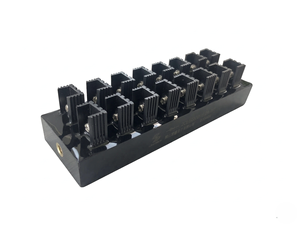
Our engineering manufacturing facilities specialize in solving complex isolation challenges by customizing geometry, creeping distance paths, dielectric encapsulation materials, and internal shield configurations. Whether your system demands a 17.5kV fast-recovery silicon stack diode for industrial radio-frequency (RF) induction heating or a specialized 400VAC input to 180VDC output rectified brake control module, every assembly undergoes comprehensive dielectric withstand voltage testing (Hi-Pot) and partial discharge analysis to guarantee zero structural degradation across decades of continuous service.
Constructed with void-free vacuum epoxy resin casting techniques achieving partial discharge levels below 5 pico-Coulombs (<5 pC) at 1.5 times nominal rated working voltage, eliminating long-term dielectric erosion.
Tailored clearance and creepage path geometry engineered with CTI > 600 insulation materials (Group I) to counteract high-altitude voltage flashover according to EN 50124-1 and IEC 60664-1 standards.
Integrated ceramic substrates (Al2O3 / AlN) and specialized aluminum heat-sink bases providing ultra-low thermal resistance (Rthjc) for high-current rectifier modules operating under elevated continuous temperatures.
Building on over 30 years of specialized UK and global power conversion legacy, our manufacturing facilities deliver bespoke isolation hardware engineered for zero downtime.
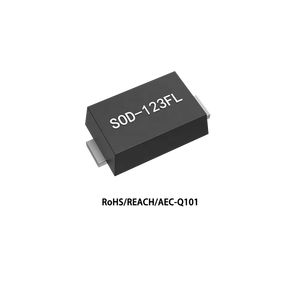
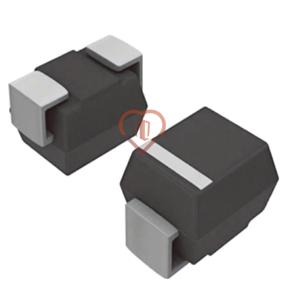
Austrian original equipment manufacturers operate under stringent European quality directives and market pressures that demand absolute precision. From high-voltage power conversion modules delivering up to 200 kV / 150 kW down to discrete surface-mount surge isolation diodes (SMA/SOD-123FL), our manufacturing plant operates strictly under ISO 9001 quality management protocols.
Unlike off-the-shelf component brokers, we maintain an agile clean-sheet engineering capability. Our value-added solutions team handles electrical topology optimization, custom magnetics winding, advanced thermal modeling, EMC/EMI shielding implementation, and automated stress testing under one roof.
| Isolation Technology / Material | Dielectric Strength (kV/mm) | Thermal Conductivity | Partial Discharge Limit | Typical OEM Application |
|---|---|---|---|---|
| Vacuum-Cast Epoxy Resin | 22 - 28 kV/mm | 1.2 - 2.5 W/m·K | < 3 pC @ 15kV | HV Silicon Stack Rectifiers (HVP-16), Transformer Insulation |
| Direct Bonded Copper (DBC) AlN | 15 - 20 kV/mm | 170 - 200 W/m·K | < 5 pC @ 5kV | High Current SCR Modules, Traction Power Converters |
| Silicon Elastomer Potting | 18 - 22 kV/mm | 0.8 - 1.5 W/m·K | < 5 pC @ 10kV | Sensors, High Voltage Isolation Transducers |
| High-Density Ceramic Barriers | 30 - 40 kV/mm | 24 - 30 W/m·K | Zero Internal PD | Ultra-High Voltage Substation Components & Pulse Power |
Our power engineering team assists Austrian system designers in calculating exact insulation clearances, thermal limits, and reverse recovery parameters tailored to your application blueprint.
Contact UsDeploying specialized components engineered to fulfill the operational profiles of leading Austrian industrial technology ecosystems.
Austria generates over 60% of its electricity from hydro facilities across the Alpine rivers (Tyrol, Carinthia, Salzburg). Our high-voltage isolation components, bridge rectifiers, and high-current diode blocks (such as the 2CLG20KV/50A-WT) are built into excitation control systems, static var compensators (SVCs), and grid interconnect protection hardware operating under severe outdoor humidity and mountain temperature extremes.
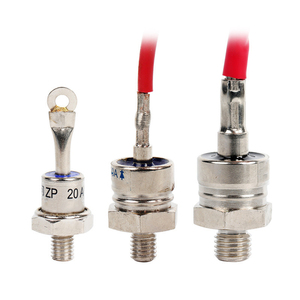
Austria’s extensive electric rail network (ÖBB) relies on 15 kV 16.7 Hz AC catenary systems requiring exceptional surge suppression and isolation integrity. Custom silicon-controlled rectifiers (SCRs) and high-power rectifiers (ZP100A series) are critical components inside onboard auxiliary converters, brake choppers, and trackside DC substation power supplies, conforming to EN 50124-1 railway insulation coordination specs.
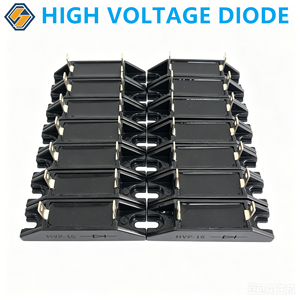
In the industrial corridors of Linz and Voestalpine green steel initiatives, massive power conversion equipment is needed for hydrogen electrolyser stacks, direct reduced iron (DRI) electric arc furnaces, and high-frequency induction heating. High-voltage silicon stack rectifiers (HVP-16) and high-current rectifier blocks handle massive continuous current loads while shielding control PLCs from dangerous back-EMF spikes.
Austrian research clusters—including TU Wien, Graz University of Technology, Montanuniversität Leoben, and Austrian institutions affiliated with CERN—require custom laboratory-grade high-voltage isolation components. Our clean-sheet engineering capability enables custom high-voltage pulse isolation transformers and low-noise diode rectifiers operating reliably up to 200 kV DC for particle beam line steering and laboratory plasma experimentation.
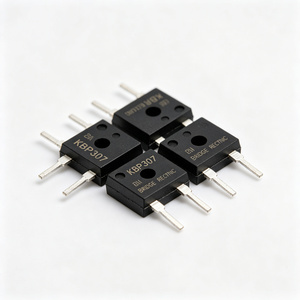
As Austria expands its high-speed electric vehicle charging networks along trans-European transit routes (A1 Westautobahn, A2 Südautobahn), 800V DC and megawatt-level charging station topologies require high-efficiency isolation diodes and fast-recovery bridge rectifiers (such as KBP307 and P0080TA-MC series) to ensure galvanic isolation between grid tie-in lines and battery systems.
Medical OEMs in Vienna and Graz building CT scanner high-voltage generators, X-ray power units, and proton therapy systems specify ultra-low partial discharge components. Medistax®-certified isolation platforms provide critical insulation barriers rated up to 150kV DC, complying fully with IEC 60601 patient-adjacent safety requirements.
The Austrian industrial landscape is undergoing a massive transformation driven by the national goal of achieving 100% renewable electricity by 2030 and full carbon neutrality by 2040. This shift is placing unprecedented technical demands on power electronic component design across several key domains:
1. Micro-Fracture Prevention under Extreme Thermal Cycling: High-altitude wind farms in the East of Austria (Burgenland) and pumped-storage hydroelectric facilities experience rapid thermal ramp-rates. Traditional epoxy potting compounds degrade over time, leading to micro-cavities where localized arcing occurs. Our high-voltage isolation components utilize flexible, thermally matched silicone-epoxy hybrid matrices designed to absorb expansion differentials without micro-cracking.
2. EU Green Deal & PFAS-Free Dielectric Fluid Compatibility: As European Union regulations mandate the phasing out of hazardous per- and polyfluoroalkyl substances (PFAS) and SF6 gas insulation in medium-to-high voltage switchgear, OEM manufacturers in Austria require solid-state encapsulated components and eco-friendly liquid-dielectric compatible components. Our resin formulations comply 100% with REACH and RoHS directives while maintaining superior voltage breakdown ratings.
3. Electromagnetic Compatibility (EMC) in High-Frequency Silicon Carbide (SiC) Topologies: Next-generation Austrian power converters are migrating from traditional IGBTs to fast-switching SiC and GaN semiconductors. The resulting high dv/dt switching slopes (exceeding 50 kV/µs) induce massive common-mode noise currents across insulation barriers. Our custom components incorporate internal electrostatic Faraday shielding to neutralize capacitive coupling and protect digital control logic.
Direct technical answers to common questions raised by Austrian electrical design engineers and OEM buyers.
Air insulation strength drops as atmospheric pressure decreases at higher elevations. For Austrian installations sited above 2,000 meters (such as Alpine railway substations or hydro plants), we apply clearance correction multipliers according to IEC 60664-1 Table A.2. Furthermore, we increase external creepage paths using high-CTI ceramic or silicone outer sleeves to prevent surface tracking under high humidity and fog.
Our standard production process includes vacuum degassing during epoxy casting, ensuring void-free encapsulation. Every high-voltage component (such as our 20kV 2CLG series) undergoes 100% factory screening with a partial discharge extinction threshold certified below 5 pico-Coulombs (<5 pC) at 1.5 times nominal working voltage, preventing long-term insulation breakdown.
Yes. We design custom silicon-controlled rectifier assemblies, brake input modules (like the M400 series), and high-power diodes specifically tailored to meet EN 50124-1 (Railway applications - Insulation coordination) Overvoltage Category III & IV, ensuring full resistance to severe vibration, shock, and line surge dynamics characteristic of ÖBB rail networks.
For modified standard components, initial engineering samples are typically dispatched within 2 to 3 weeks. For clean-sheet custom OEM designs—including custom tooling, thermal modeling, and 3D mold development—prototypes are delivered within 4 to 6 weeks, supported by full ISO 9001 test reports and certificate of conformity documentation.
Yes. Components like our 1N4006W SOD-123FL surface-mount diodes and KBP307 bridge rectifiers come with 100% original traceable lot codes, full material compliance certificates (RoHS & REACH), and full batch test logs to satisfy high-reliability industrial and automotive OEM audit standards in Austria.
Our high-current isolation components incorporate Direct Bonded Copper (DBC) ceramics, high thermal conductivity aluminum oxide (Al2O3) or aluminum nitride (AlN) substrates, and integrated nickel-plated copper baseplates. This enables direct mounting onto liquid cooling plates or forced-air heatsinks used in heavy industrial electrolysis or induction heating systems.
From initial design specification to high-volume manufacturing, our technical team works as an extension of your engineering department.
We analyze your peak working voltage, insulation safety factor, partial discharge limit, CTI class, space envelope, and ambient elevation profile in Austria.
Using advanced electrostatic field software, we simulate dielectric voltage gradients within internal potting materials to eliminate high-stress electric field nodes.
Rapid vacuum potting and CNC fabrication produce functional prototypes subjected to thermal shock (-40°C to +150°C), Hi-Pot dielectric breakdown, and partial discharge testing.
Speak directly with a senior power conversion engineer today. We provide full technical consultations, CAD models, and customized quotation proposals for projects across Austria and the wider EU region.
Contact Us