Engineered specifically for sodium hypochlorite generation, seawater electrolysis, and continuous high-current DC application in high-humidity tropical coastal zones.
An authoritative analysis of direct-current rectification efficiency, cell electrode longevity, tropical environmental hardening, and grid compliance under Philippine operating conditions.
Electrochlorination is an electrochemical process that generates sodium hypochlorite ($NaOCl$) on-site by passing a continuous, high-amperage Direct Current through a low-concentration brine solution (seawater or prepared salt solution). The electrolytic reactions occurring at the electrode surfaces are defined as:
Anodic Reaction: $2Cl^- \rightarrow Cl_2 + 2e^-$
Cathodic Reaction: $2H_2O + 2e^- \rightarrow H_2 \uparrow + 2OH^-$
Overall Solution Reaction: $Cl_2 + 2NaOH \rightarrow NaOCl + NaCl + H_2O$
To sustain these non-spontaneous reactions efficiently without excessive heat dissipation, the direct current power supply must deliver extremely stable low-voltage high-current outputs. In Metro Manila—where major water concessionaires like Maynilad Water Services and Manila Water manage massive water purification plants—electrochlorination systems are increasingly replacing hazardous bulk liquid chlorine containers due to urban density safety mandates.
However, the performance of the entire chlorination plant relies entirely on the electrical topology of the transformer rectifier (TR). Fluctuations in DC current lead directly to unstable chlorine production rates, scaling on cathode surfaces, and accelerated degradation of costly Mixed Metal Oxide (MMO) coated titanium anodes.
One of the most significant engineering challenges in continuous electrochlorination is maximizing the lifespan of the Ruthenium Oxide ($RuO_2$) and Iridium Oxide ($IrO_2$) precious metal coatings on titanium cell anodes. High AC ripple currents—frequently generated by poorly filtered or low-cost thyristor rectifiers—induce micro-cyclic oxidation and reduction states on the catalyst layer.
By controlling AC ripple, plant engineers in Manila water treatment facilities extend anode replacement intervals from 4–5 years to over 8–10 years, dramatically lowering Total Cost of Ownership (TCO).
Selecting the optimal power conversion topology for Manila’s industrial plants requires balancing initial capital expenditure, harmonic distortion on the 60 Hz grid, thermal resilience, and maintenance complexity.
| Performance Parameter | 6-Pulse Thyristor Rectifier | 12-Pulse Thyristor Rectifier (Powerstax Standard) | High-Frequency Switch-Mode (IGBT PWM) |
|---|---|---|---|
| DC Output Ripple (Unfiltered) | ~ 14% to 30% | ~ 4.5% to 8.5% (Easily filtered to <2%) | < 1.5% |
| Input Grid Harmonics (THDi) | High (~28-35%) | Low (~8-12% with passive trap filter) | Very Low (<5% with active PFC) |
| Surge & Spike Resilience | Exceptionally High (Robust SCRs) | Maximum Reliability for Grid Volatility | Moderate (Requires extra TVS protection) |
| Tropical Thermal Tolerance | Up to 55°C Ambient (Natural/Air Cooling) | Up to 55°C Ambient (Heavy Copper & Heatsinks) | Requires strict air-conditioned enclosures |
| MTBF (Mean Time Between Failures) | > 120,000 Hours | > 150,000 Hours | ~ 65,000 Hours |
While High-Frequency Switch-Mode Power Supplies (SMPS) offer compact footprints, the aggressive coastal air of Manila Bay combined with grid voltage sags makes heavy-duty 12-Pulse Thyristor Transformer Rectifiers the preferred choice for municipal and industrial baseload water disinfection systems.
The geographic location of Manila poses unique environmental stresses on power conversion hardware. With average relative humidity hovering above 85% and ambient temperatures reaching up to 42°C inside unconditioned power distribution rooms, off-the-shelf power units fail prematurely due to dielectric breakdown and salt-spray corrosion.
Powerstax electrochlorination power systems manufactured for Luzon suppliers incorporate specific engineering countermeasures:
Providing customized power supplies, rectifiers, and high-reliability components engineered for critical regional utilities and marine projects.
Serving large-scale water treatment infrastructure (La Mesa, Putatan, and Cardona facilities). High-capacity thyristor rectifiers provide reliable 24/7 continuous DC current to brine electrolysis cells, guaranteeing compliant residual chlorine levels across Maynilad and Manila Water distribution networks.
Coastal power generation stations located along Manila Bay, Batangas, and Limay utilize seawater electrochlorination to prevent marine biofouling (barnacles, mussels, and algae) in condenser cooling circuits. Our rectifiers withstand aggressive saltwater ambient environments while delivering up to 10,000A DC.
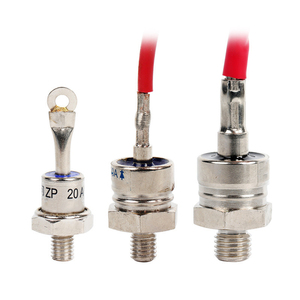
Commercial marine vessels calling at the Port of Manila and Subic Bay rely on compact, shock-resistant electrochlorination power modules. Utilizing high-efficiency SCR bridges (like the M400 module) and heavy-duty stud diodes (ZP100A series), our power units comply with IMO ballast water discharge standards.
High-rise real estate, resort complexes, and commercial centers in Bonifacio Global City (BGC), Makati, and Bay City deploy on-site hypochlorite generation for cooling towers, swimming pools, and greywater recycling facilities requiring quiet, compact, low-EMC AC-DC power units.
Manufacturing and food processing facilities across Laguna Technopark, First Philippine Industrial Park (FPIP), and Cavite Economic Zone utilize localized electrochlorination to oxidize industrial effluents and break down organic pollutants prior to discharge under DENR regulations.
Extending beyond chlorination, our heavy-duty transformer rectifiers supply precise Impressed Current Cathodic Protection (ICCP) to prevent steel corrosion on submerged gas pipelines, jet fuel lines, and marine jetties operating throughout the Port of Manila.
Industrial power systems operating in Metro Manila are subject to specific electrical grid characteristics and strict environmental enforcement. Failure to account for local grid variations leads to equipment tripping, harmonic penalties, and regulatory fines.
Over 30 years of British power electronics design, ISO 9001 certified manufacturing, and responsive OEM component supply.
We don't force off-the-shelf catalogue rectifiers. We custom-configure transformer magnetics, control loops, and enclosure IP ratings to match your specific cell voltage and current profile.
Full lot-traceability on every diode, SCR, bridge, and PCB assembly. Guaranteed full power burn-in testing prior to shipment reduces job-site commissioning delay in Manila.
From discrete surface-mount surge suppressors to megawatt SCR power blocks, we maintain stringent raw material inspection to eliminate counterfeit components in critical infrastructure.
Complete spares availability—including SCR modules, replacement silicon stacks, trigger boards, and calibration services—to keep installed assets performing for 15+ years.
Key technical considerations when specifying and procuring electrochlorination power supplies in the Philippines.