Proven high-current, low-ripple AC/DC industrial power supply platforms customized for Alkaline (AEL), PEM, and Solid Oxide (SOEC) electrolyser stacks operating under extreme ambient conditions.
Addressing the unique thermodynamic, power quality, and environmental challenges of deploying megawatt-scale DC electrolysis supplies in the Arabian Gulf region.
Kuwait stands at a pivotal juncture in its energy transformation. As part of Kuwait Vision 2035 (NewKuwait) and the national strategy targeting net-zero operations by 2050, the State of Kuwait—spearheaded by Kuwait Petroleum Corporation (KPC), Kuwait National Petroleum Company (KNPC), and the Ministry of Electricity, Water and Renewable Energy (MEW)—is investing heavily in green hydrogen production. Central to projects located within the Shagaya Renewable Energy Park and coastal industrial hubs such as Al-Zour and Mina Al-Ahmadi is the deployment of gigawatt-scale water electrolysis plants.
However, converting the high-voltage AC grid power delivered by MEW’s 11kV/33kV distribution network into the precise, high-current direct current (DC) required by electrolysers poses stringent engineering hurdles. The direct current rectifier system serves as the heart of the hydrogen production plant, representing up to 15% of total capital expenditure (CAPEX) and directly influencing overall Plant Performance Ratio (PPR) and operational expenditures (OPEX) over a 25-year operational lifecycle.
In high ambient temperature zones (exceeding 50°C during peak summer months), conventional rectifier topologies suffer severe thermal derating, elevated internal component stress, and accelerated stack degradation caused by high direct current ripple. Delivering continuous megawatt-scale power requires specialized thermal dissipation, active power factor correction (PFC), and advanced harmonic mitigation (THDi < 3%).
Operating rectifiers in Kuwait requires engineered resistance against high ambient dry-bulb temperatures, high humidity along coastal regions, airborne particulates (sand and fine silica dust), and corrosive atmospheric hydrogen sulfide/salt mist. Standard air-cooled rectifiers frequently experience fan blockage, air-filter clogging, and fatal junction over-temperature faults on SCR thyristors and IGBT modules.
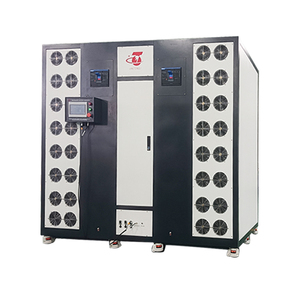
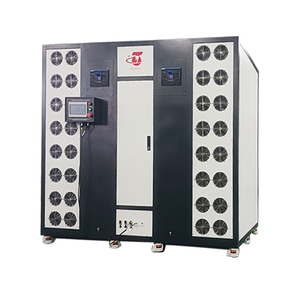
Our Kuwait-spec hydrogen production rectifiers utilize a Dual-Chamber Hermetically Sealed Enclosure (IP65 / NEMA 4X) paired with an integrated Closed-Loop Deionized Water-Glycol Liquid Cooling System. Heat generated by power semiconductors, copper busbars, and isolation transformers is transferred directly via nickel-plated copper cold plates to an external liquid-to-air heat exchanger rated for 55°C ambient continuous duty without output derating.
Electrolyzer stack longevity—whether using Alkaline Water Electrolysis (AEL) or Proton Exchange Membrane (PEM) technology—is directly inversely proportional to the peak-to-peak ripple of the supplied direct current. High current ripple causes thermal cycling across catalytic membranes, accelerates catalyst dissolution (platinum/iridium oxide in PEM; nickel foam in AEL), and generates parasitic reverse currents during dynamic load ramping.
| Topology Class | Rectifier Type | Typical DC Ripple | Power Factor (cos φ) | THDi (Harmonics) | Suitability for Kuwait Solar-to-H2 |
|---|---|---|---|---|---|
| 6-Pulse Thyristor (SCR) | Line Commutated | > 8.0% | 0.70 - 0.85 | 30% - 35% | Low (Requires large external filters) |
| 12-Pulse Thyristor (SCR) | Phase Shifted TR | 3.5% - 5.0% | 0.88 - 0.92 | 10% - 15% | Moderate (Standard for basic legacy plants) |
| 24-Pulse Thyristor System | Multi-Winding TR | 1.5% - 2.5% | 0.94 - 0.96 | < 5.0% | High (Robust for ultra-large MW/GW AEL) |
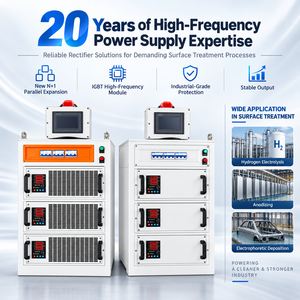
| High-Frequency IGBT Switch-Mode | Active Front End (AFE) | < 0.5% | > 0.99 | < 2.5% | Optimal (Ideal for dynamic PEM & Solar-H2) |
Connecting multi-megawatt rectifiers to Kuwait’s electrical network demands strict adherence to MEW power quality guidelines. Unmitigated harmonic currents injected into the grid can cause transformer overheating, capacitor bank resonance, and voltage distortion across neighboring industrial plants in Shuaiba and Mina Abdulla industrial zones.
Our solutions incorporate integrated Active Front End (AFE) PWM technology or 24-Pulse phase-shifting transformers with active harmonic filters (AHF). This ensures a low Total Harmonic Distortion of Current (THDi < 3%) and maintains a unity power factor (> 0.98) across the entire 10% to 110% load adjustment range, satisfying MEW grid code requirements without penalty.
Tailored power electronics designed specifically for the state’s key industrial sectors and renewable energy roadmap.
Direct coupling of high-capacity IGBT rectifiers with utility-scale photovoltaic (PV) power systems. High-frequency dynamic response handling fluctuating solar radiance while maintaining precise DC current regulation to protect PEM electrolysers.
Replacing traditional grey hydrogen produced via Steam Methane Reforming (SMR) at Mina Al-Ahmadi and Mina Abdulla refineries with megawatt-scale green hydrogen rectifiers designed for hazardous zone compliance (Class I, Div 2 / ATEX Zone 2).
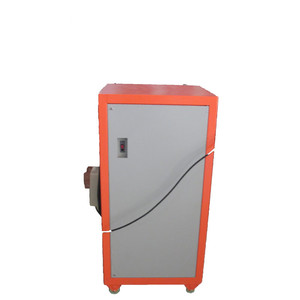
Heavy-duty high-current thyristor rectifiers engineered for high-density electrochlorination and chemical electro-synthesis plants along the Kuwait coastline, utilizing anti-corrosion marine-grade C5-M coatings.
Insights into how market forces and national policy are shaping power conversion purchasing decisions in Kuwait.
While legacy industrial electrolysis relied on 12-pulse thyristor rectifiers due to low cost per megawatt, modern Kuwaiti project tenders increasingly specify IGBT Switch-Mode or Hybrid PWM Rectifiers. The driver is clear: green hydrogen production powered by solar PV requires ultra-fast dynamic load tracking (millisecond response times) to prevent stack starving, coupled with lower power ripple to maximize overall stack efficiency (kWh/kg H2).
Due to severe dust storms (Shamal winds) carrying ultra-fine sand particles, air-ventilated cabinet rectifiers are experiencing high failure rates in desert sites. The market trend in Kuwait is moving decisively toward fully sealed IP65 chassis with liquid-to-air cooling modules, eliminating the ingress of sand particulates into high-voltage electronics cabinets.
Kuwaiti industrial operators are prioritizing digital connectivity. Our rectifiers come integrated with native Modbus TCP, Profinet, and EtherNet/IP communications interfaces, enabling real-time telemetry streaming to central SCADA systems and predictive fault analytics using AI-based thermal monitoring of individual thyristor and IGBT junctions.
With limited freshwater resources, hydrogen production in Kuwait relies on purified desalinated seawater. Rectifiers are being deployed alongside specialized electrochlorination and deionization skid modules, requiring synchronized power control architectures across water treatment and electrolysis stacks.
Over three decades of power conversion engineering expertise, rigorous ISO 9001 quality assurance, and dedicated engineering support for the Middle East market.
Decades of proven design excellence in mission-critical industrial rectifiers, high-voltage systems, and severe-environment power platforms.
Tailored voltage (up to 400V DC) and high current (up to 30,000A) outputs engineered to match exact electrolyzer polarization curves.
Manufactured under strict ISO 9001 quality controls with full CE marking, IEC 60146 compliance, and extensive Factory Acceptance Testing (FAT).
Direct technical answers addressing procurement, site conditions, maintenance, and grid compliance in Kuwait.
Consult with our senior application engineers today to receive detailed technical specifications, custom single-line diagrams (SLD), efficiency simulations, and competitive commercial proposals tailored for your project.
