Explore our ISO 9001 certified range of high-current, low-ripple DC power rectifiers custom-engineered for Alkaline, PEM, and Solid Oxide electrolysers operating in West Africa.
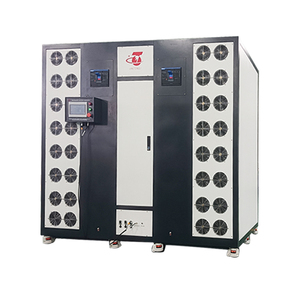
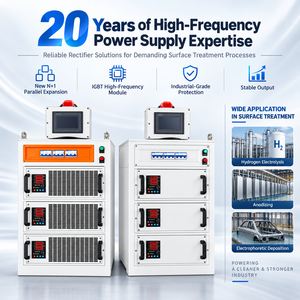
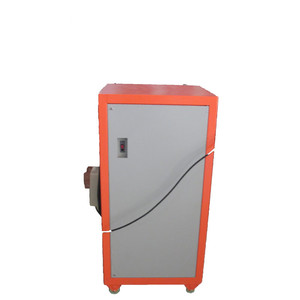
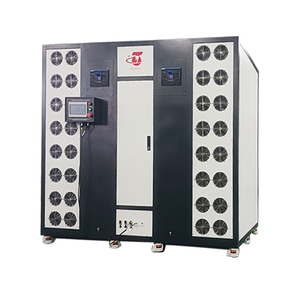
Nigeria is undergoing a historic energy transformation. As West Africa’s largest economy advances its National Energy Transition Plan (ETP), clean green hydrogen and industrial electrolytic processes are taking center stage. From heavy industrial complexes in Lagos and Ogun State to gas-to-hydrogen synthesis in the Niger Delta and off-grid solar-to-hydrogen microgrids across Northern Nigeria, the demand for ultra-reliable, high-power DC conversion equipment has never been more urgent.
As a world-class Hydrogen Rectifier Supplier & Exporter serving the Nigeria market, our power conversion architectures are specifically engineered to address the distinct operational challenges presented by West African power grids and tropical environmental conditions. Water electrolysis stacks—whether Alkaline (AEC), Proton Exchange Membrane (PEM), or Solid Oxide (SOEC)—require continuous, highly regulated Direct Current (DC). Delivering constant multi-megawatt DC power under heavy grid voltage fluctuations, ambient heat exceeding 45°C, and high humidity demands superior magnetics, advanced semiconductor control, and robust thermal protection.
Advanced IGBT switch-mode and thyristor phase control respond dynamically within milliseconds to solar/wind power intermittency in renewable hydrogen projects.
Integrated Active Power Factor Correction (PFC > 0.96) and harmonic filters conform with strict IEEE 519 standards to protect local distribution networks.
Ultra-low DC ripple current (< 2%) minimizes membrane thermal stress and chemical degradation, extending expensive cell stack lifespans by over 30%.
Deploying hydrogen rectifiers in Nigeria requires deep context on local industrial infrastructure. Unlike standard off-the-shelf power units designed for controlled temperate environments, export-grade hydrogen rectifiers destined for Nigerian sites must support diverse end-user applications:
Nigeria’s massive agricultural sector relies heavily on nitrogen-based fertilizers. Massive chemical complexes in Port Harcourt and Lekki Free Trade Zone are integrating multi-megawatt water electrolysers to replace fossil-fuel derived grey hydrogen with green hydrogen for ammonia synthesis. Our 10,000A to 27,000A thyristor-controlled transformer rectifiers provide continuous 24/7 heavy-duty operation to ensure zero downtime in ammonia synthesis units.
States such as Kano, Kaduna, and Jigawa boast exceptionally high solar irradiance. However, remote renewable microgrids suffer from solar radiation fluctuations throughout the day. Our Modular IGBT Hydrogen Rectifiers excel in tracking solar generation curves, adjusting DC current output smoothly without tripping electrolyser membrane pressure thresholds.
With giant facilities such as the Dangote Refinery driving regional downstream independence, supplementary clean hydrogen generation for hydrotreating and desulfurization processes is crucial. Our custom 400V 2500A 1000KW rectifiers feature dual RS-485 Modbus and PROFIBUS interfaces, allowing seamless telemetry integration with plant-wide SCADA and Distributed Control Systems (DCS).
Municipal water utilities in Abuja and Lagos rely on on-site electrochlorination systems (generating sodium hypochlorite via saltwater electrolysis). Our compact air-cooled 100V 500A rectifiers and high-current 12V 12000A DC power supplies offer corrosion-resistant IP54 enclosures built to handle harsh coastal marine atmospheres.
Industrial operators connected to the Nigerian national grid frequently experience frequency drift (fluctuating around 48.5Hz to 51.5Hz) and rapid voltage sags. Unprotected rectifiers risk semiconductor failure or severe harmonic distortion. Our dedicated export rectifiers incorporate wide input voltage tolerance (±15%) and custom step-down isolation transformers with specialized primary tap changers, guaranteeing uncompromised DC output stability regardless of upstream grid disturbances.
Selecting the appropriate conversion topology is critical to maximizing Return on Investment (ROI) for Nigerian plant operators. The table below outlines key engineering criteria between our heavy-duty Thyristor units and high-frequency IGBT rectifiers:
| Performance Metrics | Thyristor (SCR) Transformer Rectifier | High-Frequency IGBT Switch-Mode Rectifier |
|---|---|---|
| Power Range | 1 MW to 50 MW+ Multi-megawatt banks | 10 kW to 5 MW Modular expandable units |
| Conversion Efficiency | 95% - 97% at full load | 97.5% - 98.5% across full load range |
| Output DC Ripple | Standard < 5% (Down to < 2% with LC filters) | Ultra-Low < 1% inherently |
| Power Factor (PFC) | 0.85 - 0.92 (Requires passive PFC) | > 0.97 Active PFC integrated |
| Cooling Options | Oil-immersed (ONAN/OFAF) or Water-Cooled | Forced Air or Closed-Loop Water/Glycol |
| Optimal Application | Large-scale continuous Alkaline electrolysers | PEM electrolysers, intermittent Solar PV input |
With over 30 years of power conversion engineering legacy, our manufacturing facilities adhere strictly to ISO 9001:2015 Quality Management Systems. We understand that importing high-voltage power supplies into Nigeria involves stringent regulatory compliance, documentation, and thermal ruggedization.
Standard European or North American rectifiers are frequently rated for 25°C to 30°C ambient temperatures. Operating them in Northern Nigeria leads to immediate thermal derating or premature thermal shutdown. Our specialized export rectifiers feature over-dimensioned copper busbars, heavy-duty heatsinks, high-efficiency liquid-to-air heat exchangers, and tropicalized conformal coating on all printed circuit boards (PCBs) to resist dust accumulation and humidity corrosion.
Every rectifier exported to Nigeria undergoes rigorous Factory Acceptance Testing (FAT), including full-load burn-in, dielectric withstand testing, EMC compliance, and short-circuit protection verification. We assist engineering buyers and EPC contractors with complete certification dossiers required for SONCAP (Standard Organization of Nigeria Conformity Assessment Program) approval and Form M import documentation.

Backed by ISO 9001 certified production lines, clean-sheet power architecture design, and decades of mission-critical installations across electrolysis, defense, and high-voltage sectors worldwide. Our dedicated technical team offers full remote commissioning support and complete spare parts packages for Nigerian installations.
Below are technical answers to common inquiries raised by plant directors, EPC contractors, and procurement managers sourcing hydrogen rectifiers for deployment in Nigeria:
Our rectifiers feature wide input AC tolerances (±15% voltage, 45Hz–65Hz frequency range). Furthermore, integrated microprocessors constantly adjust thyristor firing angles or IGBT duty cycles in real time to maintain rock-solid steady DC current output even during sudden grid sags.
We provide full Factory Acceptance Test (FAT) reports, ISO 9001 quality certificates, CE declarations, detailed wiring schematics, and complete technical manuals needed for SONCAP certificate issuance and smooth clearing at Lagos (Apapa/Tin Can) or Port Harcourt ports.
High AC ripple in DC power output causes localized hotspotting, accelerates catalyst dissolution, and degrades proton-exchange membranes. Our high-frequency IGBT rectifiers deliver ripple < 1%, preserving your electrolyser stack warranty and ensuring maximum hydrogen purity.
For high-dust or desert areas (such as Kano or Kaduna), we recommend our closed-loop Water-to-Water or Water-to-Air cooled cabinets with IP54/IP65 sealed electronics compartments. This completely isolates delicate electronics from ambient dust, sand, and humidity.
Yes. All units come standard with industrial communications protocols including RS-485 Modbus-RTU, Ethernet Modbus-TCP, PROFIBUS, or analog 4-20mA / 0-10V control channels for seamless remote telemetry, automated start/stop, and real-time current logging.
Standard configured units ship within 6 to 10 weeks. Custom multi-megawatt systems are delivered according to project timelines. We provide comprehensive remote support during Site Acceptance Testing (SAT) and offer stocked spare parts packages (thyristors, IGBT modules, control cards) for quick air-freight dispatch.
Connect directly with our senior power electronics engineers. Whether you require standard equipment specifications, custom megawatt calculations, or a comprehensive technical quote for your upcoming project, we are here to support your green energy transition.