Engineered for high-reliability medical equipment, diagnostic monitors, ventilators, and laser therapy systems compliant with New Zealand healthcare regulations.
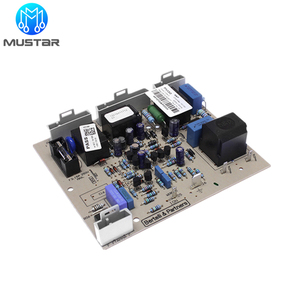
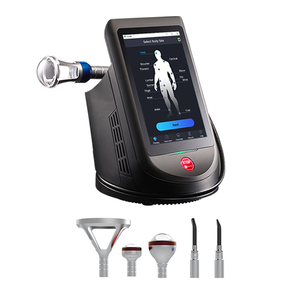
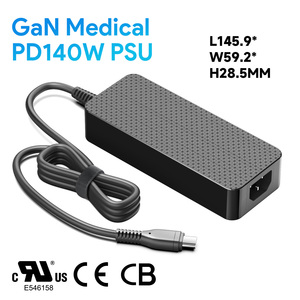
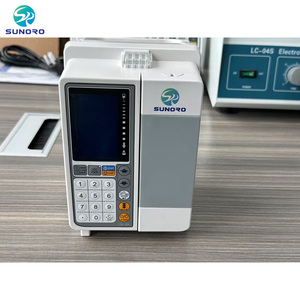
New Zealand’s healthcare infrastructure, overseen by Health New Zealand (Te Whatu Ora), operates under stringent biomedical engineering guidelines. As regional hospitals in metropolitan hubs like Auckland, Wellington, and Christchurch modernize their diagnostic suites, and rural health clinics across Northland and the West Coast expand telemedicine capabilities, the demand for medical-grade power conversion architecture has surged exponentially.
Designing and procuring power supplies for the New Zealand medical market requires adherence to dual regulatory imperatives: global standards such as IEC 60601-1 (3rd & 4th Edition) and regional electrical safety mandates governed by AS/NZS 3551 (Technical management programs for medical devices). Medical power supplies are not merely AC-to-DC converters; they are critical isolation barriers designed to safeguard patients and clinical operators from lethal electrical leakage currents.
New Zealand’s 230V / 50Hz single-phase mains supply, combined with potential voltage sag in rural microgrids, demands power supply architectures with wide AC input ranges (85V–264V AC), active Power Factor Correction (PFC > 0.95), and robust transient voltage surge suppression (TVSS).
Based on electrical efficiency, regulatory certification depth, custom engineering support, and local distribution availability in Australasia, the following top 10 manufacturers lead the supply chain for New Zealand’s healthcare OEMs and biomedical procurement officers:
Core Focus: Custom Medical Power PCBA, High-Voltage Systems & 2x MOPP Modular Conversion Platforms.
Powerstax delivers high-reliability custom power conversion solutions with over 30 years of pedigree. Specializing in bespoke Gerber/BOM SMT manufacturing, low-noise medical AC-DC front-ends, and high-voltage DC modules, Powerstax provides New Zealand OEMs with tailored, ISO 13485-compliant solutions engineered for complex clinical environments.
Core Focus: Standard Off-The-Shelf Medical Desktop Adapters & Enclosed PSUs.
Widely distributed across New Zealand, Mean Well offers standard medical power ranges (GSM, NMP series) with 2x MOPP rating, ideal for cost-sensitive diagnostic devices and clinical desk equipment requiring standard 12V to 48V DC outputs.
Core Focus: High-Density Modular & Programmable Medical Power Supplies.
TDK-Lambda provides high-end medical power units (CUS and KMS series) used extensively in hospital MRI suites and surgical tools requiring whisper-quiet, fanless convection cooling and low leakage currents.
Core Focus: Ultra-Compact AC-DC & DC-DC Medical Converters.
XP Power supplies healthcare device makers with high-efficiency PCB-mount modules featuring 4000VAC isolation, designed for portable patient monitors and critical care ventilators.
Core Focus: Surgical & Diagnostic Imaging Power Subsystems.
Known for rugged heavy-duty medical power supplies, SL Power focuses on medical devices operating under severe electromagnetic interference (EMI), fully meeting EN 60601-1-2 4th Edition requirements.
Core Focus: Medical DC-DC Converters & Micro-Modules.
RECOM excels in miniature DC-DC converter bricks providing isolated secondary patient power barriers (up to 10kVDC isolation) for ECG devices and cardiac catheters used in New Zealand clinics.
Core Focus: Open-Frame Medical Modules & Ventilator Power Supplies.
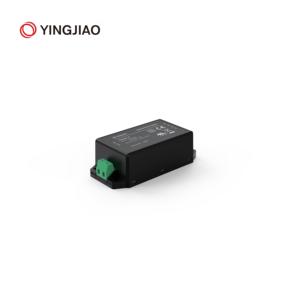
Yingjiao produces reliable 12W to 65W AC-DC medical power converters tailored for homecare respiratory equipment, nebulizers, and emergency backup battery chargers.
Core Focus: Board-Mount Medical Isolation Transformers & Converters.
Murata offers ultra-small surface-mount isolated converters critical for biomedical sensor interfaces where board space is constrained and signal isolation is paramount.
Core Focus: Ultra-Reliable Low-Profile Medical AC-DC Supplies.
Cosel’s Japanese engineering heritage delivers ultra-low failure rate power modules (AME & GHA series) favored in precision laboratory analysis devices across Auckland university research facilities.
Core Focus: High-Power Medical Front-Ends & External Adapters.
Delta supplies robust 100W to 1000W medical power supplies featuring active current sharing, remote control interfaces, and smart battery charging systems for mobile medical carts.
When specifying medical power supplies for the New Zealand healthcare sector, electrical design engineers must navigate complex safety isolation matrix specifications. The foundational standard—IEC 60601-1—defines safety and essential performance for medical electrical equipment.
The 3rd Edition of IEC 60601-1 clearly distinguishes between MOOP (Means of Operator Protection) and MOPP (Means of Patient Protection). Because medical devices frequently come into direct contact with vulnerable patients, power supplies connected to patient circuits must incorporate 2x MOPP isolation:
With the proliferation of wireless communications, Wi-Fi networks, and mobile phones inside New Zealand hospitals, power supplies must withstand high electromagnetic disturbance levels. 4th Edition EMC regulations demand enhanced immunity against Electrostatic Discharge (ESD up to 8kV contact / 15kV air) and high-level Radiated RF fields (up to 28V/m at specific wireless telemetry frequencies).
Power conversion systems are customized depending on where and how the medical equipment is deployed across New Zealand’s geographical spectrum:
Deployed in Auckland City Hospital & Christchurch Hospital. Requires zero-acoustic fanless 140W USB-C PD or enclosed Class I power supplies with sub-10µA leakage to prevent micro-shock during surgical operations.
Servicing remote communities in Gisborne and Northland. Power supplies must feature wide DC-input ranges (battery-driven 12V/24V to DC PCBA converters) with shock-and-vibration damping to withstand unpaved rural transit.
High-intensity Class 4 laser therapy power drivers (980nm/1064nm) used in private physiotherapy clinics. Demands precise current pulsing, zero overshoot, and active thermal runaway protection.
Critical life-support systems require Yingjiao/Powerstax 65W AC-DC modules with integrated seamless battery switchover circuitry, guaranteeing zero millisecond interruption during mains power dropouts.
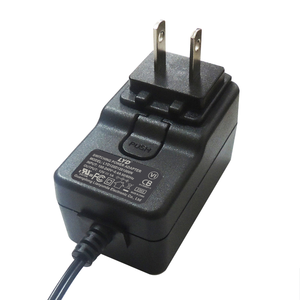
Portable patient care kits used by district nurses in Wellington. Compact 12W 5V wall-mount adapters with interchangeable AS/NZS 3112 AC blades, compliant with Class II double insulation (no earth wire required).
New Zealand’s agricultural health sector utilizes portable IV infusion pumps powered by sealed, moisture-resistant power modules rated to IP22/IP44 dust and fluid ingress standards.
The medical power supply sector in Australasia is shifting rapidly driven by technical innovation and environmental policy:
New Zealand health boards are increasingly specifying high-power USB-C PD3.1 adapters (up to 140W) for mobile medical carts and tablet-based diagnostic monitors. USB PD standardizes cable management and enables universal fast charging across multi-vendor hospital fleets while maintaining 2x MOPP safety isolation.
Gallium Nitride power switches replace traditional silicon MOSFETs in modern medical power modules. GaN enables power conversion efficiencies exceeding 94%, drastically reducing thermal dissipation and shrinking power adapter footprints by over 40%—a key benefit for portable emergency response devices.
Following extreme weather events in New Zealand (e.g., Cyclone Gabrielle), healthcare facilities are prioritizing medical power architectures capable of seamless dual-input operations: accepting 230V AC mains alongside direct 12V/24V DC battery microgrid or solar input.
When partnering with Powerstax and its premier manufacturing network for custom medical power supply development, New Zealand engineering teams gain unparalleled technical backing:
Full Turnkey SMT assembly and custom PCBA layout tailored precisely to your device enclosure shape and thermal dissipation requirements.
Certified medical quality management ensuring strict component batch traceability, risk management (ISO 14971), and zero-defect quality policies.
Every single manufactured power supply undergoes rigorous automatic full-load burn-in testing and thermal stress screening before export.
Streamlined supply chain logistics serving Auckland, Christchurch, and Wellington with complete regulatory compliance dossier support.
Answer: While IEC 60601-1 provides the foundational design and manufacturing safety certification, AS/NZS 3551 governs the ongoing operational testing and maintenance of medical equipment in New Zealand healthcare facilities. Using an IEC 60601-1 3rd/4th edition certified power supply with 2x MOPP ensures your device will easily pass routine AS/NZS 3551 electrical safety tests (e.g., earth bond integrity and insulation resistance testing).
Answer: Class I medical power supplies rely on basic insulation plus a protective earth (ground) connection (3-pin AC inlet). Class II supplies utilize double or reinforced insulation without requiring a protective earth wire (2-pin AC inlet). Class II is ideal for portable homecare devices in New Zealand where grounding integrity in domestic power sockets cannot always be guaranteed.
Answer: Yes. Beyond our standard 5V, 12V, 24V, and 48V catalog units, our engineering team specializes in modifying PCB transformer windings and feedback control loops to deliver custom output voltages tailored precisely to your internal PCBA requirements, complete with Gerber and BOM verification.
Answer: For surgical theaters and intensive care units, fan noise is unacceptable. We utilize high-efficiency topologies (over 93%), aluminum plate conduction cooling, and potting resins to design fanless power supplies that dissipate heat passively through the device chassis.
Answer: Standard samples are dispatched within 5 to 7 working days. Custom medical power PCBA design and prototype assembly typically take 3 to 5 weeks, followed by full volume production. Express air freight directly to Auckland or Christchurch ensures minimal logistics downtime.
Answer: Every shipment includes a complete compliance dossier: CB Test Certificates, IEC/EN 60601-1 Safety Test Reports, EN 60601-1-2 4th Edition EMC Reports, RoHS/REACH statements, and ISO 13485 Factory Quality Inspection Certificates required by Medsafe New Zealand.
Speak directly with our senior power supply application engineers. We will analyze your schematic, voltage requirements, and compliance targets to deliver a certified medical power solution tailored for the New Zealand market.
